
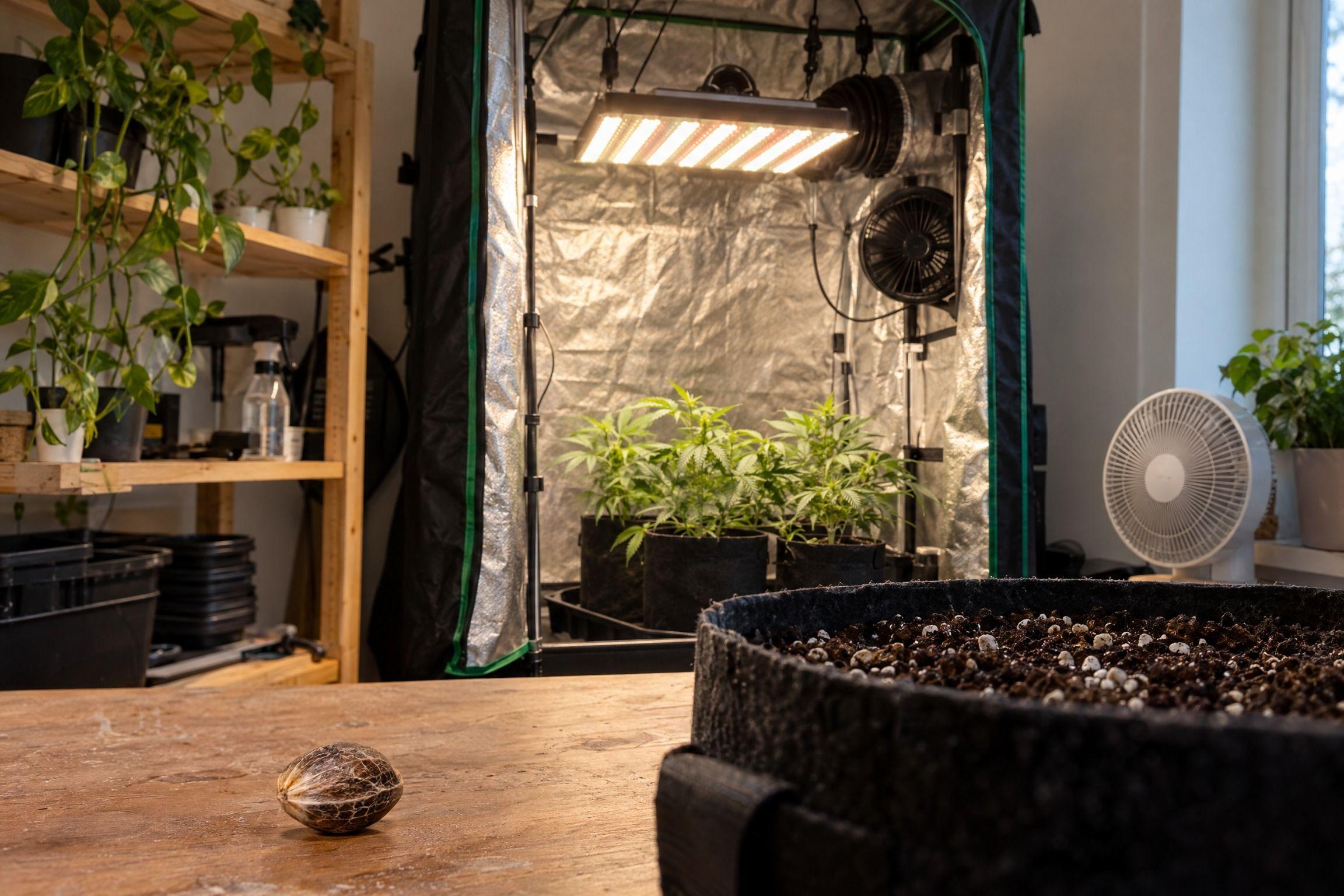
SFV OG Autoflower Seeds
SFV OG autoflower seeds suit growers who want an age-triggered flowering routine with a female-focused seed format. The key planning decision is to prepare the space early, because the plant’s life stage rather than a grower-led light-cycle change sets the flowering direction.
San Fernando Valley OG x Auto Glueberry OG
Cycle timing
10 to 12 weeks
Plant height
Medium
Environment
Cool, Dry, Hot, Temperate, Warm, Wet
Current offer
We may earn a commission when you purchase through one of these links.
About SFV OG Autoflower Seeds
SFV OG, or San Fernando Valley OG, is an OG Kush-family hybrid with a sharp lemon and citrus lift over pine, earthy or woody Kush notes, and a fuel-led edge. Use that classic profile as a preference filter while allowing the selected plant to show its own structure and aroma balance.
What SFV OG autoflower means
Autoflower describes flowering behavior, not seed sex. The selected SFV OG auto product is also labeled feminized, so this route combines age-triggered flowering with a female-focused seed-sex lane.
That distinction matters when you compare formats. An autoflower does not require a grower-initiated light-cycle shift to begin flowering, while feminized describes the intended female-plant focus rather than the timing mechanism.
The route-specific listed cross is San Fernando Valley OG x Auto Glueberry OG. Keep that parent line attached to this exact autoflower product and do not turn it into a universal formula for every seed sold under the SFV OG name.
Build the space before the plant moves quickly
Start with the container position, light clearance, airflow route, and access path. An early layout gives you more room to make small adjustments before branches and flowers make the interior harder to reach.
Leave flexibility around the plant rather than filling every available corner. OG-family expressions can vary in branching and stretch, so a workable setup should accommodate the plant you are observing instead of forcing one catalog shape.
Keep the root zone easy to inspect and the light easy to adjust. A short log of watering, light position, training, airflow, and plant posture makes each decision easier to connect to what happened before it.
Early training and airflow planning
Autoflower timing rewards restraint and observation. If you shape the plant, favor gentle early adjustments that preserve access and airflow rather than relying on a late intervention to correct the whole canopy.
Good airflow should reach the inner canopy as well as the outer leaves. If the developing flowers become dense, keep humidity and air movement under close control as part of the routine.
Support is a planning option rather than a requirement. Keep a stake, tie, or trellis available when the observed branches need organization, and use it to improve access rather than impose a fixed form.
SFV OG aroma and plant direction
Sensory language helps you decide whether this route belongs in your plan. It does not authenticate a cultivar by itself, and the balance can change with plant development, environment, drying, and storage.
The family is best handled as an OG Kush-family hybrid with an expression range. Give the plant room for its natural shape, keep the canopy accessible, and let observed development guide the next practical adjustment.
Autoflower timing without a copied calendar
Use age and plant development as the framework for the routine. The light schedule can remain consistent, but the plant still needs regular checks of root-zone moisture, posture, new growth, airflow, and the space available around the canopy.
A calendar can organize inspections without dictating what the plant must do. Record meaningful changes and let the next step follow the response you can see rather than a fixed date.
Keep major changes separated when possible. A measured approach to light position, watering, training, and airflow makes the plant easier to read and helps you understand which adjustment influenced the next observation.
Because age-triggered flowering reduces the value of late corrections, organize recurring checks before the first visible transition. A repeatable route from container to canopy helps you notice small changes without disturbing the plant.
The exact product label belongs at the center of the route. Use the current details for the selected auto release, then combine them with your own room measurements and the plant’s actual development.
Autoflower versus the feminized route
The SFV OG Seeds comparison page places this age-triggered route beside the feminized option. Return there when you want to decide whether automatic flowering or light-cycle control better fits the space and schedule you can maintain.
Current SFV OG autoflower option
When you are ready to review the exact route, Buy NowWe may earn a commission when you purchase through this link.. Confirm the live page’s format label and current product details before ordering.
A practical SFV OG auto checklist
Before starting, write down the container position, light plan, airflow path, access route, and the early observations you want to track. That preparation supports the age-triggered format without turning it into a promise about one fixed plant shape or schedule.
During the run, make small changes with a clear reason. Keep the root zone observable, leave room around the branches, and use the SFV OG strain guide for the wider identity and aroma context.
The best reason to choose SFV OG auto seeds is a clear fit between the age-triggered format and your routine. Prepare early, protect access and airflow, and let the individual plant determine the next step.
Read the SFV OG strain guide for cultivar background and broader growing context. Use this page to compare the selected seed format.
SFV OG Autoflower Seeds data sheet
Use the details below to compare this seed type with your space and schedule. Plant traits can vary with format and growing conditions.
| Seed format | Autoflower |
|---|---|
| Profile | Hybrid |
| Flowering type | Autoflowering |
| Flowering window | 10 to 12 weeks |
| Expected height | Medium |
| Environment | Cool, Dry, Hot, Temperate, Warm, Wet |
| CBD | Low CBD (0-1%) |
Cultivar context
These traits describe the cultivar as a whole. Expression can vary across seed formats and growing conditions.
| Cultivar background | SFV OG x Afghan #1 |
|---|---|
| Group profile | Hybrid; Indica-dominant |
SFV OG Autoflower Seeds growing FAQs
How should I plan the flowering window for SFV OG?
The listed flowering reference is 10 to 12 weeks; use it as planning context rather than a fixed finish date. Individual plants and conditions can shift timing.
What size context is listed for SFV OG?
The listed size context is Medium; treat it as a planning reference rather than a fixed result. Container size, training, and growing conditions can shape plant structure.
What environment should I consider for SFV OG?
Cool, Dry, Hot, Temperate, Warm, Wet is the listed setup context; match it to your space and climate. Light, airflow, and routine still vary between growing environments.
What harvest context is available for SFV OG?
Harvest outcomes vary with the seed line, plant health, light, and growing conditions. A figure associated with another format should not be treated as an estimate for this one.
How should I choose a seed type for SFV OG?
Compare the autoflower format with your space, timing, and preferred light schedule. Choose the exact seed type that fits your plan, then review the format-specific page.
Related seeds
All seeds
Hybrid
24k Gold
24k Gold seed options include Feminized formats. Compare the options with your preferred space and growing schedule.
View details
Hybrid
3 Kings
3 Kings seed options include Feminized formats. Compare the options with your preferred space and growing schedule.
View details
Hybrid
5 Alive
5 Alive seed options include Feminized formats. Compare the options with your preferred space and growing schedule.
View details