
Strain guide
White Widow Strain Guide: Pine aroma and grower notes
White Widow is documented here with source-aware cultivar context and current-record comparison cues.
Overview
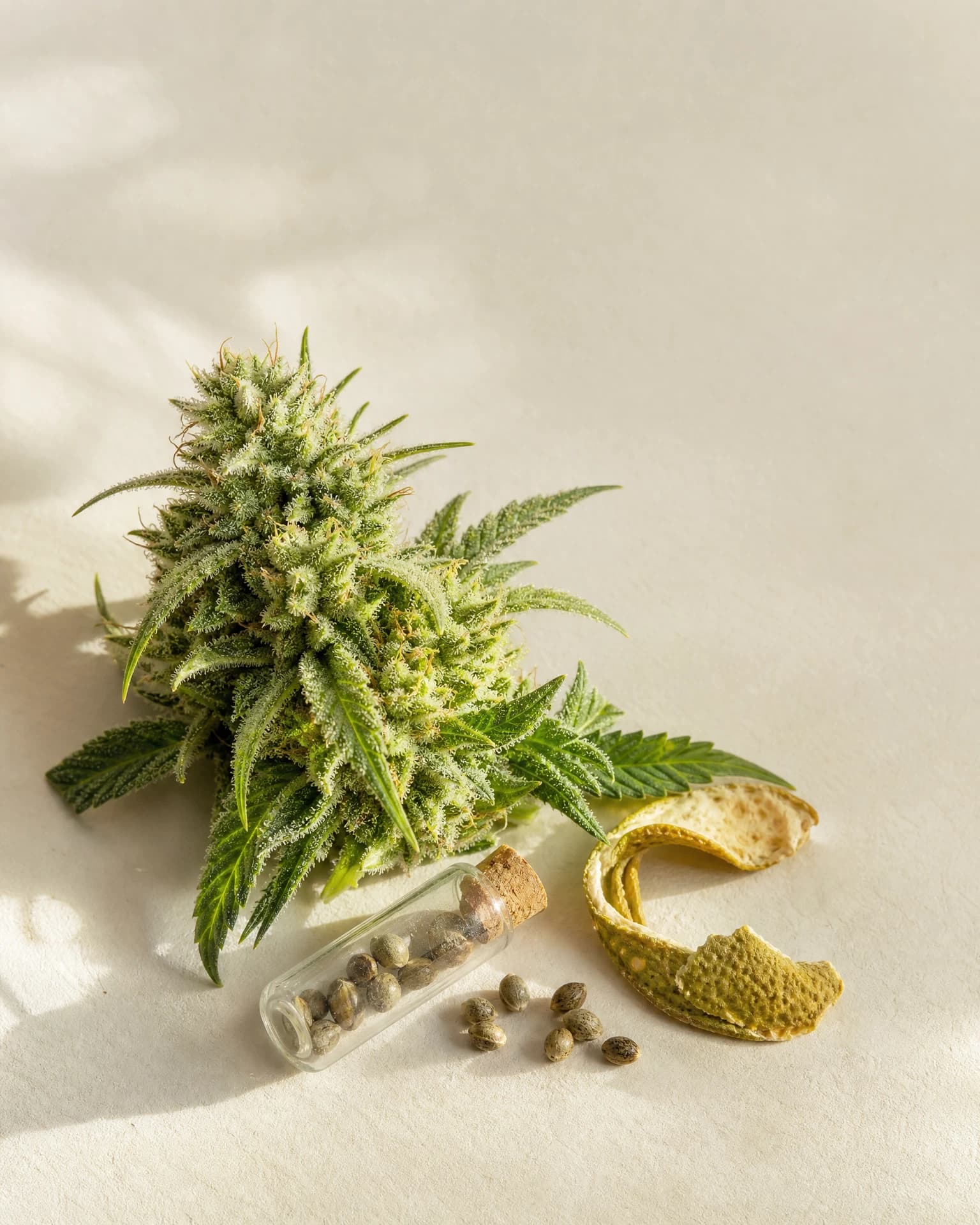
The process of evaluating a specific cultivar requires a disciplined approach to evidence, focusing strictly on the data points provided by primary breeder records and verified botanical descriptions. In the case of the white widow strain, the available record defines it as a hybrid cultivar resulting from a cross between a Brazilian Sativa landrace and a South Indian Indica landrace. This genetic foundation establishes a specific set of characteristics that have been documented across multiple retail and breeder sources, though the interpretation of these traits can vary slightly depending on the specific source consulted. The record indicates that this cultivar is recognized for a dominant aromatic profile that is described as earthy, piney, and spicy, a combination that is often attributed to the presence of specific terpenes such as myrcene and caryophyllene. Furthermore, the physical presentation of the plant is noted for a signature dense coating of white resinous trichomes, which contributes to its overall visual identity and is a primary feature mentioned in the verified facts.
When planning for the cultivation of this hybrid, the white widow flowering time is a central consideration for any grower. The record specifies a flowering cycle that typically completes within a window of 8 to 10 weeks. This timeframe is standard for many hybrid cultivars but requires careful monitoring to ensure that the plant reaches its full potential. The plants themselves are described as sturdy, a characteristic that suggests a certain level of structural integrity during the growth process. However, the record also notes that for specific details regarding plant structure, one should check the current breeder source, as individual phenotypes and breeding lines may exhibit variations in height, branching, and leaf morphology. This reliance on current breeder data is a necessary step in professional cultivation, as it ensures that the grower is working with the most accurate information for the specific seeds they have acquired.
The availability of this cultivar in multiple formats, including autoflowering, feminized, and regular seeds, provides a range of options for different types of cultivation environments and goals. Each of these formats carries its own set of implications for the growth cycle and the final outcome of the project. A comprehensive white widow growing guide must take these formats into account, as the choice of seed can significantly influence the management of the flowering period and the overall requirements of the plant. By focusing on these verified facts and avoiding the inclusion of unsupported claims, a researcher can build a reliable understanding of the cultivar that is grounded in documented evidence rather than anecdotal reports or marketing generalizations.
Understanding the limits of a breeder record is just as important as understanding the facts it contains. The record for this cultivar includes a specific caveat regarding the balance of Indica and Sativa genetics. While there is broad agreement on the lineage, different sources provide conflicting information regarding whether the strain is mostly Sativa-dominant, Indica-dominant, or a balanced hybrid. This type of disagreement is common in the botanical documentation of cannabis and serves as a reminder that the classification of hybrids is often an interpretation of complex genetic data. In this guide, we prioritize the documented facts while acknowledging where the evidence is thin or contradictory, providing a framework for responsible research and cultivation planning.
Genetics and cultivar background
The genetic background of the white widow strain is rooted in the combination of two distinct landrace populations, each contributing unique traits to the resulting hybrid. A landrace is a locally adapted, traditional variety of a species that has developed over time through adaptation to its specific environment and through isolation from other populations. In the context of this cultivar, the lineage is described as a cross between a Brazilian Sativa landrace and a South Indian Indica landrace. This pairing represents a significant intersection of two geographically and botanically distinct types of cannabis, which is a foundational element of its identity as a hybrid cultivar.
A Brazilian Sativa landrace typically originates from the tropical regions of South America, where plants have adapted to long growing seasons, high humidity, and intense sunlight. These environmental factors often result in plants that exhibit certain growth patterns, such as a taller stature and a longer flowering period compared to Indica varieties. By contrast, a South Indian Indica landrace comes from a region with different environmental pressures, often leading to a more compact structure and a different aromatic profile. The integration of these two lineages is what defines the hybrid nature of the cultivar, creating a plant that attempts to balance the characteristics of its parents.
The record explicitly states that this cross is the definitive origin of the cultivar. In the study of cannabis genetics, the term "hybrid" refers to the offspring of two different varieties, and in this case, the hybridity is achieved by crossing two landraces. This is a relatively straightforward lineage compared to many modern cultivars that involve multiple layers of hybridization. However, even with a clear lineage, the resulting plants can show a range of traits. This is why the record mentions that while the lineage is agreed upon, the exact balance of Indica and Sativa characteristics is a point of minor conflict among different sources. Some retailers might classify the plant as 55% Sativa, while others might label it as Indica-dominant or balanced.
For a researcher, this disagreement highlights the importance of looking beyond simple labels. The classification of a plant as "Sativa-dominant" or "Indica-dominant" is often a shorthand for describing its growth habits and physical appearance, but these labels do not always capture the full complexity of the plant's genetic expression. The fact that different sources provide different classifications suggests that the cultivar may exhibit a range of phenotypes, or that different breeding lines have emphasized different aspects of the original landrace parents. When reviewing a white widow growing guide or a breeder record, it is essential to recognize that these classifications are interpretations of the plant's behavior rather than absolute biological categories.
The presence of a "dense coating of white resinous trichomes" is another verified fact that relates back to the cultivar's genetic background. Trichomes are the glandular structures on the surface of the cannabis plant that produce cannabinoids and terpenes. The description of these trichomes as "white" and "resinous" is a specific botanical observation that has become a defining characteristic of the strain. This trait is likely a result of the specific combination of the Brazilian and South Indian genetics, which together produce a plant with a high density of these glands. This physical feature is one of the few structural details explicitly confirmed in the record, and it serves as a key indicator for identifying the cultivar during the flowering stage.
Plant profile and grow planning
Planning the cultivation of the white widow strain requires a focus on the specific data points provided in the breeder record, particularly regarding the flowering cycle and the general structure of the plant. The record specifies that the flowering time typically falls between 8 and 10 weeks. This duration is a critical piece of information for any white widow growing guide, as it dictates the timeline for the entire project, from the initiation of the flowering stage to the final harvest. A flowering period of 8 to 10 weeks is considered moderate, allowing the plant enough time to develop its signature resinous coating without requiring the extended season that some pure Sativa varieties might need.
The description of the plants as "sturdy" is a qualitative observation that has implications for how the cultivation space is managed. A sturdy plant is generally one that can support its own weight and resist environmental stressors, which can be an advantage in various growing environments. However, the record is careful to note that for more detailed information on plant structure, one must consult the current breeder source. This is because "sturdy" is a broad term that does not specify the height of the plant, the spacing of the nodes, or the width of the leaves. These details can vary significantly depending on the specific seeds and the environment in which they are grown.
In the absence of specific height or yield data in the record, a responsible grower should focus on general principles of hybrid management while remaining attentive to the plant's progress. Grow planning for a hybrid cultivar involves creating an environment that can accommodate both the Sativa and Indica aspects of its heritage. This might include managing the canopy to ensure even light distribution and monitoring the humidity levels to protect the dense trichome-covered flowers as they develop. The 8 to 10 week white widow flowering time provides a clear window for these activities, but the exact timing of harvest will depend on the observation of the trichomes and the specific goals of the grower.
The record also mentions that the cultivar is available in feminized, regular, and autoflowering formats. This is a vital piece of information for grow planning, as the format of the seed determines the fundamental nature of the growth cycle. For example, autoflowering seeds will transition from the vegetative stage to the flowering stage based on their age rather than a change in the light cycle. This would significantly alter the planning for a white widow growing guide compared to using photoperiod seeds (feminized or regular). Feminized seeds, on the other hand, are bred to produce only female plants, which simplifies the process for those who are not interested in breeding. Regular seeds include both male and female plants, which is necessary for those who wish to produce their own seeds or conduct their own crosses.
Because the record does not provide specific details on climate preferences, nutrient requirements, or training techniques, these areas remain "unknown fields" in this specific evidence-bounded guide. A researcher should be wary of applying general advice for "White Widow" found in other sources, as that advice may not apply to the specific genetic line described here. Instead, the focus should be on the sturdy nature of the plant and its 8 to 10 week flowering cycle as the primary pillars of the cultivation plan. By sticking to these verified facts, the grower avoids making assumptions that could lead to suboptimal results.
Aroma and flavor profile
The aromatic profile of the white widow strain is characterized by a dominant earthy, piney, and spicy scent, as explicitly stated in the verified facts. This combination of aromas is a direct result of the plant's terpene composition, with the record highlighting myrcene and caryophyllene as the primary contributors. Understanding these terpenes is essential for a complete picture of the cultivar's sensory characteristics, as they provide the chemical basis for the smells and flavors that a user might encounter.
Myrcene is one of the most common terpenes found in cannabis and is often associated with an earthy or musky aroma. It is also found in other plants such as hops, thyme, and lemongrass. In the context of this cultivar, myrcene contributes to the foundational earthy scent that is mentioned in the record. Caryophyllene, on the other hand, is known for its spicy or peppery notes and is also found in black pepper, cloves, and cinnamon. The combination of these two terpenes, along with the piney notes mentioned in the record, creates a complex aromatic profile that is a signature of the white widow strain.
The record does not provide a detailed breakdown of the flavor profile, but the aromatic description gives a strong indication of what one might expect. In cannabis, the aroma and flavor are closely linked, as both are driven by the same terpene compounds. An earthy and spicy aroma often translates into a similar flavor profile, though the experience of tasting the plant can be influenced by many factors, including how it was grown, cured, and consumed. The mention of a "piney" scent adds another layer to this profile, suggesting a fresh or resinous quality that complements the earthier notes.
For a researcher, the focus on myrcene and caryophyllene is a useful data point because these terpenes are well-studied. However, it is important to remember that the record does not specify the exact concentrations of these terpenes or the presence of other, less dominant compounds. The aromatic profile of a plant can be influenced by the environment in which it is grown, and different phenotypes may express these terpenes in different ratios. Therefore, while the earthy, piney, and spicy description is a verified fact for this cultivar, it should be treated as a general guideline rather than an absolute certainty for every individual plant.
The absence of information regarding the flavor in the record means that we cannot make any specific claims about how the white widow strain tastes. While it is tempting to infer flavor from aroma, a strictly evidence-bounded guide must refrain from doing so. Instead, we can only confirm that the aromatic profile is rich in myrcene and caryophyllene and that it is described as earthy, piney, and spicy. This level of detail is sufficient for understanding the basic sensory characteristics of the cultivar without straying into unsupported speculation.
Reported experience context
When researching a cultivar like the white widow strain, many people look for information regarding the "experience" or the effects it might produce. However, the provided record for this cultivar does not contain any specific claims about its effects, potency, or medical uses. This omission is a significant part of the evidence-bounded approach, as it prevents the inclusion of subjective or unverified information that might mislead a reader. In the absence of this data, we must focus on how a researcher should approach the topic of reported experiences in a responsible and critical manner.
The experience of using a particular cannabis cultivar is highly subjective and can be influenced by a wide range of factors, including the individual's biology, their previous experience with cannabis, and the environment in which the consumption occurs. Furthermore, the chemical composition of the plant itself—including the levels of THC, CBD, and various terpenes—can vary from one batch to another. Because the record does not provide these percentages or a description of the effects, any claim about the "experience" of this cultivar would be an inference rather than a verified fact. A responsible white widow growing guide must acknowledge these limits and avoid making generalizations that cannot be supported by the data.
Instead of providing a list of effects, we can discuss the context in which these experiences are reported. Many retailers and websites provide descriptions of how a strain feels, but these descriptions are often based on anecdotal reports rather than scientific studies. When a record mentions that there are "minor conflicts" regarding the Indica/Sativa balance, this is a clear indication that even the basic botanical classification of the plant is subject to interpretation. If the botanical classification is not fully agreed upon, it follows that the reported effects will also be subject to significant variation.
For someone interested in the white widow strain, the best approach is to focus on the verified botanical facts—such as the lineage, the aromatic profile, and the flowering time—and to treat reports of the experience as secondary information that may or may not apply to their specific situation. The presence of myrcene and caryophyllene, for example, is a chemical fact that can be used to compare this cultivar to others, but it does not allow us to predict the exact experience a user will have. By maintaining this distinction between verified data and reported experience, a researcher can build a more accurate and reliable understanding of the plant.
Finally, it is worth considering why a record might omit information on effects. In some cases, this is a matter of regulatory compliance, as claims about medical benefits or specific psychoactive effects are often restricted. In other cases, it is a reflection of the difficulty of providing accurate data on such a subjective topic. Whatever the reason, the absence of this information in the record means that it has no place in a strictly evidence-bounded guide. We report what is known and leave the unknown as a subject for further research by the individual.
How to compare current breeder records
Evaluating the information found in a breeder record requires a critical eye and an understanding of how these documents are constructed. A record like the one for the white widow strain is a compilation of data from various sources, and as such, it may contain areas of agreement as well as areas of conflict. Learning how to address these discrepancies is an essential skill for any researcher or grower who wants to build a reliable understanding of a cultivar. The record for this strain provides a perfect example of this process, particularly in its treatment of the Indica/Sativa balance.
The record states that while all sources agree on the lineage of the white widow strain—a cross between a Brazilian Sativa and a South Indian Indica—there are "minor conflicts" regarding the exact balance of these genetics. Some sources might label it as 55% Sativa, while others might call it Indica-dominant or balanced. This type of disagreement is not a sign of poor data, but rather a reflection of the inherent complexity of cannabis genetics. The labels "Sativa" and "Indica" are often used as shorthand for a set of physical and growth characteristics, and different breeders may observe different traits in their specific lines of the same cultivar.
When faced with this kind of conflict, the best approach is to look at the underlying data rather than the labels. Instead of worrying about whether the plant is 55% Sativa or 60% Indica, a researcher should focus on the verified facts that are consistent across sources, such as the 8 to 10 week white widow flowering time and the presence of myrcene and caryophyllene. These data points provide a more concrete basis for understanding the plant than a simple percentage label. The fact that the lineage is consistently reported as a cross between a Brazilian and a South Indian landrace is also a strong piece of evidence that can be used to anchor the research.
Another important aspect of comparing breeder records is identifying what is not said. In the case of this cultivar, the record does not provide specific information on yield, height, or THC content. When these fields are unknown, a responsible researcher will note them as such rather than filling in the gaps with information from other, potentially less reliable sources. This disciplined approach to evidence ensures that the resulting white widow growing guide is as accurate as possible and does not lead the reader to make false assumptions.
Finally, it is essential to recognize that breeder records are living documents. As new genetic testing and cultivation data become available, these records may be updated to reflect the most current understanding of the cultivar. A researcher should always check the date of the record and, if possible, consult multiple sources to see how the data has evolved over time. By comparing different records and focusing on the verified facts, one can build a comprehensive and reliable picture of a cultivar like the white widow strain, even when the evidence is incomplete or contradictory.
The information provided in this guide is strictly bounded by the evidence found in the specific record for the white widow strain. This record is a compilation of data from multiple retail and breeder sources. While these sources provide a consistent foundation for the cultivar's lineage and basic characteristics, the record also includes a substantive caveat that must be taken into account when interpreting the data. This caveat serves as a reminder of the limits of the current evidence and the need for a critical approach to botanical information.
The primary caveat mentioned in the record is the conflict regarding the Indica/Sativa balance of the cultivar. While all sources agree that the lineage is a cross between a Brazilian Sativa landrace and a South Indian Indica landrace, there is no consensus on the resulting genetic balance. This disagreement is a significant constraint on the draft, as it prevents us from making a definitive claim about the plant's classification. Instead, we must present the range of interpretations found in the sources, from mostly Sativa to Indica-dominant or balanced. This transparency is essential for maintaining the integrity of an evidence-bounded guide.
In addition to this specific conflict, there are several "unknown fields" in the record that have limited the scope of this guide. For example, there is no specific data on the plant's height, yield, or THC content. Furthermore, the record does not provide information on the cultivar's history, the specific breeder who first created it, or its reported medical uses. These omissions are intentional and reflect the focus on verified, non-anecdotal data. By excluding these unsupported claims, we ensure that the guide remains a reliable resource for those who value accuracy over marketing hype.
The reliance on the term "sturdy" to describe the plant structure is another example of how the record's evidence limits have shaped the guide. Because the record does not provide more detailed structural information, we have focused on the implications of a sturdy plant for grow planning while directing the reader to seek out more specific data from their chosen breeder. This approach respects the limits of the record while still providing useful information for the reader. The 8 to 10 week white widow flowering time is one of the most concrete data points in the record and has been used as a central pillar of the cultivation advice provided here.
Ultimately, the goal of this guide is to provide a clear and accurate picture of the white widow strain based on the best available evidence. By acknowledging the conflicts and the missing facts in the record, we provide a framework for responsible research and cultivation. This source-bounded approach ensures that every claim made in the guide can be traced back to the verified facts, providing a level of reliability that is often missing from more general cultivar descriptions. As new data emerges, the record and this guide will continue to be refined, reflecting the ongoing process of botanical discovery.
Given the specific facts and the unknown fields in the current record for the white widow strain, there are several areas where further research could be beneficial. These questions are designed to help a researcher or grower deepen their understanding of the cultivar by identifying the gaps in the current evidence and seeking out the data needed to fill them. By asking these questions, one can move beyond the basic facts and begin to explore the complexities of the plant in a more systematic way.
One of the primary areas for further research is the variation in plant structure across different breeding lines. The record describes the plants as "sturdy" but directs the reader to check current breeder sources for more detail. This suggests that there may be significant differences in height, branching, and leaf morphology depending on the specific seeds used. A researcher might ask: What are the typical height ranges for the autoflowering vs. the feminized versions of this cultivar? How does the node spacing vary between different phenotypes? Answering these questions would provide a much more detailed white widow growing guide for those planning a cultivation project.
Another important question relates to the aromatic profile and the concentration of terpenes. The record identifies myrcene and caryophyllene as dominant terpenes, but it does not provide their exact percentages or mention other secondary terpenes that might be present. A researcher could ask: What is the typical terpene profile for this cultivar when grown in different environments? Are there specific cultivation techniques that can enhance the piney or spicy notes mentioned in the record? Understanding these factors would allow for a more precise characterization of the plant's sensory properties.
The conflict regarding the Indica/Sativa balance also presents an opportunity for further investigation. A researcher might look for genetic testing data that could provide a more definitive answer to the question of the plant's heritage. They might ask: Does the genetic profile of the white widow strain more closely resemble the Brazilian Sativa or the South Indian Indica parent? How much variation is there in the genetic markers across different retail sources? This type of research would help to clarify the botanical identity of the cultivar and resolve the "minor conflicts" mentioned in the record.
Finally, the 8 to 10 week white widow flowering time is a verified fact, but the record does not specify the factors that might influence this window. A researcher could ask: What environmental conditions are most likely to result in an 8-week flowering period versus a 10-week period? How does the choice of seed format (autoflower vs. photoperiod) affect the overall timeline from seed to harvest? By exploring these questions, a researcher can build a more comprehensive and practical understanding of the cultivar, grounded in both verified data and a commitment to ongoing inquiry.
Frequently asked questions
What is the White Widow strain?
This guide summarizes the documented cultivar record while separating verified details from variable grower outcomes.
Is White Widow suitable for beginners?
Difficulty depends on the exact seed line, environment, and grow setup. Confirm current breeder guidance.
How long does White Widow take to flower?
Flowering windows vary by phenotype and environment. Confirm the estimate for the exact breeder line.
Can White Widow be grown indoors and outdoors?
Suitability depends on the breeder line and local climate. Compare space, humidity, temperature, and season length.
Which White Widow seed format should I choose?
Autoflower and feminized formats serve different schedules and grow styles. Compare only documented direct records.