
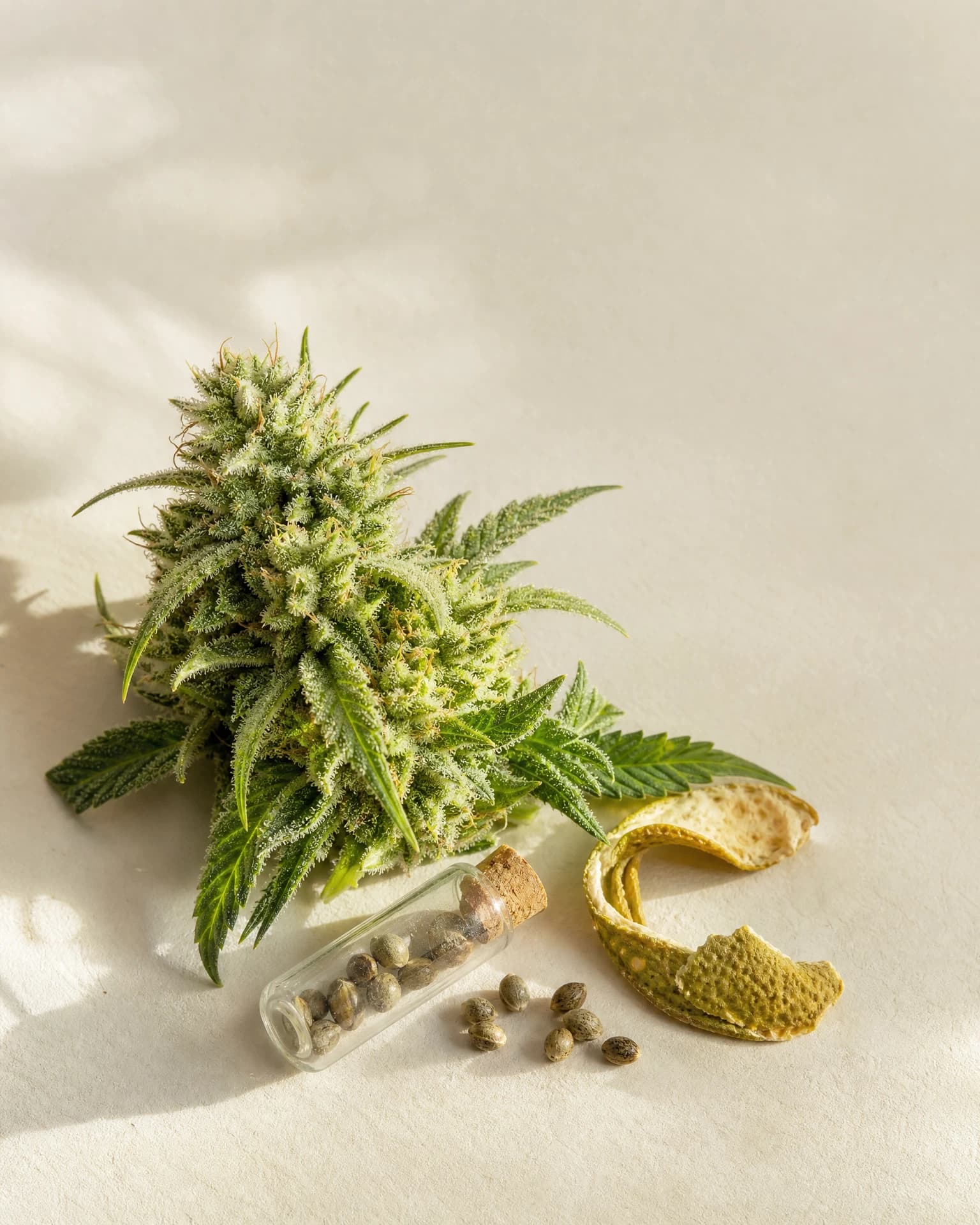
White Widow Seeds
White Widow Seeds help you compare multiple seed formats for a well-known hybrid cultivar when deciding what to grow. If you need to evaluate Autoflower, Feminized, and Regular options, this profile collects the cultivar identity, declared flowering schedule, cannabinoid indicators, and reported sensory descriptors so you can weigh tradeoffs.
White Widow is a legendary hybrid cross of a Brazilian Sativa landrace and a South Indian Indica landrace
Flowering
8-10 Weeks
Height
Very Tall
Yield
Heavy
Choose a seed type
About White Widow Seeds
White Widow is a legendary hybrid cross of a Brazilian Sativa landrace and a South Indian Indica landrace, characterized by a dominant earthy, piney, and spicy aromatic profile rich in myrcene and caryophyllene. The strain typically completes its flowering cycle in 8 to 10 weeks, producing sturdy plants with a signature dense coating of white resinous trichomes and is available in feminized, regular, and autoflowering formats. Source note: While all sources agree on the lineage, there are minor conflicts regarding the exact Indica/Sativa balance, with some retailers labeling it mostly Sativa (55%) and others as Indica-dominant or balanced.
White Widow formats at a glance
White Widow Seeds references a hybrid cultivar historically described as a cross between a Brazilian sativa landrace and a South Indian indica landrace. The grouped profile lists three seed formats: Autoflower, Feminized, and Regular. Each format is labeled in the profile; the Feminized label describes an intended female-plant outcome.
This cultivar is presented as a photoperiod cultivar with a stated hybrid profile.
Comparing White Widow Autoflower and Feminized and Regular seeds
Autoflower, Feminized, and Regular seed formats differ in how they are commonly used and managed. Feminized seeds are sold with the intent of producing predominantly female plants. Regular seeds can produce male or female plants. Autoflower seeds are typically selected for an automatic transition to the flowering stage without a change in light schedule. These are general definitions and do not promise absolute outcomes.
When choosing between the listed formats, consider your intended workflow and risk tolerance: the profile lists all three formats, so compare how much control you want over sexing, whether you prefer a photo-dependent flowering cycle, and whether the simplified flowering behavior often associated with autoflower genetics aligns with your plan. Use the cultivar details below to judge which format best matches your growing priorities.
How White Widow's hybrid profile shapes comparison
This White Widow entry reports the plant as 'Very Tall' and classifies the flowering type as Photoperiod. The profile also describes overall yield as 'Heavy' and lists the profile as Hybrid.
Difficulty and environment specifics are not supplied in this grouped profile; base cultivation decisions on the stated stature and photoperiod flowering behavior, and adjust training, support, and space planning accordingly if you select a format that follows the photoperiod schedule.
Reading White Widow flowering and cannabinoid details
Flowering is reported as 8–10 Weeks for this photoperiod cultivar. The profile lists yield as Heavy. Use the 8–10 week flowering window as the cultivar's documented photoperiod range; autoflower versions listed in this profile may follow different timelines in practice, so do not transfer the exact flowering weeks to the Autoflower format without checking the specific version.
Cannabinoid indicators in the profile show THC as Very High (20–30%) and CBD as Low (0–1%). These values are presented at the grouped-cultivar level and can help you compare potency profiles when choosing between the listed formats, but remember not to assume identical cannabinoid numbers for each format without format-specific lab data.
Reading White Widow's Earthy aromatic profile
Reported flavor descriptors for this White Widow profile are Earthy, Herbal, and Spicy. The listed dominant terpenes are Caryophyllene, Myrcene, and Pinene.
If those flavor and terpene notes match your preference, use them alongside the cultivar's height, flowering window, and cannabinoid indicators to choose between Autoflower, Feminized, and Regular seeds. For example, prioritize the format that best fits your management style while keeping these documented sensory and cannabinoid attributes in mind as selection criteria.
Compare White Widow seed types
Use the practical seed-type cards below to decide which White Widow seed type fits your space, experience, and preferred growing rhythm.
Autoflower seed type
White Widow Autoflower Seeds
Review the documented autoflower record for White Widow.Feminized seed type
White Widow Feminized Seeds
Review the documented feminized record for White Widow.Regular seed type
White Widow Regular Seeds
Review the documented regular record for White Widow.White Widow Seeds data sheet
Technical details explicitly published by the reviewed breeder record. Values not stated by the source are omitted rather than estimated.
White Widow Seeds growing FAQs
How long does White Widow take to flower?
The current record lists 8-10 Weeks. Use that timing as a planning range, not a fixed harvest promise, because phenotype, climate, and the breeder’s current version can affect the result.
How tall can White Widow grow?
The reviewed record lists Very Tall. Confirm the live breeder page before using plant height as a final space calculation, especially when comparing different documented formats.
What environment should I consider for White Widow?
The current source lists not published consistently by the reviewed breeder. Match that context to your local conditions, indoor controls, and growing method rather than assuming one cultivar listing fits every setup.
What yield information is available for White Widow?
The documented yield context is Heavy. Yield language is comparative and breeder-specific, so use it alongside flowering, height, and environment instead of treating it as a guaranteed output.
How should I choose a seed type for White Widow?
Compare the currently documented seed type with your available space, timing, and experience. Then review the live breeder information before selecting a retailer destination, because catalog lineups can change.
Related seeds
All seeds
Hybrid
24k Gold Seeds
24k Gold Seeds include documented Feminized seed options, with a hybrid profile and a 8-10 Weeks flowering window. Compare the available breeder details and format-specific data below.
CSUS · 24k gold seedsHybrid
3 Kings Seeds
3 Kings Seeds include documented Feminized seed options, with a hybrid profile and a 8-10 Weeks flowering window. Compare the available breeder details and format-specific data below.
CSUS · 3 kings seeds
Hybrid
5 Alive Seeds
5 Alive Seeds include documented Feminized seed options, with a hybrid profile and a 8-10 Weeks flowering window. Compare the available breeder details and format-specific data below.
CSUS · 5 alive seeds