
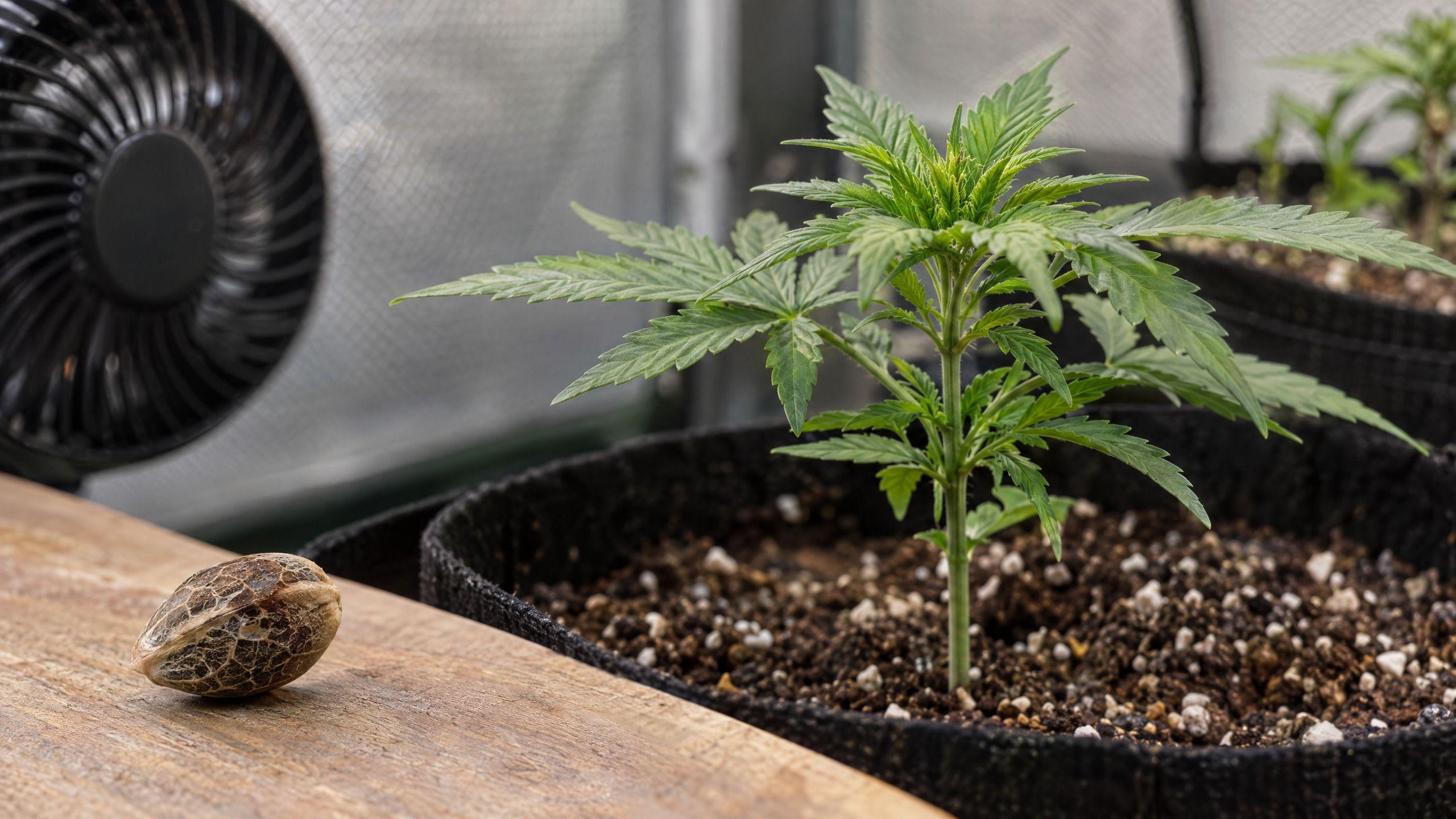
Super Skunk Autoflower Seeds
Super Skunk autoflower seeds suit growers who want an age-led crop plan rather than a deliberate switch into flowering. This page covers the auto format, its indicative 8–10 week seed-to-harvest range, early root-zone choices, and its separation from classic photoperiod traits.
Current offer
We may earn a commission when you purchase through one of these links.
About Super Skunk Autoflower Seeds
Why choose this auto format?
An autoflower starts flowering by age, so the light schedule does not need a flowering change. That can simplify planning while making the first weeks important because the plant continues on its own timetable.
Choose the final container, light position, airflow plan, and watering routine before emergence. Note early growth and visible flower development so the next cycle reflects your space rather than a generic date.
This page uses an affiliate link. We may earn a commission if you purchase through it. Please read our [affiliate disclosure](https://cannabisseeds.us.com/affiliate-disclosure).
Plan by the full cycle, not a photoperiod switch
Classic photoperiod Super Skunk is often discussed with a flowering window, while an auto schedule includes early growth and flowering in one estimate. Auto lines can also include ruderalis genetics and different lineage ratios.
Super Skunk identity and aroma
Super Skunk is commonly described as a cross of Skunk #1 and an Afghani or Afghan line, with the classic photoperiod record presented as an indica-leaning hybrid. For this auto page, treat that history as context rather than a fixed ratio for every autoflower line.
What the current auto profile supports
These planning references describe the format only. They are not promises.
- Seed format: Autoflower; flowering begins with age while the light schedule remains consistent.
- Seed-to-harvest estimate: 8–10 weeks, indicative and line-dependent.
- Typical scale: Compact-to-medium; roughly 0.6–1.4 m across auto records.
- CBD: Low or variable; this value varies by product line.
- Reported profile descriptors: Caryophyllene, humulene, and limonene may appear as catalog terms, without concentration or effects claims.
A steady setup for an age-led crop
Give the roots a clear path from the start and avoid an unplanned transplant. A suitable final container, stable light position, measured watering, and useful airflow make the plant’s pace easier to read.
Leave room around the canopy and make small changes when observations justify them rather than forcing a photoperiod training schedule. Record emergence, water-use changes, first visible flowers, and finishing signs so the 8–10 week estimate becomes more useful for your room and next planting.
Choose this route for the age-led autoflower format and a complete seed-to-harvest window. For a deliberate light-cycle change, compare the Super Skunk feminized seed page. Review all Super Skunk seed types too.
A clearer way to start
Super Skunk autoflower seeds suit a whole-cycle plan from the first leaf. Use the estimate flexibly, separate auto from photoperiod context, and let observations guide decisions.
Read the Super Skunk strain guide for cultivar background and broader growing context. Use this page to compare the selected seed format.
Super Skunk Autoflower Seeds data sheet
Use the details below to compare this seed type with your space and schedule. Plant traits can vary with format and growing conditions.
| Seed format | Autoflower |
|---|
Cultivar context
These traits describe the cultivar as a whole. Expression can vary across seed formats and growing conditions.
| Cultivar background | Super Skunk is an Indica-dominant hybrid (typically 80% Indica / 20% Sativa) created by crossing Skunk #1 with a potent Afghani hash plant. The strain is characterized by a compact and robust plant structure with short i |
|---|---|
| Group profile | Hybrid |
Super Skunk Autoflower Seeds growing FAQs
How should I plan the flowering window for Super Skunk?
Flowering pace varies with the selected seed line, plant, and environment. Use a flexible schedule and observe growth instead of treating the cultivar name as a fixed finish date.
What size context is listed for Super Skunk?
Final plant structure varies with seed type, container, training, and growing conditions. Plan space for access and airflow rather than relying on a single size estimate.
What environment should I consider for Super Skunk?
Indoor and outdoor plans depend on available space, light, airflow, and local climate. Choose a setup you can manage consistently.
What harvest context is available for Super Skunk?
Harvest outcomes vary with the seed line, plant health, light, and growing conditions. A figure associated with another format should not be treated as an estimate for this one.
How should I choose a seed type for Super Skunk?
Compare the autoflower format with your space, timing, and preferred light schedule. Choose the exact seed type that fits your plan, then review the format-specific page.
Compare Super Skunk seed types
All Super Skunk seed typesSuper Skunk Feminized Seeds
Review the feminized route for format-specific planning details. Match the format to your space and schedule.
Regular seed typeSuper Skunk Regular Seeds
Review the regular route for format-specific planning details. Match the format to your space and schedule.
Related seeds
All seeds
Hybrid
24k Gold
24k Gold seed options include Feminized formats. Compare the options with your preferred space and growing schedule.
View details
Hybrid
3 Kings
3 Kings seed options include Feminized formats. Compare the options with your preferred space and growing schedule.
View details
Hybrid
5 Alive
5 Alive seed options include Feminized formats. Compare the options with your preferred space and growing schedule.
View details