
Strain guide
Black Domina Strain Guide: Earthy aroma and grower notes
Black Domina is documented here with partner-source cultivar context, seed-format availability, and secondary-topic research cues.
Overview
A breeder record serves as a primary technical document for understanding the intended characteristics of a specific cannabis cultivar. When examining the data for the black domina strain, researchers encounter a profile that is defined by a high degree of Indica dominance. According to the available record, this cultivar is classified as a 90-95% Indica-dominant hybrid. This specific classification suggests that the plant will likely exhibit physical traits and growth patterns associated with the Indica subspecies, though the remaining 5% to 10% of its genetic makeup may introduce subtle variations that deviate from a pure landrace profile.
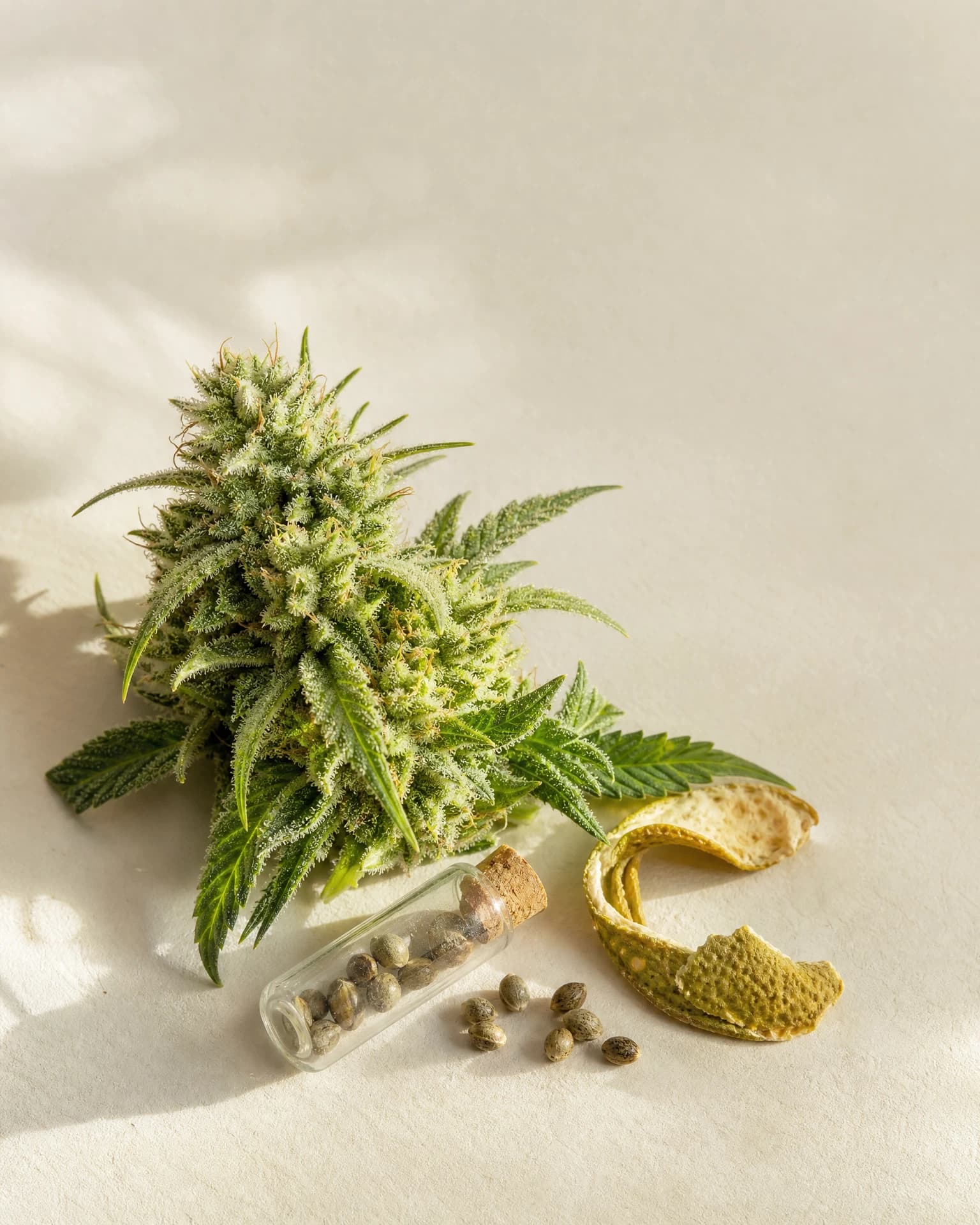
The evaluation of a strain guide requires a careful distinction between verified facts and general botanical expectations. In the case of Black Domina genetics, the record indicates that the cultivar was developed through a four-way cross involving several established genetic lines. These genetic foundations contribute to a plant that is typically described as having a short to medium structure. The physical appearance of the plant is notable for its dark foliage, often described as "midnight" green or purple, which supports the dense and resin-heavy buds that define its mature state.
Understanding the limitations of a single record is a fundamental aspect of responsible research. The documentation for this cultivar includes a specific caveat regarding the consistency of reported data across different retail and breeding sources. For instance, while the primary stature is listed as compact, there are conflicting reports regarding its potential height in outdoor environments. Furthermore, the availability of the pure cultivar may vary, as some major retailers currently offer only hybrid crosses rather than the original four-way stabilized version. This highlights the necessity for growers and researchers to verify the specific provenance of their seeds before initiating a cultivation project.
The role of a technical guide is to provide a framework for expectation rather than a guarantee of outcome. The black domina strain is reported to flower within a window of 7 to 9 weeks, a timeframe that is relatively standard for Indica-heavy hybrids. However, the record also notes that some sources cite a range of 50 to 70 days, which represents a slight variation that could impact harvest planning. By focusing on these technical parameters—genetics, structure, flowering time, and terpene profile—a researcher can develop a comprehensive understanding of the cultivar based strictly on the evidence provided in the breeder's documentation.
Genetics and cultivar background
The genetic history of a cannabis cultivar is often the most significant indicator of its potential performance and chemical profile. The record for the black domina strain specifies that it is a four-way cross, a breeding technique used to combine the desirable traits of four distinct parental lines into a single stabilized hybrid. In this instance, the lineage is composed of Afghani, Northern Lights, Ortega, and Hash Plant genetics. Each of these components is recognized within the breeding community for contributing specific characteristics to the final hybrid.
Afghani genetics are frequently associated with the foundational Indica traits of resin production and structural stability. Northern Lights is a well-documented line often used for its reliability and compact growth. Ortega and Hash Plant are similarly integrated to reinforce the Indica dominance and the density of the floral clusters. By combining these four lines, the breeders of black domina have created a hybrid that is 90-95% Indica-dominant. This high percentage of Indica heritage is the primary driver behind the plant's physical morphology and its reported terpene profile.
When analyzing a four-way cross, it is important to consider the concept of phenotypic expression. While a cultivar may be stabilized, individual seeds—especially regular seeds—may still show slight variations in how these ancestral traits manifest. The record confirms that Black Domina genetics are available in both feminized and regular formats, allowing for different types of selection and breeding work. A researcher examining this lineage would look for the interplay between the four parental lines, noting how the combination of these specific genetics results in the resin-heavy buds and high calyx-to-leaf ratio mentioned in the verified facts.
The background of a cultivar also includes its chemical potential as defined by its genetic limits. The record states that THC levels for this strain generally range between 15% and 24%. This range is a direct reflection of the genetic capabilities inherited from its four-way lineage. However, the record does not provide information regarding other cannabinoids such as CBD, nor does it detail the specific ratios of minor cannabinoids. In the absence of this data, a researcher must rely on the provided THC range as the primary chemical benchmark for the cultivar.
The study of cultivar background also involves recognizing what is not present in the record. There is no mention of the specific year of origin, the original breeder's name, or the geographic location where the initial stabilization occurred. Furthermore, the record does not provide a detailed history of how these four specific parental lines were selected or the number of generations required to reach the current 90-95% Indica-dominant state. A responsible analysis of the genetics must therefore remain confined to the specific four-way cross listed: Afghani, Northern Lights, Ortega, and Hash Plant.
Plant profile and grow planning
Planning for the cultivation of a specific cultivar requires a detailed analysis of its structural profile and environmental needs. The record for the black domina strain describes a plant with a short to medium stature, characterized by a compact and sturdy growth habit. This morphology is a direct result of its heavy Indica dominance. The foliage of the plant is particularly distinct, exhibiting dark "midnight" green or even purple hues as it matures. This coloration can be a significant factor in how the plant absorbs light and manages temperature, although the record does not specify the exact environmental triggers for these color changes.
The structure of the buds is another critical element of the plant profile. The verified facts describe the buds as dense and resin-heavy, with a high calyx-to-leaf ratio. A high calyx-to-leaf ratio is often preferred by growers because it simplifies the post-harvest trimming process and indicates a higher concentration of floral material relative to foliage. The resin production mentioned in the record suggests that the plant may be particularly sticky or aromatic during the late stages of flowering, though the specific management of this resin is left to the grower's discretion.
Grow planning must also account for the discrepancies found in the record. The primary description of the plant as "short" is challenged by a caveat noting that one source lists a potential outdoor height of up to 3 meters. This represents a significant deviation from the standard "short-medium" classification. A researcher must interpret this as a possibility for extreme growth under specific outdoor conditions, while the majority of data points toward a more manageable, compact indoor profile. This highlights the importance of environmental control and the potential for genetic variation based on the cultivation setting.
The flowering timeframe is a central component of any grow plan. The record indicates a flowering period of 7 to 9 weeks, which is also expressed as 50 to 70 days in some sources. This window is relatively narrow, but the 20-day difference between the minimum (50 days) and maximum (70 days) can be significant for scheduling nutrient cycles and harvest labor. The record does not specify the factors that might lead to a shorter or longer flowering time, such as light intensity, temperature, or specific phenotype selection. Therefore, a grower must be prepared to monitor the plant's development closely during this period.
Finally, the record notes that the pure cultivar is not currently listed by certain major retailers, which instead offers hybrid crosses. This information is relevant for grow planning because it suggests that obtaining the exact 90-95% Indica-dominant version of black domina may require sourcing from specific retailers like various verified retail sources. The choice between feminized and regular seeds will also impact the grow plan, as regular seeds will require the identification and removal of male plants if the goal is to produce seedless floral material.
Aroma and flavor profile
The sensory characteristics of a cannabis cultivar are defined by its terpene profile, which is influenced by both genetics and environmental factors. According to the record, the aroma and flavor of the black domina strain are dominated by earthy, musky, and spicy notes. These primary scents are further complemented by sweet berry undertones. This combination of scents suggests a complex chemical profile, though the record does not list the specific individual terpenes—such as myrcene, caryophyllene, or pinene—that contribute to these sensations.
Earthy and musky notes are common in cultivars with heavy Indica heritage, often reflecting the presence of terpenes that are also found in soil, roots, and various woods. The spicy component adds a layer of complexity that is often described in technical catalogs as being reminiscent of black pepper or exotic spices. The sweet berry undertones provide a contrast to the more pungent earthy and spicy elements, creating a profile that is both savory and slightly fruit-forward.
When interpreting a flavor profile from a breeder record, it is important to understand that these descriptions are often based on the consensus of multiple testers or the breeder's own observations. The actual experience of a specific plant may vary depending on how it was grown, cured, and stored. For example, the record mentions "resin-heavy buds," and since terpenes are stored within the resin glands (trichomes), the intensity of the aroma and flavor is likely linked to the density of these glands. However, the record does not provide specific data on the concentration of these aromatic compounds.
The absence of specific terpene data means that a researcher cannot definitively state which chemical compounds are responsible for the "spicy" or "berry" notes. While one might infer the presence of certain terpenes based on general knowledge of other strains, this record does not support such claims. The focus must remain on the reported sensory descriptors: earthy, musky, spicy, and sweet berry. These terms provide a qualitative framework for what a consumer or researcher might expect when encountering the cultivar.
The record also does not specify how the aroma changes throughout the plant's lifecycle. Many cultivars exhibit different scents during the vegetative stage, the early flowering stage, and after the buds have been dried and cured. The descriptions provided in the record are typically representative of the final, cured product. A researcher should note that the "midnight" green or purple foliage mentioned in the plant structure section does not necessarily correlate with the flavor profile, as color and scent are often controlled by different genetic pathways.
Reported experience context
The reported experience of a cultivar is a subjective area that is often summarized in breeder records through broad classifications. For the black domina strain, the primary indicator of the experience context is its 90-95% Indica-dominant hybrid status. In the context of cannabis classification, Indica dominance is traditionally associated with a specific range of effects, but the record itself does not list any specific physical or mental outcomes. It does not mention relaxation, sedation, euphoria, or any other common experiential descriptors.
This absence of experiential data is a significant detail for the researcher. It means that any claims regarding the "effect" of the strain would be speculative and not supported by the provided evidence. The record focuses instead on technical specifications like THC content (15% to 24%) and the terpene profile. While THC is a psychoactive compound, its specific impact is influenced by the surrounding chemical matrix, including terpenes and other cannabinoids, which are not fully detailed in this record.
The lack of medical claims is also noteworthy. The record does not suggest that this cultivar is suitable for treating any specific condition, such as pain, insomnia, or anxiety. In a professional research context, the absence of these claims is preferred over the use of anecdotal evidence that cannot be verified. A researcher must conclude that the "experience" of black domina is undefined in this specific record, beyond what can be inferred from its high Indica percentage and THC range.
When evaluating the context of a cultivar's use, it is also important to consider the "high calyx-to-leaf ratio" mentioned in the verified facts. This structural trait is often relevant to the experience of the consumer, as it typically results in a smoother or more potent product due to the higher concentration of resin-bearing calyxes relative to the harsher leaf material. However, the record does not explicitly make this connection, and a researcher should only note the structural fact itself.
The reported experience is also limited by the lack of data on CBD levels. CBD is known to modulate the effects of THC, and without a reported CBD percentage, the balance of the experience remains unknown. The record provides a clear picture of the plant's physical and chemical potential but stops short of describing the subjective results of its use. This reinforces the need for users to approach the cultivar with an understanding that the provided data is technical rather than experiential.
How to compare current breeder records
The process of comparing breeder records involves more than just looking at a list of facts; it requires a critical evaluation of how those facts are gathered and reported. In the case of the black domina strain, the record itself highlights the challenges of data consistency. The primary caveat states that flowering times vary by source, ranging from 50 to 70 days. When a researcher encounters such a discrepancy, the first step is to look at the sources of the data and the conditions under which the observations were made.
Conflicting data on plant height is another example of why record comparison is necessary. The main profile lists the plant as "short-medium," but one source mentions a potential height of 3 meters outdoors. This suggests that the "short" description may be more applicable to indoor cultivation under controlled lighting, while the "3 meters" figure may represent the plant's full genetic potential when grown in the ground with unlimited root space and natural sunlight. A researcher must be able to synthesize these two seemingly contradictory facts into a more nuanced understanding of the plant's environmental response.
Another factor in record comparison is the specificity of the genetic claims. This record is very specific about the four-way cross (Afghani, Northern Lights, Ortega, and Hash Plant), which provides a high level of confidence in the cultivar's heritage. However, other records for the same strain name might list different parents or omit the specific percentages of Indica dominance. When these differences occur, the researcher should prioritize records that provide detailed, verifiable lineage information over those that use vague or purely marketing-driven descriptions.
The reporting of THC levels also varies significantly between records. This record gives a range of 15% to 24%, which is a relatively broad window. Some sources might give a single, high number to attract buyers, while others might provide a more conservative average. A professional comparison of these records involves recognizing that THC production is not just a function of genetics, but also of cultivation skill, light quality, and harvest timing. Therefore, a range is often a more accurate reflection of the cultivar's potential than a single static percentage.
Finally, a researcher must look at the "verified facts" section of a record to see how it aligns with the "caveats." If a record lists a fact as verified but then includes a caveat that contradicts it, this is a signal that the data is still in a state of flux or that there is a lack of consensus in the industry. The responsible way to handle this is to report both the verified fact and the caveat, as this record does, providing a complete picture of the current state of knowledge regarding the cultivar.
The information provided in this guide is derived from a specific set of retail and breeding records. The primary sources for the data on the black domina strain include several established seed retailers. Each of these sources contributes to the overall profile of the cultivar, though they do not always agree on every technical detail. The role of this guide is to synthesize that data into a cohesive document while highlighting the areas of uncertainty.
The verified facts section of the record is the most reliable portion of the data, as it represents the consensus among the listed sources. This includes the 90-95% Indica-dominant status, the four-way genetic cross, and the physical description of the plant's structure and foliage. These facts are the foundation of the guide and are used to establish the primary identity of the cultivar.
The caveat section is equally important, as it provides the necessary context for interpreting the verified facts. The mention of flowering times varying between 50 and 70 days and the discrepancy in potential plant height are significant for anyone planning to cultivate the strain. These caveats serve as a reminder that cannabis is a biological entity subject to variation and that breeder records are observations of that variation rather than absolute laws.
The note regarding market data informs the researcher about the current availability of the cultivar, as not every retailer using the name is offering the pure four-way cross. This emphasizes the need for due diligence when sourcing seeds and the importance of checking the specific genetic background listed by the retailer.
In summary, this guide is a reflection of the evidence available in the provided record. It avoids making claims that are not supported by the data and uses general educational prose to provide context for the technical specifications. By adhering to these strict evidence boundaries, the guide ensures that the reader receives a factual and responsible overview of the black domina strain, grounded in the actual documentation provided by the breeding and retail community.
A comprehensive strain guide should not only provide answers but also identify the areas where more information is needed. Based on the current record for the black domina strain, there are several research questions that remain unanswered. One of the most prominent is the question of yield. The record provides no data on the expected weight of the harvest, either in terms of grams per square meter indoors or grams per plant outdoors. Yield is a primary concern for many growers, and its absence in the record is a significant gap.
Another area for further research is the specific terpene concentration. While the record lists "earthy, musky, and spicy notes with sweet berry undertones," it does not provide a lab-verified terpene profile. Knowing the exact percentages of terpenes like myrcene or caryophyllene would allow for a much deeper understanding of the plant's chemical nature and its potential effects. A researcher might ask: what is the primary terpene in the 90-95% Indica-dominant profile, and how does it contribute to the reported aroma?
The lack of information on CBD and other minor cannabinoids is also a relevant research question. With THC levels ranging from 15% to 24%, the presence or absence of CBD could significantly alter the plant's overall profile. Is there any measurable CBD in the pure black domina cultivar, or is it strictly a high-THC strain? Furthermore, are there any other cannabinoids like CBG or THCV that appear in significant amounts in this four-way cross?
Environmental optimization is another topic that warrants further investigation. The record mentions a height discrepancy between indoor and outdoor growth, but it does not specify the ideal temperature, humidity, or nutrient levels for the plant. A researcher might wonder: does the dark purple foliage appear more frequently in cooler temperatures, or is it a purely genetic trait that manifests regardless of the environment? Similarly, does the flowering time shorten significantly under specific light spectrums?
Finally, the question of genetic stability is worth exploring. As a four-way cross, how consistent are the offspring from regular seeds? Does the plant show a high degree of uniformity, or are there distinct phenotypes that favor one of the four parental lines (Afghani, Northern Lights, Ortega, or Hash Plant) over the others? Answering these questions would require access to more detailed breeding logs and lab data than what is provided in the current record.
Frequently asked questions
What is the Black Domina strain?
This guide summarizes the documented cultivar record while separating verified details from variable grower outcomes.
Is Black Domina suitable for beginners?
Difficulty depends on the exact seed line, environment, and grow setup. Confirm current breeder guidance.
How long does Black Domina take to flower?
Flowering windows vary by phenotype and environment. Confirm the estimate for the exact breeder line.
Can Black Domina be grown indoors and outdoors?
Suitability depends on the breeder line and local climate. Compare space, humidity, temperature, and season length.
Which Black Domina seed format should I choose?
Autoflower and feminized formats serve different schedules and grow styles. Compare only documented direct records.