
Strain guide
Blue Cheese Strain Guide: Berry aroma and grower notes
Blue Cheese is documented here with partner-source cultivar context, seed-format availability, and secondary-topic research cues.
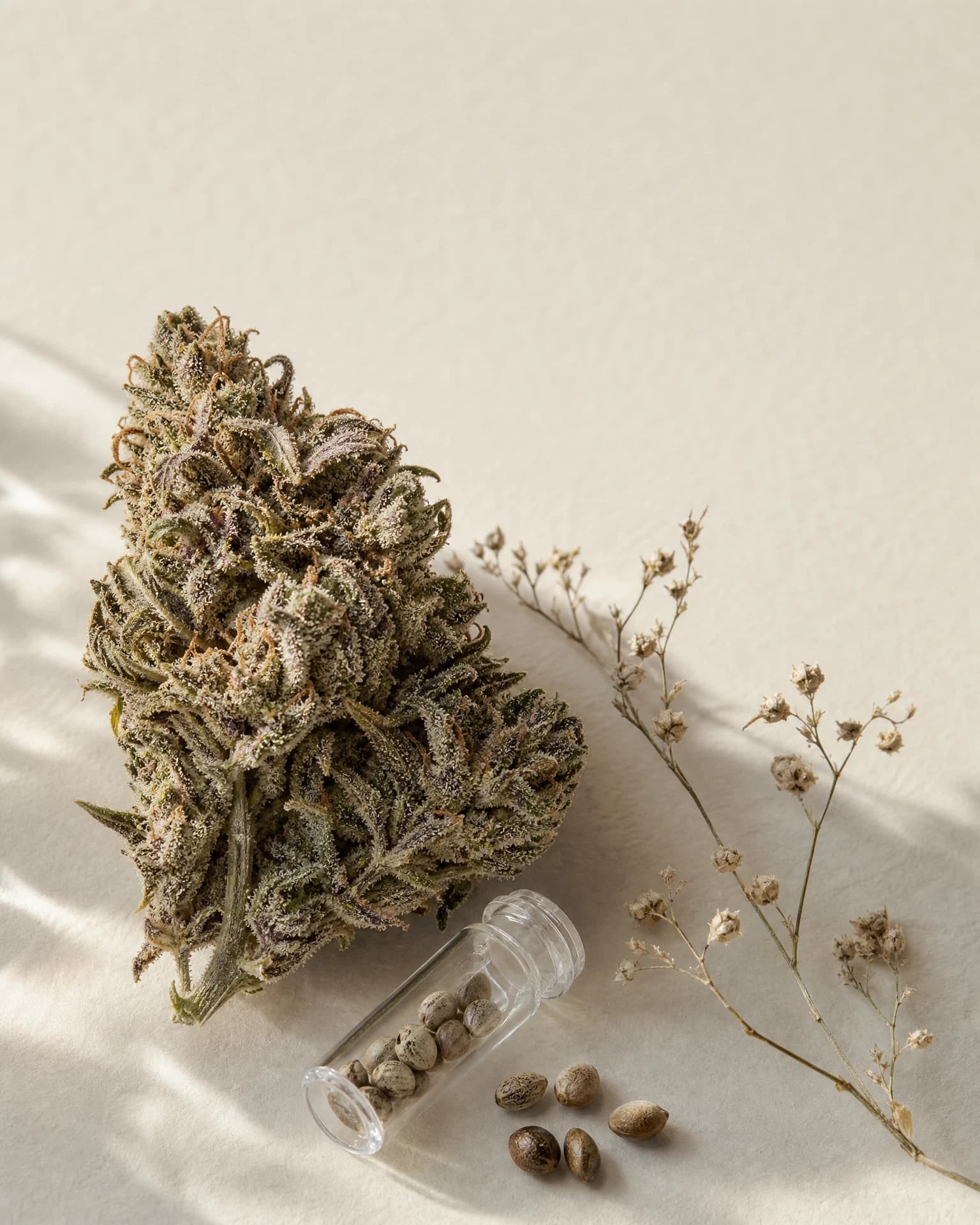
Overview
The study of specific cannabis cultivars requires a methodical approach to data collection and verification, particularly when examining a well-documented variety such as the blue cheese strain. This particular cultivar is classified as an indica-leaning hybrid, with records generally indicating a genetic composition that is approximately 80% indica and 20% sativa. By examining the available technical data, researchers and cultivators can establish a baseline for what to expect when interacting with Blue Cheese genetics in various environments. The primary objective of this guide is to synthesize the verified facts provided in breeder records while maintaining a strict boundary around the evidence currently available.
A central challenge in the analysis of any cultivar is the reconciliation of data points across different sources. For the blue cheese strain, the record indicates a lineage derived from the crossing of UK Cheese with Blueberry. This specific combination has resulted in a profile that is frequently cited for its distinct aromatic properties and growth characteristics. When evaluating a cultivar, it is essential to distinguish between the specific attributes of the plant and the general botanical principles that govern indica-dominant hybrids. This guide provides a framework for understanding the technical specifications of the cultivar, ranging from its flowering duration to its physical structure, without relying on anecdotal reports or external marketing claims that fall outside the verified dataset.
The process of selecting Blue Cheese genetics involves understanding the available formats and how they align with specific cultivation goals. The record notes that this cultivar is available in both feminized and autoflowering formats, each of which carries specific implications for the growth cycle and management of the plant. As the blue cheese flowering time typically ranges between 8 and 10 weeks, planning for the transition from the vegetative stage to the reproductive stage is a fundamental aspect of the cultivation process. By focusing on these verifiable metrics, one can develop a comprehensive understanding of the cultivar’s requirements and potential outcomes within the constraints of the provided evidence.
Genetics and cultivar background
The genetic foundation of the blue cheese strain is rooted in a specific cross between two established varieties: UK Cheese and Blueberry. This hybridization process is intended to combine the structural and aromatic traits of the parent plants into a stable offspring. In the context of cannabis breeding, the designation of a cultivar as an indica-dominant hybrid (80% indica / 20% sativa) provides a high-level summary of its likely growth patterns and chemical tendencies. However, the background of a cultivar is more than just a simple percentage; it represents a specific selection process where breeders identify and stabilize desirable traits over multiple generations.
When researching the background of a cultivar like Blue Cheese, it is useful to consider how breeder records document lineage. A record typically lists the immediate parents, but the deeper history of those parents often remains in the background unless explicitly stated. In this case, the focus remains on the UK Cheese and Blueberry cross. The documentation of such a cross serves as a roadmap for understanding the inherited characteristics of the plant. For instance, the savory and sweet aromatic profile described in the record is a direct result of this genetic pairing. Understanding the interaction between these two distinct profiles allows for a more nuanced appreciation of the cultivar’s development.
The stability of a cultivar’s genetics is often reflected in the consistency of the data across different breeder catalogs. While the core lineage of Blue Cheese is widely agreed upon, the specific expressions of these genetics can vary. A breeder record acts as a snapshot of a particular selection or "phenotype" that the breeder has chosen to promote. When a record states that a strain is an 80/20 indica-sativa hybrid, it is providing a generalized expectation based on the observed traits of that specific population. Researchers should treat these figures as guidelines rather than absolute constants, as the biological reality of plant genetics allows for a degree of natural variation even within a stabilized line.
Furthermore, the background of a cultivar informs the technical requirements for its successful management. The indica dominance suggested by the record implies certain physiological traits, such as a compact structure and a specific response to light cycles. By grounding the analysis in the provided genetic data, we avoid the pitfalls of speculation and maintain a focus on the structural and chemical facts that define the cultivar. The record’s emphasis on the UK Cheese and Blueberry heritage provides a clear boundary for what can be factually claimed about the origin and genetic intent of this variety.
Plant profile and grow planning
The physical profile of the blue cheese strain is characterized by a short to medium stature, which is a common trait among indica-dominant hybrids. The record specifically describes the plant as having a bushy and compact structure. This morphology is significant for space management in various cultivation settings, as it suggests a plant that grows outward as much as it grows upward. The compact nature of the plant also has implications for light penetration and airflow, as a dense canopy requires careful monitoring to ensure that all parts of the plant receive adequate environmental support.
One of the most notable features mentioned in the plant structure record is the heavy resin production. Resin is the substance produced by the glandular trichomes of the cannabis plant, and its abundance is often a key metric for evaluating the quality and utility of a cultivar. The presence of heavy resin on a compact, bushy plant indicates a high density of these structures, which is a primary goal for many breeders. When planning for the growth of this cultivar, the resinous nature of the flowers must be considered, particularly in terms of humidity control and the handling of the plant during the final stages of the flowering cycle.
The blue cheese flowering time is another critical factor in grow planning. According to the record, the cultivar typically reaches maturity in approximately 8 to 10 weeks. This duration is a standard window for many indica-leaning varieties, but it requires precise timing to optimize the harvest. The transition from the vegetative stage to the flowering stage is triggered by changes in the light cycle for photoperiod plants, whereas autoflowering versions will transition based on age. Regardless of the format, the 8-to-10-week flowering period represents the time from the first signs of floral development to the point of peak maturity.
Planning a cultivation cycle around these facts involves several steps. First, the short-medium height must be accounted for in the layout of the growth space. Second, the bushy structure may necessitate specific training techniques to manage the canopy and encourage even development. Third, the heavy resin production suggests that the plant will be particularly sensitive to environmental factors like moisture, which can be trapped within the dense floral clusters. By adhering to the technical specifications provided in the record, a cultivator can create an environment that supports the natural tendencies of the cultivar while mitigating the risks associated with its specific growth habits.
It is also useful to understand the broader context of indica growth patterns when interpreting these records. Indica-dominant plants are generally known for their broad leaves and sturdy stems, which support the weight of dense, resinous flowers. The description of this cultivar as "short, bushy, and compact" aligns perfectly with these general botanical expectations. However, the specific mention of "heavy resin production" sets it apart as a variety that has been selected for high concentrations of secondary metabolites. This combination of structural efficiency and chemical output is a hallmark of the cultivar’s design as documented in the verified facts.
Aroma and flavor profile
The sensory profile of the blue cheese strain is defined by a complex interaction of savory and sweet notes, as documented in the breeder records. The primary aroma is described as a pungent savory cheese, a characteristic that is inherited from its UK Cheese lineage. This pungency is a defining feature of the cultivar, providing a sharp and recognizable scent that is often the first thing noted by researchers. However, this savory base is not the only component of the profile; the record also notes that it is softened by sweet berry notes, which are attributed to the Blueberry parentage.
The flavor profile is further described as being creamy, which suggests a smooth and rich experience when the cultivar is processed or consumed. This creaminess acts as a bridge between the sharp, savory cheese notes and the sweet, fruity berry elements. The combination of these three distinct components—pungent cheese, sweet berry, and creamy flavor—creates a multifaceted sensory experience that is a direct result of the cultivar’s genetic heritage. In the field of cannabis research, these aromatic and flavor descriptions are used to categorize cultivars and understand the underlying terpene profiles, even when specific terpenes are not explicitly listed in the record.
When evaluating the aroma and flavor of a cultivar, it is important to understand how these traits are documented in breeder catalogs. Descriptions like "pungent," "savory," and "creamy" are qualitative assessments based on the observations of the breeders and testers. These terms provide a general expectation for the sensory qualities of the plant, but the actual expression of these traits can be influenced by environmental factors such as soil composition, nutrient levels, and curing processes. However, the core identity of the blue cheese strain remains tied to this specific combination of cheese and berry, as this is the consistent finding across the verified data.
The role of aroma and flavor in the identification of a cultivar cannot be overstated. For the blue cheese strain, the unique juxtaposition of a savory, almost funky cheese scent with the light, sweet aroma of berries serves as a primary identifier. This contrast is a classic example of how hybridization can create new and interesting sensory profiles by blending the best traits of two very different parents. By focusing on these documented sensory facts, we can build a clear picture of the cultivar’s character without needing to rely on subjective or unverified claims.
Reported experience context
The experience associated with a particular cannabis cultivar is a product of its chemical composition and the individual’s biological response. For the blue cheese strain, the record provides two key data points that inform this context: its classification as an indica-leaning hybrid and the reported THC levels. The indica-dominant nature of the plant (80% indica / 20% sativa) suggests a profile that is traditionally associated with relaxation and physical effects, rather than the more stimulating effects often linked to sativa-dominant varieties. This general expectation is a starting point for understanding how the cultivar might be experienced.
The record also includes a caveat regarding the THC content of the cultivar, noting that reported levels can range from 15% to 26% depending on the specific breeder. This is a significant range that highlights the variability inherent in cannabis genetics and cultivation. A THC level of 15% represents a moderate potency that may be more accessible for some, while a level of 26% is considered high potency and would result in a much more intense experience. This variation emphasizes the need to check the specific lab results or breeder data for the particular batch or seeds being researched.
Understanding the context of reported experiences also requires a look at how this data is collected. Breeder records often summarize the effects of a cultivar based on a combination of chemical analysis and qualitative feedback. While the record for this cultivar does not list specific medical uses or detailed psychological effects, the combination of its indica-leaning profile and the pungent, creamy flavor profile provides a framework for what a user might expect. The emphasis is on the physical and sensory aspects of the experience, grounded in the verified chemical and genetic data.
It is also essential to note that the experience of a cultivar is not solely determined by its THC content. The presence of resin, as noted in the plant structure section, indicates a complex array of cannabinoids and terpenes that work together to produce the final effect. While the record does not provide a full breakdown of these compounds, the description of the cultivar as "indica-dominant" and "resinous" points toward a specific type of experience that is consistent with its botanical classification. Researchers should treat these reported experiences as a range of possibilities rather than a single, guaranteed outcome, especially given the documented variations in potency across different sources.
How to compare current breeder records
The process of comparing breeder records is a fundamental skill for any serious researcher or cultivator in the cannabis field. A breeder record is not a definitive scientific paper; rather, it is a technical summary provided by the entity that produced the seeds. Because different breeders may be working with different selections of the same lineage, the data they provide can vary significantly. This is clearly illustrated in the case of the blue cheese strain, where the record notes variations in THC levels and flowering durations depending on the source, such as Barney's Farm versus Seedsman.
To effectively compare these records, one must first identify the core facts that remain consistent across all sources. For Blue Cheese, the consistent facts are its lineage (UK Cheese x Blueberry), its indica-dominant profile, and its general aromatic characteristics. Once these constants are established, the researcher can then look at the variables. For instance, if one breeder reports a flowering time of 8 weeks and another reports 11 weeks, this discrepancy tells us something about the potential range of the cultivar's genetics. It suggests that some versions of the strain may be faster-flowering than others, or that different environmental conditions were used to establish those metrics.
Another key area of comparison is the reported potency, such as the 15% to 26% THC range mentioned in the caveat. When a record provides a range this broad, it is often an acknowledgment of the fact that potency is not just a genetic trait, but also a result of the cultivation environment and the specific phenotype being grown. A researcher should look for lab results or detailed testing data that supports these claims. If a breeder consistently reports higher THC levels, it may indicate a selection that has been optimized for potency. Conversely, a lower reported level might suggest a version of the strain that prioritizes other traits, such as aroma or ease of growth.
The methodology for evaluating these discrepancies involves cross-referencing multiple sources and looking for patterns. If the majority of breeders report a short, bushy structure, then that trait can be considered a highly stable part of the cultivar's identity. If there is wide disagreement on a particular point, such as the exact flowering duration, then that trait should be viewed as more variable. This approach allows the researcher to build a probabilistic model of what the plant will be like, rather than relying on a single data point that might be an outlier.
Furthermore, it is essential to consider the reputation and history of the breeders being compared. Established names like Barney's Farm and Seedsman have long histories of stabilizing genetics, but their specific goals for a cultivar may differ. One might focus on creating a version of Blue Cheese that is optimized for commercial production, while another might focus on preserving the original sensory profile of the UK Cheese parent. By understanding the intent behind the breeding process, a researcher can better interpret the data provided in the record. This level of critical analysis is what separates a casual observer from a dedicated researcher.
In addition to comparing the data itself, one should also look at the transparency of the records. A high-quality breeder record will often include information about the testing environment, the number of generations the strain has been stabilized, and the specific phenotypes that were used in the cross. The absence of this information does not necessarily mean the record is inaccurate, but it does mean that the data should be treated with more caution. The goal of comparing records is to find the most reliable and representative information possible, allowing for a more accurate understanding of the cultivar's true nature.
Ultimately, the study of breeder records is an exercise in data integrity. By recognizing that these documents are both technical guides and marketing materials, a researcher can manage the complexities of the cannabis market with a clear and objective mind. The blue cheese strain, with its well-documented history and clear variations across sources, serves as an excellent case study for this process. By focusing on the verified facts and carefully weighing the discrepancies, one can develop a comprehensive and accurate profile of this influential cultivar.
The information presented in this guide is derived from a synthesis of verified breeder records and technical data associated with the blue cheese strain. A primary source of information for this cultivar includes catalogs from established breeders such as Barney's Farm and Seedsman, which provide the baseline for its genetic lineage, flowering duration, and physical characteristics. These records are the most reliable sources of data for understanding the intended traits of the cultivar as designed by the breeders who stabilized its genetics.
It is important to emphasize the role of the caveat provided in the record, which notes that minor variations exist in reported THC levels and photoperiod flowering durations. Specifically, the THC range of 15-26% and the flowering window of 8-11 weeks are subject to change based on the specific breeder and the environmental conditions of the cultivation. This acknowledgment of variability is a key part of the verified data, as it reflects the biological reality of the plant and the diversity of the cannabis market. The 8-to-10-week flowering time mentioned in the main body of the record is a generalized average that covers the most common expressions of the cultivar.
The classification of the blue cheese strain as an indica-dominant hybrid (80% indica / 20% sativa) is a consistent finding across the source material. This genetic breakdown, along with the lineage of UK Cheese and Blueberry, forms the core identity of the cultivar. The descriptions of its aroma (pungent cheese, sweet berry) and flavor (creamy) are also widely supported by the available data. By adhering strictly to these verified facts and avoiding unverified external claims, this guide provides a reliable and evidence-bounded overview of the cultivar's technical specifications.
In conclusion, the study of the blue cheese strain requires a careful and methodical evaluation of the available records. By focusing on the genetic, structural, and chemical facts provided by the breeders, and by accounting for the documented variations in the data, researchers can establish a clear and accurate profile of this variety. The information contained herein serves as a technical reference for understanding the blue cheese strain within the constraints of the currently available evidence.
The study of the blue cheese strain opens up several avenues for further research, particularly for those interested in the technical and botanical aspects of cannabis cultivation. While the current record provides a solid foundation of facts, there are many areas where more detailed data could enhance our understanding of the cultivar. These research questions are intended to guide the curious mind toward a deeper exploration of the plant's biology and the factors that influence its development.
One primary area of interest is the specific terpene profile that produces the "pungent savory cheese" and "sweet berry" aromas. While we know these scents are present, a detailed chemical analysis of the volatile organic compounds in the resin would provide a more precise understanding of the cultivar's sensory identity. How do these terpenes interact with each other, and how does their concentration change during the flowering and curing processes? Answering these questions would allow for a more scientific approach to aroma and flavor evaluation.
Another research question concerns the stability of the 80/20 indica-sativa ratio across different generations of the cultivar. As a hybrid, the blue cheese strain is subject to the laws of Mendelian genetics, which means that different offspring may express different combinations of traits from their parents. Researching the consistency of this ratio in large populations of plants would provide insights into the stability of the cultivar's genetics and the effectiveness of the stabilization process used by various breeders. This type of population study is essential for understanding the long-term viability of a strain.
The variation in THC levels (15-26%) also presents a significant opportunity for research. What are the specific environmental factors that lead to the higher end of this range? Is it a matter of light intensity, nutrient ratios, or specific stress induction techniques? By isolating these variables in a controlled study, researchers could determine the optimal conditions for maximizing the chemical output of the blue cheese strain. This information would be invaluable for cultivators looking to achieve consistent results with their Blue Cheese genetics.
Finally, the relationship between the plant's structure and its resin production is a topic worth exploring. The record notes that the cultivar is "short, bushy, and compact" with "heavy resin production." Is there a physiological link between the compact growth habit and the density of the trichomes? Does the smaller surface area of the plant lead to a higher concentration of secondary metabolites in the available floral space? Investigating these structural and chemical correlations would contribute to a broader understanding of cannabis botany and the trade-offs involved in breeding for specific physical and chemical traits.
These research questions highlight the fact that a breeder record is just the beginning of the journey. For the dedicated researcher, every fact provided is a starting point for a deeper investigation. By asking these types of technical and scientific questions, one can move beyond the surface-level descriptions and gain a truly comprehensive understanding of the blue cheese strain and the complex biological systems that define it.
Frequently asked questions
What is the Blue Cheese strain?
This guide summarizes the documented cultivar record while separating verified details from variable grower outcomes.
Is Blue Cheese suitable for beginners?
Difficulty depends on the exact seed line, environment, and grow setup. Confirm current breeder guidance.
How long does Blue Cheese take to flower?
Flowering windows vary by phenotype and environment. Confirm the estimate for the exact breeder line.
Can Blue Cheese be grown indoors and outdoors?
Suitability depends on the breeder line and local climate. Compare space, humidity, temperature, and season length.
Which Blue Cheese seed format should I choose?
Autoflower and feminized formats serve different schedules and grow styles. Compare only documented direct records.