
Strain guide
Bubblegum Strain Guide: Source-backed cultivar record profile and grower notes
A source-aware guide built from Seedsupreme’s public feminized record and practical breeder-comparison context.
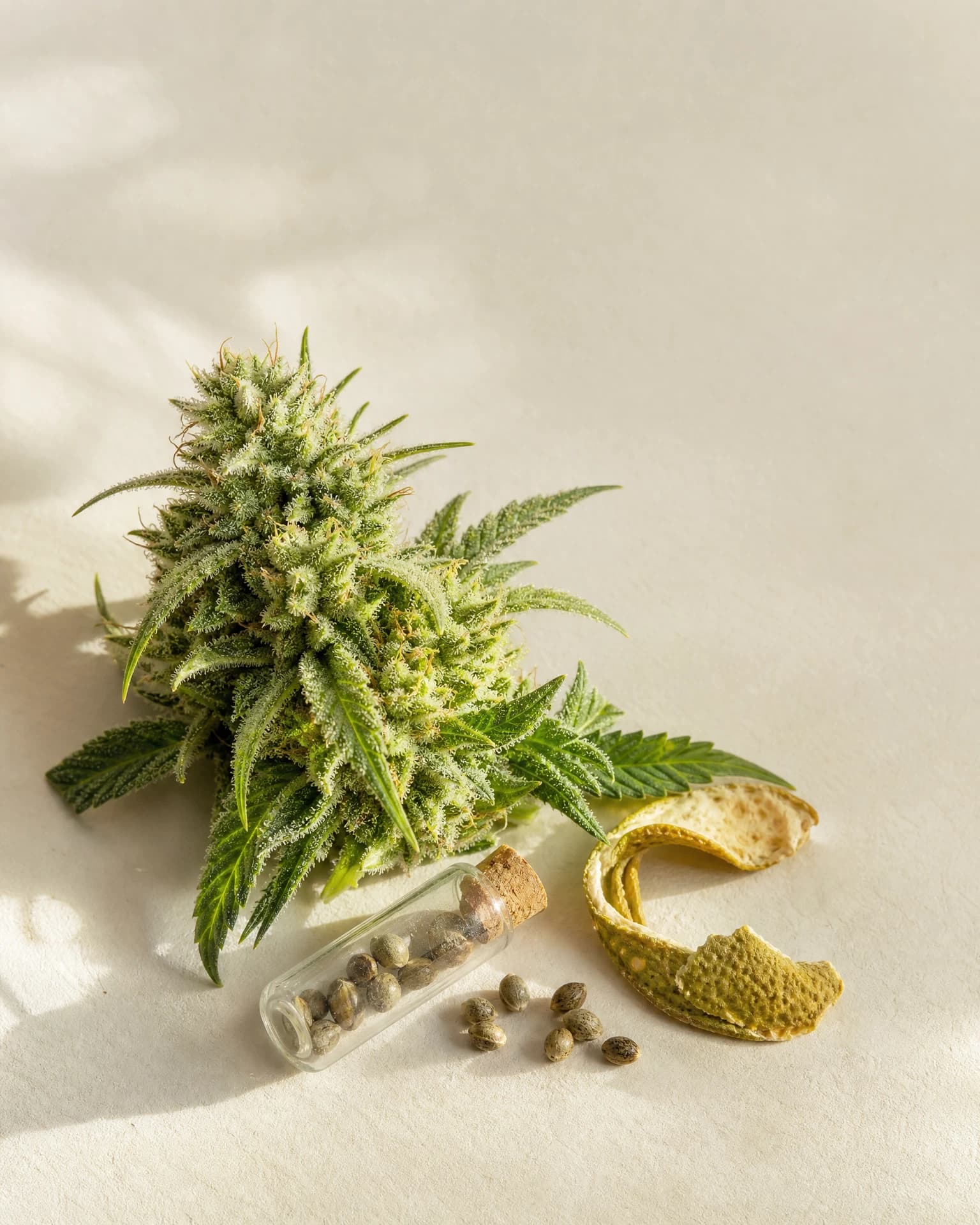
Overview
If you are comparing Bubblegum genetics for a future grow or purchase, start by treating each public product record as a bundle of verifiable claims and gaps. The Seedsupreme product page referenced in this guide lists Bubblegum in a Feminized format and includes a public product description that identifies the cultivar as a Hybrid with High (15–20%) THC and Low (0–1%) CBD. Beyond those specific labels, the page does not provide a full set of cultivation statistics, lineage details, or laboratory certificates in the data kept for this guide.
This article explains what is present in that record, what is not, and—critically—how to compare the missing items across breeder or retailer records so you can make informed choices. It is written for adult readers who need a practical checklist for vetting seed listings, planning a grow, and deciding which additional questions to ask the breeder or retailer before purchase.
Genetics and cultivar background
What the public product record shows
- The referenced seller’s public text identifies the cultivar by name and classifies it as a Hybrid. The record does not include a breeder pedigree, parent-strain names, or a documented crossing history in the supplied fields.
Why genetics and background matter
- Lineage, breeding generation (F1, F2, stabilized line), and parent strains shape expected phenotype range, stability, and trait inheritance. When these fields are missing, expect wider variation among plants and greater uncertainty about predictable structure or flowering behavior.
How to check other breeder/retailer records for useful genetic detail
- Look for explicit parentage: a credible breeder will list both parents and, ideally, describe the generation (for example, an F1 cross, a stabilized variety, or a selection out of many phenotypes). If parent names are absent, treat the record as incomplete.
- Search for a breeder statement about stabilization and selection process: phrases such as “stabilized over X generations,” “backcrossed,” or “phenotype selection” give insight into expected uniformity. If those statements are present, note the number of generations and whether testing was done across multiple runs.
- Seek registration or archival references: reputable strains sometimes appear in breeder catalogs, interviews, or seed-bank archives outside the retailer page. Cross-reference those sources to see if claims are consistent.
- Check for independent genetic testing: some breeders publish genotype fingerprints or SNP-based reports that confirm relationships to known cultivars. If a page lacks this, ask the breeder for any lab reports or third-party genetic work that supports their pedigree claims.
- Note ambiguous or conflicting claims: if different retailers attribute different parentage to the same cultivar name, log both claims and ask the original breeder or originator for clarification. Names are often reused or applied to different selections over time.
How to weigh incomplete pedigree claims
- Prioritize primary-breeder sources over resellers when tracing origin. If the retailer is not the original breeder, they should attribute the breeder and provide a link or contact.
- Treat an unnamed origin or a simple “Hybrid” label as a cue to expect a broader phenotype range and to prepare a flexible grow plan that can accommodate tall or compact plants, early or late flowering, and variable aromas or resin production.
Plant profile and grow planning
What the supplied record lists and what it does not
- The publicly supplied fields note the seed format as Feminized. The product meta description identifies the cultivar as a Hybrid and reports THC and CBD bands in the record’s descriptive text. It does not include standard grow metrics such as photoperiod vs autoflower status beyond the feminized label, flowering time, indoor/outdoor recommendations, typical height, yield estimates, or germination rates.
Interpreting “Feminized” in grow planning
- Feminized seeds are intended to produce predominantly female plants under standard photoperiod conditions. The label alone does not confirm whether a variety is photoperiod or auto-flowering; some breeders sell feminized autoflower seeds as “Feminized Auto.” Because the supplied record only lists “Feminized,” verify photoperiod/autoflower status in the breeder’s full product description or by asking the breeder directly.
- Ask the seller: if the product page lacks an explicit photoperiod designation, request confirmation of whether the plants require a light-cycle change to flower. This is a fundamental operational difference for planning space, lighting schedules, and harvest timing.
Essential grow-plan fields to check in other breeder records
- Flowering time: breeder records usually give a range in weeks for flowering or a typical harvest month for outdoor grows. Compare ranges across sources and note whether they specify early, mid, or late flowering phenotypes.
- Recommended environment: indoor/outdoor greenhouse suitability and climate notes (e.g., tolerant to humidity or dry climates).
- Plant structure: descriptions of node spacing, stretch during flowering, typical final height, and canopy shape help with trellising and training choices.
- Yield estimates: when present, these are often expressed as grams per square meter indoors or per plant outdoors; treat them as approximate and cross-check multiple records.
- Germination and viability: some breeders publish expected germination percentages or sell seeds tested for viability. If the seller’s record lacks this, ask whether the seed lot has been tested.
- Pest, disease, and stress tolerance: records sometimes mention mold resistance or insect resilience; absence is not evidence of vulnerability but is a gap to investigate for high-humidity or outdoor grows.
Designing a grow plan when many fields are missing
- Prepare a flexible training and spacing plan. Use conservative spacing and moderate nutrient inputs until you observe the plant’s vegetative vigor.
- Plan for photoperiod control unless the breeder confirms autoflower behavior.
- Build margin into harvest timing: assume a wider flowering window and stagger planting to avoid losing an entire crop to an unexpected late finish.
- Ask for grower notes or demonstrations: many breeders or retailers will share grow logs, photos, or short cultivation tips for the listed seed run—request these to narrow uncertainties.
Seed handling and seed health checks
- On receipt, visually inspect seeds for uniformity, color, and surface integrity. If the product record makes no germination claim, consider running a small pre-test of a subset of seeds to assess viability before committing space.
- Verify whether the seller provides storage guidance or a viability guarantee, and, if absent, follow standard seed storage best practices: cool, dry, dark conditions in airtight containers.
Aroma and flavor profile
What is present and what isn’t
- The available public description on the referenced record does not provide a terpene profile or sensory tasting notes beyond the cultivar name and hybrid label. No COA (certificate of analysis) or terpene breakdown is supplied in the product fields referenced here.
How to get reliable aroma and flavor data from breeder records
- Look for quantified terpene reports: the most useful records include a COA showing terpene concentrations by name (for example, myrcene, limonene, caryophyllene, etc.). These reports are laboratory documents and usually include the testing lab’s name and date.
- Distinguish between sensory copy and measured data: subjective tasting notes on a product page reflect individual perception and may vary with phenotype and cultivation method. Treat measured terpene percentages as more objective.
- Ask for COAs tied to the specific seed lot or harvest year rather than generic cultivar-level numbers. Terpene content fluctuates with growing practices and harvest conditions; a COA for the same cultivar from a different harvest may not match the batch you receive.
- Compare multiple sources: if several independent breeders or seed banks publish similar terpene profiles for the same cultivar name, that adds confidence. When there is wide disagreement, identify which sources publish COAs and which only offer subjective descriptors.
How to interpret sensory claims on product pages
- Understand that aroma and flavor displayed on a product page without lab data are vendor descriptions. They can be useful for expectation-setting but are not definitive.
- When aroma/flavor is important to your selection, request lab data for cannabinoids and terpene spectra or independent tasting notes from multiple growers who document their cultivation conditions.
Testing and lab document best practices
- When a COA is provided, verify the lab’s credentials: reputable labs will list accreditation or registration details. Check the report date, the exact sample name, and the testing methods used.
- If a vendor refuses to share a COA or provides one that lacks sample identification or a lab signature, consider that a red flag and ask for further documentation.
Reported experience context
What the record allows and what it does not
- The supplied product record does not include user reviews, consumption reports, or guidance on subjective experience. It only identifies the format and lists THC/CBD bands in the public description.
How to read experience reports when you find them elsewhere
- Separate cultivar-intrinsic effects from cultivation and use variables: reported experiences depend on phenotype, plant health, harvest timing, curing, the route of consumption, the consumer’s tolerance, and setting. When reading reports, note the grow conditions and consumption method.
- Look for consistency and reproducibility: multiple independent reports that describe similar outcomes under a variety of reasonable conditions lend weight, but they remain anecdotal.
- Distinguish between phenotype-specific reports and cultivar-level claims: if users mention “the lemon phenotype” or “the purple pheno,” they are referring to a genetic expression within a broader cultivar. Treat these as phenotype-specific observations rather than statements about the cultivar as a whole.
How to document and use experience reports
- Record the key variables: grow environment, feeding regimen, days to harvest, and curing process. When comparing reported experiences, prioritize those accompanied by cultivation details.
- Use controlled comparisons: if possible, compare reports where the only major variable differs (for example, indoor vs outdoor, or early vs late harvest). That isolates how much cultivation affects the reported outcome.
Limitations and recommended skepticism
- Recognize small-sample bias: a handful of social-media posts or forum comments is not the same as aggregated data from many grows.
- Avoid assuming causation from correlation: if several reports suggest the same outcome but all come from a single grower or group following the same method, the result may reflect their technique rather than the cultivar inherently.
How to compare current breeder records
A practical comparison checklist
- Origin and pedigree
- Primary-breeder attribution, parent strain names, generation information (F1/F2/stabilized), and any breeder notes on selection criteria.
- Seed format and classification
- Feminized, regular, autoflower, and a clear photoperiod/autoflower designation.
- Lab certificates
- COAs for cannabinoids and terpenes, including lab name, date, sample identification, and methodology.
- Grow metrics
- Flowering time ranges, indoor/outdoor recommendations, typical heights, and yield estimates. Note whether these are averages or extremes.
- Germination and seed health
- Germination percentage claims, testing method, and storage or viability guarantees.
- Phenotype variability
- Statements on phenotype range and how many phenotypes growers should expect from a single seed run.
- Pack and batch details
- Pack size options, SKU, batch or lot number, and any serial numbers that link to testing documentation.
- Documentation and support
- Availability of grow notes, cultivation guides, and direct breeder contact for follow-up questions.
- Reputation and third-party corroboration
- Independent grow journals, multiple COAs from different harvests, and community consensus where available.
How to weigh and prioritize fields
- Place highest weight on verifiable, third-party documentation (COAs, accredited lab reports, batch-linked germination tests).
- Give secondary weight to detailed breeder-published grow metrics and clearly stated pedigree.
- Give tertiary weight to subjective tasting notes and forum reports; use them to form hypotheses to test under your conditions, not as guarantees.
How to verify claims in practice
- Request COAs that match the specific batch/lot you are buying. Verify lab accreditation and the date of testing.
- Ask for a germination test result or a small viability sample if the seller offers it; some sellers will send an extra seed or offer a germination guarantee.
- Contact the breeder for clarification on ambiguous language. A transparent breeder will provide clear answers and documentation; evasive answers are a red flag.
Red flags and cautionary signs
- Vague or missing batch identifiers when a seller claims specific lab results.
- Lab reports that are undated, unsigned, or that lack the sample name and lot number.
- Product pages that recycle tasting notes across multiple cultivars without specific COAs or breeder documentation.
- Conflicting parentage claims across different vendors with no clear origin point.
A simple comparison template you can use
- Create a table with the following columns: Seller/Breeder, Product Name & SKU, Format (Feminized/Regular/Auto), Pedigree (parents/generation), Flowering Time, Indoor/Outdoor Notes, Height/Yield Estimates, COA link (Y/N + lab name/date), Germination Info, Batch/Lot Number, Support/Documentation Link. Populate this table when researching multiple sources and score each field by the importance you assign (for example, 1–5). This quantitative approach helps cut through marketing language and focus on verifiable differences.
Final advice on decision-making
- Prioritize sellers and breeders that supply primary documentation tied to specific batches. When the record you are viewing—like the one referenced for Bubblegum—provides a limited set of public facts (name, format, and a THC/CBD band), use the checklist above to request the missing pieces before committing significant grow resources. If a breeder is responsive and supplies COAs, germination data, and clear pedigree statements, you gain a defensible basis for selection. If those items remain absent, lean toward flexible grow plans and smaller initial trials to learn the cultivar’s behavior under your conditions.
Frequently asked questions
What is the Bubblegum strain?
This guide summarizes the documented cultivar record while separating verified details from variable grower outcomes.
Is Bubblegum suitable for beginners?
Difficulty depends on the exact seed line, environment, and grow setup. Confirm current breeder guidance.
How long does Bubblegum take to flower?
Flowering windows vary by phenotype and environment. Confirm the estimate for the exact breeder line.
Can Bubblegum be grown indoors and outdoors?
Suitability depends on the breeder line and local climate. Compare space, humidity, temperature, and season length.
Which Bubblegum seed format should I choose?
Autoflower and feminized formats serve different schedules and grow styles. Compare only documented direct records.