
Strain guide
CBD White Widow Strain Guide: Source-backed cultivar record profile and grower notes
A source-aware guide built from Seedsupreme’s public feminized record and practical breeder-comparison context.
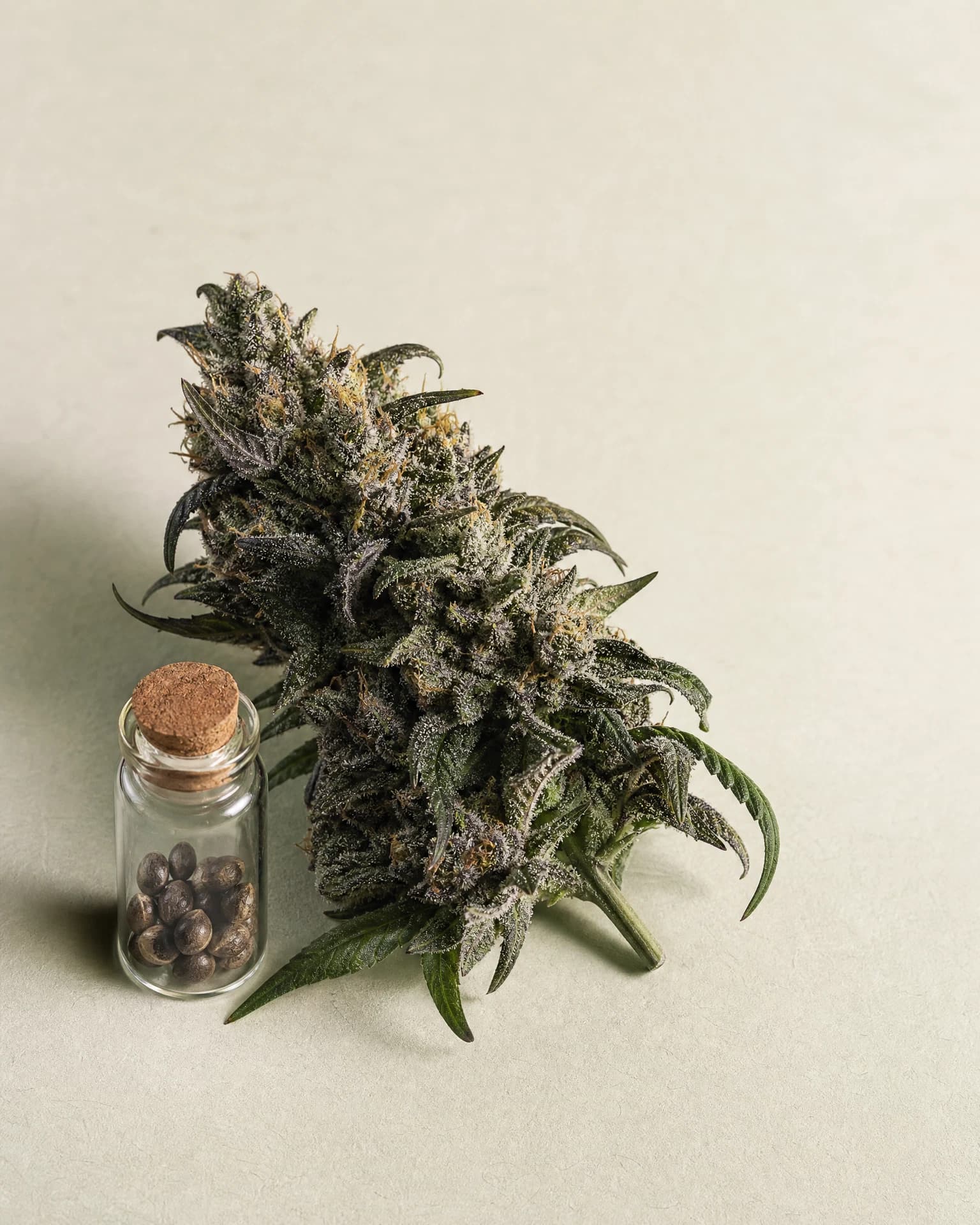
Overview
CBD White Widow genetics are part of a product record listed by SeedSupreme under the label "CBD White Widow." That public listing specifies a Feminized seed format and presents cannabinoid ranges on the product page: THC listed in a 0–5% band and CBD listed in a 5–10% band. The same SeedSupreme record also classifies the cultivar as a Hybrid.
This guide is written to help experienced home growers, professional cultivators, and seed shoppers interpret the public record for this cultivar and compare it to other seed listings. Wherever the available public source does not establish a fact, the text explains the concrete steps you can use to check breeder or retailer records before buying, storing, or planning a grow. The intent is to keep statements strictly bounded to what the supplier’s public record shows and, where that record is silent, to provide reliable methods for checking the missing items.
CBD White Widow genetics
SeedSupreme’s public product page shows a specific combination of labels: a Hybrid classification, a Feminized seed format, and cannabinoid ranges. Do not assume anything beyond those explicit labels — for example, do not assume pack sizes, yield ranges, flowering times, terpene profiles, or specific growth behavior. When you need those, use the comparison checks later in this guide to confirm them from breeder-provided sources.
Genetics and cultivar background
What the SeedSupreme product record shows
- Classification: Hybrid (label taken from the supplier’s public product fields).
- Cannabinoid bands: the product lists THC at a minimum band of 0–5% and CBD at a band described as 5–10%.
- Seed format: Feminized.
What is not established in the public record
- The record does not document parent strains, explicit lineage, breeder name, original cross, or the genetic strategy used to arrive at the cultivar.
- The product page does not include generation details (F1, stabilized line, backcrosses), phenotype descriptions, or genetic markers.
- There is no lab-backed cannabinoid certificate attached to the public listing that confirms those ranges for a specific lot.
How to check genetics and background — stepwise comparison method
- Look for a breeder page or original breeder statement. The most reliable genetic info comes from the original breeder or seed bank that developed the cultivar. If SeedSupreme is acting as a reseller, the breeder’s product page should be linked or cited; if it is not, ask the seller to provide the breeder reference and strain history.
- Request or locate a pedigree chart. Reputable breeders will often publish a lineage summary (e.g., parent A × parent B), and sometimes will include notes on stabilizing crosses or phenotypic selection criteria. If the breeder provides a pedigree, check whether the described parents have documented chemotype data.
- Check public genetic resources and incident reports. Some cultivars have been genetically profiled in independent databases or by third-party laboratories. A named pedigree that appears in multiple independent breeder records or in cultivar registries increases the ability to cross-check claims.
- Confirm what “Hybrid” means in context. “Hybrid” is a broad label. Use the breeder’s detailed description to determine whether it refers to a roughly balanced indica/sativa heritage, a specific cross between two defined parents, or simply a commercial convenience label.
Red flags and verification steps
- No breeder attribution: treat the genetic history as unverified until a breeder source is provided.
- Inconsistent lineage claims across sellers: ask for lab test IDs, lot numbers, or direct breeder confirmation to reconcile differences.
- Missing generation info: if a product is marketed as a stable line, the breeder should be able to explain the generation (F1, F2, etc.) and describe the expected phenotypic spread.
Plant profile and grow planning
What the public record explicitly states
- The seed format is Feminized.
- The public record classifies the cultivar as Hybrid.
What the public record does not state (so you must verify)
- Plant height under different light regimes (indoor vs. outdoor).
- Flowering time and expected harvest window.
- Typical indoor yields per square foot or per plant.
- Preferred cultivation medium (soil, coco, hydroponics) or nutrient schedule.
- Resistance to common pests, molds, or environmental stressors.
- Specifics on training suitability (e.g., topping, low-stress training, SCROG).
How to plan a grow for an incompletely documented cultivar
- Start with the seed format: Feminized. Practical implications include that seedlings should develop as female-only plants under normal photoperiod conditions, eliminating the need to sex plants and remove males for seedless production. Still, confirm with the breeder whether feminization methods were used (e.g., colloidal silver, Rodelization, or chemical treatment during breeding) and whether the breeder reports any residual hermaphroditic tendencies in certain phenotypes.
- Assume uncertainty on size and flowering time. When a cultivar’s public listing does not provide specific dimensions or flowering windows, plan conservatively:
- Allow flexible canopy spacing and support structures that can accommodate a range of plant heights.
- Use adjustable height setups (scrog frames, trellis rings, or adjustable-rack shelves) to handle taller phenotypes without committing to a fixed canopy distance too early.
- Schedule a range of potential harvest dates by monitoring trichome development and pistil progression rather than relying on a published week count.
- Use incremental nutrient and irrigation strategies. If the breeder does not provide a nutrient schedule, adopt a conservative feed regimen:
- Start at 25–50% of manufacturer-recommended nutrient strength for seedlings and small vegetative plants, then increase in small increments while observing plant response.
- Keep EC/ppm targets and pH ranges appropriate to your medium and adjust based on runoff readings and plant appearance.
- Build phenotype observation into your grow plan. For cultivars lacking public phenotype details:
- Tag and photograph each plant daily or every few days to log growth rate, internode spacing, leaf shape, smell, and bract formation.
- If you plan multiple plants, keep at least three to five specimens to observe variation between siblings; this helps determine consistency and the need for phenotype selection in future breeding or seed-saving.
- Prepare for pest and disease management without cultivar-specific resistance information. Since the product record does not list resistance profiles:
- Implement integrated pest management (IPM) baseline controls: clean grow space, insect traps, quarantine for new clones/seeds, and beneficial predator introductions where legal.
- Monitor humidity and airflow to minimize mold risk, and maintain proper sanitation practices.
Scaling and environmental considerations
- If you plan to grow outdoors or in a greenhouse, obtain microclimate data for your site and plan for seasonality. Because the listing does not provide flowering schedules or frost sensitivity, choose planting dates with a margin for extended maturation.
- For indoor grows, maintain flexibility in light schedules and plant spacing, and plan for a few extra weeks in case phenotypes take longer than typical flowers to finish.
Documentation and record-keeping
- Keep detailed grow logs that include germination date, transplant dates, veg duration, flowering start, nutrient feeds, pest incidents, and final harvest metrics. This record will be particularly valuable when growing a cultivar whose public record lacks performance data.
Aroma and flavor profile
What the public record provides
- The SeedSupreme page does not include a sensory description (terpene profile, aroma, or flavor notes) in its public product fields.
Why a documented terpene/ aroma profile matters
- Terpene profiles inform aromatic characteristics and can be correlated with consumer descriptions such as citrus, earthy, or floral. Those profiles also guide expectations in pairing and selection for personal preference.
- Terpene analysis typically requires lab testing (GC-MS or similar) on finished flower rather than seed-stage documentation.
How to assess aroma and flavor claims when the supplier record is silent
- Seek lab reports with terpene data. The clearest way to move beyond anecdote is to find a certificate of analysis (CoA) from a third-party lab that lists terpene concentrations. Ideally, the CoA should reference a lot number or batch ID that matches the seed packet or the breeder’s batch.
- Compare multiple CoAs where available. Terpene expression can vary by phenotype and cultivation conditions. If a breeder provides multiple test results across batches, use the range as a practical guide rather than a single data point.
- Read breeder-provided sensory notes cautiously. Breeder tasting notes are useful for direction but are subjective. Treat them as starting points and weigh them against lab terpene data when making decisions.
- Use phenotype observation during early growth. While full terpene development happens in late flower and curing, early resin and leaf scent can indicate dominant aromatic families that you can confirm later with lab tests.
How to document aroma and flavor in your own grows
- When you cultivate a strain without a supplied aroma profile, keep a sensory log during late flower and after proper curing, noting dominant scent families and perceived flavor. This personal documentation helps you compare the cultivar’s actual aromatics to breeder descriptions once available.
Reported experience context
What the public listing states
- The SeedSupreme product page gives cannabinoid bands (0–5% THC; 5–10% CBD) and a Hybrid classification, but it does not contain a section on user experiences, effects, or medical outcomes.
How to handle reported experiences and anecdotal reports responsibly
- Distinguish between anecdote and verified data. Forums, social media, and reviews often contain user reports about a cultivar’s effects, but these are influenced by grow conditions, phenotype variation, harvest time, and individual physiology. Treat them as subjective observations rather than generalizable facts.
- Look for patterns across independent sources. Single anecdotal comments are weak evidence. If multiple independent reports consistently describe similar experiences and those reports originate from different grows and labs, the pattern becomes more informative—though still not a substitute for controlled testing.
- Check for linking details in reports. More useful reports will include cultivation conditions, harvest dates, curing method, and whether lab tests were performed. Reports that provide CoA links or explicit batch identifiers allow for cross-verification.
- Use chemotype comparisons instead of effect labels. Since the public vendor listing provides cannabinoid bands, you can compare reported experiences against the chemotype bands published by labs. Similar cannabinoid and terpene profiles often correlate with similar subjective descriptions, but many confounding factors remain.
Interpreting cannabinoid bands in context
- The SeedSupreme listing’s cannabinoid bands can be used as a preliminary chemotype signal: the cultivar is listed with low THC (0–5%) and higher CBD (5–10%) ranges. If confirmed by a CoA for a given batch, that chemotype suggests a CBD-dominant profile. To verify for a given seed lot or harvested batch, always request the lab certificate associated with the seed lot or the harvested flower.
Ethical and legal considerations for reported experiences
- When using user reports to inform choices, consider jurisdictional legal limits and avoid interpreting anecdotal material as medical advice. For any therapeutic intent, rely on licensed healthcare professionals and documented clinical evidence rather than anecdote.
How to compare current breeder records
Why comparison matters
- A single public listing often provides only a partial picture. Comparing multiple breeder records or the same cultivar across several retailers reduces the risk of relying on incomplete or ambiguous data. Comparison allows you to triangulate reliable details such as pedigree, chemotype, flowering time, and pack-size policies.
A practical step-by-step comparison workflow
- Start with the official breeder source. Identify the breeder’s official page for the cultivar. If SeedSupreme is reselling, request a link to the original breeder or ask for explicit attribution. The original breeder’s page is typically the primary source for pedigree, generation, and stabilization claims.
- Gather product pages from at least three independent sources. Collect public product pages from the breeder and two additional reputable seed banks or resellers. Note differences in labels (e.g., “Hybrid” vs. more specific indica/sativa split), cannabinoid ranges, and any extra verifiable materials such as CoAs.
- Request or find lab certificates (CoAs) tied to lot numbers. The single strongest evidence for cannabinoid or terpene claims is a third-party lab report that references a lot number and an identifiable sample date. Prefer CoAs that specify sample preparation, analytical method, laboratory accreditation, and sample origin.
- Compare germination and viability data. Look for published germination test reports (e.g., 10-seed germination tests) or warranty policies. If multiple sellers list different germination rates for ostensibly the same lot, contact the breeder to reconcile or request the latest test data.
- Align phenotype descriptions and flowering windows. Where available, collect flowering time estimates and typical plant dimensions. Note the range rather than a single number, as breeders often report different outcomes for different phenotypes or growing environments.
- Note any discrepancies in feminization or autoflower claims. If one seller lists feminized and another lists regular or autoflower for the same cultivar name, obtain batch numbers and breeder confirmation.
- Check historical records and community archives. Sometimes breeder claims evolve; archived product pages, breeder updates, or community databases can show whether a cultivar has been re-stabilized or re-released with a new genetic profile.
Evaluating the credibility of information
- Prefer primary-source CoAs and breeder statements with batch identifiers.
- Be cautious with bare product labels that repeat a cultivar name without backing details.
- Favor suppliers who provide transparent documentation (pedigree, CoA, germination tests) and clear contact pathways for questions.
Specific checks to request from sellers
- Copy of the most recent CoA with batch/lot number that corresponds to the seeds you will receive.
- Germination test results for the lot or a germination guarantee policy.
- Clear pack-size and quantity labeling; if the product page is ambiguous (e.g., a field labeled "Qty"), ask the seller to confirm what your order will contain.
- Breeder attribution and pedigree details if lineage or breeding rights matter to your intended use.
Interpreting conflicting information
- If breeders or resellers disagree on basic facts (e.g., THC/CBD bands, feminized vs. regular), prioritize the breeder’s official record and any linked CoAs. If the breeder is unreachable or offers no documentation, treat the cultivar’s claims as unverified.
- Use date stamps on CoAs and product pages to establish which claim is most recent; genetic lines and breeding strategies change over time, so more recent documentation can reflect updated stock.
Maintaining a decision checklist
- Before purchasing, use a checklist that includes: breeder confirmation, CoA with lot ID, pack-size clarity, germination policy, feminization confirmation, and clear anecdotal/lab-backed information about flowering time and phenotype spread. Only proceed when the documentation meets your needs or when you have a contingency plan for unverified attributes.
Closing notes on responsible use of the public record
- The SeedSupreme product page provides specific labels — Feminized, Hybrid, and cannabinoid bands — which are useful starting points. However, the page does not supply definitive performance metrics, lineage detail, or sensory and cultivation specifics. Use the comparison methods above to obtain the missing information, and always request batch-specific CoAs and breeder confirmations for matters such as cannabinoid percentages, terpene profiles, germination expectations, and feminization reliability.
This guide is designed to help you interpret what the supplier’s public record states and to give practical steps to fill gaps with verifiable data from breeders and labs. When planning a grow or purchase, ground your decisions in documented evidence tied to specific seed lots rather than inferences from a cultivar name alone.
Frequently asked questions
What is the CBD White Widow strain?
This guide summarizes the documented cultivar record while separating verified details from variable grower outcomes.
Is CBD White Widow suitable for beginners?
Difficulty depends on the exact seed line, environment, and grow setup. Confirm current breeder guidance.
How long does CBD White Widow take to flower?
Flowering windows vary by phenotype and environment. Confirm the estimate for the exact breeder line.
Can CBD White Widow be grown indoors and outdoors?
Suitability depends on the breeder line and local climate. Compare space, humidity, temperature, and season length.
Which CBD White Widow seed format should I choose?
Autoflower and feminized formats serve different schedules and grow styles. Compare only documented direct records.