
Strain guide
Critical Strain Guide: Citrus aroma and grower notes
Critical is documented here with partner-source cultivar context, seed-format availability, and secondary-topic research cues.
Overview
The record for the cultivar known as Critical describes a hybrid plant that is characterized by a tall structure and a relatively brief flowering window. According to the available breeder data, the critical flowering time for this specific variety typically falls within a range of six to nine weeks. This window is considered standard for many modern hybrids that aim to balance development speed with the maturation of chemical profiles. The documentation indicates that the plant is available in several distinct seed formats, including feminized photoperiod seeds, autoflowering versions, and fast-flowering variants. These options cater to different cultivation environments and timelines, though the core botanical identity remains centered on its hybrid nature. The data suggests that the plant exhibits vigorous growth patterns and possesses a high-yield potential, which is a common goal in the selection and stabilization of commercial-grade cultivars.
Understanding a breeder record requires a careful look at the specific metrics provided. In the case of this cultivar, the tall structure mentioned in the profile implies a specific set of requirements for space management and light penetration. When a record lists a plant as tall, it generally indicates that the vegetative phase may involve significant vertical stretching, a trait often inherited from its ancestral lineage. The hybrid classification further suggests that the plant carries a mix of traits, though the record does not specify the exact ratio of indica to sativa influence. Instead, the focus remains on the observable physical characteristics and the documented flowering cycle. By examining the provided details, a researcher can begin to form a picture of how this cultivar might behave in a controlled environment, provided they account for the inherent variability mentioned in the source caveats.
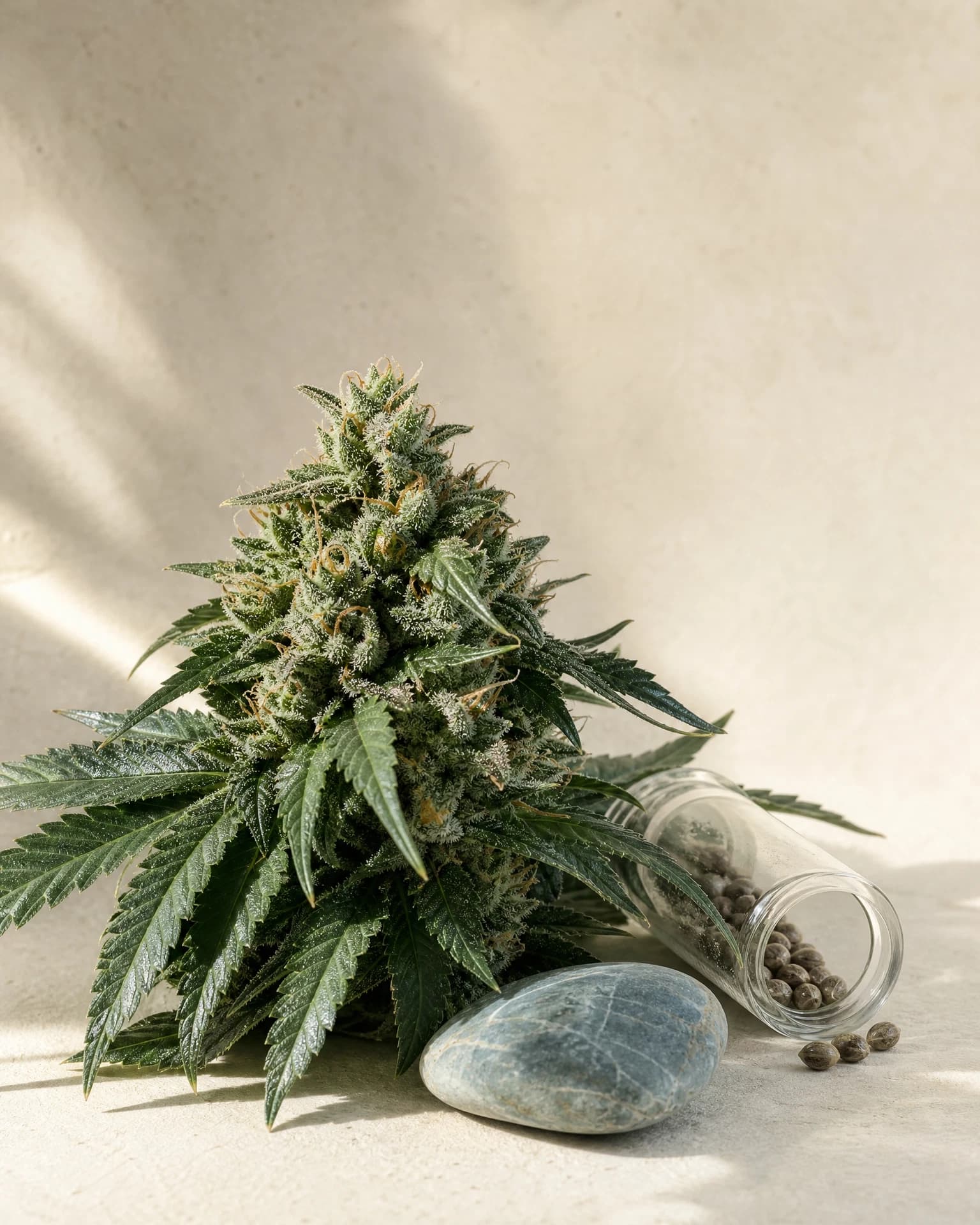
The available documentation also highlights the presence of large, dense buds as a primary feature of the matured plant. This physical attribute is often linked to the high-yield potential noted in the verified facts. However, the density and size of the flowers introduce specific physical needs, such as the requirement for structural support during the final stages of the flowering process. This detail is a practical observation that informs how the plant should be managed as it nears harvest. Without such support, the weight of the developing buds might exceed the capacity of the branches to remain upright. This type of technical information is a staple of breeder records, offering a glimpse into the practical realities of working with a specific genetic line.
Genetics and cultivar background
The genetic foundation of the Critical strain is typically reported as a cross between Critical Mass, which itself is a combination of Afghani and Skunk #1. This lineage places the cultivar within a well-established family of hybrids known for their reliability and specific growth characteristics. The Afghani component generally contributes to the plant's structural integrity and resin production, while the Skunk #1 influence is often associated with the vigorous growth and aromatic complexity found in the resulting offspring. However, it is essential to recognize that the term "Critical" is used by various breeders to describe slightly different genetic configurations. The record notes that the specific lineage can vary depending on the source of the seeds. For instance, one prominent version of the cultivar is documented to incorporate White Widow genetics, adding another layer of complexity to its background.
This variation in genetic makeup is a common feature in the seed industry. When a cultivar becomes popular, different breeders may attempt to recreate or improve upon the original by introducing new parents into the cross. The inclusion of White Widow genetics in some versions suggests a shift toward different resin profiles or perhaps a change in the plant's overall height and flowering speed. Because the record identifies multiple possible lineages, a researcher must treat the name "Critical" as a category rather than a single, uniform entity. The differences between an Afghani x Skunk #1 cross and a White Widow-influenced variant can be significant, affecting everything from the specific terpene ratios to the plant's response to environmental stressors.
Furthermore, the introduction of autoflowering traits adds another dimension to the genetic background of this cultivar. The record states that autoflower variants use Lowryder or other ruderalis crosses to achieve their non-photoperiod-dependent flowering cycle. Ruderalis is a subspecies of cannabis that has adapted to shorter growing seasons by flowering based on age rather than changes in light exposure. By crossing a standard hybrid with a ruderalis variety, breeders can produce seeds that retain many of the original cultivar's characteristics while adopting the automatic flowering trait. This process necessarily alters the genetic profile, as the ruderalis influence can impact the final size of the plant and the concentration of various cannabinoids. The record clearly indicates that these variations are a standard part of the current market for this cultivar.
Plant profile and grow planning
The plant profile for this cultivar is defined by its tall structure and vigorous growth. These traits suggest that the plant is capable of rapid development during both the vegetative and flowering phases. For those planning a cultivation cycle, the height of the plant is a primary consideration. A tall cultivar requires sufficient vertical space to prevent the upper canopy from becoming too close to light sources, which can lead to heat stress or light burn. In indoor settings, this may necessitate the use of specific training techniques or a shorter vegetative period to keep the final height manageable. The vigorous growth mentioned in the record implies that the plant is efficient at processing nutrients and expanding its root system, which supports the development of a large frame capable of bearing a significant harvest.
High-yield potential is another key aspect of the plant profile. This term indicates that under optimal conditions, the cultivar is capable of producing a large volume of dried flower relative to its size and the length of its growing cycle. However, the record also points out that the large, dense buds produced by this plant often require structural support. As the flowering phase progresses and the buds gain mass, the branches may begin to sag or even break under the weight. Planning for this requirement involves the use of stakes, nets, or other support systems that can be integrated into the grow space. This is a technical necessity for maintaining the health of the plant and ensuring that the flowers reach their full potential without being damaged by physical failure of the plant structure.
The flowering context of six to nine weeks provides a timeframe for the final stage of the plant's life. This range allows for some variation depending on the specific phenotype and the environmental conditions provided. A shorter flowering time of six weeks would represent a very fast maturation process, while a nine-week cycle allows for a more extended period of resin development and bud swelling. When planning a grow, it is useful to prepare for the full nine-week window to ensure that the plant has enough time to complete its biological processes. The mention of "fast-flowering" versions in the record suggests that some selections have been made specifically to favor the shorter end of this spectrum, providing an option for those who prioritize speed in their production cycle.
Aroma and flavor profile
The aromatic profile of the Critical cultivar is described as being dominated by citrus and fruity notes, which are often the first scents noticed when handling the dried flowers. These bright, acidic aromas are frequently accompanied by earthy or skunky undertones, creating a complex sensory experience. In the context of cannabis chemistry, these scents are the result of specific terpenes produced in the resin glands of the plant. While the record does not list individual terpenes by name, the description of citrus and fruit strongly suggests the presence of compounds that are common in many hybrid varieties. The earthy and skunky elements provide a grounding contrast to the lighter fruit notes, reflecting the plant's Afghani and Skunk #1 heritage.
Understanding how these flavors are reported involves looking at the consensus across multiple retailer records. The fact that citrus and fruity profiles are consistently mentioned indicates that these are stable traits within the various versions of the cultivar. However, the intensity of these aromas can be influenced by the specific growing conditions and the methods used for drying and curing the harvest. An earthy profile often suggests a more traditional cannabis scent, one that is deeply rooted in the history of the Skunk and Afghani lines. The skunky undertone is a classic marker of certain genetic families, often associated with a pungent and lingering aroma that can be quite distinct even in small quantities.
When evaluating a cultivar based on its flavor profile, it is important to remember that the experience of taste is closely linked to the aromatic compounds present in the plant. A fruity and citrus-forward profile typically translates into a bright and tangy flavor when the material is consumed. The earthy and skunky notes add a savory or musky quality to the overall taste, providing a multi-layered profile that many researchers find interesting. The record provides these details as a general guide to what one might expect from the cultivar, but the exact expression of these traits will always depend on the specific breeder's version and the individual plant's development.
Reported experience context
The reported experience context for this cultivar is heavily influenced by the wide range of THC levels documented in the record. According to the caveat, THC concentrations can range from as low as 13% to over 25%. This significant variance is a direct result of the different breeder versions and seed formats available on the market. A plant with 13% THC may offer a very different experience compared to one that exceeds 25%, highlighting the importance of knowing the specific source of the genetics. The record does not provide a list of specific effects, as these are often subjective and can vary between individuals. Instead, it focuses on the measurable chemical potential of the cultivar as reported by various retailers.
The variation in potency is also linked to the genetic lineage and the specific type of seed used. For example, the record notes that autoflower variants, which include ruderalis genetics, may have different cannabinoid profiles compared to their photoperiod counterparts. The inclusion of White Widow genetics in some versions could also push the THC levels toward the higher end of the reported range. Because the record spans a wide spectrum of potency, it serves as a reminder that the name of a cultivar is not always a guarantee of a specific strength. A researcher must look at the data provided by the individual breeder to understand the likely potency of a particular batch of seeds.
In the absence of detailed effect reports, the chemical data provided serves as the primary basis for understanding the potential experience. A hybrid cultivar with a citrus and earthy profile and a broad THC range is a versatile subject for study. The wide range of 13% to 25% suggests that there are versions of this cultivar suited for different needs and preferences. Whether a researcher is looking for a more moderate profile or a highly potent one, the documentation indicates that both are possible within the "Critical" category. This highlights the need for careful selection and verification when dealing with cultivars that have multiple established versions in the commercial market.
How to compare current breeder records
When researching a cultivar like Critical, it is important to understand how to evaluate and compare the various breeder records that are available. A breeder record is a summary of the expected traits of a plant, but it is not a set of absolute certainties. Instead, it represents the average results observed by the breeder during the development and testing of the seeds. When comparing records from different sources, a researcher should look for areas of consensus as well as points of disagreement. For this cultivar, the consensus includes the citrus aromatic profile and the fast flowering time, while the disagreements center on the exact lineage and the range of THC potency.
One of the first things to check in a breeder record is the transparency of the lineage information. As seen in the documentation for this cultivar, some sources cite an Afghani x Skunk #1 cross, while others mention the inclusion of White Widow. A record that provides detailed ancestral information is generally more useful than one that simply uses a popular name. Additionally, the reported THC levels should be viewed as a potential range rather than a single fixed number. The fact that this record shows a range from 13% to 25% is a sign of honesty, as it acknowledges the natural variability that occurs in biological systems. A record that claims a single, very high number without any context may be less reliable than one that provides a realistic spectrum.
Technical details such as flowering time and plant structure should also be cross-referenced. If multiple retailers report a flowering time of six to nine weeks, it is likely that the cultivar is indeed fast-maturing. However, if one source claims a much shorter or longer time, it may indicate a different phenotype or a less stable genetic line. Researchers should also look for specific cultivation advice, such as the need for structural support mentioned in this record. These practical details are often the result of direct observation and can be incredibly valuable for planning. By carefully analyzing these records and looking for consistent patterns, a researcher can make more informed decisions about which version of a cultivar best fits their needs.
The information provided in this guide is derived from a specific set of retailer records and breeder documentation. These sources provide a snapshot of how the Critical cultivar is presented in the current market, but they also highlight the inherent limitations of such data. The most significant limitation is the variability in lineage and potency, as noted in the source caveat. Because different breeders use the same name for different genetic crosses, the facts associated with one version may not apply to another. This is particularly true for the THC range, which varies significantly depending on the specific breeder's selection and the seed format used.
The data also contains several unknown fields that should be acknowledged. For example, the record does not provide a detailed breakdown of the terpene profile beyond the general descriptions of citrus, fruit, earth, and skunk. While these terms are useful, they do not offer the precision of a laboratory analysis showing the exact percentages of compounds like limonene or myrcene. Similarly, the specific ratio of indica to sativa genetics is not explicitly stated, though the hybrid classification and tall structure provide some clues. The absence of these details means that a researcher must rely on the observable traits and the general categories provided by the retailers.
Ultimately, the record caveats serve as a reminder that a breeder record is a starting point for research, not the final word. The caveat regarding the White Widow cross mentioned in the record and the use of Lowryder in autoflower variants is a central piece of information that informs the entire guide. It explains why the potency and lineage are not uniform and why the plant's characteristics can vary so widely. By stating these limits plainly, the guide provides a more accurate and responsible overview of the cultivar. Researchers are encouraged to use the provided source URLs to dive deeper into the specific offerings of each retailer and to verify the claims against their own observations and needs. The goal is always to build a complete picture of the cultivar, grounded in the best available evidence and mindful of the inherent variability of the modern cannabis seed market.
The record emphasizes that the cultivar is recognized for its vigorous growth and high-yield potential, producing large, dense buds that often require structural support. This information is consistent across multiple sources, suggesting it is a reliable trait of the Critical line. The flowering context of 6 to 9 weeks is also a well-supported fact, providing a clear timeframe for the maturation of the flowers. However, the variation in seed formats—from feminized photoperiod to autoflower—means that the cultivation experience can differ significantly. By keeping these source-based distinctions in mind, a researcher can better manage the options available and choose a version of the cultivar that aligns with their specific goals.
In conclusion, the data for the Critical cultivar presents a picture of a versatile and productive hybrid, but one that requires careful attention to detail due to its genetic variability. The tall structure and large buds are defining physical traits, while the citrus and earthy aroma defines its sensory profile. The wide range of THC levels and the different seed formats offer flexibility but also require the researcher to be diligent in their selection process. By relying on the verified facts and acknowledging the documented caveats, this guide provides a solid foundation for understanding the Critical cultivar as it exists in the current breeder and retailer documentation. The focus remains on the evidence provided, ensuring that all claims are grounded in the specific record at hand.
When a breeder record describes a cultivar as having "vigorous growth," it is important to understand the biological implications of this claim. Vigorous growth typically refers to the plant's metabolic efficiency—its ability to rapidly convert light, water, and nutrients into biomass. This is a desirable trait in both the vegetative and flowering phases, as it allows the plant to establish a strong structural foundation quickly and then transition into productive flower development. However, vigor can also mean that the plant is more demanding of its environment. A fast-growing plant may require more frequent watering and a more precise nutrient regimen to avoid deficiencies. It also means that any mistakes in the growing environment—such as a sudden drop in temperature or an imbalance in pH—can have a more immediate impact on the plant's health.
The concept of "high-yield potential" is another term that requires careful interpretation. In the context of a breeder record, this potential is usually measured under ideal conditions, where every factor from light intensity to CO2 levels is optimized. For the average researcher or grower, the actual yield may vary depending on their specific setup and skill level. The mention of "large, dense buds" in the record is a physical explanation for where this yield comes from. Density refers to the concentration of floral material within a given volume, and it is a key factor in the final weight of the harvest. However, density also increases the risk of moisture-related issues, such as mold or mildew, especially if the air circulation is not adequate. This is why the technical detail about structural support is so important—it is not just about keeping the plant upright, but also about maintaining the spacing and airflow necessary for healthy bud development.
The seed formats—feminized, autoflower, and fast-flowering—each represent a different way of interacting with the plant's genetics. Feminized seeds are the result of a breeding process that eliminates the male chromosome, ensuring that every seed has the potential to produce flowers. This is a significant advancement in the seed market, as it removes the need to identify and remove male plants, which do not produce the desired floral material. Autoflower seeds, by incorporating ruderalis genetics, bypass the need for a light-cycle change. This is a fundamental shift in the plant's biology, as it ties the transition to flowering to a chronological clock rather than an environmental one. Fast-flowering seeds are often the result of crossing a photoperiod plant with an autoflower, resulting in a plant that still requires a light-cycle change but matures much faster than a standard photoperiod variety. Understanding these technical distinctions is essential for anyone looking to research a cultivar like Critical, as the choice of format will dictate the entire timeline and management strategy of the cultivation project.
The role of caveats in breeder records cannot be overstated. A caveat, like the one provided for this cultivar, is a vital piece of context that helps to manage expectations. When a record states that lineage and potency vary, it is a reminder that the name of a cultivar is often a brand or a category rather than a single, genetically identical clone. The fact that one breeder's version includes White Widow genetics while others do not is a perfect example of this. These differences can lead to variations in the chemical profile, the physical structure, and the overall resilience of the plant. A responsible researcher will always look for these caveats, as they provide a more realistic and nuanced view of what the seeds will actually produce. By acknowledging the limits of the data and the potential for variation, the researcher can better prepare for the range of outcomes that are possible when working with a living, biological system.
Finally, the importance of source URLs in a breeder record is to provide a path for further verification. Each retailer may have slightly different data based on their own testing or the specific batch of seeds they are currently selling. By following these links, a researcher can see the most up-to-date information and compare it against the summary provided in the guide. This process of cross-referencing is a hallmark of good research, ensuring that the information being used is both current and comprehensive. In the case of Critical, the provided URLs offer a wealth of additional context, from specific breeder histories to detailed customer feedback, all of which can help to fill in the gaps left by the summary record. The goal is always to build a complete picture of the cultivar, grounded in the best available evidence and mindful of the inherent variability of the cannabis market.
Given the variability documented in the records for the Critical cultivar, there are several important research questions that a prospective buyer or researcher should consider. The first set of questions should focus on the specific genetic version being offered. Since the lineage can vary between an Afghani x Skunk #1 cross and a White Widow cross, it is important to ask which specific parents were used to create the seeds in question. This information can provide a better understanding of the plant's likely physical traits and chemical profile. Knowing the exact ancestry can also help in predicting how the plant might respond to different environmental factors, such as humidity or temperature fluctuations.
Another area for research involves the stability of the seed format. For those considering autoflower or fast-flowering versions, it is worth asking about the number of generations the line has been stabilized. A more stable line will produce plants that are more uniform in their growth and potency. In contrast, a less stable line may show a wider range of phenotypes, which could lead to unexpected results in the garden. Researchers should also inquire about the specific testing methods used to determine the THC range. Understanding whether the 13% to 25% range represents a single batch or an average across multiple years can provide better context for the reported potency.
Finally, questions regarding the plant's structural needs are essential. The record mentions that the large, dense buds often require support, but it does not specify which methods are most effective. Researching different support systems—such as trellis netting versus individual stakes—can help in preparing the grow space. Additionally, asking about the plant's nutrient requirements during the vigorous growth phase can ensure that it has the resources it needs to reach its high-yield potential. By asking these targeted questions, a researcher can move beyond the basic information provided in a breeder record and gain a more comprehensive understanding of the cultivar's requirements and potential.
Frequently asked questions
What is the Critical strain?
This guide summarizes the documented cultivar record while separating verified details from variable grower outcomes.
Is Critical suitable for beginners?
Difficulty depends on the exact seed line, environment, and grow setup. Confirm current breeder guidance.
How long does Critical take to flower?
Flowering windows vary by phenotype and environment. Confirm the estimate for the exact breeder line.
Can Critical be grown indoors and outdoors?
Suitability depends on the breeder line and local climate. Compare space, humidity, temperature, and season length.
Which Critical seed format should I choose?
Autoflower and feminized formats serve different schedules and grow styles. Compare only documented direct records.