
Strain guide
Do-si-dos Strain Guide: Earthy aroma and grower notes
Do-si-dos is documented here with partner-source cultivar context, seed-format availability, and secondary-topic research cues.
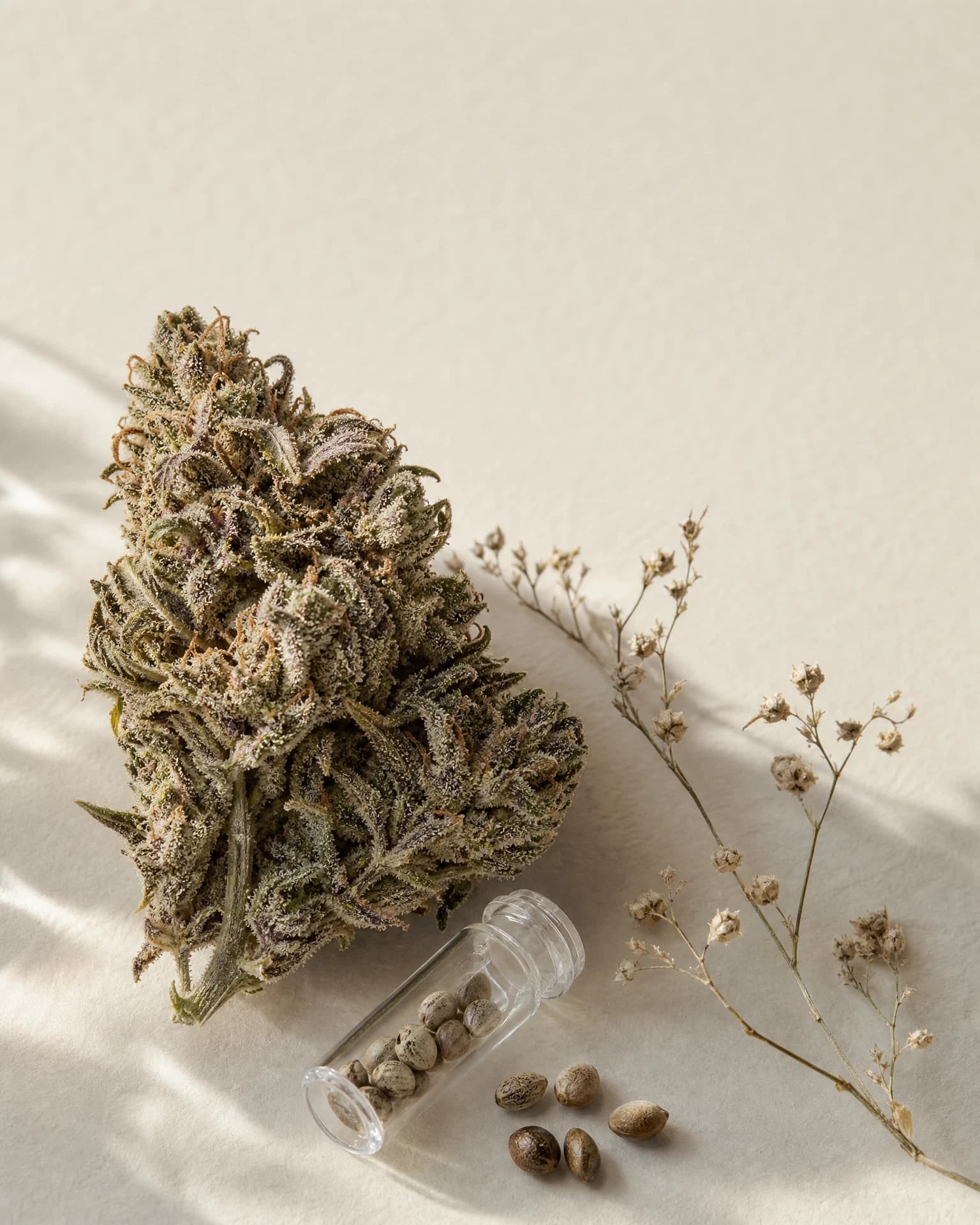
Overview
The study of specific cannabis cultivars requires a disciplined approach to data interpretation, particularly when navigating the diverse documentation provided by various seed banks and retailers. The cultivar known as Do-Si-Dos serves as a primary example of how a single name can encompass a range of technical specifications depending on the source of the genetic material. This indica-leaning hybrid is widely recognized in the current market for its distinct physical characteristics and its availability across multiple cultivation formats. When examining a breeder record for this cultivar, one finds a set of core attributes that define its identity, yet these attributes often exist within a spectrum of reported values. Understanding these values is not merely about identifying the plant's traits but also about recognizing the limits of the available evidence.
A comprehensive look at the record for the Do-Si-Dos strain reveals a plant that is consistently described as having an indica-dominant profile, typically falling within the sixty-five to seventy percent range. This genetic leaning influences almost every aspect of the plant's development, from its physical stature to its flowering requirements. The documentation indicates a flowering window of eight to ten weeks, a timeframe that is standard for many modern hybrids but requires careful management to optimize results. Furthermore, the physical structure of the plant is described as short to medium, reaching an approximate height of one and a half meters. This compact nature, combined with the production of dense, resinous buds, makes it a subject of interest for those who prioritize space efficiency and specific morphological traits.
In the broader context of cultivar research, the availability of various seed formats—including feminized, autoflowering, and regular versions—highlights the versatility of the genetic line. Each of these formats carries its own set of technical considerations and grower requirements. For instance, the presence of autoflowering versions suggests a modification of the original photoperiod-dependent genetics to include traits that allow for flowering based on age rather than light cycle changes. Meanwhile, the existence of regular seeds points toward the preservation of the original genetic lineage for further breeding or selection. By analyzing these formats alongside the reported THC levels, which vary significantly from nineteen percent to as high as thirty percent, researchers and growers can gain a clearer picture of the cultivar's potential variability.
Genetics and cultivar background
The genetic foundation of the Do-Si-Dos strain is primarily rooted in a cross between two well-known cultivars: Girl Scout Cookies (GSC) and Face Off OG. This combination is what gives the cultivar its characteristic indica-leaning profile. Within the field of cannabis genetics, the term "indica-leaning" refers to the dominance of traits traditionally associated with Cannabis indica, such as broader leaves, a shorter growth habit, and a specific chemical composition. The reported sixty-five to seventy percent indica dominance in this cultivar suggests a stable inheritance of these traits, although the remaining thirty to thirty-five percent sativa influence should not be overlooked as it contributes to the overall complexity of the plant's genetic makeup.
However, a closer inspection of various breeder records reveals a slight disagreement regarding the exact lineage. While the majority of sources cite the GSC x Face Off OG cross, at least one major retailer, Homegrown Cannabis Co., references a lineage of Face Off OG x OG Kush Breath. It is worth noting that OG Kush Breath is itself considered a phenotype of Girl Scout Cookies. This distinction is subtle but important for those interested in the precise genetic history of the plant. A phenotype represents the observable characteristics of an individual resulting from the interaction of its genotype with the environment. In the case of OG Kush Breath, it may express certain traits more strongly than the standard GSC line, which could in turn influence the resulting Do-Si-Dos offspring.
Understanding these genetic nuances is essential for any serious study of a cultivar. The variation in reported lineage highlights a common challenge in the industry: the lack of a centralized, standardized registry for cannabis genetics. Instead, information is disseminated through a decentralized network of breeders and retailers, each of whom may have their own internal naming conventions or specific selections of a given line. When a record mentions "breeder-specific variations" such as Alaskan Do-Si-Dos or "Fast" versions, it indicates that the original genetics have been further selected or crossed to emphasize certain traits, such as cold resistance or a shorter flowering time. These variations are not identical to the "house version" of a strain but are instead specialized branches of the same genetic tree.
The role of Face Off OG in this lineage is also significant. As a potent OG Kush descendant, Face Off OG is often credited with contributing to the resin density and the "compact" structure mentioned in the plant's profile. When combined with the sweet and earthy characteristics of the GSC line, the resulting hybrid aims to balance the best of both parents. However, without a single authoritative source, the researcher must weigh the evidence from multiple records, acknowledging that the "Do-Si-Dos" name may represent a family of related genotypes rather than a single, uniform clone. This genetic diversity is a hallmark of modern polyhybrids, which are the result of multiple generations of crossing and selection.
Plant profile and grow planning
The physical manifestation of the Do-si-dos genetics' genetic potential is a plant of short to medium stature, typically topping out at around one and a half meters. This height makes it a manageable option for various environments, though its compact and dense structure necessitates specific planning. A "compact" plant structure usually implies short internodal spacing—the distance between the points on the stem where leaves and branches emerge. This leads to a thick canopy that can trap moisture and limit light penetration if not properly managed. Growers must consider these factors when designing their space, ensuring that there is sufficient airflow to prevent stagnant air pockets within the dense foliage.
One of the most striking visual features reported for this cultivar is the development of purple or lavender hues in the buds and leaves. The record notes that these colors often emerge when the plant is exposed to cooler temperatures. This phenomenon is caused by the presence of anthocyanins, a group of water-soluble vacuolar pigments that can appear red, purple, or blue depending on the pH. In many cannabis cultivars, these pigments are masked by the green of chlorophyll but become visible as chlorophyll breaks down or as the plant responds to environmental stress, such as a drop in temperature during the late flowering stage. Planning for this visual expression requires the ability to precisely control the environment, specifically the nighttime temperatures in the final weeks of the cycle.
The do-si-dos flowering time is documented as being between eight and ten weeks. This window is a critical period where the plant shifts its energy from vegetative growth to the production of resinous flowers. During these weeks, the plant's nutritional requirements change, and the dense, resinous nature of the buds becomes more apparent. The term "resinous" refers to the high concentration of trichomes—the tiny, glandular structures that produce the plant's cannabinoids and terpenes. The record's mention of "dense" buds further emphasizes the need for careful humidity control, as high-density flowers are more susceptible to internal moisture issues if the surrounding air is too humid.
In terms of planning, the short-medium height of approximately 1.5 meters suggests that the plant does not require excessive vertical space, but its width and density should be accounted for. Techniques that involve managing the canopy structure can be beneficial for such a plant. For instance, ensuring that light reaches the lower sections of the plant is vital for uniform bud development. Furthermore, the choice of seed format—whether it be feminized, autoflowering, or regular—will dictate the timeline and the light schedule required. An autoflowering version will not require a change in light cycle to initiate flowering, whereas a photoperiod version (feminized or regular) will need a shift to a twelve-hour light and twelve-hour dark cycle to move out of the vegetative phase.
Aroma and flavor profile
The sensory experience associated with the Do-Si-Dos strain is defined by a profile that is described as earthy, sweet, and floral. These descriptors are not arbitrary but are the direct result of the plant's terpene composition. Terpenes are aromatic compounds found in many plants, and in cannabis, they play a significant role in defining the character of each cultivar. The record specifically identifies limonene and caryophyllene as key terpenes driving this aromatic profile. Limonene is often associated with citrus notes, but in combination with other compounds, it can contribute to a complex sweetness or a floral undertone. Caryophyllene, on the other hand, is known for its spicy, peppery, and earthy qualities, providing a grounding base to the overall scent.
An "earthy" aroma in cannabis is frequently linked to terpenes like caryophyllene and myrcene, suggesting a scent reminiscent of damp soil or forest floor. When this is paired with "sweet" and "floral" notes, the resulting bouquet is often described as sophisticated and multi-layered. The sweet aspect likely stems from the GSC lineage, which is famous for its dessert-like aromatic qualities. The floral notes add a lightness to the profile, preventing the earthiness from becoming too heavy. For the researcher, these aromatic markers are useful for identifying the presence of specific chemical phenotypes, or "chemotypes," within a batch of seeds or finished flowers.
The preservation of these aromatic qualities is a major focus of the post-harvest process. Terpenes are volatile compounds, meaning they evaporate easily at room temperature. The "floral" and "sweet" notes are often the first to be lost if the plant is dried too quickly or stored in suboptimal conditions. Therefore, understanding the aromatic profile of the Do-Si-Dos strain is not just about knowing how it smells, but also about recognizing the technical requirements for maintaining that profile. A well-cured sample should retain the earthy base while allowing the more delicate floral and sweet notes to remain prominent.
Furthermore, the interaction between different terpenes can create a "floral aromatic profile" that is greater than the sum of its parts. While the record highlights limonene and caryophyllene, it is the specific ratio of these and other secondary terpenes that creates the unique signature of the Do-Si-Dos strain. For someone analyzing a breeder record, these terpene mentions provide a roadmap for what to expect, but they also serve as a reminder of the chemical complexity inherent in the plant. Each individual plant may lean more heavily into one aspect of the profile—some being more earthy, others more floral—depending on the specific environmental factors present during its growth.
Reported experience context
When discussing the "experience" of a cultivar like the Do-Si-Dos strain within the bounds of a breeder record, the focus must remain on the measurable data points rather than anecdotal claims. The most prominent data point in this regard is the reported THC content. The record indicates a significant range for THC levels, spanning from nineteen percent to as high as thirty percent across different retailers. This wide variance is a essential piece of information for anyone evaluating the cultivar. It suggests that the "potency" of the plant is not a fixed number but a variable that depends on the specific batch, the breeder's selection, and the conditions under which the plant was grown.
A THC level of nineteen percent is generally considered moderate to high in the current market, while thirty percent is at the very top end of what is biologically possible for the cannabis plant. This discrepancy highlights the importance of looking at laboratory test results for a specific product rather than relying solely on a general strain guide. The factors that lead to a thirty percent THC result versus a nineteen percent result can include everything from the specific phenotype selected to the intensity of the light and the precision of the nutrient regimen used during cultivation. For the researcher, this range serves as a warning against making broad generalizations about the cultivar's effects without knowing the specific potency of the sample in question.
In addition to THC, the "indica-leaning" nature of the cultivar provides context for the reported experience. In a general sense, indica-dominant hybrids are often associated with a particular physical and mental profile, but these associations are increasingly being questioned as our understanding of terpenes and minor cannabinoids grows. The record for the Do-Si-Dos strain does not list specific effects, and therefore, none should be inferred. Instead, the focus remains on the chemical profile: a high-THC, indica-dominant plant with a terpene profile led by limonene and caryophyllene. This combination of data points defines the "context" of the experience, providing the chemical foundation upon which the plant's influence is built.
The mention of "dense, resinous buds" also contributes to the context of the reported experience. High resin production is often a marker for a high concentration of secondary metabolites, including cannabinoids and terpenes. When a plant is described as "potent," it is usually a reflection of this resin density. However, the experience of potency is also subjective and can be influenced by the user's tolerance and the presence of other compounds that may modulate the effects of THC. By sticking to the reported facts—the THC range and the botanical descriptions—we can provide a grounded perspective that avoids the hyperbole often found in less rigorous strain reviews.
How to compare current breeder records
Evaluating the documentation for a cultivar like the Do-Si-Dos strain requires a critical eye and an understanding of how the cannabis industry operates. Because there is no single governing body that verifies the claims made by seed banks, the information found in breeder records can vary significantly from one source to another. To compare these records effectively, one must look for both the points of consensus and the areas of disagreement. For example, in the case of Do-Si-Dos, there is a strong consensus that it is an indica-leaning hybrid with a flowering time of eight to ten weeks. This gives the researcher a reliable baseline to work from.
However, the areas of disagreement are just as informative. The reported THC range of nineteen to thirty percent is a prime example. Rather than seeing this as a contradiction, a savvy researcher views it as an indication of the cultivar's potential variability. One retailer might be reporting the results of a single, exceptionally high-testing batch, while another might be providing an average based on multiple tests over several years. When comparing these numbers, it is helpful to look for the "typical" or "most frequent" value rather than just the highest one. Additionally, checking whether the retailer provides the specific lab that performed the testing can add a layer of credibility to the claim.
Lineage is another area where records often diverge. As noted in the caveat for Do-Si-Dos, while most sources point to GSC x Face Off OG, others mention OG Kush Breath. This discrepancy often stems from the use of different parent plants that carry the same or similar names. A breeder who uses a specific cut of OG Kush Breath may still market the resulting cross as Do-Si-Dos because it fits the general profile of the strain. When comparing these records, it is important to ask: what is the primary goal of this specific version? Is it to recreate the original as closely as possible, or is it to improve upon a specific trait like yield or potency?
Another factor to consider when comparing records is the date and origin of the information. The cannabis market moves quickly, and a breeder record from five years ago may not reflect the current state of the genetics. Newer versions of a cultivar may have been "backcrossed" or refined to be more stable or to express certain traits more consistently. Furthermore, the geographical location of the breeder can influence the plant's reported characteristics. A plant grown and stabilized in a Mediterranean climate may show different height and flowering time data than one developed in a more northern or indoor-focused environment. By looking at the source URLs and the specific retailers mentioned—such as SeedSupreme, Blimburn, and Herbies—a researcher can start to map out these differences and build a more nuanced understanding of the cultivar.
Finally, one should always look for the "caveats" or "fine print" in a breeder record. These often contain the most honest assessments of the plant's limitations or the uncertainty surrounding its data. If a record mentions that a strain is "breeder-specific" or a "variation," it is a signal that the standard rules for that cultivar may not apply. The ability to reconcile these disparate pieces of information is what separates a casual grower from a professional researcher. By treating every record as a piece of a larger puzzle rather than an absolute truth, one can traverse the complex world of cannabis genetics with greater confidence and accuracy.
The information presented in this guide is derived from a synthesis of multiple breeder records and retail documentation, each of which provides a unique perspective on the Do-Si-Dos strain. However, it is essential to acknowledge the limitations of this data. As noted in the record's caveat, there is significant variance in reported THC levels, ranging from nineteen percent to thirty percent. This range reflects the inherent variability of biological systems and the different testing methodologies used by various labs. It also highlights the fact that a "strain guide" is a general overview, not a guarantee of the specific results one might achieve with a particular batch of seeds.
The disagreement regarding the exact lineage—specifically the role of OG Kush Breath versus the standard Girl Scout Cookies line—is another point of uncertainty. While these are closely related, the distinction is relevant for those seeking the most precise genetic information. Furthermore, the presence of breeder-specific variations like Alaskan Do-Si-Dos indicates that the "Do-Si-Dos" name is often used as a broader category for a group of related hybrids rather than a single, uniform genetic entity. This decentralization of information is a hallmark of the current cannabis market and requires the researcher to be diligent in verifying the specific source of their seeds.
The absence of certain data points is also noteworthy. For example, the record does not provide specific yield numbers, detailed climate preferences beyond the mention of cooler temperatures for color change, or specific resistance to pests and diseases. In the absence of this information, it is best to assume that the cultivar requires standard, high-quality care and that results will vary based on the grower's skill and the specific environment. By sticking strictly to the verified facts and acknowledging the areas where information is missing or conflicting, this guide aims to provide a reliable, evidence-based foundation for understanding the Do-Si-Dos cultivar.
The sources used for this analysis include reputable retailers such as SeedSupreme, Blimburn Seeds, Homegrown Cannabis Co., Seedsman, and Herbies Headshop. Each of these sources contributes to the overall picture of the strain, but they also reflect the specific marketing and breeding priorities of their respective organizations. When researching any cultivar, it is always recommended to consult the original breeder's documentation whenever possible and to look for third-party lab results to verify the chemical claims made in retail listings. This disciplined approach to evidence ensures that the information used to plan a grow or conduct research is as accurate and reliable as possible.
The study of the Do-Si-Dos strain, like any complex genetic subject, inevitably leads to further questions that require more detailed investigation. For those interested in the botanical and chemical aspects of this cultivar, several areas of research stand out as particularly promising. First, the relationship between the reported purple hues and specific environmental triggers warrants closer look. While the record mentions "cooler temperatures," the exact temperature thresholds and the duration of exposure required to induce these color changes are not specified. Researching the genetic stability of the anthocyanin production in different Do-Si-Dos phenotypes could provide valuable insights for those looking to achieve a specific aesthetic result in their garden.
Another important area of inquiry involves the terpene profile. While limonene and caryophyllene are identified as the primary drivers of the aroma, the secondary and tertiary terpenes are often what provide the subtle nuances that distinguish one batch from another. A detailed chemical analysis across multiple samples of Do-Si-Dos could reveal whether there are consistent "chemotypes" within the strain. For instance, do some versions lean more heavily into the floral notes, while others are dominated by the earthy, spicy scent of caryophyllene? Understanding these chemical variations could help in identifying which specific selections are most likely to produce the desired aromatic profile.
The genetic divergence between the GSC x Face Off OG lineage and the Face Off OG x OG Kush Breath lineage also presents a fascinating research opportunity. Since OG Kush Breath is a phenotype of GSC, a comparative study of the two crosses could highlight how specific phenotypic selections in the parent generation affect the stability and trait expression of the offspring. Does the OG Kush Breath cross result in a more "compact" plant? Is the THC range more consistent in one lineage than the other? These are the types of questions that can only be answered through rigorous, side-by-side comparison and genetic testing.
Finally, the performance of the various seed formats—autoflower, feminized, and regular—in different cultivation environments is a topic of great practical importance. The record notes a flowering time of eight to ten weeks, but how does this change when the plant is grown outdoors versus indoors? How do the "fast-flowering" versions compare to the standard photoperiod versions in terms of resin density and terpene retention? By posing these questions, researchers can move beyond the basic data provided in a breeder record and begin to build a comprehensive, evidence-based understanding of the cultivar's true potential and limitations.
Frequently asked questions
What is the Do-si-dos strain?
This guide summarizes the documented cultivar record while separating verified details from variable grower outcomes.
Is Do-si-dos suitable for beginners?
Difficulty depends on the exact seed line, environment, and grow setup. Confirm current breeder guidance.
How long does Do-si-dos take to flower?
Flowering windows vary by phenotype and environment. Confirm the estimate for the exact breeder line.
Can Do-si-dos be grown indoors and outdoors?
Suitability depends on the breeder line and local climate. Compare space, humidity, temperature, and season length.
Which Do-si-dos seed format should I choose?
Autoflower and feminized formats serve different schedules and grow styles. Compare only documented direct records.