
Strain guide
Freakshow Strain Guide: Source-backed cultivar record profile and grower notes
A source-aware guide built from Seedsupreme’s public feminized record and practical breeder-comparison context.
Overview
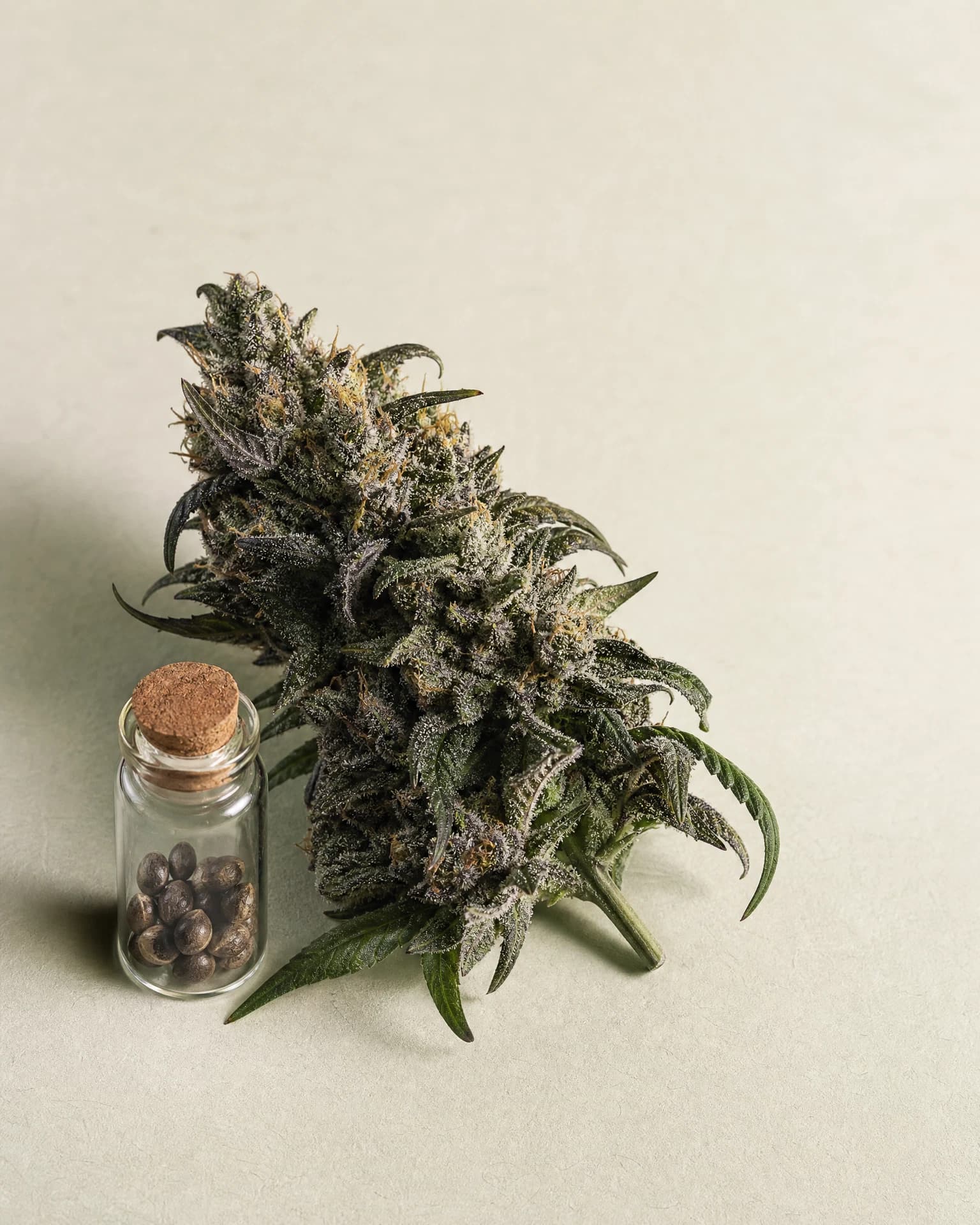
Freakshow is presented by the vendor as a sativa hybrid with herbal-citrus character and a listed THC ceiling of up to 20%. If you are searching for Freakshow genetics, the public product record for this cultivar identifies a feminized format and summarizes its highlighted sensory and effect descriptors: herbal and citrus flavor, fresh-herb and zesty-citrus aroma, dominant terpenes listed as terpinolene, humulene, and myrcene, and reported main effects described as energetic, focused, and creative. The vendor record also flags a beginner caution noting a high THC ceiling and advising a conservative approach for less experienced consumers.
This guide treats those vendor-supplied fields as the fixed facts available from the single public source and builds practical comparison and planning advice around them. Where the vendor record does not specify a detail—parentage, yield, flowering time, ideal environment, lab certificates, or phenotype variability—I explain how to locate and evaluate those items on contemporary breeder and seed-house records so you can make informed choices before purchasing or planning a grow. The goal is to help adult readers evaluate the Freakshow entry alongside other cultivar listings, understand which data points are present or missing, and use standard checks to fill gaps through reliable breeder information rather than guesswork.
Genetics and cultivar background
The public record supplied for Freakshow identifies the cultivar as a sativa hybrid in its short vendor summary, but it does not provide parental lineage, breeder name, stabilization generation, or breeding notes. Those are common gaps in many product pages and they matter for different reasons: parentage helps explain expected morphologies and genetic diversity; breeder identity supports provenance and accountability; and stabilization details or line generation affect phenotype uniformity and how likely a seed lot is to produce predictable plants.
How to check genetics details on a current breeder record
- Look for explicit parentage fields or lineage narratives. Reputable breeders usually name both parents (e.g., “Parent A × Parent B”) or provide a descriptive history of the cross (landrace, backcross, selection from phenotype trials). If parent names are missing, treat the hybrid designation as descriptive rather than genealogical.
- Confirm breeder or origin. A named breeder or seed company on the product page allows follow-up questions and cross-reference with other releases by the same breeder.
- Search for announced releases, breeder blogs, or breeder social/press posts. Breeders often publish the story behind a cross—selection goals, target terpene profile, or phenotype characteristics—outside the retail product page.
- Check for community documentation. Independent grow journals and phenotype hunts can reveal how stable a line behaves across producers and environments; treat these as observational supplements to official breeder data.
- Request genetic certificates if available. Some advanced breeders provide third-party genetic testing or lineage verification; these are uncommon but increasingly offered.
If a vendor lists only “sativa hybrid” without parents, note that classification signals likely growth tendencies (often a tendency toward taller, longer-flowering forms in sativa-dominant genetics) but cannot substitute for concrete lineage. Use the steps above to verify the genetic story before relying on expectations for structure or behavior.
Plant profile and grow planning
The vendor’s public facts do not include specific cultivation parameters such as expected flowering time, typical plant height, yield range, or explicit indoor/outdoor suitability. That leaves planning decisions to be based on a combination of the available descriptors and systematic checks of breeder records and third-party grow reports.
Which product fields to prioritize for planning
- Flowering time / days to harvest: This is essential for scheduling indoor runs and outdoor planting. If the product page lacks it, search the breeder site, seed forums, or third-party retailer copies of the listing. If none provide days-to-flower, ask the vendor or breeder for average flowering length and note whether that figure is given as an average, a range, or per-phenotype.
- Expected height and stretch: For space planning, height estimates or “compact/tall” descriptors matter. If absent, compare with other cultivars labeled “sativa hybrid” by the same breeder, which may offer a relative sense of structure, but verify through direct breeder communication where possible.
- Phenotype variability: Look for notes about multiple phenotypes, ratio of pheno types found during selection, or whether the line was stabilized. If a line is described as “stable” or “F1 stabilized,” expect greater uniformity; if no stability notes exist, plan for greater variability and consider buying extra seeds to select a preferred pheno.
- Environmental recommendations: Some breeders indicate whether a line fares better indoors, in greenhouse conditions, or outdoors. When that’s missing, look for grow journals or ask the seed house for typical use cases reported by other customers.
Practical grow-planning steps when key details are missing
- Start with conservative assumptions. Without flowering-time data, assume an intermediate-to-extended flowering period for a sativa hybrid and plan for flexible space occupation. This prevents mid-run surprises if the plant stretches more than expected.
- Plan for phenotype selection. If breeder records do not guarantee uniformity, germinate a larger set of seeds and cull to preferred phenotypes during veg. That protects you from weak or undesirable phenos when uniformity isn’t confirmed.
- Use standard veg/flower ratios. Absent breeder guidance, set veg and flower durations based on your experience with comparable hybrids and adjust for observed stretch during the first two weeks of flower.
- Environment and nutrient regimen. Treat vendor terpene and aroma notes (terpinolene, humulene, myrcene; herbal, citrus aroma) as sensory descriptors, not cultivation instructions. Follow a tried-and-true feeding schedule you already trust; don’t assume a cultivar-specific nutrient regimen when none is given.
- Prepare for odor management. The product record lists noticeable citrus and herbal aromas; if odor control matters at your location, plan to include carbon filtration or other containment steps during flowering.
Labeling and record-keeping during cultivation
- Record batch or lot numbers and any breeder tags that came with the seeds. This helps trace the specific seed lot if you later seek lab tests or breeder support.
- Photograph phenotypes at regular intervals and keep growth measurements—node spacing, internode length, branching—to compare with breeder-supplied photos or community reports.
- Log feeding and environmental conditions alongside observations of aroma and resin production, so you can statistically attribute traits to genetics versus environment over multiple runs.
Avoid making unverified assumptions about Freakshow’s cultivation behavior. Use breeder and community data to refine your plan. If those data are sparse, adopt an incremental, observation-driven approach to each run.
Aroma and flavor profile
The vendor’s public facts list Freakshow’s flavor as herbal and citrus and its aroma as fresh herbs with zesty citrus notes. Dominant terpenes specified are terpinolene, humulene, and myrcene. Those three terpenes align with the supplied sensory labels in the vendor record, but the public entry does not provide a quantitative terpene profile (percentages or total terpene content), nor does it provide third-party lab chromatograms.
Understanding the listed terpene and sensory fields
- Terpinolene is commonly linked to herbal, floral, and piney citrus notes in many reports and can contribute to a lighter, sometimes woodsy-citrus top note.
- Humulene can add woody, earthy, and herbal aspects to an aroma profile.
- Myrcene is often described as having an earthy, musky, or herbal character and can influence perceived smoothness.
How to evaluate aroma and flavor claims
- Request a terpene chromatogram or certificate of analysis (CoA) from the vendor or breeder. A CoA should show terpene percentages and allow you to see whether terpinolene, humulene, and myrcene are indeed the dominant compounds and in what proportion.
- Compare sensory descriptions across records. If multiple seed houses or the breeder’s own publicity consistently describe the same herbal-citrus profile, that strengthens the likelihood that the terpene package is a genuine line feature.
- Treat vendor flavor/aroma tags as directional rather than exhaustive. A line with those dominant terpenes can still show citrus, floral, earthy, or even spice notes depending on growing environment and curing.
Practical tips for preserving aroma and flavor during cultivation and processing
- Dry and cure cautiously. Many aromatic compounds are volatile and degrade with improper drying and high temperature curing. Aim for a gentle drying curve and monitor humidity during the early cure to preserve terpenes.
- Environment impacts terpene expression. Variables such as light spectrum, temperature swings, and nutrient balance can change the concentration and relative expression of terpenes; replicate any breeder-recommended environmental notes if they exist, or run side-by-side trials with your baseline regimen to see how the line expresses itself.
- Record sensory outcomes. Keep tasting logs (for legal and permissible contexts only) tied to specific phenotype IDs and grow conditions so you can build a profile of which pheno-environment combinations best reproduce the vendor’s described herbal-citrus character.
Because the vendor listing does not include a quantitative terpene analysis, requests for CoAs and cross-referencing community data are the best paths to verify the aroma and flavor profile before or after purchase.
Reported experience context
The seller’s public facts summarize Freakshow’s main effects as energetic, focused, and creative. The public listing also contains a cautionary note for beginners, pointing to a high THC ceiling and advising moderation. These are the effect descriptors provided in the available source and should frame how a reader interprets reported experiences in other places.
How to read and compare effect descriptors
- Treat effect tags as subjective, crowd-sourced shorthand. Terms like energetic or creative are qualitative and often based on limited user reports, breeder intent, or marketing language. They can provide a directional expectation but are not objective measurements.
- Consider THC and CBD ranges alongside effect descriptors. The product record lists THC up to 20% and CBD as low (0–1%). A higher THC ceiling can amplify intensity and unpredictability for inexperienced consumers; the listed beginner caution reflects this relationship.
- Look for corroborating lab data and independent reviews. When available, lab results for cannabinoid content and terpene composition can help explain why certain effects are reported (for example, certain terpene combinations are correlated with reported alertness or relaxation in anecdotal contexts), but these remain correlations rather than causal proof.
How to evaluate anecdotal reports responsibly
- Note the sample size and source. Single-user reports or small grow-journal posts may describe a specific phenotype or grow environment. Larger pools of independent reports increase confidence in common effects.
- Pay attention to dose. Many effect differences come down to dose and tolerance; the vendor’s “up to 20%” THC figure and the beginner caution recommend a cautious approach for those with low tolerance.
- Distinguish between short-term and situational reports. Words like “creative” or “focused” can be situational—reported effects may vary with activity, time of day, or concurrent use of other substances.
Record-keeping to anchor reported experience
- When testing a new cultivar, keep a structured log that documents dose, time from intake, context (activity and environment), and subjective ratings across standardized metrics—arousal, focus, creativity—so you can compare across runs.
- Link sensory and chemical data. When possible, pair a sample’s CoA and terpene profile with effect logs to build a reproducible dataset that helps you determine which phenotypes and grows align with the vendor’s descriptors.
Because the vendor record provides only the three effect tags and a THC ceiling, cross-referencing independent lab data and compiled user reports is the practical route to understand how those descriptors play out across contexts and phenotypes.
How to compare current breeder records
When comparing Freakshow’s public entry against other breeder records or similar cultivar listings, use a consistent checklist to identify what is known, what is missing, and how reliable each data point is. The following checklist and process help you evaluate entries methodically.
A practical breeder-record comparison checklist
- Format and labeling: Is the seed format clearly marked (feminized, regular, autoflower)? Are pack sizes and SKU/lot numbers present?
- Genetics and origin: Does the record list parentage, breeder name, and any lineage notes? Is there a breeder statement about breeding goals or selection criteria?
- Chemical profiling: Are CoAs or lab test results published? Do they show cannabinoids and terpenes with dates and analyzed batch identifiers?
- Phenotype documentation: Are there photos through growth stages and descriptions of the number and types of prevalent phenotypes? Are there notes on which phenotype was stabilized or selected for retail?
- Cultivation parameters: Are flowering time, height, yield estimates, and environmental recommendations (indoor/outdoor, climate suitability) reported? Are any agronomy notes included (nutrient regime, light recommendations)?
- Effect descriptors and user feedback: Are main effects listed and supported by independent user reports? Are user reports from a diverse source pool or from a single retailer?
- Guarantees and support: Does the breeder or retailer offer germination guarantees, replacement policies, or post-purchase grow support?
- Documentation timeliness: Are dates or batch numbers provided so you can confirm how recent the data and lab tests are?
How to validate and prioritize information
- Prioritize primary documents: CoAs and breeder-supplied lineage notes should be weighted more heavily than retail marketing copy. CoAs should include lab accreditation and batch identifiers when possible.
- Check for independent corroboration: Matching terpene or cannabinoid results across multiple independent labs or multiple batches increases confidence.
- Evaluate breeder transparency: Breeders who publish selection criteria, pheno counts, and trial notes are often easier to evaluate and have clearer communication if you need follow-up.
- Treat missing fields as important signals: Absence of flowering time, lack of phenotype photos, or missing CoAs are not neutral; they increase uncertainty and should affect ordering quantity, selection strategy, and risk tolerance in planning.
- Ask direct questions: Use vendor contact channels to request missing data—flowering days, CoAs, pheno counts, or breeder identity. Note response time and quality; a prompt, detailed reply can be a positive indicator of post-sale support.
Red flags and additional considerations
- Vague or inconsistent THC/CBD labels across different vendor pages: Ask for batch-specific CoAs to resolve discrepancies.
- No breeder or origin stated: That increases provenance uncertainty. You can still buy, but consider reduced seed counts or additional runs for phenotype selection.
- Overly broad claims without supporting data: Effect or aroma claims that are not supported by terpene/cannabinoid data or phenotype photos should be treated cautiously.
Final steps before purchase or planting
- Match the cultivar entry you intend to purchase with the specific batch, SKU, or lot number on the seller’s page and request any available lab certificates tied to that batch.
- If cultivation parameters are essential (schedule, height, yield estimates), insist on those measurements from the seller or breeder or postpone purchase until you can verify them from a reliable source.
- For first-time runs, consider purchasing a small number of seeds to phenotype-select before scaling up, particularly when the breeder record lacks stabilization or phenotype counts.
Conclusion
The public product record for Freakshow provides a concise sensory and effect snapshot—herbal-citrus flavor and aroma, dominant terpenes terpinolene, humulene, and myrcene, main effects described as energetic, focused, and creative, a THC ceiling of up to 20%, CBD listed as low (0–1%), and a feminized seed format. It also contains a beginner caution regarding the high THC ceiling. Beyond those supplied fields, many practical cultivation and provenance details are not present in the record you provided. Use the verification steps and comparison checklist in this guide to pursue missing information in breeder records, CoAs, phenotype documentation, and direct breeder communications. Doing so helps you move from marketing descriptors to verifiable data that supports confident purchasing and grow-planning decisions.
Frequently asked questions
What is the Freakshow strain?
This guide summarizes the documented cultivar record while separating verified details from variable grower outcomes.
Is Freakshow suitable for beginners?
Difficulty depends on the exact seed line, environment, and grow setup. Confirm current breeder guidance.
How long does Freakshow take to flower?
Flowering windows vary by phenotype and environment. Confirm the estimate for the exact breeder line.
Can Freakshow be grown indoors and outdoors?
Suitability depends on the breeder line and local climate. Compare space, humidity, temperature, and season length.
Which Freakshow seed format should I choose?
Autoflower and feminized formats serve different schedules and grow styles. Compare only documented direct records.