
Strain guide
G13 Strain Guide: Pine aroma and grower notes
G13 is documented here with partner-source cultivar context, seed-format availability, and secondary-topic research cues.
Overview
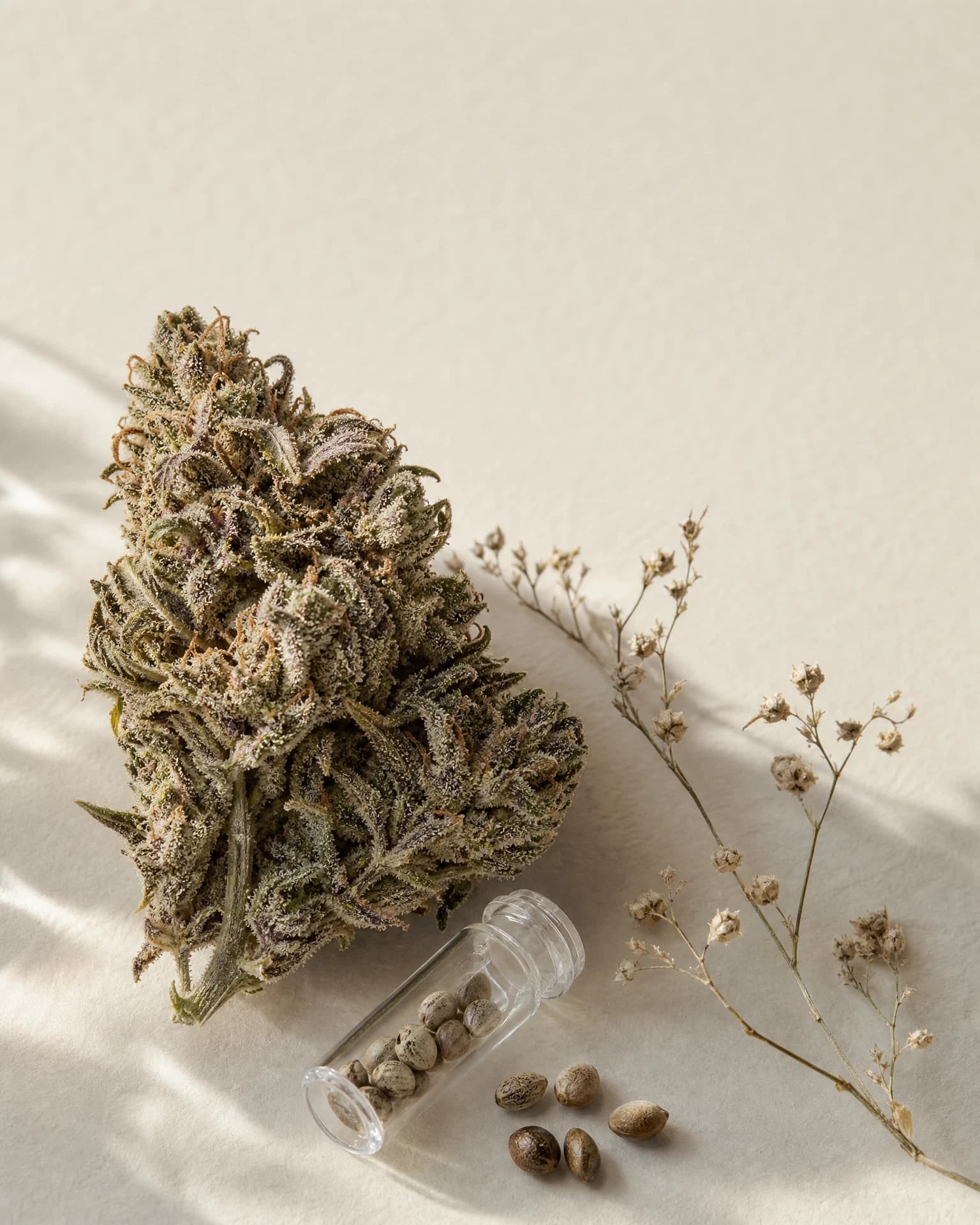
The G13 strain represents a specific category of cannabis genetics that is frequently documented as having a significant lean toward indica characteristics. In the context of modern botanical records, this cultivar is generally classified as an indica-dominant hybrid, with data suggesting a composition ranging from 70% to 90% indica. When reviewing the available information for G13 genetics, it is observed that the physical expression of the plant tends toward a compact build. This physical form is often associated with varieties that have adapted to specific environmental pressures, resulting in a plant that does not reach the heights of its sativa-leaning counterparts. The documentation for the g13 strain highlights a physical structure that is both dense and resinous, particularly concerning the development of its floral clusters. These buds are noted for their high resin production, which is a key metric for those evaluating the quality of a breeder's output.
Understanding the data surrounding this cultivar requires a careful examination of the specific records provided by various retailers and breeders. For instance, the reported potency of this plant is not a fixed number but rather a range that spans from 15% to 25% THC. This variance is a common feature in the cannabis industry, where different growing conditions, phenotypes, and laboratory testing methods can lead to divergent results. Furthermore, the availability of this specific genetic line is subject to the inventory and breeding programs of individual seed banks. A notable caveat in the current record indicates that some major suppliers do not offer a standalone version of this cultivar, instead providing hybrid variations like G13 Haze or Airborne G13 S1. This distinction is vital for researchers who are looking for the original genetic expression versus a crossbred iteration. The record serves as a primary point of reference, but it also points toward the necessity of verifying current breeder sources for specific details such as flowering requirements, which are not universally standardized for this plant.
Genetics and cultivar background
The study of g13 genetics involves examining a complex web of breeder reports and historical claims that are often difficult to verify with absolute certainty. According to the specific record at hand, the cultivar is defined as an indica-dominant hybrid, with a heavy emphasis on its indica heritage, often cited between 70% and 90%. This high percentage suggests a genetic background that favors the physical and growth traits typically associated with the indica subspecies. In the broader context of cannabis breeding, an indica-dominant profile usually implies a lineage that originated in mountainous or arid regions, though the specific geographic origins for this cultivar are not detailed in the provided data. Instead of relying on anecdotal history, a responsible researcher must look at the technical specifications provided by the seed bank or breeder.
One of the most significant challenges in establishing a clear genetic background for a cultivar like this is the prevalence of hybrid versions in the market. The record explicitly mentions that certain retailers may only carry hybrids such as G13 Haze or specific selections like Airborne G13 S1. This highlights a common trend in the industry where a popular name is used as a foundation for new crosses, sometimes making it difficult to find the "pure" or original version of the strain. When a record states that the genetics are "Indica-leaning," it provides a general direction for the plant's behavior and chemistry, but it does not account for the subtle variations that might occur in different seed formats. For example, feminized seeds are the primary format listed for this cultivar, which is a technical choice made by breeders to ensure that the resulting plants are female. This focus on feminized options reflects a market demand for stability and ease of cultivation, but it also limits the genetic diversity that might be found in regular seeds.
When evaluating the background of a cultivar through a breeder record, it is essential to recognize the limits of the data. The absence of specific parentage or a detailed lineage map in this record means that any claims about its ancestry would be speculative. A scientific approach to cannabis research prioritizes the verified facts over the myths that often surround famous strain names. By focusing on the 70-90% indica classification, we can infer a certain level of stability in the plant's growth habits, but we must remain cautious about attributing traits that are not explicitly documented. The genetic profile is a blueprint, and while the g13 strain is documented as a sturdy and compact hybrid, the exact way those genes manifest will always be influenced by the environment in which the plant is grown.
Plant profile and grow planning
Planning for the cultivation of the g13 strain requires an understanding of its physical profile as described in the technical data. The record specifies that the plant structure is typically short to medium in height. This information is a primary factor in grow planning, as it determines the amount of vertical space required and the type of training techniques that might be most effective. A compact and sturdy structure is generally preferred for indoor environments where space is a constraint, or for outdoor gardens where a lower profile might be advantageous for concealment or wind resistance. The dense nature of the buds, as noted in the verified facts, also suggests that airflow and humidity control will be important considerations during the later stages of the plant's development to prevent issues related to moisture retention within the floral clusters.
The flowering context for this cultivar is a point of variability that requires direct consultation with the current breeder source. Unlike some strains that have a universally accepted flowering time, the g13 strain's requirements are not explicitly defined in this record, suggesting that different phenotypes or breeder selections may have different needs. This lack of a specific flowering duration is a reminder of the importance of real-time data in cannabis cultivation. A grower should not assume a standard eight-week or ten-week period but should instead monitor the plant's development and refer to the specific instructions provided by the seed bank from which the G13 genetics were purchased. This approach ensures that the harvest is timed correctly based on the actual behavior of the plant rather than a generic estimate.
In addition to height and flowering time, the resinous nature of the plant is a defining characteristic of its profile. The record describes the buds as being dense and resinous, which indicates a high concentration of trichomes. From a planning perspective, this suggests that the plant may have specific nutrient requirements to support such heavy resin production. While the record does not list a specific nutrient regimen, the physical description provides a clue to the plant's metabolic needs. Furthermore, the fact that the cultivar is available in feminized seed formats simplifies the planning process by removing the need to identify and remove male plants. This allows the grower to focus entirely on optimizing the environment for female flower production. When preparing a space for this cultivar, the focus should be on supporting its sturdy, compact growth while remaining flexible enough to adapt to the specific flowering signals provided by the breeder.
Aroma and flavor profile
The sensory characteristics of the g13 strain are documented as having a distinct profile that emphasizes earthy, piney, and skunky notes. These descriptors provide a window into the terpene composition of the cultivar, even if the specific terpenes are not listed by name. An earthy aroma is often associated with the presence of myrcene or humulene, which are common in many indica-dominant varieties. The piney scent typically points toward pinene, a terpene that is known for its sharp, refreshing quality. The skunky element is a more complex aromatic trait that has long been a hallmark of certain cannabis lineages, often resulting from a specific combination of volatile sulfur compounds and various terpenes. Together, these scents create a profile that is grounded and traditional, moving away from the fruity or floral notes found in many modern hybrids.
Understanding the flavor profile of a cultivar involves more than just reading a list of scents; it requires an appreciation for how these aromas translate into the experience of the plant. The earthy and piney notes are likely to be the dominant themes, providing a base that is both pungent and lingering. The skunky undertone adds a layer of intensity that is often described as "loud" in the context of cannabis aromatics. When a breeder record describes a plant as having these specific traits, it is offering a prediction of the final product's sensory qualities. However, one should observe that the expression of these flavors can be influenced by the curing process and the conditions under which the plant was grown. A plant that is stressed or harvested prematurely may not fully develop the complex earthy and piney notes that are characteristic of the g13 strain.
For the researcher or consumer, the aroma and flavor profile serves as a primary method of identification and quality assessment. The dense and resinous buds mentioned in the plant profile are the primary site for the production of these aromatic compounds. As the resin matures, the concentration of terpenes increases, leading to a more potent and defined scent. The record's focus on an earthy, piney, and skunky profile suggests a cultivar that stays true to its indica roots, offering a classic cannabis experience that is highly valued for its consistency. By focusing on these verified aromatic facts, we can avoid the speculative descriptions that often plague the industry and instead focus on the documented sensory traits that define this particular genetic line.
Reported experience context
The context of a user's experience with the g13 strain is heavily influenced by the chemical profile documented in retailer records. One of the most prominent data points in this regard is the reported THC range, which is listed between 15% and 25%. In the field of cannabis science, THC concentration is a primary indicator of the plant's potential intensity, though it is not the only factor. A range of 15% to 25% represents a significant spectrum of potency, suggesting that different batches or phenotypes of the g13 strain can produce vastly different results. This variability is often the result of environmental factors such as light intensity, nutrient availability, and harvest timing, all of which can affect the final cannabinoid content. For a researcher, this range highlights the importance of lab testing and the fact that a single number cannot fully represent the potential of a cultivar.
When a cultivar is described as an indica-dominant hybrid (70–90% indica), the reported experience is often framed within the traditional understanding of indica effects. While this record does not list specific subjective effects, the high indica percentage typically points toward a profile that is physically oriented. In general educational terms, indica-dominant plants are often associated with a sense of relaxation and physical heaviness, though these outcomes are not guaranteed and can be modified by the presence of specific terpenes like the earthy, piney, and skunky notes found in this cultivar. The dense and resinous nature of the buds also plays a role in the experience, as the high concentration of resin is where the majority of the plant's active compounds are stored. A more resinous bud is generally expected to be more potent, which aligns with the upper end of the 15-25% THC range.
One must also consider the limitations of reported experience data. Many descriptions found online are based on anecdotal evidence rather than controlled studies. A responsible approach to understanding the g13 strain involves looking at the verified facts—such as the 70-90% indica dominance and the specific aromatic profile—rather than relying on subjective claims. The variance in THC levels across different retailers is a clear sign that the experience of this cultivar is not uniform. A consumer who encounters a version with 15% THC will likely have a different experience than one who finds a version with 25% THC. This lack of standardization is a hallmark of the current cannabis market and highlights the need for consumers to verify the specific laboratory results for the product they are using.
How to compare current breeder records
Comparing breeder records for a cultivar like the g13 strain is a fundamental skill for any serious cannabis researcher. The first step in this process is to identify the core facts that are consistent across different sources. In the case of this cultivar, the indica dominance (70-90%) and the compact, sturdy structure are recurring themes. However, the discrepancies are just as important as the similarities. For example, the reported THC range of 15-25% is a wide margin that suggests a lack of consensus or a high degree of phenotypic variation. When a researcher sees such a range, they should look for the specific laboratory data provided by the breeder rather than accepting the highest number as the definitive potency.
Another critical area for comparison is the flowering context. As noted in the record, this is a field that requires checking the current breeder source. Some breeders may list a specific number of days for flowering, while others may provide a broader window or a specific harvest month for outdoor grows. The lack of a standardized flowering time for the g13 strain indicates that the genetics may have been adapted for different environments by different breeders. By comparing these details, a grower can determine which version of the strain is best suited for their specific climate or indoor setup. A version that flowers in 56 days is a very different prospect than one that requires 70 days, even if they both share the same name.
The presence of caveats in a record is also a vital piece of information. The note that a specific major supplier does not carry a standalone version of the g13 strain is a perfect example of why cross-referencing is necessary. If a researcher only looked at one source, they might conclude that the strain is unavailable or that the hybrid versions are the only ones that exist. By examining multiple records, it becomes clear that the g13 strain exists in several forms, each with its own set of characteristics. This process of comparison helps to filter out marketing claims and focus on the technical data that will actually impact the cultivation and use of the plant. A scientific mindset requires skepticism and a commitment to verifying every claim against the available evidence.
The information presented in this guide is derived from a specific set of breeder and retailer records, which serve as the primary evidence for the claims made about the g13 strain. These sources include data from several established retail platforms and seed banks. Each of these retailers provides a piece of the puzzle, from the 70-90% indica classification to the short-to-medium plant structure and the earthy, piney, and skunky aromatic profile. However, it is essential to recognize that these records are snapshots in time and may be updated as new laboratory results or breeding data become available. The reliance on these specific sources means that the guide is bounded by the facts they provide, avoiding the speculative history that often surrounds this cultivar.
One of the most important aspects of these record caveats is the acknowledgment of missing or variable data. The flowering context, for example, is noted as a field that must be verified with the current breeder, as it is not consistently reported across all sources. Similarly, the THC range of 15-25% is a composite of different reports, reflecting the inherent variability in cannabis testing. The caveat regarding the availability of a standalone version among certain major suppliers is an essential reminder that even the most well-known cultivars are not always universally available in their original form. This level of transparency is necessary for maintaining the integrity of the research and ensuring that the reader understands the limits of the information provided.
In conclusion, the study of the g13 strain through these records highlights the importance of evidence-based research in the cannabis industry. By focusing on verified facts and acknowledging the areas where data is missing or conflicting, we can build a more accurate and useful profile of the cultivar. The goal is not to provide a definitive history or a list of subjective effects, but to offer a technical overview that is grounded in the available data. As the industry continues to mature, the quality of these records is likely to improve, providing even more detailed information for researchers and growers alike. Until then, the responsible approach is to treat every record as a starting point for further investigation and to always verify the specific details of the seeds or products being used.
The data provided for the g13 strain opens up several avenues for further research, particularly concerning the stability of its genetics and the factors that influence its chemical expression. One of the most pressing questions is the cause of the wide variance in THC levels. Is this 15-25% range a result of genetic instability, or is it purely a function of different cultivation methods? Researching the impact of specific environmental stressors—such as temperature fluctuations or nutrient deficiencies—on the cannabinoid production of this cultivar could provide valuable insights for growers looking to maximize their yield and potency. Furthermore, the relationship between the 70-90% indica dominance and the plant's terpene profile is an area that warrants closer inspection. How do the earthy, piney, and skunky notes correlate with the physical structure of the plant?
Another area for research is the comparison between the standalone cultivar and its popular hybrids. For instance, how does the addition of Haze genetics in G13 Haze change the resin production and bud density compared to the original indica-dominant hybrid? Investigating the genetic markers that define the "Airborne" selection could also help to clarify what makes that specific version distinct from other G13 lines. These questions are not just academic; they have practical implications for the industry. If the Airborne G13 S1 is found to be more stable in its THC production than other versions, it would become a preferred choice for commercial producers.
Finally, the lack of standardized flowering data for the g13 strain suggests a need for more rigorous phenological studies. By tracking the development of multiple plants across different environments, researchers could establish a more accurate flowering window for the cultivar. This would involve documenting the transition from vegetative growth to flowering, the rate of floral development, and the timing of trichome maturation. Such data would be invaluable for creating more precise grow guides and helping growers avoid the pitfalls of early or late harvesting. The goal of this research is to move beyond the vague descriptions often found in breeder records and toward a more detailed and scientific understanding of the plant's biology.
Frequently asked questions
What is the G13 strain?
This guide summarizes the documented cultivar record while separating verified details from variable grower outcomes.
Is G13 suitable for beginners?
Difficulty depends on the exact seed line, environment, and grow setup. Confirm current breeder guidance.
How long does G13 take to flower?
Flowering windows vary by phenotype and environment. Confirm the estimate for the exact breeder line.
Can G13 be grown indoors and outdoors?
Suitability depends on the breeder line and local climate. Compare space, humidity, temperature, and season length.
Which G13 seed format should I choose?
Autoflower and feminized formats serve different schedules and grow styles. Compare only documented direct records.