
Strain guide
GMO Strain Guide: Diesel aroma and grower notes
GMO is documented here with partner-source cultivar context, seed-format availability, and secondary-topic research cues.
Overview
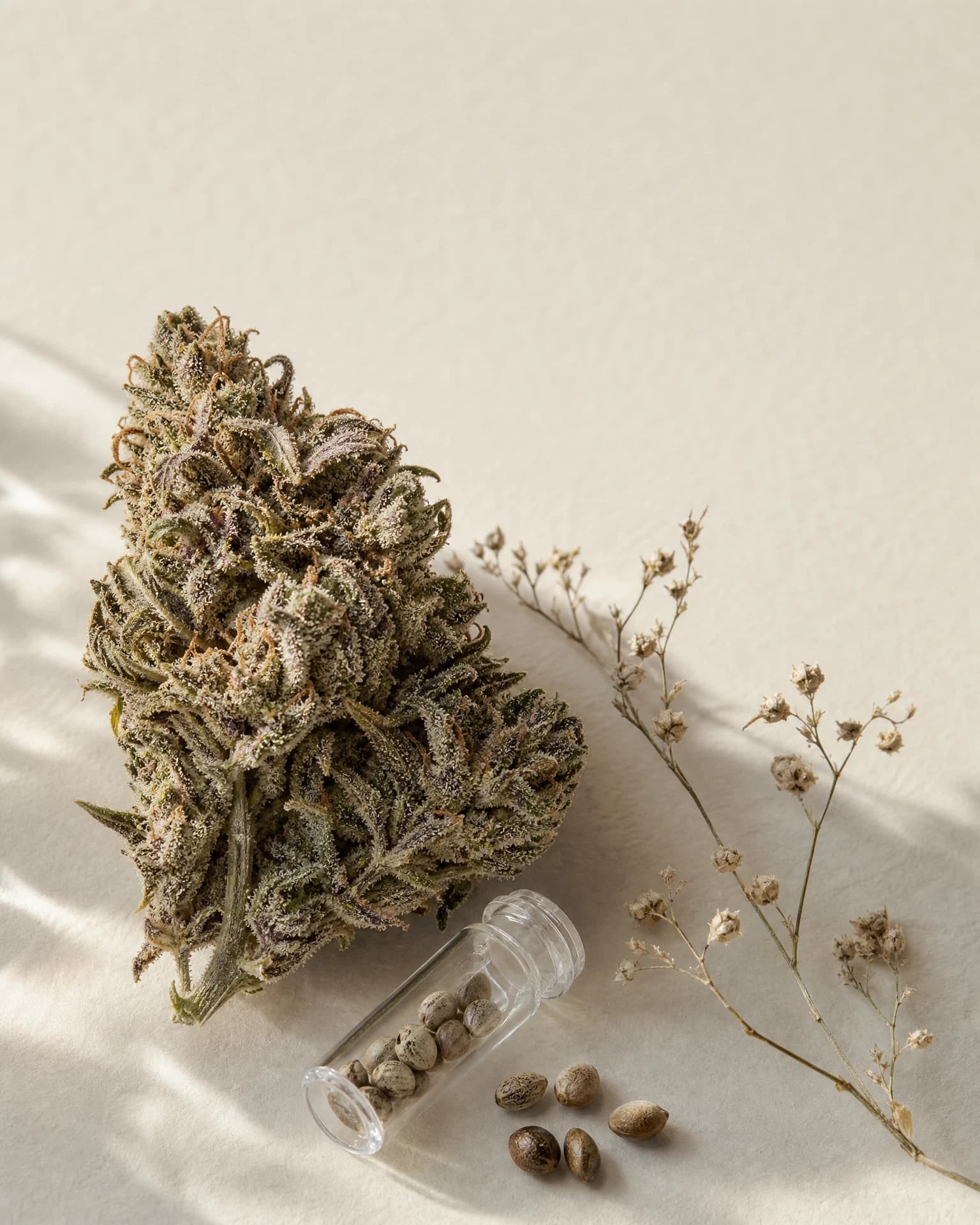
The GMO cultivar, which is frequently identified by the alternative name Garlic Cookies, represents a specific type of cannabis that has gained attention for its distinct aromatic properties and botanical characteristics. In the context of modern botanical records, this plant is classified as an Indica-dominant hybrid, with data suggesting a composition that ranges between seventy percent and ninety percent Indica. This classification indicates that the plant expresses traits typically associated with broader-leaved, shorter-statured varieties, although the specific height metrics for this cultivar suggest a more significant vertical reach than some other Indica-heavy hybrids. The name GMO itself is a point of frequent discussion among those who study breeder documentation, as it does not refer to any form of genetic modification but rather serves as a descriptor for the savory and pungent aromatic profile that the plant produces.
Understanding the gmo strain requires a close look at the technical documentation provided by various breeders who maintain these genetics. The record indicates that the plant is capable of reaching heights between one hundred and two hundred centimeters, which places it in a medium-to-tall category for indoor or outdoor cultivation. This verticality is accompanied by the production of dense, resinous buds that are characteristic of high-quality hybrid selections. For individuals looking to acquire GMO genetics, the documentation shows that the cultivar is available in several different biological formats, including feminized and autoflowering versions. This variety in seed availability allows for different cultivation strategies depending on the specific needs of the environment or the experience level of the person managing the growth cycle.
The aromatic identity of the plant is one of its most cited features in technical records. Unlike many other cultivars that lean toward sweet, fruity, or floral scents, this variety is noted for a savory profile that includes scents reminiscent of garlic, mushroom, and onion, often accompanied by a sharp diesel undertone. This specific combination of scents is what led to the Garlic Cookies moniker, providing a more descriptive title for the plant's sensory output. The flowering period for this cultivar is documented as lasting between eight and ten weeks, a timeframe that is relatively standard for hybrids with this level of Indica dominance. By focusing on these verified facts, researchers and cultivators can build a foundational understanding of the plant without relying on anecdotal reports or unverified claims that often circulate in less formal contexts.
Genetics and cultivar background
The genetic foundation of the GMO cultivar is established through the crossing of two well-documented parent varieties: Chemdawg and Girl Scout Cookies. This specific lineage is responsible for the unique combination of traits observed in the resulting hybrid. Chemdawg is often cited in botanical literature for its sharp, chemical-like aroma and its contribution to the potency and structure of its offspring. Girl Scout Cookies, on the other hand, provides a different set of characteristics, often contributing to the resin density and the complexity of the terpene profile. When these two parents are combined, the resulting gmo strain inherits a complex genetic map that favors Indica-dominant expression.
In technical terms, the Indica-to-Sativa ratio of a hybrid is a primary indicator of its growth patterns and potential effects. For this specific cultivar, the record indicates an Indica dominance of seventy to ninety percent. This range is significant because it suggests a high degree of stability in certain physical traits while allowing for some variation in others. The variance in this ratio, as noted in the source documentation, is often a result of different breeder selections and the specific phenotypes that are prioritized during the stabilization process. When researching the background of such a cultivar, it is necessary to recognize that genetic lineages are not always perfectly uniform across every available seed source.
The history of a cultivar's development is often reflected in its naming conventions. As previously stated, the "GMO" designation is an acronym that has occasionally led to confusion regarding the plant's biological origin. However, the record clarifies that this name is strictly related to the aromatic profile—garlic, mushroom, and onion—rather than any laboratory-based genetic engineering. This distinction is a vital part of the cultivar's background, as it separates the plant from the broader category of genetically modified organisms. By tracking the lineage back to Chemdawg and Girl Scout Cookies, researchers can see the natural progression of selective breeding that resulted in this specific aromatic and structural outcome.
General education on cultivar lineage often highlights the importance of parentage in determining the final characteristics of a plant. When a breeder selects two parents like Chemdawg and Girl Scout Cookies, they are looking for a specific intersection of traits. This process involves multiple generations of backcrossing and selection to ensure that the desired features, such as the savory aroma or the dense bud structure, are consistently passed down. The resulting documentation for the gmo strain serves as a map for these genetic choices, providing a framework for understanding how the plant will behave in a controlled environment. Understanding these genetic backgrounds is a fundamental step in the responsible study of any cannabis variety.
Plant profile and grow planning
The physical profile of the GMO cultivar is defined by its substantial vertical growth and the density of its reproductive structures. According to the verified record, the plant typically reaches a height between one hundred and two hundred centimeters. This height range suggests that the plant has a significant stretch during its growth cycle, requiring cultivators to plan for adequate vertical space. In an indoor setting, this might involve the use of specific training techniques to manage the canopy, while in an outdoor setting, the plant's tall stature may make it more visible than shorter, bushier varieties. The tall structure is a notable trait, especially considering the high percentage of Indica genetics, which often produce shorter plants.
The density of the buds is another critical aspect of the plant's profile. The record describes the buds as dense and resinous, which indicates a high concentration of trichomes on the surface of the flowers. This resin production is a key indicator of the plant's physiological maturity and its ability to produce the aromatic compounds that define the variety. For those planning a cultivation cycle, the gmo flowering time is a central factor to consider. The documentation specifies a flowering period of eight to ten weeks. This duration refers to the time from the initiation of the flowering phase until the plant reaches full maturity and is ready for harvest.
Planning for the growth of a tall, dense cultivar requires attention to environmental factors such as airflow and light penetration. Because the buds are described as dense, maintaining proper humidity levels is a standard practice to prevent issues related to moisture retention within the flower structures. The height of the plant also means that light must be able to reach the lower branches to ensure even development across the entire structure. Cultivators often look at these physical metrics—height, bud density, and flowering time—to determine the best approach for nutrient delivery and environmental control. The eight-to-ten-week window provides a predictable timeline for these activities, allowing for a structured approach to the growth cycle.
Technical documentation for plant profiles often leaves out specific environmental requirements such as exact temperature ranges or nutrient schedules, as these can vary based on the specific growing medium and local conditions. In the case of the GMO record, these details are not provided, meaning that a researcher must rely on general botanical principles when planning their approach. The focus remains on the verified metrics of height and flowering duration. By sticking to these data points, one can avoid the pitfalls of following overly specific advice that may not apply to the particular phenotype they are working with. The plant's tall structure and dense resin production are the primary physical benchmarks for this variety.
Aroma and flavor profile
The sensory output of the GMO cultivar is perhaps its most distinguishing characteristic in the available technical records. The aromatic profile is described as pungent and savory, a combination that sets it apart from the more common sweet or citrusy profiles found in many other hybrids. Specifically, the record identifies four primary scents that define the experience: garlic, mushroom, onion, and diesel. These notes are not subtle; they are described as pungent, indicating a high concentration of the volatile organic compounds responsible for the plant's scent. This savory foundation is the reason for the "Garlic Cookies" name and the "GMO" acronym.
Understanding the flavor profile of a cannabis plant involves looking at the terpenes that the plant produces. While the specific terpene percentages are not listed in this record, the descriptive terms provided—garlic, mushroom, and onion—suggest a unique chemical composition. These savory notes are often associated with specific terpenes that are less common in high concentrations in other varieties. The addition of a diesel undertone adds a sharp, chemical edge to the profile, which is a trait often inherited from the Chemdawg parentage. This combination creates a complex sensory experience that is frequently highlighted in breeder catalogs and technical descriptions.
In general botanical terms, the aroma of a plant serves several biological functions, including attracting pollinators or deterring predators. In the context of cultivated cannabis, these aromas are the primary way that researchers and consumers identify and categorize different varieties. The savory nature of the GMO profile is a departure from the "dessert" strains that have become popular in recent years, offering a more earth-bound and industrial scent profile. When evaluating the flavor of the plant, the record suggests that these same savory notes are present, providing a consistent experience from the initial scent to the final taste.
Educational prose regarding aroma and flavor often emphasizes the subjectivity of sensory experiences. While the record lists garlic, mushroom, onion, and diesel as the primary notes, different individuals may perceive these scents with varying levels of intensity. Furthermore, the way a plant is grown, cured, and stored can influence the final aromatic output. However, the core identity of the GMO cultivar remains rooted in this savory, pungent description. By focusing on these specific descriptors, the record provides a clear benchmark for what one should expect from a verified version of this variety. The absence of sweet or fruity notes in the documentation is a significant detail, reinforcing the plant's unique position in the aromatic spectrum.
Reported experience context
The experience associated with the GMO cultivar is framed by its genetic identity as an Indica-dominant hybrid. With an Indica percentage ranging from seventy to ninety percent, the reported effects are generally expected to align with the characteristics of that category. In the context of breeder records, Indica-dominant varieties are often associated with a particular set of physical and mental responses, though these are not explicitly detailed in the provided data for this specific strain. The record focuses on the classification rather than providing a list of subjective effects, which is a common practice in more technical or evidence-bounded documentation.
General education on how experiences are reported in the cannabis industry highlights the importance of understanding the limitations of such data. Reports are often based on subjective feedback from a variety of sources, and these can be influenced by an individual's biology, tolerance, and the specific environment in which the plant is used. When a record states that a cultivar is "Indica-leaning," it is providing a broad category that suggests a certain type of experience, but it does not guarantee a specific outcome for every person. This classification serves as a starting point for research rather than a definitive guide to the plant's effects.
The dense, resinous nature of the buds, as mentioned in the plant structure section, is also a factor in the reported experience. High resin production is often correlated with a higher concentration of active compounds, which can influence the intensity of the experience. However, without specific potency percentages in the record, it is impossible to make definitive claims about the strength of the cultivar. The record notes that THC potency can vary between breeders, which further emphasizes the need for caution when interpreting reported experiences. This variance is a standard part of the botanical field, where different versions of the same cultivar can produce different results.
When looking at the reported experience context for the gmo strain, it is also useful to consider the role of the aromatic profile. The pungent, savory scents of garlic and diesel can play a part in the overall sensory experience, contributing to the "set and setting" that influences how a person perceives the plant's effects. The absence of detailed medical or recreational claims in the record is a reflection of the strict evidence-bounded nature of the documentation. By sticking to the classification of "Indica-leaning" and the physical description of the buds, the record provides a reliable, if limited, overview of what the cultivar offers.
How to compare current breeder records
Evaluating cannabis documentation requires a systematic approach to understanding how different sources present data. When looking at a record for a cultivar like GMO, one will often find discrepancies between different breeders regarding specific metrics such as THC potency, Indica-to-Sativa ratios, and even flowering times. These differences are not necessarily indicative of a lack of quality, but rather a reflection of the inherent variability in biological systems and the different priorities of individual breeders. To effectively compare these records, one must look at the context in which the data was collected and the specific goals of the breeding program.
One of the most common areas of variance is the Indica-to-Sativa ratio. In the case of the GMO cultivar, the record indicates a range of seventy to ninety percent Indica. This twenty-percent spread is a significant margin and highlights how different selections of the same lineage can result in different genetic expressions. When comparing records, a researcher should look for the specific parents used and the number of generations the cultivar has been stabilized. A record that provides a narrower range may indicate a more stabilized version of the genetics, while a broader range suggests that multiple phenotypes may be present in the seed population.
THC potency is another metric that frequently varies across breeder records. The caveat in the GMO record explicitly states that THC potency varies between breeders. This variance can be caused by a multitude of factors, including the specific growing conditions used during testing, the methods of laboratory analysis, and the particular phenotype selected for the test. When a record provides a single percentage for THC, it should be viewed as a snapshot of a specific plant under specific conditions rather than a universal truth for the entire cultivar. Comparing multiple records can provide a more realistic range of what a cultivator might expect to achieve.
Flowering time is also subject to variation. While the GMO record lists a window of eight to ten weeks, other sources might suggest a shorter or longer period. This can be influenced by the definition of when flowering begins—some count from the first sign of flowers, while others count from the switch in the light cycle. Additionally, environmental factors like temperature and light intensity can speed up or slow down the maturation process. By looking at the range provided across different records, a researcher can establish a more accurate timeline for their grow planning.
The way a breeder describes the aromatic profile can also vary, although the core notes of garlic, mushroom, onion, and diesel are fairly consistent for GMO. Some records might emphasize the chemical diesel notes, while others focus on the savory garlic aspects. These differences in description often reflect the subjective experience of the person writing the documentation. When comparing these records, it is helpful to look for commonalities rather than getting bogged down in the specific adjectives used. A consistent mention of savory or pungent notes across multiple sources is a strong indicator of the plant's true aromatic identity.
Finally, the availability of different seed formats—such as feminized, autoflower, and fast-version—should be a point of comparison. Not every breeder will offer the cultivar in every format, and the quality of the breeding work can vary between these types. For example, an autoflowering version of a famous photoperiod strain requires careful breeding to maintain the original's characteristics. When comparing records, one should look for details on how these different formats were developed and whether the breeder provides specific data for each one. A comprehensive record will offer distinct metrics for its autoflower and feminized versions, recognizing that they are biologically different.
The information provided in this guide is based on a specific record for the GMO cultivar, and it is subject to the limitations of that data. The primary caveat noted in the record is that the name "GMO" is a reference to the plant's aromatic profile—specifically garlic, mushroom, and onion—and is not an indication of genetic modification. This is a critical distinction that must be maintained in any discussion of the cultivar's origins or biology. The record also notes that THC potency and Indica-to-Sativa ratios can vary between different breeders, which means that the data provided should be viewed as a general range rather than an absolute value.
The sources for this record include documentation from several well-known seed retailers and breeders, such as SeedSupreme, Blimburn Seeds, Homegrown Cannabis Co, Seedsman, and Herbies Head Shop. These sources provide the foundational metrics for the cultivar, including its height of one hundred to two hundred centimeters and its flowering time of eight to ten weeks. However, because these sources are commercial in nature, the data they provide is often focused on the most marketable traits of the plant. This record has been filtered to include only the verified facts, excluding any anecdotal claims or unverified reports that might be found on these websites.
One of the significant limitations of the current record is the lack of detailed information on specific terpene or cannabinoid percentages beyond the general Indica-leaning classification. While the savory aroma is well-documented, the underlying chemical data is not present in the record. Additionally, the record does not provide specific details on the plant's history or the identity of the original breeder who first crossed Chemdawg and Girl Scout Cookies to create the GMO variety. These missing facts are a standard part of the cannabis documentation environment, where information is often fragmented or proprietary.
In conclusion, this guide serves as a summary of the verified data for the GMO cultivar as of the current record. It provides a reliable overview of the plant's physical characteristics, aromatic profile, and available seed formats. However, researchers and cultivators are encouraged to conduct their own due diligence when selecting a specific source for GMO genetics. By understanding the limitations of the data and the reasons for variance between different breeder records, one can make more informed decisions and approach the study of this unique cultivar with a grounded and evidence-based perspective. The focus remains on the savory, pungent identity of the Garlic Cookies lineage and its well-defined botanical traits.
When a botanical record is limited in scope, it often leaves several important questions unanswered. For the GMO cultivar, the absence of certain data points provides an opportunity for further research and inquiry. One of the primary questions a researcher might ask relates to the specific terpene profile of the plant. While the record identifies savory notes like garlic and onion, it does not list the specific chemical compounds, such as myrcene, caryophyllene, or limonene, that are responsible for these scents. Researching the typical terpene concentrations in the Chemdawg and Girl Scout Cookies lineage could provide more insight into why GMO expresses these unique savory traits.
Another area for inquiry involves the environmental preferences of the cultivar. The record states that the plant is tall and has dense buds, but it does not specify the ideal temperature, humidity, or nutrient levels for optimal growth. A researcher might ask how this variety responds to different growing media, such as soil versus hydroponics, or how it reacts to specific training techniques like topping or low-stress training. Understanding these practical cultivation details is essential for anyone looking to successfully manage the plant's eight-to-ten-week flowering cycle.
The variance in THC potency and Indica ratios also raises questions about phenotypic stability. A researcher might wonder how many distinct phenotypes are commonly found in a typical pack of GMO genetics and which of these phenotypes most closely aligns with the "Garlic Cookies" aromatic profile. This leads to questions about the stabilization process used by different breeders and how they select the "mother" plants for their seed production. Investigating the history of the breeders mentioned in the source URLs could provide more context on their specific methods and the reliability of their data.
Furthermore, the "fast-version" of the cultivar mentioned in the record warrants closer examination. One might ask how the genetics were modified to achieve a faster flowering time and whether this change has any impact on the plant's final aromatic profile or bud density. Comparing the technical data for the standard feminized version against the fast version could reveal trade-offs that are not immediately apparent in a high-level summary. This type of comparative research is vital for understanding the full range of options available to cultivators.
Finally, the broader category of "savory" cannabis cultivars is an interesting topic for related research. The GMO strain is one of the most prominent examples of this profile, but it is not the only one. A researcher might look for other varieties that share the garlic, mushroom, or onion notes to see if there are common genetic threads or environmental factors that encourage the expression of these scents. This could lead to a deeper understanding of how terpene synthesis works in the cannabis plant and how breeders can intentionally target these less common aromatic profiles.
Frequently asked questions
What is the GMO strain?
This guide summarizes the documented cultivar record while separating verified details from variable grower outcomes.
Is GMO suitable for beginners?
Difficulty depends on the exact seed line, environment, and grow setup. Confirm current breeder guidance.
How long does GMO take to flower?
Flowering windows vary by phenotype and environment. Confirm the estimate for the exact breeder line.
Can GMO be grown indoors and outdoors?
Suitability depends on the breeder line and local climate. Compare space, humidity, temperature, and season length.
Which GMO seed format should I choose?
Autoflower and feminized formats serve different schedules and grow styles. Compare only documented direct records.