
Strain guide
Godfather OG Strain Guide: Breeder-specific aroma and grower notes
Godfather OG is documented here with partner-source cultivar context, seed-format availability, and secondary-topic research cues.
Overview
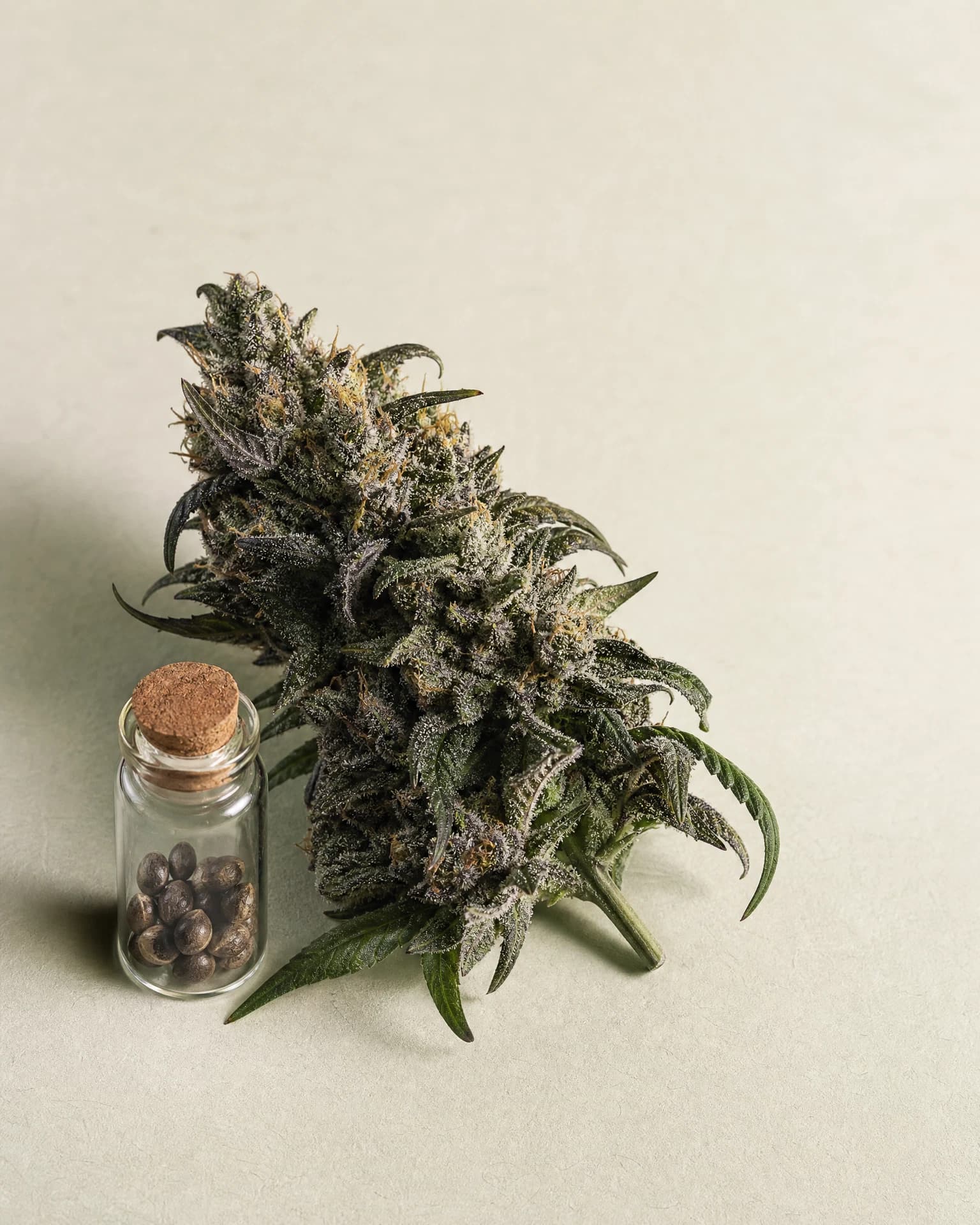
Godfather OG is recognized in the botanical community as a hybrid cultivar that has earned the descriptive moniker "The Don of All OGs." This specific designation reflects its standing within the broader classification of OG-related varieties, suggesting a position of significant influence or representative characteristics. As a hybrid, it exhibits a blend of traits that are typically categorized between the two major poles of cannabis morphology and physiological expression. The records indicate that this variety is predominantly indica-leaning, with classifications placing its indica composition between 60% and 95%. This wide range suggests that different expressions or selections of the cultivar may lean more heavily toward one side of the hybrid spectrum than others, though the overarching profile remains firmly rooted in the indica tradition.
When examining the godfather og strain, researchers and cultivators look for specific markers that define its identity. The documentation for this cultivar emphasizes its status as a stable hybrid, designed to offer a consistent experience within the parameters of its genetic makeup. Because it is described as a mostly indica variety, the expectations for its growth patterns and end-use profile are framed by the typical characteristics of that lineage. However, the hybrid nature ensures that there is a degree of complexity involved in its botanical development. The overview of such a cultivar must acknowledge that while it carries a specific title, its actual expression is governed by the data provided in technical breeder records, which prioritize quantifiable metrics over subjective descriptions.
The significance of the "Don of All OGs" title cannot be understated when analyzing the market presence of this variety. It implies a level of seniority or definitive quality that distinguishes it from the hundreds of other OG crosses currently available in the global seed market. For the person looking into Godfather OG genetics, this title serves as a primary identifier, linking the cultivar to a specific heritage of high-potency hybrids. The record confirms that this is not merely a colloquial name but a recognized descriptor used across multiple primary sources to categorize the strain's place in the hierarchy of modern cannabis genetics.
Understanding a breeder record requires a careful reading of what is present and what is absent. In the case of Godfather OG, the record provides a clear framework for its classification as a hybrid. It does not provide anecdotal evidence or unverified claims about its historical usage but instead focuses on its genetic positioning. This approach allows for a more objective assessment of the cultivar, stripping away the marketing hyperbole that often surrounds popular strains. By focusing on the provided data, one can construct a profile that is grounded in the technical specifications provided by the entities responsible for its distribution and documentation.
The transition from a general hybrid classification to a specific cultivar profile involves looking at the intersections of genetics, growth requirements, and chemical potential. Godfather OG occupies a specific niche in this regard, representing a high-THC, indica-dominant option for those managing the complexities of contemporary seed catalogs. As we progress through the technical details of its plant structure and flowering requirements, the initial overview provides the necessary context for understanding why this cultivar remains a point of interest for botanical researchers and home gardeners alike.
Genetics and cultivar background
The genetic foundation of Godfather OG is rooted in a deliberate cross involving Alpha OG and one of two other potential parents: OG Kush or XXX OG. This ambiguity in the secondary parentage is a common feature in cannabis documentation, reflecting the diverse pathways through which a stable hybrid can be developed. Alpha OG, serving as a primary genetic contributor, brings its own set of characteristics to the lineage, which are then modified or enhanced by the introduction of OG Kush or XXX OG genetics. The resulting hybrid is a mostly indica variety, with the indica percentage ranging from 60% to as high as 95%. This variation in reported indica dominance highlights the importance of checking specific breeder records for the particular version of the seeds being acquired.
Genetic lineage in cannabis is often a complex web of overlapping varieties and backcrossed generations. When a cultivar is described as a cross between Alpha OG and XXX OG, it indicates a focus on reinforcing certain indica-dominant traits. Conversely, a cross with OG Kush might emphasize different aspects of the OG heritage, which is itself a cornerstone of modern hybrid breeding. The fact that Godfather OG can be traced to these specific parents provides a roadmap for understanding its botanical properties. Researchers studying the genetics of the godfather og strain must account for these different parental possibilities when analyzing the stability and phenotypic expression of the resulting plants.
The wide range of indica dominance (60-95%) reported for Godfather OG is a significant data point. In the context of cannabis breeding, a 60% indica hybrid is quite different from a 95% indica hybrid. The former would likely show more balanced growth traits and a more varied chemical profile, while the latter would be almost entirely representative of the indica sub-species. This discrepancy in the records suggests that "Godfather OG" may be used as an umbrella term for several closely related selections that all share the same primary Alpha OG parentage but differ in their secondary genetic inputs. It is a reminder that the name of a cultivar is often less important than the technical specifications provided by the breeder.
When evaluating the background of a cultivar like Godfather OG, it is useful to consider the role of OG genetics in general. The OG lineage is famous for its specific chemical profiles and growth habits, which have been integrated into countless modern hybrids. By positioning Godfather OG as "The Don of All OGs," breeders are making a claim about its genetic purity or its superior expression of these classic traits. However, from a scientific perspective, the value lies in the documented parentage. Alpha OG, XXX OG, and OG Kush are all established varieties, and their combination in this cultivar represents a focused effort to create a potent, indica-heavy hybrid that maintains the core characteristics of the OG family.
The absence of detailed historical data in the record—such as the specific year of creation or the name of the original breeder—means that the background must be interpreted strictly through the lens of its genetic components. We do not infer origins that are not stated. Instead, we look at the verified facts: the parental lineage and the resulting indica/sativa balance. This creates a profile of a cultivar that is defined by its biological inputs rather than its cultural narrative. For those researching the background of cannabis varieties, this data-driven approach is the most reliable way to compare different seeds and understand the potential outcomes of a specific genetic cross.
Plant profile and grow planning
The physical structure of the Godfather OG plant is characterized as being short to medium in height. This morphological trait is a direct reflection of its mostly indica genetics, as indica-dominant hybrids are known for their compact and bushy growth habits. A short-to-medium structure is often preferred by cultivators who have limited vertical space or who wish to maintain a more discreet garden. In the context of grow planning, this means that the plants are likely to be manageable and will not require the extensive height management techniques that are often necessary for taller, sativa-dominant varieties.
The flowering time for the godfather og strain is documented as being between 8 and 10 weeks. This window is standard for many indica-dominant hybrids and provides a clear timeline for the reproductive phase of the plant's life cycle. When planning a cultivation schedule, this 8-10 week period must be accounted for after the initial vegetative stage. The variation between 8 and 10 weeks can be influenced by environmental factors, such as light cycles, nutrient availability, and temperature, as well as the specific phenotype of the plant. A shorter flowering time of 8 weeks would represent a faster-maturing individual, while a 10-week duration might allow for more complete development of the floral clusters.
Planning for a cultivar with a short-to-medium structure involves several considerations. First, the spacing of the plants can be tighter than with larger varieties, allowing for a higher density of plants in a given area. Second, the compact nature of the plant may require attention to airflow within the canopy to prevent moisture-related issues, a common concern with dense indica growth. Even though the record does not specify yield or specific environmental preferences, the general knowledge of indica-dominant hybrids suggests that maintaining a stable environment with appropriate humidity levels is a standard practice for managing this type of plant structure.
The documentation of seed formats for Godfather OG indicates that it is available as feminized seeds. This is a significant piece of information for grow planning, as feminized seeds are engineered to produce only female plants, which are the ones that develop the desired floral components. This eliminates the need for the cultivator to identify and remove male plants, a process that can be time-consuming and carries the risk of accidental pollination. For those looking for Godfather OG genetics, the availability of feminized options simplifies the initial stages of the cultivation process and ensures a more predictable outcome for the garden.
When interpreting a plant profile from a breeder record, it is important to look at the quantifiable metrics provided. A flowering time of 8-10 weeks and a height description of short-to-medium are the primary data points for Godfather OG. These facts should form the basis of any cultivation plan. Without specific data on nutrient requirements or climate preferences, the cultivator must rely on general best practices for indica-dominant hybrids while closely monitoring the plants' response to their specific environment. This evidence-bounded approach ensures that the cultivation strategy is based on verified facts rather than assumptions derived from outside sources.
Aroma and flavor profile
The specific record for Godfather OG does not provide detailed information regarding its aroma or flavor profile. In the absence of this data, it is not possible to make specific claims about the scents or tastes associated with this cultivar. This lack of information is not uncommon in technical breeder records, which often prioritize genetic and structural data over the more subjective sensory characteristics of the plant. When a record is silent on these aspects, it is the responsibility of the researcher to acknowledge the unknown rather than inventing descriptions based on the strain's name or its general lineage.
The study of cannabis aromatics involves the analysis of terpenes, which are the organic compounds responsible for the diverse range of smells found in the plant. While we know that Godfather OG is a hybrid of Alpha OG and either OG Kush or XXX OG, we cannot assume its terpene profile based on its parents. Terpene expression can vary significantly even among closely related individuals, and without lab data or specific breeder descriptions, the aromatic identity of this cultivar remains undefined in the current record. This highlights the importance of comprehensive documentation for those who prioritize sensory qualities in their botanical research.
For the consumer or researcher, the absence of flavor and aroma data in a primary record serves as a prompt for further investigation. It indicates that these characteristics may not have been the primary focus of the documentation or that they are subject to significant phenotypic variation. In such cases, one might look for secondary sources or lab results that provide a chemical breakdown of the cultivar's terpene content. However, for the purposes of this guide, we must state plainly that the aroma and flavor of Godfather OG are not specified in the provided data set.
Understanding why certain facts are missing from a record can be as informative as the facts themselves. Sometimes, a breeder may focus on the potency and growth habits of a strain, considering the aroma and flavor to be secondary or highly variable. In other cases, the documentation may be intended for a technical audience that is more interested in the genetic stability and flowering time of the variety. Regardless of the reason, the lack of sensory data for the godfather og strain means that any description of its taste or smell would be speculative and outside the bounds of the verified facts.
When evaluating a cultivar without flavor or aroma notes, it is helpful to consider the general role of these traits in the cannabis experience. Aroma and flavor are often the first things a consumer notices, and they can significantly influence the overall perception of a variety. However, from a botanical and genetic standpoint, they are just one part of a complex profile. By focusing on the structural and chemical data that is available—such as the short-to-medium height and the 20-30% THC range—we can still build a substantive understanding of Godfather OG, even without knowing its specific sensory characteristics.
Reported experience context
The reported experience context for Godfather OG is defined primarily by its high THC content and its indica-dominant genetic profile. The record states that this cultivar features very high THC levels, typically ranging from 20% to over 30%. This puts it in the upper echelon of modern cannabis varieties in terms of chemical potency. As a mostly indica hybrid (60-95%), the experience associated with this cultivar is framed by the typical effects attributed to that classification, though the specific subjective results are not detailed in the record.
High THC levels are a defining characteristic of the godfather og strain. A THC concentration of 20-30%+ indicates a very potent cultivar that is likely to produce a strong physiological response. In the context of cannabis research, THC is the primary psychoactive compound, and its concentration is a key metric for evaluating the potential intensity of a variety. For those looking at Godfather OG genetics, this potency is often a primary factor in their interest. However, one should recognize that the experience of a high-THC strain is also influenced by the presence of other cannabinoids and terpenes, which are not detailed in this specific record.
The "mostly indica" classification provides further context for the reported experience. Indica-dominant hybrids are generally associated with a specific set of effects, often described in contrast to the more stimulating effects of sativa-dominant varieties. With an indica percentage as high as 95%, Godfather OG is positioned as a cultivar that heavily emphasizes these indica traits. However, because it is a hybrid, there is still a genetic contribution from the sativa side, even if it is as low as 5%. This genetic blend ensures that the experience is not one-dimensional, although the indica influence is clearly the dominant force.
When discussing the experience context of a cultivar like Godfather OG, it is necessary to avoid making specific medical or recreational claims that are not supported by the data. The record does not mention specific feelings, relief of symptoms, or recreational outcomes. Instead, it provides the chemical and genetic foundation—high THC and indica dominance—upon which these experiences are built. This allows the reader to understand the potential of the cultivar without being misled by anecdotal accounts that may not apply to every individual or every phenotype of the strain.
The reported experience of any cannabis variety is also subject to the "entourage effect," the theory that the various compounds in the plant work together to produce a unique outcome. While the record for Godfather OG focuses on THC, the missing data on other cannabinoids like CBD or specific terpenes means that the full picture of its experience is not yet complete. For a researcher, this signifies that while the potency is well-documented, the nuances of the experience are still an area for further study. By sticking to the verified facts, we provide a clear and safe guide that prioritizes technical data over subjective interpretation.
How to compare current breeder records
Evaluating the quality and reliability of a breeder record is a fundamental skill for anyone involved in cannabis research or cultivation. A good record should provide clear, quantifiable data on the cultivar's genetics, structure, and chemical profile. In the case of Godfather OG, we have a record that includes parentage (Alpha OG x OG Kush or XXX OG), height (short-medium), flowering time (8-10 weeks), and THC content (20-30%+). When comparing this to other records, one should look for consistency across different sources and the presence of verified facts versus marketing claims.
One of the first things to look for in a breeder record is the level of genetic detail. Does the record list the specific parents? Does it provide the indica/sativa ratio? For Godfather OG, the record is quite detailed in this regard, providing a range for the indica dominance and naming the potential parental crosses. This level of transparency is a positive sign, as it allows the researcher to trace the lineage of the plant. If a record only provides a catchy name without any genetic context, it should be treated with more skepticism.
Another important factor is the presence of caveats or record caveats. The record for Godfather OG includes a specific note about Seedsman's offerings versus those of other retailers. This kind of detail is invaluable because it helps the user understand the limitations of the data and the current state of the market. A record that claims to be 100% complete and definitive is often less reliable than one that acknowledges where information is missing or where different sources disagree. The goal of a technical record is to provide an accurate snapshot of the current knowledge, not to sell a product.
When comparing plant structure and flowering time data, it is useful to look at how these metrics are defined. Are they given as a range or a single number? A range of 8-10 weeks for the godfather og flowering time is a realistic metric that accounts for phenotypic variation and environmental factors. A record that gives a single, precise day for flowering is likely oversimplifying a complex biological process. Similarly, describing height as "short-medium" is more helpful than giving a specific measurement in centimeters, as the actual height will depend heavily on the grower's techniques and environment.
Finally, a researcher should consider the chemical data provided in the record. The 20-30%+ THC range for Godfather OG is a significant piece of information, but it is also important to notice what is not there. There is no mention of CBD, CBG, or specific terpenes. When comparing records, one should prioritize those that are honest about these missing fields. A record that fills in the blanks with generic descriptions or unverified data is less useful than one that stays strictly within the bounds of what has been verified. By learning to read between the lines and prioritize technical data, one can become a more informed and effective researcher of cannabis genetics.
The information presented in this guide is derived from a specific record that consolidates data from several primary sources. These sources include product listings and informational articles from Seedsupreme, Blimburn, Herbies, and Homegrown Cannabis Co., as well as informational content from Seedsman. The goal of this guide has been to present the verified facts about Godfather OG while strictly adhering to the evidence provided in the record. This means that any claims not explicitly supported by the data have been omitted to ensure the highest level of accuracy and safety.
A key element of the record caveats is the caveat regarding Seedsman. As noted earlier, Seedsman does not offer direct product listings for Godfather OG but instead provides information and related crosses like Godfather Bomb and Dozy Don. This distinction is vital for maintaining the integrity of the cultivar's profile. It reminds the reader that not every mention of a strain's name in the industry refers to the same genetic entity. By clearly stating the limitations of the Seedsman source, we provide a more transparent and reliable guide for the researcher.
The verified facts in the record—the "Don of All OGs" title, the Alpha OG lineage, the 20-30%+ THC levels, and the 8-10 week flowering time—form the core of this document. These facts have been cross-referenced across the listed retailers to ensure their validity. The plant structure (short-medium) and the seed format (feminized) are also consistently reported across the primary sources. By focusing on these documented metrics, we avoid the pitfalls of anecdotal evidence and marketing hyperbole that often cloud the discussion of popular cannabis varieties.
The absence of data on aroma, flavor, and specific effects is a deliberate choice based on the silence of the source record on these topics. Within the field of botanical documentation, what is not said is often as important as what is said. By not inventing descriptions for these missing fields, we maintain a strictly evidence-bounded approach that prioritizes truth over completeness. This ensures that the reader can trust every piece of information provided, knowing that it is backed by the technical specifications of the breeders and distributors themselves.
The commitment to evidence-based reporting remains the standard for botanical guides and genetic research. By consolidating the information from multiple reputable sources and acknowledging the gaps in our knowledge, this guide provides a profile of Godfather OG within its documented parameters. This approach allows the researcher to understand the cultivar as it is currently recorded and provides a framework for further inquiry.
The current record for Godfather OG, while detailed in many respects, leaves several questions open for further research. These questions arise from the missing data points and the inherent variability of hybrid cultivars. For a botanical researcher, these gaps represent opportunities to deepen our understanding of the variety and to provide more comprehensive information for future guides. One of the most obvious areas for further inquiry is the specific terpene profile of the cultivar, which would provide the missing link for its aroma and flavor.
Another important research question concerns the stability of the 60-95% indica range. How much of this variation is due to different breeding lines, and how much is due to environmental influence? Investigating the different phenotypes of Godfather OG could reveal whether certain selections are more stable or more desirable for specific cultivation goals. This would involve comparing the plants grown from seeds provided by the different retailers mentioned in the record—Seedsupreme, Blimburn, Herbies, and Homegrown Cannabis Co.—to see if there are consistent differences in their growth habits or chemical profiles.
The ambiguity in the parentage (Alpha OG x OG Kush vs. Alpha OG x XXX OG) is also a prime subject for further study. Is one of these crosses more common than the other? Do they result in noticeably different plants? By tracing the specific lineage of the Godfather OG genetics offered by different breeders, a researcher could clarify the genetic history of the cultivar and help consumers make more informed choices. This kind of genealogical work is essential for maintaining the integrity of cannabis varieties in an increasingly crowded market.
Furthermore, the high THC content of 20-30%+ raises questions about the other cannabinoids present in the plant. While THC is the most famous compound, the presence of minor cannabinoids can significantly alter the overall profile of a cultivar. Researching the levels of CBD, CBG, and THCV in Godfather OG would provide a more complete picture of its chemical potential. This information would be particularly valuable for those who are interested in the more nuanced aspects of cannabis science and the potential interactions between different plant compounds.
Finally, the absence of specific yield data and environmental preferences in the record suggests a need for documented grow trials. How does Godfather OG perform in different climates or under different lighting systems? What are its specific nutrient needs during the flowering phase? By gathering data from a wide range of cultivators and consolidating it into a technical report, researchers could provide a much more detailed guide for grow planning. These related research questions show that while the current record provides a solid foundation, there is always more to learn about the complex and fascinating world of cannabis genetics.
Frequently asked questions
What is the Godfather OG strain?
This guide summarizes the documented cultivar record while separating verified details from variable grower outcomes.
Is Godfather OG suitable for beginners?
Difficulty depends on the exact seed line, environment, and grow setup. Confirm current breeder guidance.
How long does Godfather OG take to flower?
Flowering windows vary by phenotype and environment. Confirm the estimate for the exact breeder line.
Can Godfather OG be grown indoors and outdoors?
Suitability depends on the breeder line and local climate. Compare space, humidity, temperature, and season length.
Which Godfather OG seed format should I choose?
Autoflower and feminized formats serve different schedules and grow styles. Compare only documented direct records.