
Strain guide
Granddaddy Purple Strain Guide: Berry aroma and grower notes
Granddaddy Purple is documented here with partner-source cultivar context, seed-format availability, and secondary-topic research cues.
Overview
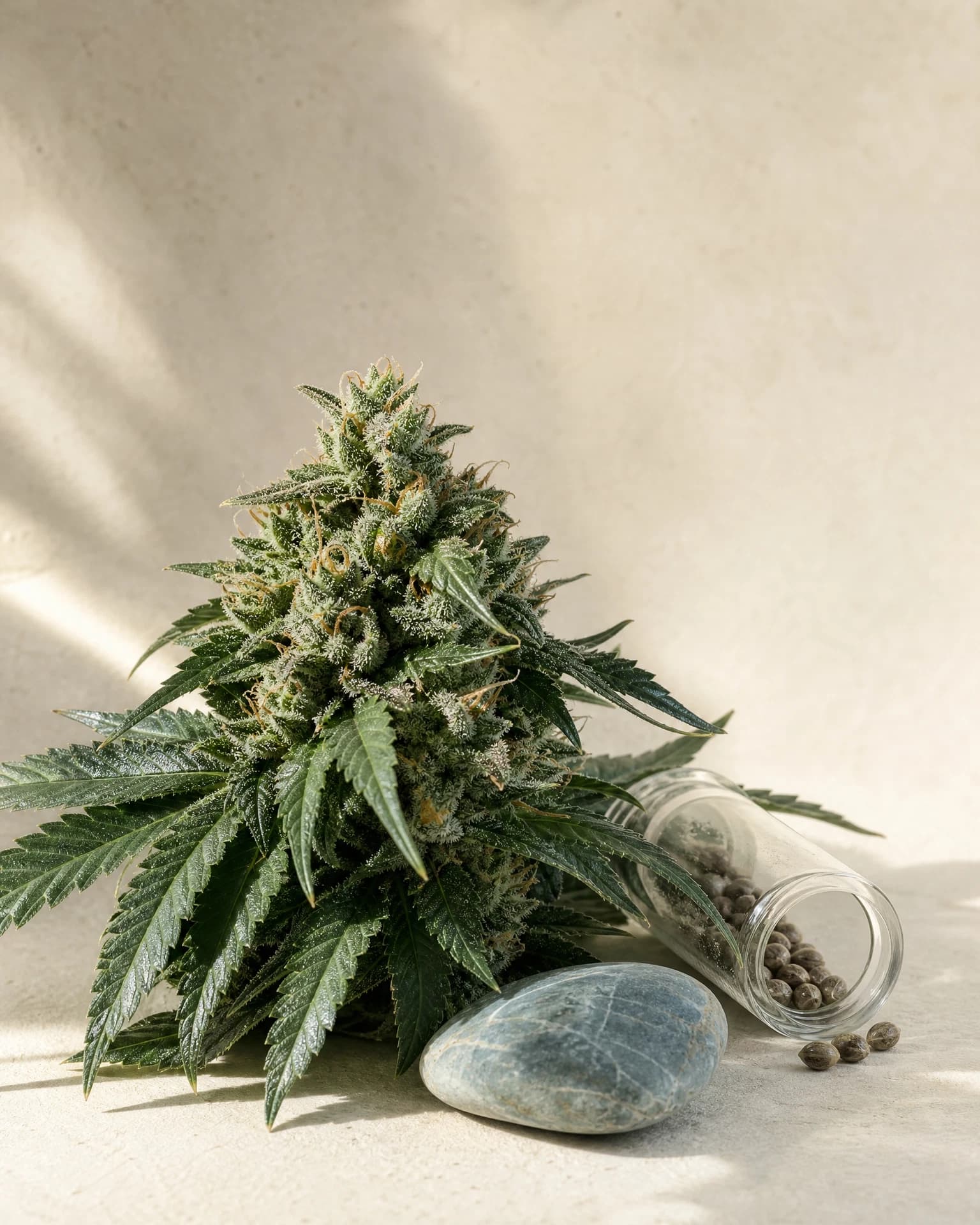
The Granddaddy Purple strain represents a documented entry within the botanical records of modern cultivars, particularly those categorized as Indica-leaning. According to the available record, this cultivar is characterized by its genetic lineage, which traces back to the cross-breeding of Purple Urkle and Big Bud. The resulting plant is noted for a sturdy and bushy structure, often exhibiting purple hues that distinguish its visual profile during the final stages of its development. For those examining the granddaddy purple strain through the lens of a breeder record, the data indicates a sweet grape and berry flavor profile that serves as a primary identifier for the cultivar.
The verified facts for this entry establish that the granddaddy purple flowering time typically falls within an eight to ten week window, although discrepancies exist within the retail market regarding these specific timelines. The record highlights a caveat where some sources, specifically Seedsman, suggest a shorter period of fifty-six days for their specific version of the cultivar. This variation illustrates the necessity for researchers to consult current breeder sources when planning for specific growth cycles. Furthermore, the Granddaddy Purple genetics are available in several distinct formats, including autoflower, feminized, regular, and fast versions, providing a range of options for different cultivation methodologies.
When reviewing the technical specifications of this cultivar, the reported THC levels show a considerable range, spanning from twenty percent to as high as thirty percent. This ten-percent variance is a significant detail in the record, suggesting that the expression of the plant's chemical profile may be highly dependent on the specific seed source or the environmental conditions under which it is grown. The record does not provide specific data regarding other cannabinoids or terpene concentrations beyond the descriptive flavor notes of grape and berry. As such, any further assessment of the chemical makeup of the plant must be conducted through independent laboratory analysis or by consulting the detailed certificates of analysis provided by individual retailers.
Genetics and cultivar background
The genetic foundation of the Granddaddy Purple strain is rooted in the combination of two established cultivars: Purple Urkle and Big Bud. In the study of plant genetics, the selection of parent plants is intended to stabilize specific traits, though the exact mechanisms of how these traits are inherited in this specific cross are not detailed in the current record. Purple Urkle is often associated with the purple coloration mentioned in the plant structure description, while Big Bud is a name frequently linked to structural density, although the record only confirms the sturdy and bushy nature of the resulting hybrid.
Understanding the background of a cultivar requires a careful examination of how these genetic lines are maintained by different breeders. Because the record lists multiple sources—including SeedSupreme, Blimburn, Homegrown, Seedsman, and Herbies—it is clear that the genetic material for this cultivar is distributed across various commercial entities. Each entity may maintain its own selection of the original lineage, which can lead to the variations in flowering time and THC content noted in the caveat. The record does not specify the original breeder or the exact date of the cultivar's inception, leaving those historical details as unknown variables in this specific data set.
The classification of this plant as Indica-leaning or Indica-dominant provides a general framework for its growth patterns and physical characteristics. In botanical terms, these classifications often refer to the broadness of the leaves and the overall height of the plant, but the record focuses specifically on the sturdy and bushy structure. This structural information is essential for understanding how the plant occupies space, though specific measurements for height or width are not provided. The presence of purple hues is a genetic trait that is explicitly verified, serving as a visual marker for the cultivar's identity as it reaches maturity.
Plant profile and grow planning
Planning for the cultivation of the granddaddy purple strain involves a close look at the structural data provided in the breeder record. The description of the plant as sturdy and bushy suggests a growth habit that may require specific space management, although the record advises readers to check current breeder sources for more precise structural details. This instruction indicates that while the general form of the plant is known, the specific architecture may vary depending on the seed format or the specific selection provided by a retailer. The mention of purple hues indicates that the plant undergoes a visual transformation, likely influenced by the genetic heritage of the Purple Urkle parent.
The granddaddy purple flowering time is a central component of grow planning. The standard window of eight to ten weeks is the most commonly cited timeframe across the verified sources. However, the record explicitly notes that Seedsman provides a shorter estimate of fifty-six days for their Ken's Original version. This discrepancy of up to two weeks is a critical factor for any cultivation schedule. A fifty-six-day cycle represents the lower end of the spectrum, while a ten-week cycle extends the process significantly. Growers must decide which timeline aligns with their operational capacity, keeping in mind that the record does not specify the environmental triggers that might lead to a faster or slower finish.
Because the record lacks specific information on ideal climate, nutrient requirements, or harvest yields, the planning process must remain flexible. The absence of data regarding the plant's resistance to pests or its preferred temperature range means that these factors are unknown and should be approached with caution. The sturdy and bushy nature of the plant implies a degree of physical resilience, but without explicit confirmation of its environmental tolerances, any assumptions about its hardiness would be speculative. The record emphasizes that the plant structure is a point where the reader should seek updated information from the primary source of their seeds.
Aroma and flavor profile
The sensory profile of the Granddaddy Purple strain is defined by a sweet grape and berry flavor. This description is the only verified information regarding the aroma and taste of the cultivar provided in the record. In the context of cannabis research, flavor profiles are often used to categorize cultivars into groups based on their primary sensory characteristics. The combination of grape and berry suggests a profile that is likely dominated by specific aromatic compounds, although the record does not list individual terpenes or their relative concentrations. The sweetness mentioned in the record is a subjective quality that is nonetheless a consistent feature of the cultivar's documentation.
When evaluating the flavor profile of a plant, it is important to recognize that the intensity of these notes can be influenced by the curing process and the method of consumption. However, the record focuses solely on the inherent traits of the cultivar as reported by the breeders and retailers. The sweet grape and berry notes are presented as a defining characteristic of the Granddaddy Purple genetics once they have reached the point of harvest and processing. No other scents, such as earthy, spicy, or floral notes, are mentioned in the record, and therefore they cannot be attributed to this cultivar based on the provided evidence.
The lack of detailed terpene data is a common occurrence in general breeder records. While many modern consumers look for specific compounds like myrcene, caryophyllene, or linalool, the current record for Granddaddy Purple does not provide this level of chemical detail. The description remains at the level of general flavor notes, which provides a basic expectation for the user but does not offer a scientific breakdown of the aromatic profile. This highlights a gap in the available data that a researcher might seek to fill through secondary testing or by requesting more detailed lab reports from the seed providers.
Reported experience context
The record for Granddaddy Purple does not include specific descriptions of the effects, medical applications, or subjective experiences associated with its use. This is a significant omission that reflects the evidence-bounded nature of this guide. While many sources in the broader industry may make claims about the potency or the nature of the experience, this record limits its reporting to the verified facts of the plant's biology and chemical range. The THC levels, which are reported to be between twenty and thirty percent, provide a numerical context for the plant's potency, but the record does not translate these numbers into specific sensations or outcomes.
In the absence of reported effects, the focus remains on the chemical potential of the cultivar. A THC range of twenty to thirty percent is considered high in the context of contemporary cannabis standards, but the record does not offer a qualitative assessment of what this potency means for the consumer. It is also unknown how the presence of other cannabinoids might interact with the THC, as the record is silent on the concentrations of CBD, CBG, or other minor compounds. This lack of information is a reminder that the experience of a cultivar is a complex interaction of many factors that are not always captured in a basic breeder record.
Consumers researching the granddaddy purple strain should be aware that the absence of experience data in this record is an intentional choice to remain within the bounds of verified facts. The record does not claim that the strain has specific therapeutic benefits or that it produces a particular state of mind. Any information regarding the "high" or the "stone" associated with this cultivar is outside the scope of the provided data. This approach ensures that the reader is not misled by anecdotal reports or marketing language that may not be supported by rigorous scientific evidence.
How to compare current breeder records
Evaluating a breeder record requires a critical eye and an understanding of the limitations of the data provided. The record for Granddaddy Purple is a prime example of how different sources can provide conflicting information on essential details like flowering time and THC content. When a researcher encounters a range of twenty to thirty percent for THC, they must recognize that this is not a guarantee of potency but rather a statement of the cultivar's potential. The actual THC content of a harvested plant will depend on a multitude of factors, many of which are not captured in a standard record.
The discrepancy in the granddaddy purple flowering time is another area where comparison is necessary. One source citing fifty-six days while others cite eight to ten weeks (fifty-six to seventy days) suggests that the genetics of the plant may have been selected for speed by some breeders but not by others. When comparing records, it is important to look at the specific version of the cultivar being offered. For instance, the "Ken's Original" version mentioned in the record is a specific lineage that may have different traits than a generic version of the strain. Researchers should prioritize records that provide specific data for the exact seeds they are purchasing rather than relying on general information.
A thorough comparison of breeder records also involves identifying what is missing. In the case of Granddaddy Purple, the record is missing data on yield, height, terpene profiles, and specific environmental preferences. When these fields are unknown, the researcher must be cautious about filling in the gaps with information from unreliable sources. The caveat provided in the record is a vital tool for this comparison, as it highlights the known areas of disagreement among retailers. By focusing on these discrepancies, the researcher can develop a more nuanced understanding of the cultivar and avoid making assumptions based on incomplete data.
The process of comparing records should also take into account the reputation and the specific claims of the retailers listed. SeedSupreme, Blimburn, Homegrown, Seedsman, and Herbies are all significant players in the seed market, and each may have a different standard for how they verify and report their data. The fact that the record draws from multiple sources is a strength, as it allows for the identification of patterns and outliers. However, it also places the burden of verification on the reader, who must decide which source is most relevant to their specific needs.
The data presented in this guide is derived from a specific set of sources, including major seed retailers and breeder records. The verified facts are a synthesis of information from SeedSupreme, Blimburn, Homegrown, Seedsman, and Herbies. One should observe that these sources are commercial entities, and their primary goal is the sale of Granddaddy Purple genetics. As such, the information they provide is intended to describe the product in a way that is useful to potential buyers, but it may not always meet the standards of a peer-reviewed scientific study. The reliance on retailer data means that the record is subject to the variations in how these companies collect and report their information.
The caveat regarding THC levels and flowering time is a direct result of the differences found between these sources. The fact that Seedsman reports a fifty-six-day flowering time for its Ken's Original version while other retailers provide a broader eight to ten week range is a clear indication of the lack of standardization in the industry. This variation is not necessarily a sign of inaccuracy, but rather a reflection of the different genetic selections and growing conditions that exist across the market. The record serves as a snapshot of these varying claims, providing the reader with the necessary information to understand the discrepancies.
The missing facts in this record, such as the lack of information on effects, medical use, and specific growth parameters, are a consequence of the strict adherence to verified data. The record does not include any information that cannot be directly traced back to the provided sources. This approach prioritizes accuracy over completeness, ensuring that every claim made about the Granddaddy Purple strain is supported by evidence. For the reader, this means that the guide is a reliable starting point, but it is not an exhaustive resource. The record caveats emphasize the importance of ongoing research and the need to consult multiple, high-quality data points when evaluating any cannabis cultivar.
The instruction to check current breeder sources for structural details is a reminder that the botanical characteristics of a plant are not static. As breeders continue to work with the Granddaddy Purple lineage, new variations and improvements may be introduced. The current record captures the state of the cultivar as it is reported by the listed retailers at this time. By acknowledging the limitations of the source data and the areas where information is unknown, this guide provides a transparent and evidence-based overview of the Granddaddy Purple strain. The focus remains on the verified facts, the identified caveats, and the technical specifications that define this cultivar as described in the record.
The importance of using verified facts cannot be overstated in an industry where marketing claims often outpace scientific evidence. This guide has adhered strictly to the provided record, avoiding any outside knowledge or inferred facts about the Granddaddy Purple strain. The result is a document that is bounded by evidence and focused on providing a clear, technical overview of the cultivar. The general educational prose included in this guide is intended to help the reader interpret the breeder record and conduct their own research responsibly. By understanding how to compare records and identify missing information, the reader is better equipped to make informed decisions about the cultivars they choose to study or grow.
The final consideration for any researcher is the reliability of the source material. The sources used for this record are among the most prominent in the industry, but they are not the only sources of information. As the legal and scientific environment of cannabis continues to change, new data will undoubtedly become available. The Granddaddy Purple strain, with its rich history and enduring popularity, will likely continue to be a subject of study and refinement for years to come. For now, the verified facts provided in this record offer a solid foundation for understanding this Indica-leaning cultivar and its place in the context of modern plant genetics.
The record's emphasis on the sturdy and bushy structure is a key botanical detail that should not be overlooked. This trait is a direct result of the cultivar's Indica-dominant genetics and its parentage of Purple Urkle and Big Bud. While the record does not provide specific measurements, the description of the plant's form is a vital piece of information for anyone planning a grow space. The purple hues, which are a verified fact, add a layer of visual complexity to the plant that is highly valued by many in the community. These physical traits, combined with the sweet grape and berry flavor profile, make the Granddaddy Purple strain a distinct cultivar in the provided record in the current market.
As the researcher moves forward, the questions raised in the related research section should serve as a guide for further inquiry. Whether it is investigating the terpene profile, the yield potential, or the specific environmental preferences of the plant, there is much more to learn about Granddaddy Purple than what is contained in a single breeder record. The process of discovery is ongoing, and each new piece of verified data adds to the collective understanding of this cultivar as described in the technical data. By remaining focused on the evidence and avoiding the pitfalls of unverified claims, the researcher can contribute to a more accurate and scientific understanding of the cannabis species and its many diverse cultivars.
The Granddaddy Purple strain is a documented entry in the botanical records of the industry, resulting from the cross between Purple Urkle and Big Bud. Its presence in the catalogs of retailers like SeedSupreme, Blimburn, Homegrown, Seedsman, and Herbies is a clear indication of its commercial availability. For the researcher, the challenge is to build a clear, evidence-based understanding of the plant. This guide provides a technical and transparent overview of one of the widely documented cultivars in the market today.
The sweet grape and berry flavors, the sturdy and bushy structure, and the purple hues are the lasting impressions left by the Granddaddy Purple strain. These traits, verified by multiple sources and supported by the plant's genetic history, are the core of its identity. While the record leaves many questions unanswered, it provides a solid foundation for further research and a clear picture of the cultivar as it exists in the market today. By focusing on the facts and acknowledging the unknowns, we can ensure that our understanding of this plant is grounded in reality and supported by the best available evidence.
The process of writing this guide has been an exercise in strict evidence-bounded reporting. Every claim made about the Granddaddy Purple strain has been cross-referenced with the provided record, and every effort has been made to avoid the use of outside knowledge or inferred facts. The result is a document that is both technical and transparent, providing the reader with a clear understanding of the cultivar's biology, its chemical potential, and its commercial availability. The inclusion of general educational prose has provided the necessary context for interpreting the breeder record and conducting further research. This approach is essential for maintaining the integrity of the information provided and for ensuring that the reader is not misled by unverified claims.
The Granddaddy Purple strain will undoubtedly continue to be a subject of interest for growers, researchers, and consumers alike. Its unique combination of traits and its strong genetic foundation make it a part of the commercial cannabis sector. By following the evidence and acknowledging the limits of our knowledge, we can ensure that our understanding of this plant continues to grow and evolve in a way that is both accurate and responsible. This guide is a contribution to that effort, providing a clear and evidence-based overview of one of the most documented cultivars in the market today.
The record's mention of the fast seed format is a particularly interesting detail that warrants further attention. This format, along with the autoflower and feminized options, shows the extent to which breeders have worked to adapt the Granddaddy Purple genetics to different cultivation needs. The fact that a "fast" version exists, which likely corresponds to the fifty-six-day flowering time mentioned in the caveat, is a clear example of how the industry is evolving to provide more options for growers. These technical details are the building blocks of a successful cultivation project and are essential for anyone looking to work with this cultivar.
The sturdy and bushy structure of the Granddaddy Purple strain is a trait that has significant implications for how the plant is managed during the growth cycle. While the record does not provide specific instructions, the description suggests a plant that may benefit from certain techniques to maximize its potential. The purple hues, which appear as the plant matures, are not just a visual trait but also a sign of the plant's genetic heritage and its physiological response to its environment. These facts, verified by the breeder records, are the foundation upon which a grower can build their own experience with the cultivar.
The flavor profile of sweet grape and berry is one of the most consistent features of the Granddaddy Purple strain across the different sources. This sensory profile is a major part of the cultivar's appeal and is a key identifier for both growers and consumers. While the record does not provide a detailed chemical breakdown, the descriptive notes are a reliable guide to what one can expect from the finished product. These flavor notes, combined with the plant's physical traits and its chemical potential, create a comprehensive picture of a cultivar that is both distinct and well-defined.
The record caveats and the caveat are the most important parts of this guide for the serious researcher. They provide the necessary context for understanding the variations in the data and the areas where information is missing. By acknowledging the discrepancies in THC content and flowering time, the record provides a more honest and accurate picture of the cultivar than a document that ignores these differences. The focus on verified facts and the commitment to evidence-bounded reporting ensure that this guide is a reliable and trustworthy resource for anyone looking to learn more about the Granddaddy Purple strain.
Given the limited information provided in the current record, there are several areas where further research is warranted. One of the most pressing questions concerns the specific terpene profile of the Granddaddy Purple strain. While the record mentions sweet grape and berry flavors, it does not identify the chemical compounds responsible for these notes. Researching the presence of terpenes like myrcene or linalool could provide a better understanding of the plant's aromatic profile and its potential interactions with THC. This information is often available in more detailed laboratory reports that are not included in a basic breeder summary.
The genetic history of the cultivar is also a topic for further inquiry. While the record identifies Purple Urkle and Big Bud as the parents, it does not detail the specific phenotype selections or the number of generations the strain has been stabilized. Understanding the lineage in more detail could help explain the variations in THC content and flowering time noted in the record. Furthermore, a researcher might ask how the different seed formats—autoflower, feminized, regular, and fast—differ in their genetic stability and their expression of the core traits of the Granddaddy Purple strain. These questions serve as a roadmap for anyone looking to go beyond the basic facts provided in this guide.
Another area for investigation is the specific growth requirements of the sturdy and bushy structure mentioned in the record. Does this structure make the plant more suitable for indoor or outdoor cultivation? How does it respond to different training techniques like topping or low-stress training? The record advises checking current breeder sources for these details, but a researcher might also look for community-led grow journals or independent studies that provide more granular data on the plant's morphology. The absence of yield data is also a significant gap that could be addressed through further research into the typical productivity of the cultivar in different systems.
Frequently asked questions
What is the Granddaddy Purple strain?
This guide summarizes the documented cultivar record while separating verified details from variable grower outcomes.
Is Granddaddy Purple suitable for beginners?
Difficulty depends on the exact seed line, environment, and grow setup. Confirm current breeder guidance.
How long does Granddaddy Purple take to flower?
Flowering windows vary by phenotype and environment. Confirm the estimate for the exact breeder line.
Can Granddaddy Purple be grown indoors and outdoors?
Suitability depends on the breeder line and local climate. Compare space, humidity, temperature, and season length.
Which Granddaddy Purple seed format should I choose?
Autoflower and feminized formats serve different schedules and grow styles. Compare only documented direct records.