
Strain guide
Grape Ape Strain Guide: Berry aroma and grower notes
Grape Ape is documented here with partner-source cultivar context, seed-format availability, and secondary-topic research cues.
Overview
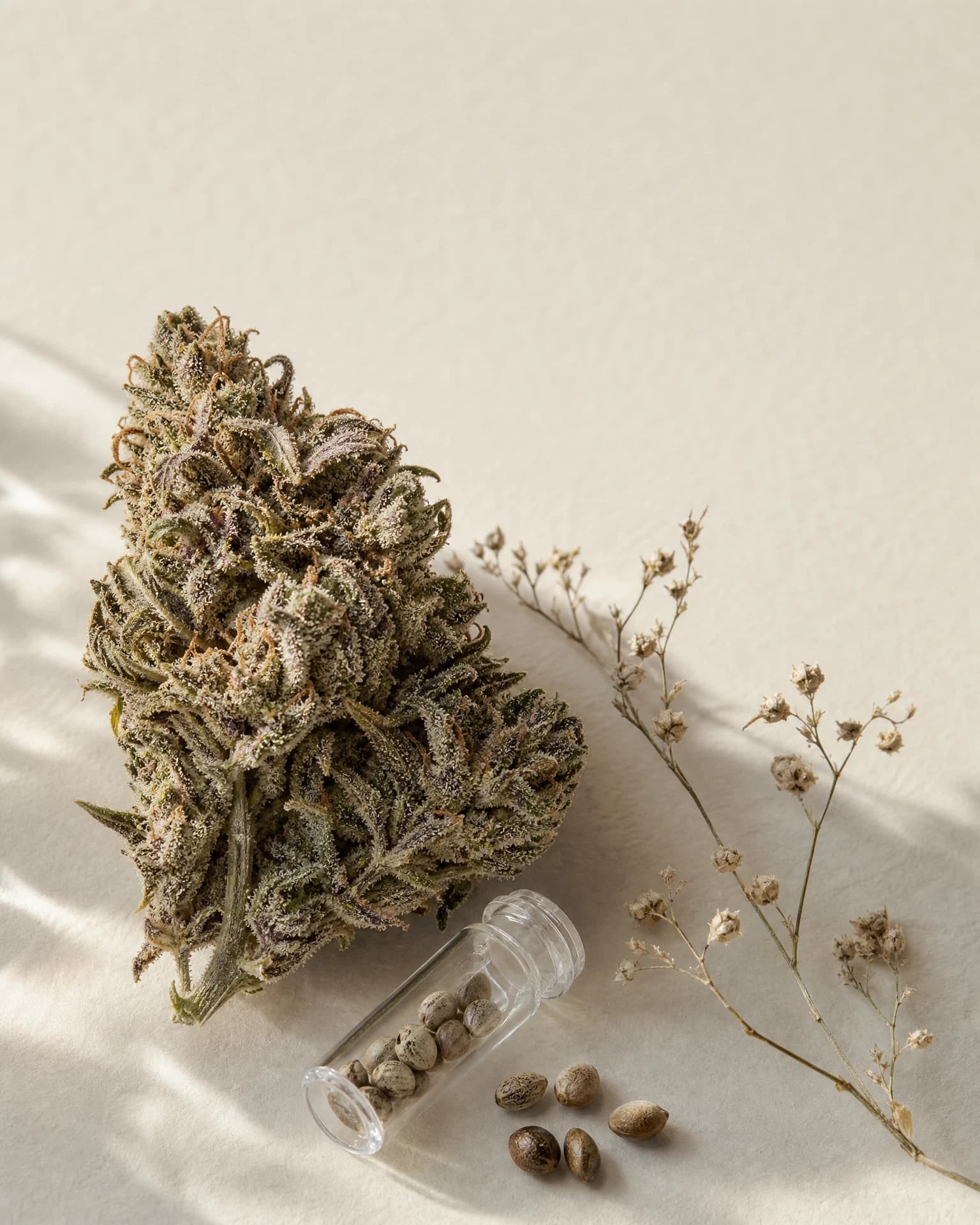
The Grape Ape strain is documented in contemporary breeder records as a heavily Indica-dominant hybrid, typically falling within the range of 90% to 100% Indica genetics. This cultivar is recognized for its specific lineage, which involves a combination of Afghani, Mendocino Purps, and Skunk #1. According to verified catalog data, the plant presents a sweet grape and berry terpene profile, which is often a primary identifier for this selection in retail environments. In terms of chemical composition, laboratory reports and breeder specifications generally place the THC content between 15% and 25%, positioning it within the standard range for modern high-potency selections. The physical expression of the plant is characterized by a short to medium stature, usually reaching a height of approximately 1 meter, with a notably bushy growth habit.
When reviewing an overview of a cultivar like the grape ape strain, it is useful to understand how these summary points are constructed by seed banks and breeders. An overview serves as a condensed snapshot of the plant's most marketable and consistent traits. For a grower or researcher, these initial facts provide a baseline for comparison against other varieties. The percentage of Indica or Sativa dominance is a primary metric used to predict the growth patterns and general physiological effects associated with the plant, although these classifications are often based on historical lineage rather than strict genomic testing. The presence of specific parent strains in the overview also signals to the reader the potential stability and heritage of the seeds, as well as the likely aromatic qualities that have been stabilized over successive generations of breeding.
Evaluating an overview requires a critical eye toward the ranges provided. For instance, a THC range of 15% to 25% indicates that while the genetic potential for high potency exists, the final result is highly dependent on the specific phenotype and the environmental conditions during the growth cycle. Similarly, the description of a terpene profile as "sweet grape and berry" is a summary of the most common sensory experiences reported by breeders, but it does not account for the subtle variations that may occur in different growing mediums or under different light spectrums. By starting with a standardized overview, a researcher can begin to map out the technical requirements and expectations for the cultivar before moving into more detailed technical specifications.
Genetics and cultivar background
The genetic foundation of the grape ape strain is built upon three distinct and well-documented parents: Afghani, Mendocino Purps, and Skunk #1. This specific combination represents a bridge between traditional landrace genetics and more modern, stabilized hybrids. The inclusion of Afghani genetics suggests a lineage rooted in the mountainous regions of the Middle East, where plants naturally evolved to produce thick resin and maintain a compact, hardy structure to survive harsh environmental conditions. Landrace strains like Afghani are often prized in breeding programs for their ability to pass on traits such as structural integrity, fast flowering times, and a high density of trichomes.
Mendocino Purps, the second parent in this lineage, contributes to the specific aromatic and aesthetic qualities that define many modern hybrids from the Pacific Coast regions. In general breeding contexts, "Purps" lineages are often associated with the expression of anthocyanins, which can lead to color changes in the foliage and flowers, although the specific record for this cultivar focuses on the aromatic profile of sweet grape and berry. The third parent, Skunk #1, is perhaps one of the most influential hybrids in the history of cannabis breeding. Skunk #1 was developed to provide a reliable, high-yielding, and stable genetic base that could be easily crossed with other varieties to improve their growth characteristics and potency. The presence of Skunk #1 in a lineage often points toward a plant that has been refined for consistency across different environments.
Understanding the background of a cultivar involves looking at how these disparate genetic sources interact. When a breeder combines a landrace like Afghani with a stabilized hybrid like Skunk #1, the goal is often to capture the raw resilience of the former and the predictable performance of the latter. The addition of a third, more specialized parent like Mendocino Purps allows the breeder to fine-tune the sensory characteristics of the final product. For the researcher, this background provides context for why the plant might behave in a certain way—such as maintaining a short, bushy structure or producing a specific set of terpenes. It also highlights the complexity of modern cannabis taxonomy, where a single name represents a sophisticated intersection of global botanical history.
Plant profile and grow planning
The physical profile of the grape ape strain is described as short to medium, with plants typically reaching a height of around 1 meter. This compact stature is accompanied by a bushy structure, which is a common trait among cultivars with heavy Indica dominance. For those involved in grow planning, these dimensions are a significant factor in determining the layout of the cultivation space. A plant that stays close to the ground and spreads outward requires different management than a tall, lanky variety. The bushy nature of the plant suggests that it will produce a significant amount of lateral branching, which can lead to a dense canopy that may require specific attention to ensure adequate light distribution and airflow.
The grape ape flowering time is another significant component of the plant profile, though the records for Grape Ape genetics show a notable degree of variation. Retailers and breeders report flowering durations ranging from 6 to 10 weeks. This four-week window represents a substantial difference in the production cycle and highlights the importance of checking the specific breeder source for the seeds being used. A 6-week flowering period is considered very fast, suitable for quick turnovers and environments with shorter growing seasons, while a 10-week period suggests a more prolonged maturation process that may result in different chemical or structural outcomes. Planning for such a wide range requires a flexible approach, where the grower must be prepared to monitor the plant's development closely rather than relying on a fixed calendar date.
When planning for a cultivar with a short and bushy profile, several technical considerations come into play. The density of the foliage means that interior sites may be shaded by the upper leaves, potentially leading to uneven development if not managed. Techniques such as selective pruning or the use of support structures to spread the branches can help in maximizing the efficiency of the light source. Furthermore, the height limit of 1 meter makes this cultivar a candidate for spaces with limited vertical clearance, such as small indoor tents or tiered shelving systems. However, the bushiness means that while vertical space is saved, horizontal space must be allocated to allow each plant to reach its full potential without overcrowding its neighbors.
Aroma and flavor profile
The aromatic identity of the grape ape strain is centered on a sweet grape and berry terpene profile. In the context of cannabis botany, these scents are the result of specific volatile organic compounds produced within the glandular trichomes of the plant. Terpenes are not only responsible for the smell and taste of the cultivar but also play a role in the plant's defense mechanisms and its interaction with the environment. A profile described as "sweet grape" often suggests the presence of terpenes like myrcene or linalool, which can contribute to fruity and floral notes, although the specific concentrations can vary based on the individual plant's phenotype and the conditions in which it was grown.
Flavor is closely linked to the aroma, as the olfactory system and the taste buds work together to create the sensory experience of the cultivar. When a breeder record lists "berry" as a primary flavor note, it indicates a complex mixture of sweet and slightly tart sensations that persist through the consumption process. For the consumer and the researcher, these profiles are a key part of the cultivar's appeal and are often used to distinguish it from other varieties with more earthy, spicy, or fuel-like scents. The consistency of these grape and berry notes across different retailer listings suggests that the breeders have successfully stabilized the genes responsible for these specific terpene expressions.
Understanding an aroma and flavor profile also requires acknowledging the factors that can influence terpene production. Soil composition, nutrient levels, temperature, and humidity all play a part in how a plant develops its scent. For instance, a plant grown in organic soil may express a more nuanced and intense aroma compared to one grown with synthetic fertilizers. Additionally, the drying and curing process is vital for preserving these volatile compounds; improper handling after harvest can lead to the loss of the delicate grape and berry notes, leaving behind a more generic hay-like smell. Therefore, while the genetic potential for a sweet profile is present in the Grape Ape genetics, the realization of that profile is a reflection of the entire lifecycle of the plant.
Reported experience context
The reported experience context for the grape ape strain is defined by its high THC content and its heavy Indica dominance. With THC levels typically ranging from 15% to 25%, this cultivar is classified as a high-potency option in the current market. THC, or delta-9-tetrahydrocannabinol, is the primary psychoactive compound in cannabis, and its concentration is a major factor in how the cultivar is perceived by users. A range starting at 15% is accessible for many, while the upper limit of 25% represents a level of intensity that is often sought after by experienced consumers. The wide range also suggests that different batches and phenotypes can vary significantly in their strength.
The Indica-leaning nature of the strain, often cited as 90% to 100% Indica, provides further context for the expected experience. In traditional cannabis classification, Indica varieties are associated with a physical and relaxing sensation, often contrasted with the more cerebral and energizing effects attributed to Sativa varieties. While modern science has begun to move toward a more nuanced understanding of how terpenes and cannabinoids interact (the entourage effect), the Indica label remains a standard shorthand in the industry for predicting a plant's impact. The fact that some sources classify this cultivar as a pure 100% Indica highlights its reputation as a quintessential example of this category.
When interpreting these reported experiences, a researcher should consider the subjective nature of the data. Most information regarding the "experience" of a cultivar comes from a combination of breeder descriptions and anecdotal reports from consumers. These reports are influenced by individual biology, tolerance levels, and the setting in which the cultivar is used. For a researcher, the focus is on the chemical markers—the THC percentage and the Indica dominance—as these provide the most objective framework for understanding the plant's potential. By analyzing these figures, one can infer the general direction of the experience without relying on the more colorful and less scientific descriptions often found in marketing materials.
How to compare current breeder records
Comparing breeder records for a cultivar like the grape ape strain requires a systematic approach to data verification. Because different seed banks and retailers may source their information from various breeders or their own internal testing, discrepancies are common. A researcher should start by identifying the core facts that are consistent across all sources, such as the general genetic lineage and the primary terpene profile. From there, the focus should shift to the areas where the data diverges, such as the reported flowering times or the exact percentage of Indica dominance. By looking at multiple records side-by-side, one can begin to see the range of possibilities for the cultivar rather than relying on a single, potentially biased source.
One of the most effective ways to compare records is to look at the specific metrics provided for growth and potency. For example, if one retailer lists a flowering time of 6 weeks and another lists 10 weeks, this indicates a high degree of phenotypic plasticity or perhaps a difference in how the "start" and "end" of the flowering phase are defined. Some breeders count from the first sign of flowers, while others count from the change in the light cycle. Understanding these technical nuances allows a grower to better interpret the data and set realistic expectations for their own environment. Similarly, THC ranges should be viewed as a spectrum of potential rather than a guaranteed result, with the understanding that the highest numbers often come from optimized, professional cultivation setups.
In addition to technical data, the history and reputation of the source itself should be evaluated. Established seed banks often provide more detailed and verified information compared to newer or less transparent retailers. A good record will not only list the traits of the plant but also provide context on the breeding methods and the stability of the seeds. When faced with conflicting information, the best practice is to look for the consensus among the most reputable sources. If the majority of high-quality catalogs describe a plant as 90% Indica and 1 meter tall, these figures can be treated with more confidence than an outlier claim. This process of triangulation is essential for anyone looking to conduct rigorous research or achieve consistent results in the garden.
The information presented in this guide is derived from a variety of contemporary breeder records and retailer catalogs, which provide a snapshot of the grape ape strain as it exists in the current market. The records indicate that these sources often contain conflicting data, which reflects the inherent variability of a biological product like cannabis seeds. For instance, while most retailers classify the strain as 90% Indica, some sources describe it as a 100% pure Indica. This discrepancy may be due to different interpretations of the plant's lineage or variations in the specific breeding lines used by different seed banks. Such differences highlight the need for growers to remain flexible and observant throughout the cultivation process.
Furthermore, the reported flowering duration shows a significant range, with some sources claiming as little as 6 weeks and others suggesting up to 10 weeks. This variation is a substantive caveat that should be considered during the planning phase, as it affects everything from nutrient scheduling to harvest logistics. The absence of a single, universally agreed-upon flowering time suggests that the cultivar may exhibit different phenotypes or respond differently to various environmental triggers. As with all agricultural data, the figures provided should be treated as guidelines rather than absolute certainties. The goal of this guide is to provide a synthesis of the available evidence while clearly stating the limits of that evidence and the areas where source disagreement exists.
For those looking to deepen their understanding of the grape ape strain, several related research questions can guide further investigation. One primary area of interest is the specific nutrient requirements of a short, bushy Indica-dominant hybrid. Plants with dense foliage often have high demands for certain minerals, particularly during the transition to the flowering phase. Researching how this cultivar responds to different feeding schedules or organic vs synthetic nutrients can provide valuable insights for optimizing growth. Additionally, the bushy structure raises questions about pest and disease resistance, particularly in relation to airflow and humidity. Investigating the plant's susceptibility to common issues like powdery mildew or bud rot in a dense canopy is a practical necessity for any serious grower.
Another important research avenue involves the stability of the terpene profile across different environments. While the "sweet grape and berry" notes are a defining characteristic, it would be beneficial to know how these scents change when the plant is grown at different temperatures or under different types of lighting, such as LED vs HPS. Does a cooler environment during the final weeks of flowering enhance the expression of certain terpenes or anthocyanins? Furthermore, the wide flowering window of 6 to 10 weeks invites research into the relationship between harvest timing and chemical composition. Does a plant harvested at 7 weeks have a significantly different cannabinoid profile than one allowed to mature for the full 10 weeks?
Finally, the genetic history of the cultivar offers a wealth of information for those interested in plant breeding and taxonomy. Researching the specific versions of Afghani, Mendocino Purps, and Skunk #1 used in the original cross can help in understanding the evolution of the strain. Are there different "cuts" or clones of Grape Ape that have been used to produce the seeds currently on the market, and how do they differ from the original parentage? By asking these types of technical and historical questions, a researcher can move beyond the surface-level information provided in a standard guide and gain a truly comprehensive understanding of the cultivar's biology and potential.
Frequently asked questions
What is the Grape Ape strain?
This guide summarizes the documented cultivar record while separating verified details from variable grower outcomes.
Is Grape Ape suitable for beginners?
Difficulty depends on the exact seed line, environment, and grow setup. Confirm current breeder guidance.
How long does Grape Ape take to flower?
Flowering windows vary by phenotype and environment. Confirm the estimate for the exact breeder line.
Can Grape Ape be grown indoors and outdoors?
Suitability depends on the breeder line and local climate. Compare space, humidity, temperature, and season length.
Which Grape Ape seed format should I choose?
Autoflower and feminized formats serve different schedules and grow styles. Compare only documented direct records.