
Strain guide
Hash Plant Strain Guide: Breeder-specific aroma and grower notes
Hash Plant is documented here with partner-source cultivar context, seed-format availability, and secondary-topic research cues.
Overview
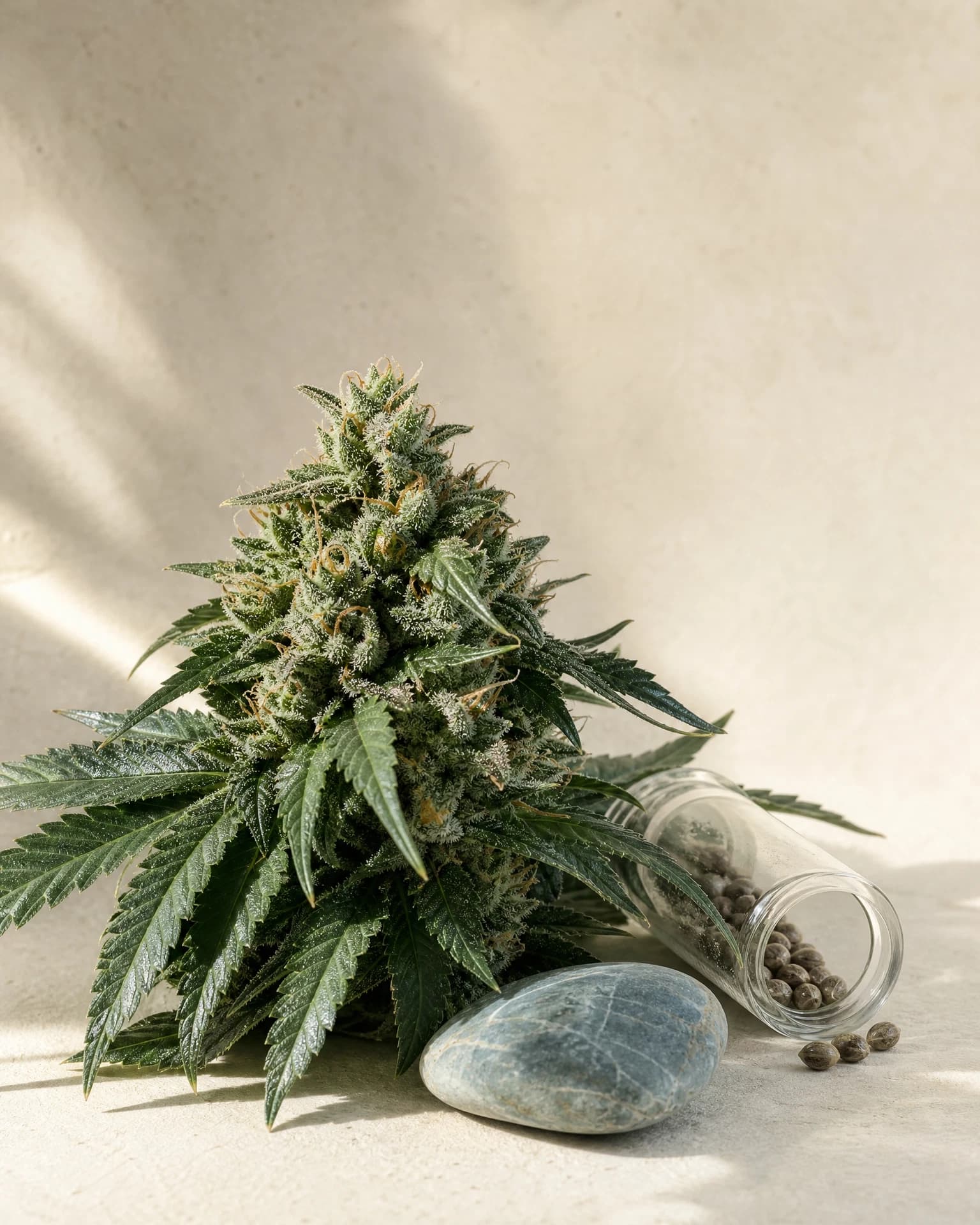
The study of a hybrid cultivar such as the one described in this record requires a careful examination of the specific data points provided by breeders and distributors. When analyzing the hash plant strain, researchers and cultivators often encounter a variety of technical specifications that define the plant's growth patterns and genetic heritage. This particular record identifies the subject as a hybrid cultivar, a classification that indicates a crossbreeding history designed to stabilize certain desirable traits. The primary focus of this guide is to present the verified facts associated with Hash Plant genetics while maintaining a strict adherence to the provided documentation.
Understanding a breeder record involves looking past the marketing language often found in the industry and focusing on the empirical data. In this instance, the record provides specific ranges for flowering times and height, as well as a clear indication of the genetic composition. The hash plant strain is characterized by its dominant Indica profile, which influences its physical structure and development cycle. By focusing on these core attributes, a clearer picture of the cultivar emerges, allowing for better-informed decisions regarding its inclusion in a garden or research project.
The availability of Hash Plant genetics in specific formats, such as feminized options, further defines the current state of this cultivar in the market. Each data point, from the resinous nature of the plant to its compact structure, serves as a piece of a larger puzzle. However, it is equally necessary to recognize where information is missing or where discrepancies exist between different versions of the same name. This record serves as a foundation for understanding the specific iteration of the strain described herein, emphasizing the need for evidence-based analysis in the botanical field.
Genetics and cultivar background
The hash plant genetics described in this record reveal a strong lean toward Indica characteristics, with the cultivar being identified as 90% to 100% dominant Indica. This high level of Indica dominance typically suggests a lineage rooted in geographic regions known for producing dense, resinous plants. According to the verified facts, the origin of this strain is attributed to a cross between Afghani and Northern Lights #1, or alternatively, it is described as a pure Afghani landrace selection. This distinction is significant, as it points to a dual possibility in the genetic history that a researcher must account for when evaluating the plant.
The inclusion of Afghani genetics is a common thread in many cultivars that prioritize resin production and a compact growth habit. Landrace selections, such as the pure Afghani mentioned, represent plants that have evolved in their native environment without significant human intervention in their breeding patterns. When these landrace genetics are crossed with established hybrids like Northern Lights #1, the resulting offspring often display a blend of ancestral stability and modernized growth efficiency. The record suggests that this particular iteration of the hash plant strain captures these qualities, manifesting in a plant that is noted for being particularly resinous.
A critical aspect of the genetic background provided is the mention of two distinct versions that exist under the same name. One version is associated with the Sensi Seeds hybrid lineage involving Afghani and Northern Lights #1, while another is linked to the Barney's Farm Afghan Hash Plant, which is categorized as a landrace selection. These two versions are noted to differ not only in their genetic makeup but also in their flowering durations. Such discrepancies are common in the botanical record, where different breeders may use the same common name for distinct genetic lines. A thorough investigation into the hash plant genetics must therefore consider which specific version is being referenced in any given context.
Plant profile and grow planning
Planning a cultivation cycle for this hybrid cultivar involves accounting for its physical dimensions and the time required for it to reach maturity. The record specifies a plant structure that ranges from short to medium, which is a common trait for plants with such high Indica dominance. A short-to-medium stature suggests that the plant is likely to be bushy and compact, making it suitable for environments where vertical space might be limited. The compact nature of the plant is also linked to its resinous quality, a feature that is highlighted as a primary characteristic in the verified facts.
The flowering context for the hash plant strain is listed as being between 40 and 60 days. This is a relatively fast flowering period, which can be an advantage for cultivators looking to complete multiple cycles within a year or those working in regions with shorter growing seasons. However, the 20-day range between the minimum and maximum flowering time indicates that there may be significant phenotypic variation within the seeds, or that the two different versions mentioned in the caveat have different maturation rates. When planning a grow, it is advisable to prepare for the possibility that the plants may take the full 60 days to reach peak maturity, while also monitoring for early finishers that might be ready by the 40-day mark.
Grow planning also requires a consideration of the resinous structure described. Plants that are noted for high resin production often require specific environmental conditions to prevent issues such as mold or mildew, especially if the buds are dense and compact. While the record does not provide specific humidity or temperature requirements, the physical description of the plant suggests that airflow and moisture control will be important factors to manage. The short-to-medium height also implies that certain training techniques might be applied to ensure that light reaches the inner parts of the compact structure, although the record does not explicitly mention any specific cultivation methods.
Aroma and flavor profile
The current record for the hash plant strain does not contain any specific information regarding its aroma or flavor profile. In the absence of documented data, it is not possible to make claims about the scent, taste, or terpene composition of this cultivar. This lack of information is a common occurrence in technical breeder records, which sometimes prioritize growth metrics and genetic lineage over sensory descriptions. For a researcher, an empty field in a record is as important as a filled one, as it indicates a gap in the verified data that should not be filled with speculation.
When a record lacks aroma and flavor details, it serves as a reminder of the limitations of standardized botanical documentation. Sensory experiences are often subjective and can be influenced by the environment in which the plant is grown, the nutrients it receives, and the methods used for curing the final product. Without a laboratory analysis of the terpene profile or a consistent set of breeder-provided descriptors, any claims about the flavor would be unsupported by the evidence. Therefore, the sensory attributes of this version of the hash plant strain remain unknown within the scope of this verified record.
The omission of these details also highlights the importance of distinguishing between different versions of a strain. As noted in the caveat, there are at least two distinct genetic lines referred to as Hash Plant. It is possible that the aroma and flavor profiles of these two versions differ significantly, further complicating the task of providing a single, unified description. In such cases, the most responsible approach is to state the absence of data clearly, ensuring that the reader understands the boundaries of the verified information.
Reported experience context
Similar to the aroma and flavor profile, the record provides no data regarding the reported experience or effects associated with the hash plant strain. There are no mentions of potency, cannabinoid percentages, or the specific nature of the experience that a consumer might expect. In the context of evidence-bounded writing, it is prohibited to infer effects based on the strain's name or its Indica dominance. While many people associate certain traits with Indica-dominant hybrids, these generalizations cannot replace specific, documented facts about a particular cultivar.
The absence of experience data in a breeder record can be attributed to several factors. Some records are intended strictly for agricultural purposes, focusing on yield, height, and flowering time rather than the end-user experience. Additionally, the legal and regulatory environment surrounding the documentation of cannabis effects can vary, leading some providers to omit such information to remain compliant with local laws. For the purpose of this guide, the experience context is categorized as unknown, reflecting the limitations of the provided data set.
A researcher looking into the hash plant strain should be aware that the lack of reported experience data means that any information found elsewhere must be scrutinized for its source and reliability. Consumer reviews and anecdotal reports, while common, do not carry the same weight as verified breeder facts. Without empirical data or standardized testing results included in the record, the effects of this cultivar cannot be described with any degree of certainty. This reinforces the need for a cautious and evidence-based approach to understanding cannabis cultivars.
How to compare current breeder records
Evaluating a breeder record requires a systematic approach to data analysis, especially when dealing with cultivars that have multiple versions or conflicting information. The first step in this process is to identify the source of the record and the specific fields of information provided. A high-quality record will typically include details on genetics, flowering time, plant structure, and seed formats. When a record like the one for the hash plant strain is encountered, the researcher must weigh the verified facts against any caveats or missing data points to form a complete understanding of the cultivar's status.
One of the most important aspects of comparing records is the identification of genetic lineage. In the case of the hash plant strain, the record points to two potential origins: a cross of Afghani and Northern Lights #1, or a pure Afghani landrace. When a record presents such alternatives, it is a signal that the name "Hash Plant" may be used as a descriptor for a category of plants rather than a single, unique genetic entity. Comparing different records involves looking for these kinds of discrepancies and determining which version is being described. This requires a close reading of the breeder's history and the specific breeding techniques they employ.
Another key factor in comparing records is the evaluation of growth metrics, such as flowering time and height. The hash plant record provides a range of 40 to 60 days for flowering and a height of short to medium. When comparing this to other records, one might find narrower or wider ranges, which can indicate the level of stabilization in the genetic line. A highly stabilized cultivar will show less variation between individual plants, leading to more predictable results. Conversely, a wide range in flowering time or height may suggest a more diverse genetic pool or a less refined breeding process. Researchers should also look for consistency across multiple records from different sources to verify the accuracy of the data.
The presence of a caveat in a record is a vital piece of information that should not be overlooked. Caveats often explain the limits of the evidence or point to known issues with the data, such as the existence of multiple versions of a strain. In the hash plant record, the caveat provides essential context about the different breeders and the variations in their offerings. When comparing records, the absence of a caveat in one source compared to its presence in another can be a sign of a more thorough or transparent reporting process. A responsible researcher will prioritize records that acknowledge these complexities and provide a clear explanation of the evidence limits.
Furthermore, the comparison of seed formats is an essential part of the evaluation process. A record that only lists feminized seeds may be focusing on a specific market segment, while a more comprehensive record might include regular, auto-flowering, and feminized options. Understanding the implications of each format is essential for a cultivator. For instance, while feminized seeds offer convenience, they do not allow for the selection of male plants for breeding. By comparing the formats available across different records, one can gain insight into the breeder's goals and the intended use of the cultivar.
Finally, a researcher must be prepared to handle missing data. As seen in the hash plant record, fields for aroma, flavor, and experience are often left blank or unspecified. When comparing records, it is worth noting which sources provide this information and which do not. However, one must also be cautious of records that provide overly detailed or hyperbolic descriptions without any supporting evidence. A record that sticks to verifiable, empirical data is often more reliable than one that uses promotional language to fill in the gaps. By maintaining a critical and evidence-based perspective, a researcher can effectively manage the complexities of breeder records and make informed decisions based on the best available data.
The information presented in this guide is derived from a specific record that prioritizes verified facts and acknowledges the limitations of the available evidence. A central component of this record is the caveat, which serves as a substantive explanation of the evidence limits for the hash plant strain. The caveat notes that the term "Hash Plant" does not refer to a single, uniform entity but rather to at least two distinct versions: a hybrid cross of Afghani and Northern Lights #1 associated with Sensi Seeds, and a landrace selection known as Afghan Hash Plant from Barney's Farm. This distinction is fundamental to understanding the discrepancies in genetics and flowering times that are observed in the data.
The evidence limits are further defined by the absence of certain data points. The record lacks information on the aroma, flavor, and reported experience of the cultivar, as well as specific cannabinoid and terpene percentages. These missing facts constrain the draft, preventing any claims about the sensory or physiological effects of the plant. By strictly adhering to the provided documentation, this guide ensures that every statement is backed by the verified facts, avoiding the speculation and outside knowledge that often cloud the discussion of cannabis strains.
Furthermore, the record highlights the variability in the retail market, noting that some providers may carry related hybrids rather than the specific versions described. This adds another layer of complexity to the evidence, as it suggests that the name "Hash Plant" can be applied loosely by different entities. The record caveats serve to remind the reader that the data provided is a snapshot of the current record and that a thorough understanding of the cultivar requires an awareness of these variations and evidence boundaries. By focusing on what is known and clearly stating what is unknown, the record maintains a high standard of data integrity and transparency.
In conclusion, the study of the hash plant strain through this record emphasizes the importance of evidence-bounded analysis. The verified facts provide a clear picture of the plant's Indica dominance, its compact and resinous structure, and its relatively fast flowering time. At the same time, the caveat and the missing data points serve as essential guides for the researcher, pointing to the areas where caution and further investigation are required. This approach to botanical documentation ensures that the information provided is accurate, reliable, and free from the influence of unsupported claims.
Given the specific information and the gaps identified in the hash plant record, several research questions arise that could help clarify the status and characteristics of this cultivar. These questions are designed to guide further investigation and highlight the areas where more data is needed to form a complete picture. A researcher might start by asking about the specific origins of the two different versions mentioned in the caveat. What are the historical contexts that led to both a hybrid and a landrace selection being marketed under the same name? Understanding the timeline of these developments could provide insight into how the name "Hash Plant" evolved in the industry.
Another important question relates to the flowering time discrepancy. The record notes a range of 40 to 60 days, and the caveat states that the two versions differ in their flowering times. Which version is associated with the shorter end of the range, and which takes longer to mature? Identifying these specific traits for each version would allow cultivators to make more precise plans for their gardens. Furthermore, a researcher might investigate the environmental factors that influence where a plant falls within that 20-day flowering window. Does the flowering time change significantly based on the light cycle, nutrient regimen, or temperature?
The resinous nature of the plant also prompts questions about its chemical composition. While the record does not provide data on cannabinoids or terpenes, the description of the plant as "compact and resinous" suggests a high concentration of trichomes. What is the typical resin yield for this cultivar compared to other Indica-dominant strains? Are there specific terpene profiles that are consistently associated with the Afghani and Northern Lights #1 lineage? Investigating these questions through laboratory analysis would help fill the gaps in the aroma and flavor profile that are currently present in the record.
The availability of different seed formats and the presence of related hybrids like Hash Burger also raise questions about genetic stability and naming conventions. How closely related is Hash Burger to the original Hash Plant lineage, and what specific traits were introduced through the hybridization process? Additionally, why are some versions of the strain only available in feminized format while others might be offered as regular seeds? Understanding the breeder's decisions regarding seed production can provide clues about the genetic health and commercial strategy behind the cultivar.
Finally, a researcher might ask how the hash plant strain compares to other landrace-derived hybrids in terms of growth efficiency and resin production. By placing the hash plant within a broader botanical context, one can better appreciate its unique characteristics and its role in the development of modern cannabis genetics. These research questions serve as a starting point for a more in-depth exploration, emphasizing the need for continued data collection and verification in the field of cannabis research.
Frequently asked questions
What is the Hash Plant strain?
This guide summarizes the documented cultivar record while separating verified details from variable grower outcomes.
Is Hash Plant suitable for beginners?
Difficulty depends on the exact seed line, environment, and grow setup. Confirm current breeder guidance.
How long does Hash Plant take to flower?
Flowering windows vary by phenotype and environment. Confirm the estimate for the exact breeder line.
Can Hash Plant be grown indoors and outdoors?
Suitability depends on the breeder line and local climate. Compare space, humidity, temperature, and season length.
Which Hash Plant seed format should I choose?
Autoflower and feminized formats serve different schedules and grow styles. Compare only documented direct records.