
Strain guide
Moon Rocks Strain Guide: Berry aroma and grower notes
Moon Rocks is documented here with partner-source cultivar context, seed-format availability, and secondary-topic research cues.
Overview
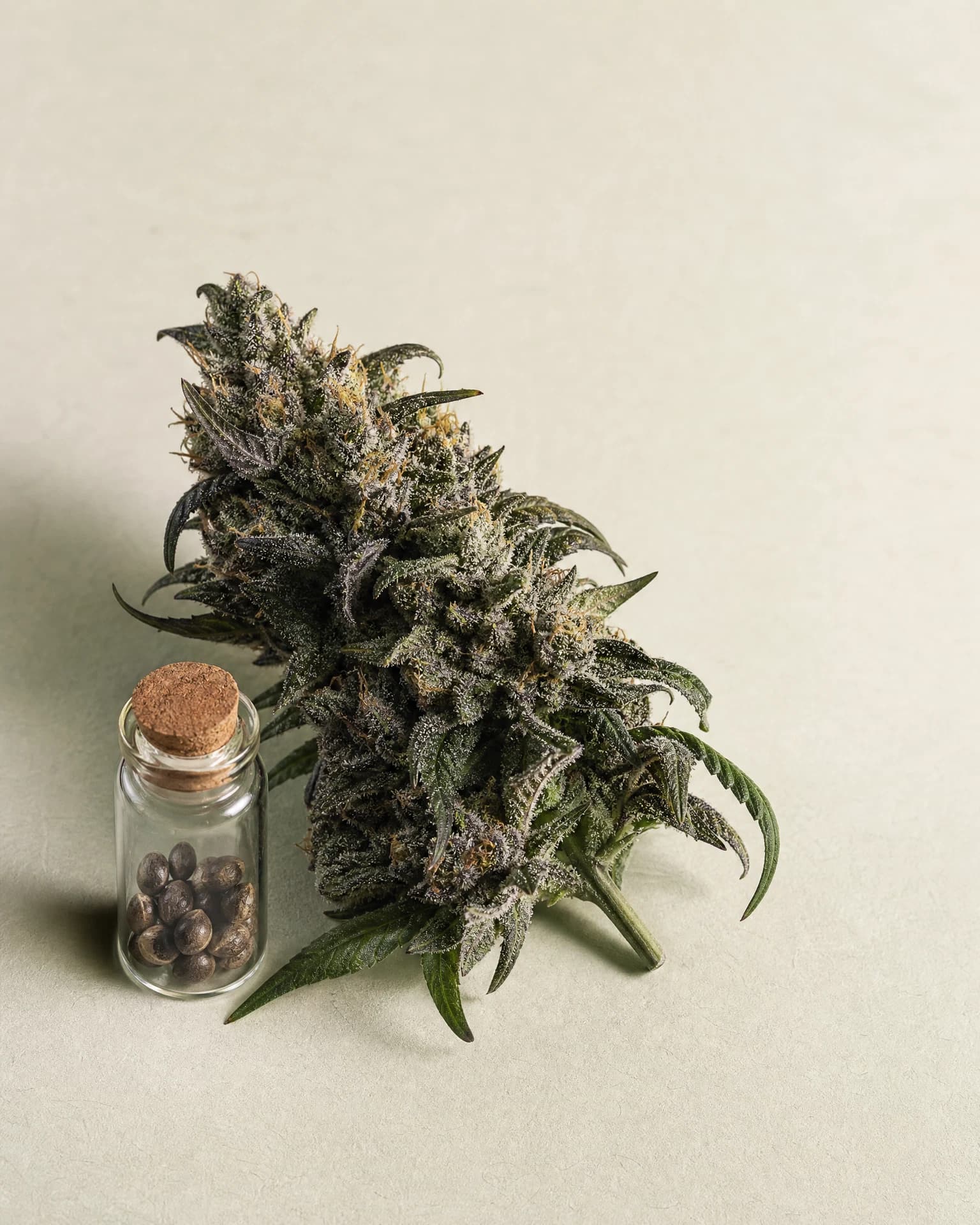
The cultivar identified as Moon Rocks, frequently documented as Blackberry Moonrocks, represents a specific genetic lineage within the modern cannabis market. This particular entry is categorized as an indica-leaning hybrid, with technical records indicating an eighty percent indica dominance. When analyzing this cultivar, researchers and cultivators must distinguish between the genetic strain and the manufactured cannabis product that shares the same name. The latter typically involves a combination of flower, oil, and kief, which is a distinct preparation method rather than a specific botanical lineage. The moon rocks strain discussed here is a biological entity defined by its parentage and chemical profile rather than a physical assembly of different cannabis derivatives.
Understanding the distinction between a genetic strain and a manufactured product is a fundamental requirement for accurate botanical research. In many instances, common names in the cannabis industry overlap, leading to significant confusion for those attempting to source specific seeds or analyze particular chemical outcomes. The moon rocks strain guide serves to clarify these differences by focusing exclusively on the documented traits of the Blackberry Moonrocks lineage. This includes its specific flowering window, which typically spans between eight and ten weeks, and its physical stature, which is described as short to medium. By adhering to verified breeder records, one can isolate the biological characteristics of the plant from the broader commercial terminology that may obscure its actual identity.
Genetics and cultivar background
The genetic foundation of the moon rocks strain is established through a cross between Blue Moonrock and Blackberry Kush, though some records simply list the second parent as Blackberry. This hybridization results in an eighty percent indica-dominant profile, which dictates much of the plant's structural and chemical development. The integration of these two parent lines suggests a focus on specific traits such as resin production and a particular terpene composition. When evaluating the genetics of any cultivar, it is necessary to look at the stability of the lineage and how the traits of the parents manifest in the offspring. In this case, the combination of Blue Moonrock and Blackberry Kush creates a distinct hybrid that is recognized for its high potency and specific aromatic markers.
Cultivar background information often relies on the consistency of breeder reports across different platforms. For the moon rocks strain, the documentation provided by sources such as Blimburn, Seedsman, and Herbies provides a baseline for understanding its genetic origins. These sources confirm the parentage and the resulting indica dominance, which are the primary factors in its classification. However, it is also important to recognize that genetic expressions can vary depending on the specific phenotype and the environmental conditions in which the plant is grown. The record for this cultivar highlights a specific range of THC content, reaching from twenty-six percent to thirty-three percent, which is a direct result of its genetic heritage.
Plant profile and grow planning
The physical profile of the moon rocks strain is characterized by a compact structure, with plants typically reaching a height of approximately 120 centimeters. This short to medium stature makes it a specific candidate for various cultivation environments where space might be a limiting factor. The buds produced by this cultivar are described as resin-dense, a trait that is highly sought after for both aesthetic and functional reasons. Additionally, the plant may exhibit purple hues during its development, a characteristic that is often influenced by environmental factors such as temperature fluctuations during the later stages of the flowering cycle.
Planning for the cultivation of this strain requires an understanding of its flowering context, which is documented as being between eight and ten weeks. This timeframe is relatively standard for indica-dominant hybrids, but it requires careful management to ensure that the plant reaches its full potential. The resin density mentioned in the records suggests that humidity control and airflow are important considerations during the final weeks of flowering to prevent issues such as mold or mildew. When a plant maintains a compact height, as documented here, it often responds well to training techniques designed to maximize light penetration to the lower canopy, although the specific record for this cultivar does not detail particular methods.
Aroma and flavor profile
The terpene profile of the moon rocks strain is dominated by several key notes that define its aromatic and flavor characteristics. Primary among these are berry and blueberry scents, which are complemented by lavender notes. The specific terpenes identified in the record include linalool and nerolidol, both of which contribute to the complex sensory experience of the cultivar. Linalool is commonly associated with floral and spicy aromas, while nerolidol is often found in plants with woody and citrusy scents. Together, these compounds create a profile that is consistent with its genetic background and parentage.
Analyzing the flavor profile of a cultivar involves understanding how these terpenes interact with the palate. The berry and blueberry notes identified in the record are often associated with specific flavor profiles, while the lavender and floral aspects contribute to the overall sensory characteristics. These traits are documented in the breeder records and are listed as defining features of the Blackberry Moonrocks lineage. For researchers, these aromatic markers are useful for identifying the strain and distinguishing it from other cultivars with similar names but different genetic origins. The consistency of these reports across multiple sources reinforces the validity of these aromatic claims.
Reported experience context
The potency of the moon rocks strain is one of its most documented features, with THC levels reported between twenty-six percent and thirty-three percent. This extremely high concentration of tetrahydrocannabinol places it among the more potent cultivars currently available in the seed market. The experience context for this strain is therefore defined by its chemical intensity, which is a direct result of its indica-dominant genetics and resin-dense bud structure. While the record does not provide specific qualitative descriptions of the effects, a THC range of twenty-six percent to thirty-three percent is typically associated with a significant physiological and psychological impact in botanical and pharmacological literature.
When considering the experience context, it is also necessary to account for the presence of secondary compounds like linalool and nerolidol. These terpenes may influence the overall effect of the THC, though the specific nature of this interaction is a subject of ongoing research. The eighty percent indica dominance further suggests that the experience is likely to be aligned with the typical characteristics of indica-leaning hybrids. However, because individual responses to cannabis can vary significantly, the reported THC levels serve as the most objective measure of the strain's potential impact.
How to compare current breeder records
Evaluating cannabis breeder records requires a systematic approach to data verification and comparison. Because the industry lacks a centralized authority for cultivar registration, information can vary significantly between different sources. When comparing records for a strain like Moon Rocks, one should look for consistency in key metrics such as parentage, flowering time, and chemical profile. If multiple reputable sources provide the same data, the level of confidence in those facts increases. Conversely, significant discrepancies between records may indicate a lack of genetic stability or a potential misidentification of the strain.
Another factor to consider when comparing records is the level of detail provided. High-quality breeder documentation will include information on the terpene profile, THC and CBD ranges, and physical growth characteristics. In the case of the moon rocks strain, the inclusion of specific terpenes like linalool and nerolidol adds a layer of technical depth that is often missing from more generic descriptions. Furthermore, understanding the caveat regarding the manufactured "moon rocks" product is essential for ensuring that the data being analyzed actually pertains to the genetic strain. By cross-referencing information from multiple retailers and breeders, one can build a more accurate and comprehensive understanding of the cultivar.
The history of breeder records in the cannabis industry is marked by a transition from informal, anecdotal reports to more standardized, lab-verified data. However, this transition is not yet complete, and researchers must still contend with significant variability in how data is collected and reported. For instance, the THC range for Moon Rocks is listed between twenty-six percent and thirty-three percent, a variance that could be attributed to different testing methodologies, growing conditions, or even the specific part of the plant being tested. When evaluating these records, it is helpful to look for information on the testing laboratory and the date of the analysis, as this provides context for the reported figures.
Furthermore, the language used in breeder records can often be descriptive rather than technical. While terms like "resin-dense" or "purple hues" provide a visual idea of the plant, they do not offer the same level of precision as chemical analysis or genetic sequencing. A responsible researcher will look for a balance between these qualitative descriptions and quantitative data. By analyzing the discrepancies between different records, one can identify the core traits that are most likely to be consistent across different phenotypes of the moon rocks strain. This systematic approach to data comparison is a vital skill for anyone involved in the study or cultivation of modern cannabis cultivars. It requires a critical eye and a commitment to verifying information through multiple independent channels.
The information provided in this guide is derived from a specific record that includes data from Blimburn, Seedsman, and Herbies. It is important to acknowledge the limitations of this data, as noted in the record's caveat. Specifically, the absence of the moon rocks strain from the inventories of Seedsupreme and Homegrown Cannabis Co. suggests that its availability may be limited to certain regions or retailers. Furthermore, the potential for confusion with the manufactured cannabis product of the same name is a significant factor that must be accounted for in any research or cultivation planning.
The record also highlights that many details regarding the cultivar remain unknown or unverified. For example, while the parentage is listed as Blue Moonrock and Blackberry Kush, the specific origins of these parent strains are not detailed. Similarly, while the plant's height is given as approximately 120 centimeters, the typical yield per plant or per square meter is not specified. These missing facts serve as a reminder of the importance of cautious interpretation when dealing with breeder records. The absence of data on CBD levels, specific nutrient requirements, or detailed pest resistance also highlights the limitations of the current record.
By focusing on the verified facts and acknowledging the areas where information is lacking, this guide provides a bounded and responsible overview of the moon rocks strain. It is a fundamental principle of scientific inquiry to distinguish between what is known and what is yet to be determined. In the context of cannabis research, this means resisting the urge to fill in gaps with anecdotal information or assumptions based on the cultivar's name. The moon rocks strain, with its high THC content and specific terpene profile, is a complex biological entity that deserves a rigorous and evidence-based analysis.
As the industry continues to evolve, the availability of more detailed and standardized records will hopefully reduce the number of unknown fields in cultivar guides. Until then, researchers must rely on the careful synthesis of information from verified sources like Blimburn, Seedsman, and Herbies. This process of data verification is not merely a technical exercise but a necessary step in ensuring the accuracy and integrity of botanical research. By maintaining a strict boundary around the verified evidence, this guide serves as a reliable reference for anyone seeking to understand the actual characteristics of the moon rocks strain without the interference of unverified claims or commercial speculation. This approach ensures that the focus remains on the plant itself and its documented biological traits, providing a solid foundation for further study and cultivation planning. The integrity of the research process depends on this commitment to evidence-bounded reporting and the transparent acknowledgment of all data limitations.
The study of the moon rocks strain opens up several avenues for further research and inquiry. One primary question involves the stability of the THC levels reported; with a range of twenty-six percent to thirty-three percent, it would be beneficial to understand what environmental or genetic factors lead to the higher end of that spectrum. Additionally, the interaction between the specific terpenes linalool and nerolidol and the high THC content is an area that warrants more detailed investigation. How these compounds contribute to the overall profile of the plant could provide insights into the broader category of high-potency indica hybrids.
Another area for research is the comparison between the feminized and autoflower versions of the strain. Investigating whether there are significant differences in the terpene profile or potency between these two formats would be valuable for both cultivators and consumers. Furthermore, when a breeder record mentions purple hues, as is the case here, it often suggests the presence of anthocyanins. Researching the specific environmental triggers for such color changes in general cannabis botany could lead to a better understanding of a plant's physiological responses. For example, investigating whether temperature, nutrient availability, or light intensity has the greatest impact on the expression of these pigments is a valuable area of study in the broader field of cannabis science.
Finally, the confusion between the genetic strain and the manufactured product highlights a need for clearer nomenclature within the cannabis industry, a topic that remains a significant challenge for researchers. The use of identical names for genetically distinct strains and manufactured preparations creates a barrier to accurate data collection and consumer safety. Research into how this nomenclature affects market perception and research outcomes would be highly beneficial. By addressing these questions, the scientific community can work toward a more standardized and transparent framework for identifying and categorizing cultivars like Moon Rocks.
The role of environmental factors in the expression of genetic traits is another critical area for further study. While the record provides a baseline for the plant's height and flowering time, these metrics are not static. Investigating how different cultivation techniques, such as hydroponics versus soil-based growing, affect the resin density and terpene concentration of the moon rocks strain would provide practical information for cultivators. Additionally, the study of how this cultivar responds to specific stressors could reveal insights into its overall resilience and genetic stability. These research questions not only apply to Moon Rocks but also contribute to a broader understanding of how cannabis interacts with its environment at a molecular level. By expanding the scope of research to include these variables, scientists can develop more comprehensive models for predicting cultivar performance in diverse settings.
Frequently asked questions
What is the Moon Rocks strain?
This guide summarizes the documented cultivar record while separating verified details from variable grower outcomes.
Is Moon Rocks suitable for beginners?
Difficulty depends on the exact seed line, environment, and grow setup. Confirm current breeder guidance.
How long does Moon Rocks take to flower?
Flowering windows vary by phenotype and environment. Confirm the estimate for the exact breeder line.
Can Moon Rocks be grown indoors and outdoors?
Suitability depends on the breeder line and local climate. Compare space, humidity, temperature, and season length.
Which Moon Rocks seed format should I choose?
Autoflower and feminized formats serve different schedules and grow styles. Compare only documented direct records.