
Strain guide
OG Kush Strain Guide: Citrus aroma and grower notes
OG Kush is documented here with source-aware cultivar context and current-record comparison cues.
Overview
Understanding the technical specifications of a specific botanical cultivar requires a disciplined approach to interpreting breeder documentation and retail data. When examining the og kush strain, researchers often encounter a range of metrics that define its place within the broader taxonomic classification of cannabis. This guide serves to synthesize the available verified facts regarding this particular cultivar, providing a framework for understanding its structural characteristics, genetic lineage, and the inherent variability found in commercial records. By focusing strictly on documented attributes, one can avoid the common pitfalls of anecdotal speculation and instead rely on the specific parameters established by those who stabilize and distribute the genetics.
The process of evaluating a cultivar involves more than just looking at a name; it requires a deep dive into the specific data points that define its growth cycle and physical expression. For the og kush strain, these data points include a medium plant height and a dense, resinous structure that suggests a specific set of cultivation requirements. Furthermore, the availability of multiple seed formats allows for different approaches to propagation, each with its own technical considerations. As we explore the documented details of this cultivar, one must maintain a critical perspective on the consistency of the data provided across various platforms, noting where consensus exists and where significant deviations occur.
Genetics and cultivar background
The genetic foundation of a cultivar is the primary determinant of its chemical and physical traits. In the case of the og kush strain, the documented lineage points to a complex heritage involving Chemdawg, Lemon Thai, and Hindu Kush. This specific combination suggests a hybridization process that seeks to balance diverse geographical origins, ranging from the high-altitude regions associated with Kush varieties to the distinct profiles of Thai landraces and the enigmatic history of the Chemdawg line. Understanding these ancestral components provides a context for the cultivar’s expressed characteristics, although the exact contribution of each parent may vary depending on the specific selection made by the breeder.
When researching cultivar backgrounds, researchers should distinguish between confirmed lineage and speculative history. The records for this specific cultivar are explicit in naming Chemdawg, Lemon Thai, and Hindu Kush as the foundational elements. This transparency in the record allows for a more targeted investigation into the potential traits that may manifest during the growth cycle. For instance, the inclusion of Hindu Kush often correlates with a certain density in the plant structure, while the Thai and Chemdawg influences may contribute to the specific aromatic notes recorded in the profile. By focusing on these documented links, researchers can build a more accurate profile of the cultivar without relying on unverified narratives that often surround popular names in the industry.
The study of lineage also highlights the concept of phenotypic variation. Even within a stable lineage like that of the og kush strain, different individual plants may express traits from their ancestors in varying degrees. This is why breeder records often provide a range of expectations rather than a single, fixed outcome. The interaction between these specific genetic inputs creates a unique profile that has been categorized as an Indica-dominant hybrid, a classification that serves as a shorthand for its general growth habit and reported characteristics. As we analyze the genetic background, we see a clear attempt to integrate the structural resilience of mountainous varieties with the complex aromatic profiles of more temperate and tropical lineages.
Plant profile and grow planning
The physical manifestation of a cultivar is often described through its height and structure, which are critical factors for anyone planning a cultivation space. The og kush strain is recorded as reaching a medium height, a designation that typically implies a balance between the compact nature of pure Indicas and the more expansive growth of Sativas. This medium stature makes the cultivar adaptable to various environments, provided that the space is managed to accommodate its dense and resinous plant structure. The density of the plant suggests a need for careful monitoring of airflow and humidity, as tightly packed floral clusters can be more susceptible to environmental stressors if not properly managed.
Planning a grow cycle requires a clear understanding of the timeframes involved. The og kush flowering time is documented as falling within a window of 8 to 10 weeks. This duration is a standard metric used to determine the efficiency and scheduling of a cultivation project. A flowering period of this length allows for the full development of the plant's resinous qualities, which are a highlighted feature of its structure. Growers must account for this 8 to 10-week period when calculating their harvest cycles and nutrient requirements, ensuring that the environmental conditions remain optimal throughout the transition from vegetative growth to floral maturation.
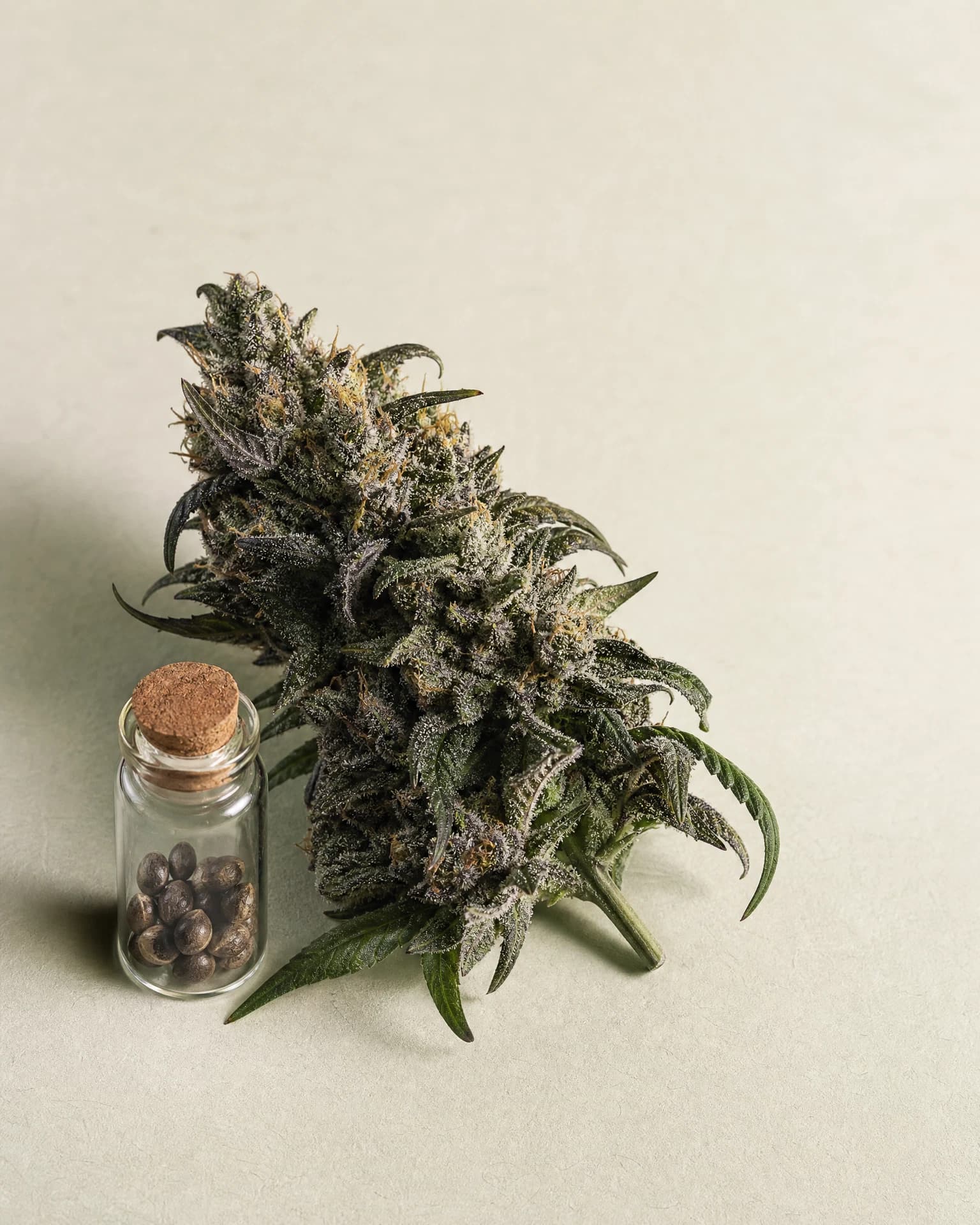
The resinous nature of the plant structure is another key data point found in the records. Resin production is a biological response that serves various functions for the plant, including protection against UV radiation and pests. In a cultivation context, a "resinous" description indicates a high concentration of trichomes, which are the glandular structures where cannabinoids and terpenes are synthesized. The medium height and dense structure, combined with this resinous quality, define the physical profile of the og kush strain as it appears in breeder documentation. Understanding these structural traits is essential for making informed decisions about training techniques, light placement, and overall canopy management.
Aroma and flavor profile
The sensory characteristics of a cultivar are defined by its terpene profile, which is recorded in the documentation as a combination of specific notes. For the og kush strain, the primary aromatic and flavor descriptors include earthy, diesel, citrus, and pine. These notes are not merely subjective impressions but are the result of specific chemical compounds produced within the plant's resin glands. An earthy and diesel profile is often associated with the presence of terpenes like myrcene and caryophyllene, while citrus and pine notes suggest the presence of limonene and pinene, respectively.
When interpreting these descriptors, it is useful to understand how they interact to create the overall sensory experience. The earthy and diesel notes provide a heavy, foundational base, while the citrus and pine elements offer a sharper, more volatile top note. This complexity is a hallmark of the cultivar’s profile as recorded in the verified facts. Observe that the intensity of these flavors and aromas can be influenced by the cultivation environment and the curing process, although the genetic potential for this specific profile is what is documented in the breeder records.
The documentation of these specific notes—earthy, diesel, citrus, and pine—serves as a guide for what to expect from the cultivar's chemical expression. Unlike some cultivars that may have a single dominant note, the og kush strain is characterized by this multi-faceted profile. This diversity in the aromatic record suggests a broad terpene synthesis capability, which is a significant aspect of its overall profile. By focusing on these documented sensory traits, researchers can better understand the cultivar's identity without needing to rely on anecdotal reports that may not align with the breeder's original intent or the stabilized genetic expression.
Reported experience context
The data regarding the potency and taxonomic balance of a cultivar is often presented as a range rather than a single figure, reflecting the natural variability of biological systems. For the og kush strain, the reported THC levels range from 19% to 27%. This significant spread highlights the impact of environmental factors and cultivation skill on the final chemical output of the plant. A range starting at 19% indicates a substantial baseline potency, while the upper limit of 27% represents the cultivar's potential under optimized conditions. This variability is a critical piece of information for anyone researching the cultivar, as it highlights the importance of lab testing for individual batches.
In addition to potency, the Indica-to-Sativa ratio is a key metric that appears in breeder records, though it is often subject to source disagreement. In the case of the og kush strain, the records show a variance in this ratio, with some sources citing a 55/45 split and others claiming a 75/25 dominance. This discrepancy is a common occurrence in the cannabis industry and reflects the different ways breeders may categorize their specific selections or "phenotypes." A 55/45 ratio suggests a nearly balanced hybrid with a slight lean towards Indica traits, whereas a 75/25 ratio indicates a much more pronounced Indica influence.
Understanding these discrepancies is essential for a responsible interpretation of breeder data. The fact that the og kush strain is consistently described as "Indica-leaning" or "Indica-dominant" provides a general framework, but the specific percentage split can vary. This variance serves as a reminder that the terms "Indica" and "Sativa" are often used as morphological and effect-based descriptors rather than strict genetic classifications. When reviewing the reported experience context, one must take into account the full range of data—from the 19-27% THC levels to the differing Indica/Sativa ratios—to form a comprehensive view of the cultivar's potential.
How to compare current breeder records
When faced with a wealth of information about a cultivar, the ability to critically compare different breeder records becomes a necessary skill. The process begins with identifying the core facts that remain consistent across multiple sources. For example, if most records for a specific cultivar agree on a certain flowering time or plant structure, those data points can be considered more reliable. However, as seen with the og kush strain, there can be significant differences in details like the Indica-to-Sativa ratio or the exact THC percentage. Learning to manage these discrepancies requires a focus on the source of the data and the methodology used to generate it.
One effective strategy is to look for "technical" vs. "marketing" language. Technical language focuses on measurable attributes like height in centimeters, flowering time in days, and specific terpene concentrations. Marketing language, conversely, often uses superlative adjectives and vague promises of "unmatched quality" or "legendary status." When comparing records, prioritize the technical data. If one breeder provides a range of 19% to 27% THC while another claims a fixed 30%, the range is often more indicative of a realistic, stabilized genetic line. This nuanced approach helps in building a realistic expectation of what the seeds will actually produce.
Another aspect of comparing records is understanding the context of the breeder's environment. A cultivar's performance can vary significantly based on the climate, soil, and light intensity it was tested in. If a breeder in a Mediterranean climate reports a 9-week flowering time, a grower in a cooler, northern climate might find that the same cultivar takes 10 weeks or more. By looking for these environmental caveats in the records, researchers can better translate the data to their own specific circumstances. The goal is not to find a "perfect" record, but to synthesize a range of likely outcomes based on the collective data available from multiple reputable sources.
Furthermore, consideration should be given to the stability of the genetics being offered. A breeder who has worked with a lineage for many generations is likely to produce more consistent results than one who has just performed a quick cross. Records that include information about the "filial generation" (e.g., F1, F2, F3) provide a clue into this stability. While this information is not always present, its inclusion is a sign of a more detailed and transparent record. By applying these comparative techniques, one can move beyond the surface-level descriptions and gain a deeper understanding of the botanical reality behind the cultivar name.
The information provided in this guide is strictly bounded by the available records for the og kush strain. One must acknowledge the limitations of this data, as highlighted by the specific caveats found in the source documentation. The most significant caveat involves the variance in the reported Indica-to-Sativa ratio and the broad range of THC levels. These discrepancies are not necessarily errors, but rather reflections of the inherent variability in cannabis genetics and the different standards used by various breeders and testing laboratories. When a record shows a range from 19% to 27% THC, it serves as a reminder that no single number can fully capture the potential of a living organism.
Furthermore, the absence of certain data points in the record is as informative as the presence of others. If a record does not specify a particular origin story or a detailed list of secondary cannabinoids, those details should be treated as unknown rather than assumed. This disciplined approach to evidence ensures that the information remains grounded in verifiable facts. The goal of these record caveats is to provide a transparent look at how the data was synthesized and to encourage a cautious interpretation of any claims that exceed the documented evidence.
In summary, the record for the og kush strain provides a solid foundation of facts—including its lineage of Chemdawg, Lemon Thai, and Hindu Kush, its medium height, and its 8 to 10-week flowering time. However, the user must always remain aware of the "source disagreement" regarding the finer details of its profile. By respecting the boundaries of the evidence and accounting for the documented caveats, one can manage the complex world of breeder records with greater clarity and precision. The responsible researcher uses these records as a starting point for their own investigation, always seeking to verify and expand upon the facts through rigorous observation and further inquiry.
The study of a cultivar like the og kush strain often leads to further questions that can guide a more in-depth investigation. One such question involves the relationship between the documented lineage and the expressed terpene profile. For instance, how do the specific influences of Chemdawg, Lemon Thai, and Hindu Kush manifest in the earthy, diesel, citrus, and pine notes? Investigating the terpene profiles of the parent varieties can provide a clearer picture of how these traits are inherited and combined. This type of research helps in understanding the chemical interaction that defines the cultivar's unique aromatic identity.
Another area for further research is the impact of different seed formats on the plant's final characteristics. While the basic profile of the og kush strain remains the same, do the autoflower, feminized, and regular versions show significant differences in their resin production or structural density? Exploring this question involves looking for comparative studies or detailed breeder notes that track the performance of these different formats under identical conditions. Such information is invaluable for those who are trying to decide which format best suits their specific goals and environmental constraints.
Researchers might also investigate the physiological reasons behind the reported range in THC levels. What environmental factors—such as light spectrum, nutrient ratios, or temperature fluctuations—most significantly influence whether a plant reaches the 19% or the 27% mark? Understanding these variables allows for a more precise approach to cultivation, where the goal is to maximize the genetic potential documented in the record. Additionally, the discrepancy in the Indica-to-Sativa ratio (55/45 vs 75/25) invites a study into the different ways that breeders define these categories. Is the classification based on leaf morphology, growth habit, or chemical composition? By asking these targeted questions, one can develop a more sophisticated understanding of the cultivar that goes beyond the basic facts found in a standard guide.
Finally, a relevant research question concerns the long-term stability of the cultivar in the commercial market. As the og kush strain continues to be bred and distributed by various retailers, how does the genetic profile change over time? Tracking the evolution of breeder records over several years can reveal trends in potency, flowering time, and structural traits. This longitudinal perspective is essential for understanding the lifecycle of a cultivar and the ongoing efforts to maintain its original characteristics in an ever-changing industry. Each of these questions provides a pathway for a deeper, more evidence-based engagement with the botanical data.
Frequently asked questions
What is the OG Kush strain?
This guide summarizes the documented cultivar record while separating verified details from variable grower outcomes.
Is OG Kush suitable for beginners?
Difficulty depends on the exact seed line, environment, and grow setup. Confirm current breeder guidance.
How long does OG Kush take to flower?
Flowering windows vary by phenotype and environment. Confirm the estimate for the exact breeder line.
Can OG Kush be grown indoors and outdoors?
Suitability depends on the breeder line and local climate. Compare space, humidity, temperature, and season length.
Which OG Kush seed format should I choose?
Autoflower and feminized formats serve different schedules and grow styles. Compare only documented direct records.