
Strain guide
Purple Gelato Strain Guide: Source-backed cultivar record profile and grower notes
A source-aware guide built from Seedsupreme’s public feminized record and practical breeder-comparison context.
Overview
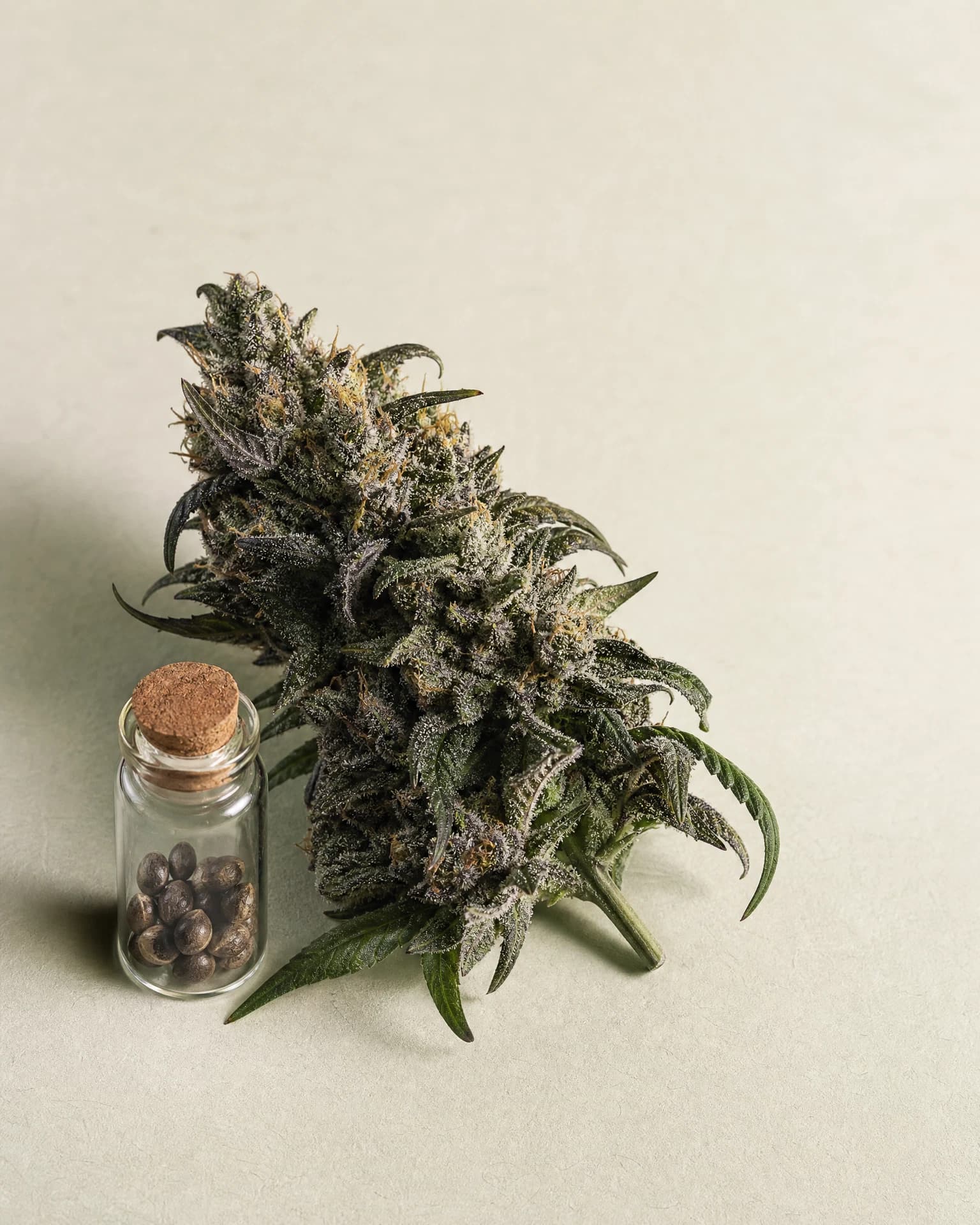
Purple Gelato genetics are listed on SeedSupreme’s public product record as a feminized hybrid option; that listing also shows cannabinoid ranges described as Very High (20–30% THC) and Low (0–1% CBD) on the retailer’s public-facing text. This guide treats those public facts as the starting point and then outlines how to evaluate and compare breeder-supplied information that the product page does not provide. It is written to help someone deciding whether to research or purchase these genetics further, showing which details to confirm on current breeder or seed-bank records and how to weigh inconsistent or missing entries.
Because the source for this guide is the single public product record named above, the guide does not assume or invent additional traits such as lineage, typical yield, flowering time, or sensory effects. Instead, it explains the documented facts, points out the most common gaps on product pages, and offers practical checks you can perform on breeder records, lab reports, and community databases to build a reliable picture before you buy or plan a grow.
Genetics and cultivar background
What the public product entry states
- The SeedSupreme product record identifies the line as a hybrid and lists the seeds as feminized. Those two labels are the only genetics-related facts provided on the supplied record.
What is missing and how to check for it
- Lineage and parental strains: Many seed listings omit verified parentage. To confirm hybrids’ lineage, look for a breeder page or official strain profile that names both parents and, ideally, describes breeding goals (stability, aroma, cannabinoid profile). If a breeder claims a particular cross, check whether they provide consistent references across multiple platforms (official site, seed-bank catalog, breeder social channels) and whether any formal registration, breeder statement, or lineage chart accompanies the claim.
- Breeder identity and reputation: The product page in this brief does not include breeder contact or name beyond the retailer listing. When lineage or breeder history matters to you, verify the breeder’s track record by reviewing their catalogue, breeder statements, and long-form documentation such as breeder notes or strain write-ups. Independent industry references and cultivar registries can corroborate claims.
- Certifications and trademarks: Some breeders register names or list trademark/status information. If a breeder claims an officially registered or trademarked cultivar, the breeder page should reference the registration body or include an image/document showing the status. If the retailer does not link to these items, request them directly from the breeder or check recognized plant registration databases where relevant.
Interpreting hybrid labels
- “Hybrid” can be broad. It may mean a balanced cross, a backcross, or a multi-generation hybrid. Use breeder materials to understand whether the hybrid is early-generation (F1/F2) or a stabilized cultivar. Stabilized cultivars tend to show more consistent phenotype expression across a packet of seeds; early-generation hybrids often produce a wider range of phenotypes and may need selection.
Questions to ask the breeder or seed bank before relying on claimed lineage
- Can you supply a breeder note that explains the cross and the number of generations?
- Are there CAD or photographic records of parent plants?
- Has the cultivar been stabilized, and if so, what methods and generations were used?
- Are there any registered trademarks or documented breeder rights?
Plant profile and grow planning
What the product record documents
- The listing supplied for this guide confirms the seed format as feminized. It does not provide additional cultivation metrics such as typical height, flowering time, yield estimates, or climate preferences.
How to plan when basic grow data is missing
- If the retailer or breeder page does not state height, flowering time, or yield, compare multiple breeder records and community grow logs for the same cultivar name to estimate ranges. Look for:
- Photographs with scale references (ruler, person, standard pot) that show typical mature size.
- Stated flowering weeks or days to harvest—if multiple reputable sources give a consistent number, you can use that as a planning baseline.
- Indoor vs. outdoor performance notes from growers who specify conditions (container size, light schedule, nutrient regimen). Cross-reference these to detect whether a cultivar behaves differently under target environment conditions.
Choosing environment and training strategies without explicit guidance
- Feminized seeds mean every viable seed is intended to produce a female plant, which simplifies canopy planning because you do not need to account for sexing males. However, feminized status does not indicate whether the cultivar tends to stretch, branch heavily, or produce many smaller colas versus a few large ones.
- To choose training and pot size when that information is absent:
- Use reports of flowering stretch from growers who document light-height changes from veg to bloom. A cultivar with large stretch will need shorter veg or more headroom.
- Compare multiple grow journals for recommended LST, topping, or SCROG approaches. Breeder notes sometimes include training suggestions, but if they do not, growers’ documented results can inform your decision.
- If unsure, plan for medium-to-conservative pot sizes and flexible trellis/trellis netting so you can adapt as plants develop.
Nutrient, pest, and disease guidance
- Because the source provides no guidance on nutrient schedules or disease susceptibility, use standard cultivar-comparison steps:
- Check breeder literature for any warnings about nutrient sensitivity or specific phasing that reduce risk of deficiencies or toxicity.
- Review lab and community reports for common pest/disease notes; repeated reports of mold or nutrient lockout across independent grows can indicate a cultivar sensitivity to humidity or feeding.
- Use controlled, incremental nutrient adjustments and monitor plants closely for signs rather than aggressive feed schedules when no cultivar-specific guidance exists.
Environmental controls and lighting
- Where cultivar-specific lighting requirements aren’t provided:
- Use baseline light intensities recommended for hybrid cannabis (adjusted to your fixture type), and watch plant response for leaf cupping, bleaching, or stretch.
- Document how the cultivar responds at different PAR levels in your environment to refine your regimen for subsequent grows.
Germination and early growth
- Feminized seed packets often include germination guidance on the seed-bank’s product page. If the SeedSupreme record lacks seed handling recommendations beyond the format label, follow widely accepted germination best practices: stable moisture, warmth, and cleanliness. If you want higher certainty before purchase, request germination rates or guarantees from the seller or breeder and compare those to other vendors’ published rates.
Aroma and flavor profile
What the public record includes
- The single supplied product record does not provide terpene lab data, sensory descriptors, or tasting notes.
How to evaluate aroma and flavor claims when they are absent or inconsistent
- Look for lab-tested terpene profiles: reputable breeder listings sometimes attach a Certificate of Analysis (COA) showing terpene percentages (myrcene, limonene, caryophyllene, etc.). A COA is the most objective way to link descriptors to likely aromas. If a cultivar page claims “berry,” “citrus,” or “earthy” but no lab data is attached, treat those descriptors as subjective marketing unless multiple independent COAs corroborate them.
- Compare descriptive language across sources: when multiple, independent grow journals and breeder notes use the same terms for a cultivar’s aroma and flavor, the consensus gains credibility. But remember vernacular terms like “sweet” or “fruity” can vary in meaning between growers.
- Check for sensory consistency within photos and grow logs: images often show trichome and resin development. While not a direct flavor indicator, mature glandular trichomes are associated with stronger aromatic expression; multiple grow diaries showing heavy resin can support sensory claims.
- When no COA or consistent descriptors exist, prioritize your own controlled small-batch testing if you acquire seeds. Describe aromas and flavors in your records and compare them to other sources over multiple phenotypes to understand the cultivar’s common profile.
Practical steps to confirm aroma/flavor before committing to a large purchase
- Request any available lab reports from the seller or breeder; many breeders will provide recent COAs on request even when the product page lacks them.
- Search both breeder and community forums for terpene testing reports tied to the same cultivar name. Note testing method and lab accreditation when comparing numbers.
- If you plan to grow for sensory qualities, document batches and environmental conditions so you can reproduce the results that match your tastes.
Reported experience context
What the source provides
- The product record in this brief provides cannabinoid ranges listed as Very High (20–30% THC) and Low (0–1% CBD). Aside from that, the record does not document reported subjective effects or clinical information.
How to read cannabinoid numbers and their limits
- The supplied THC/CBD ranges are a factual element of the public product entry. Those numbers offer a concentration snapshot as reported on the product page, but they are not a substitute for lab COAs tied to a specific batch or harvest. If cannabinoid strength is important to your decision, seek a COA for the actual seed lot or future harvest because genetics, cultivation conditions, and testing methods cause variation.
- Understand what a reported THC range on a retailer page means in planning context: it is a general indication, not a deterministic promise of the same percent in every plant or harvest. Use batch-specific lab results to plan dosing or potency expectations.
Interpreting user-reported experiences responsibly
- User reports and community reviews can help build context but are inherently variable. When reading those reports, pay attention to:
- The test conditions (dose, route of administration, setting).
- Whether the report is tied to lab-verified cannabinoid/terpene data.
- The sample size — a single report is much less informative than dozens of consistent reports.
- Potential bias in reviews (promotion, affiliate relationships).
- Avoid assuming that published product cannabinoid ranges will guarantee a specific subjective experience. If you need precise predictability, seek lab-verified batch COAs and look for growers who document their environment and harvest methods.
Contextualizing low CBD with high THC
- The source lists CBD as Low (0–1%). For a cultivar with low CBD and higher reported THC, expect the cannabinoid ratio to lean heavily toward THC on the product page’s face. However, cannabinoid expression can shift in actual plants depending on cultivation and phenotype selection. If the THC:CBD ratio is key for your intended use, request batch-specific testing and compare multiple harvests or batches before relying on a single retailer’s range.
Safety, legality, and local rules
- This guide does not provide legal advice, but when planning to grow or possess cannabis products, confirm local laws, possession limits, and permitted activities in your jurisdiction. Also confirm whether the seller will legally ship seeds to your area before making any purchase decisions.
How to compare current breeder records
A step-by-step checklist for a reliable comparison
- Confirm breeder identity and primary source:
- Locate the original breeder’s site or primary seed-bank catalogue entry for the cultivar. The retailer’s page can be secondary confirmation, but the breeder’s official listing is the principal source for lineage, stabilization claims, and COAs.
- Look for Certificates of Analysis (COAs):
- COAs give lab-verified cannabinoid and terpene values for a specific sample. Check the COA date and whether it ties to a named batch or harvest. Prefer COAs from accredited labs and those that show methodology and limits of detection.
- Verify lineage documentation:
- Seek breeder notes that name parental strains, generations (F1, F2, BX), and breeding goals. If a breeder claims a stabilized cultivar, they should describe the process or provide generation counts.
- Compare phenotypic descriptions and photos:
- Examine multiple grow journals and breeder photos for consistent phenotype traits (leaf shape, bud structure, common coloration cues). Look for photos with consistent staging labels (veg week X, bloom week Y).
- Check for legal or registration status:
- If the name is claimed as a registered cultivar or trademark, verify that claim with the registry or official documentation.
- Review germination and shipping policies:
- Confirm germination guarantees, replacement policies, and stated shipping/storage practices for seeds.
- Evaluate independent grow logs and sample sizes:
- Larger numbers of independent grow reports that align on key traits increase confidence. Pay attention to whether reports include lab results, environmental conditions, and harvest data.
- Note the date of the breeder record or lab report:
- Genetics and testing methods evolve. Prefer current records and check whether COAs reflect recent batches.
- Contact the breeder with precise questions:
- If important facts are missing, contact the breeder directly. Ask for COAs tied to the seed lot you would receive, clarification on pack sizes, and any cultivar-specific cultivation tips.
- Assess reputation and transparency:
- A transparent breeder will provide detailed documentation, lab reports, and clear contact methods. If the breeder consistently refuses or fails to provide requested verification, treat claims with caution.
Interpreting conflicting records
- When two reputable sources diverge (e.g., differing THC ranges or conflicting lineage), prioritize:
- Direct breeder statements and primary-source COAs tied to batch numbers.
- More recent documentation and lab tests from accredited labs.
- Consensus within large independent grow communities, especially when corroborated with lab data.
- Ask the breeder for clarification in writing; a clear response helps resolve or explain differences.
Record-keeping and follow-up after purchase
- Keep a clear file for every packet or batch you buy: receipt, seller lot number, COAs, germination information, photos, and grow notes. This makes it possible to compare harvests, verify the seller’s claims, and support any warranty or replacement discussions.
- If you observe significant divergence between a breeder’s claims and your results, document it thoroughly (environment, nutrient schedule, photos, third-party lab testing of the harvest) before raising the issue with the seller or breeder.
Final notes on verifying product-page facts
- In this brief, the SeedSupreme product record supplied certain factual elements: feminized format and cannabinoid ranges described as Very High (20–30% THC) and Low (0–1% CBD). Treat those as the starting public claims. For all other planning and comparison steps—including lineage, aroma, growth characteristics, and expected cultivation behavior—use the checklist above to gather confirmatory documentation from the breeder or independent testing labs before finalizing a purchase or large-scale grow plan.
This guide is intended to help you evaluate the available public facts and to give a practical workflow for filling gaps in product listings when planning around genetics and seeds. When a product page lacks details that matter for your grow or use goals, the most reliable path is to obtain batch-specific documentation, compare multiple primary sources, and document your own results for future reference.
Frequently asked questions
What is the Purple Gelato strain?
This guide summarizes the documented cultivar record while separating verified details from variable grower outcomes.
Is Purple Gelato suitable for beginners?
Difficulty depends on the exact seed line, environment, and grow setup. Confirm current breeder guidance.
How long does Purple Gelato take to flower?
Flowering windows vary by phenotype and environment. Confirm the estimate for the exact breeder line.
Can Purple Gelato be grown indoors and outdoors?
Suitability depends on the breeder line and local climate. Compare space, humidity, temperature, and season length.
Which Purple Gelato seed format should I choose?
Autoflower and feminized formats serve different schedules and grow styles. Compare only documented direct records.