
Strain guide
Purple Punch Strain Guide: Berry aroma and grower notes
Purple Punch is documented here with partner-source cultivar context, seed-format availability, and secondary-topic research cues.
Overview
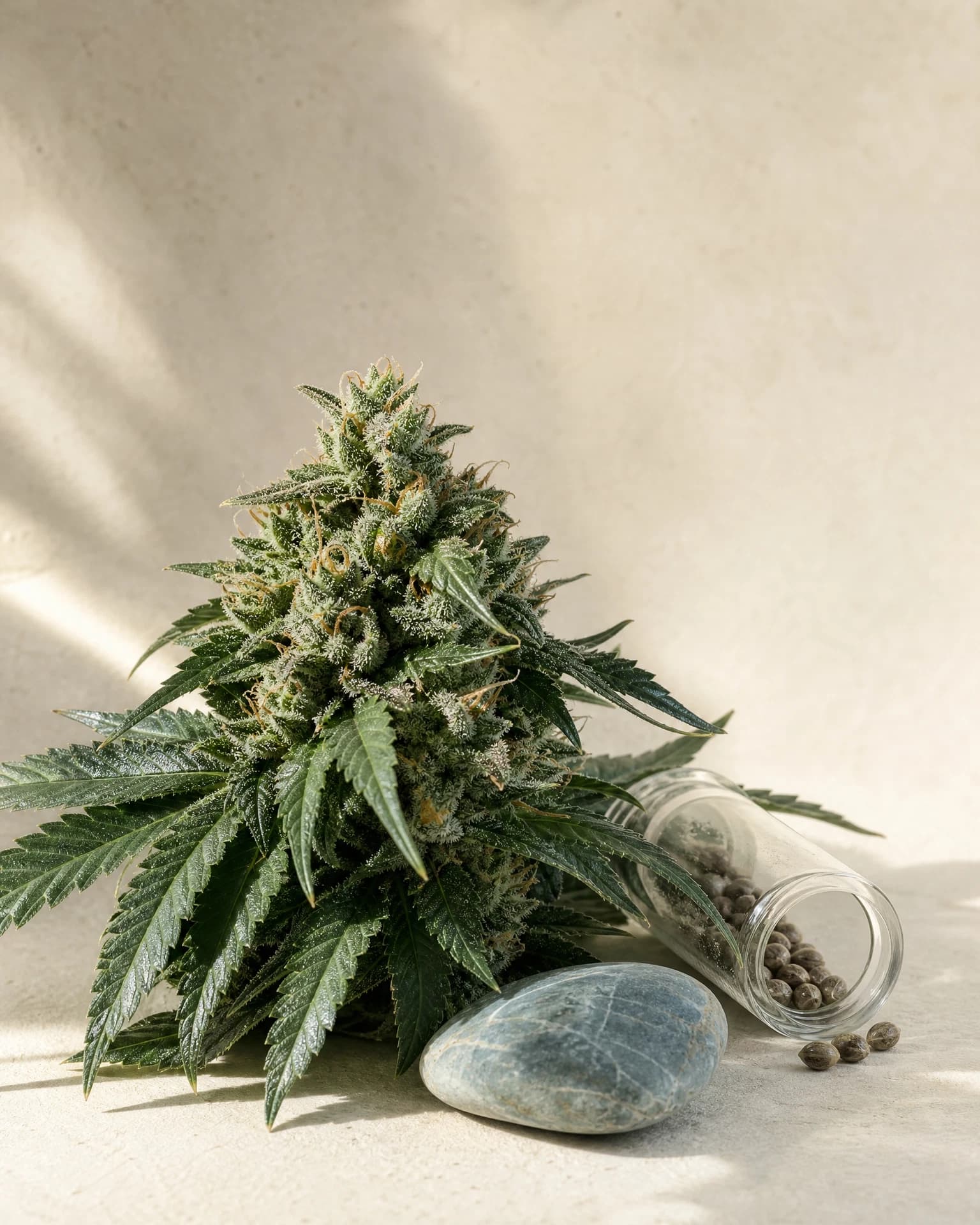
The purple punch strain is categorized in breeder records as a hybrid cultivar with a significant indica lean, typically reported as being between 75% and 85% indica. This specific genetic profile is the result of a cross between two well-known parents, Larry OG and Granddaddy Purple. When examining the documentation provided by various seed retailers, the plant is described as having a short to medium height with a compact and bushy structure. These physical characteristics are often accompanied by the production of dense buds that carry a distinct aromatic profile. The scent and taste are frequently described as having a sweet dessert-like quality, with specific notes of grape, berry, and vanilla being prominent in the available descriptions.
For those looking into the cultivation aspects of this variety, the purple punch flowering time is generally listed as falling within a window of 7 to 9 weeks, which equates to approximately 60 to 70 days. This timeframe is a standard metric used by breeders to help growers plan their cycles, although actual results can vary based on environmental factors and specific phenotypes. The availability of this cultivar is broad, with Purple Punch genetics being offered in both feminized and autoflowering formats across several major online retailers. This variety of formats allows for different approaches to cultivation, catering to both traditional photoperiod requirements and the more automated nature of ruderalis-influenced genetics.
Understanding a cultivar record requires a careful look at the specific data points provided by breeders and retailers. A record serves as a technical summary of a plant's expected behavior, but it is not a guarantee of performance. When a record lists a strain as being mostly indica, it suggests a certain growth habit and physiological response, but the hybrid nature means that some sativa-like traits may still be present in certain individuals. The description of a plant as short or compact is a relative term, usually compared to the average height of other modern hybrids. Similarly, aromatic descriptions like grape or vanilla are based on the presence of specific terpenes, which are volatile organic compounds that can be influenced by the curing process and storage conditions.
Genetics and cultivar background
The genetic foundation of the purple punch strain is built upon the crossing of Larry OG and Granddaddy Purple. In the context of modern cannabis breeding, the documentation of lineage is a primary way for retailers to communicate the expected traits of a cultivar. By identifying the parent strains, breeders provide a roadmap for the plant's potential chemical and physical expressions. Larry OG is often associated with the OG Kush family, while Granddaddy Purple is a staple in the indica category. The resulting hybrid is documented as having a 75% to 85% indica dominance, which places it firmly in the category of cultivars that are expected to exhibit classic indica growth patterns, such as broader leaves and a sturdier frame.
When analyzing the genetics of a cultivar through breeder records, it is useful to understand how these percentages are determined. Often, these figures are estimates based on the known history of the parent plants rather than precise genetic sequencing. A 75% indica rating implies that the majority of the plant's observable traits and growth requirements will align with indica standards, but the remaining 25% sativa influence can still manifest in ways that affect the plant's stretching during the early stages of flowering or the complexity of its root system. The cross between Larry OG and Granddaddy Purple represents a specific breeding intent to combine the structural integrity and aromatic qualities of both parents into a new, stable form.
The background of a cultivar is also defined by its historical context in the market. While the record for this strain does not provide a specific date of origin or a single original breeder name, its widespread presence across several major online retailers indicates a high level of market integration. This wide availability suggests that the genetics have been stabilized enough for mass production in various seed formats. However, a researcher should note that different seed banks may offer their own versions of these genetics, which can lead to slight variations in the reported facts. Comparing these records side-by-side is a standard practice for verifying the consistency of the genetic claims being made.
In the study of cannabis genetics, the term cultivar is used to denote a plant variety that has been produced in cultivation by selective breeding. The record for this strain identifies it as a hybrid, which is a broad term encompassing almost all modern cannabis varieties. The specific blend of Larry OG and Granddaddy Purple is what gives this hybrid its identity. When a record is missing specific details about the breeder's original location or the exact year the cross was first made, the focus shifts to the observable traits that have been verified through multiple retail listings. This evidence-based approach ensures that the information provided to the grower is grounded in the consensus of the current market rather than anecdotal history.
Plant profile and grow planning
The physical profile of the purple punch strain is characterized by its short to medium stature and its compact, bushy growth habit. According to the verified facts in the record, this plant structure is conducive to environments where vertical space might be limited. A compact structure usually means that the plant has short internodal spacing—the distance between the points where leaves and branches emerge from the stem. This sturdiness is a common trait among indica-dominant hybrids and often results in a plant that can support the weight of its own buds without excessive external support. The bushy nature suggests a high degree of lateral branching, which can be managed through various canopy techniques to ensure even light distribution.
Planning for a grow cycle involving this cultivar requires an understanding of the purple punch flowering time, which is documented as 7 to 9 weeks, or 60 to 70 days. This duration is typical for indica-leaning hybrids and represents the period from the onset of flowering until the plant reaches maturity. For growers using photoperiod seeds, this phase begins when the light cycle is adjusted to 12 hours of darkness. For those using autoflowering seeds, the transition to flowering happens automatically based on the age of the plant, but the total time from seed to harvest will still be influenced by this 7 to 9 week flowering window. Accurate planning involves preparing the environment for the specific needs of a plant that will spend roughly two months in its reproductive stage.
When interpreting descriptions like short-medium or compact, it is helpful to consider the general standards of the industry. A short plant is typically one that stays under three or four feet, while a medium plant might reach up to five or six feet if not trained. The bushy description implies that the plant will naturally grow outwards as much as it grows upwards. This means that in a grow planning context, the horizontal space allocated to each plant is just as important as the vertical clearance. Dense buds, as mentioned in the record, are a key feature of this plant's profile, and they require careful monitoring of humidity levels to prevent moisture from being trapped within the tightly packed floral structures.
A comprehensive grow plan also takes into account the potential for variation between individual plants. Even within a stable cultivar, different seeds can produce different phenotypes—individuals that express the genetic traits in slightly different ways. One plant might lean more towards the shorter end of the spectrum, while another might show more medium-height characteristics. The record's mention of a 7 to 9 week flowering range is a direct acknowledgment of this potential for variation. Some phenotypes may be ready for harvest at the 60-day mark, while others may benefit from the full 70 days to reach peak maturity. Monitoring the development of the dense buds and the color of the trichomes is the standard method for determining the exact harvest point within this documented window.
Technical details such as the specific nutrient requirements or the ideal temperature ranges are not explicitly listed in this record, which is a common occurrence in general strain guides. In such cases, a grower must rely on the general knowledge associated with indica-dominant hybrids while remaining observant of the plant's actual responses. The sturdiness implied by a compact and bushy structure often suggests a plant that is resilient, but the density of the buds remains a factor that demands attention during the final weeks of the flowering cycle. By sticking to the verified facts of the record—short-medium height, compact structure, and a 60-70 day flowering time—a grower can build a foundational plan that covers the most critical aspects of the plant's life cycle.
Aroma and flavor profile
The sensory experience associated with the purple punch strain is one of its most frequently documented attributes. According to the record, the aromatic profile is characterized as being sweet and dessert-like. Within this broad category, specific notes of grape, berry, and vanilla are identified as the primary components of the scent and taste. These descriptions are based on the presence of various terpenes, which are the organic compounds responsible for the diverse smells found in the cannabis plant. In a technical sense, the sweet dessert-like quality is a result of a specific combination of these compounds, which are produced in the trichomes that cover the dense buds of the plant.
When a breeder record mentions a grape or berry profile, it is referring to a specific aromatic direction that is common in many indica-leaning hybrids. These fruit-forward scents are often accompanied by a creamy or smooth undertone, which in this case is described as vanilla. It is useful to understand that the intensity of these flavors can be influenced by the way the plant is grown and processed. For example, the drying and curing stages are when the aromatic profile is stabilized. If these stages are not handled correctly, the delicate notes of vanilla or berry may be less pronounced. The record provides these flavor descriptors as a baseline for what a consumer can expect from a well-cultivated and properly cured specimen.
In the broader context of cultivar research, flavor profiles are often used to categorize strains for consumer preference. A sweet dessert-like profile is a popular category that includes many modern hybrids. However, the record does not provide a specific breakdown of the individual terpenes, such as myrcene, caryophyllene, or limonene, which might be responsible for these specific scents. Instead, it relies on the more accessible language of food-based comparisons. This approach helps to communicate the essence of the plant's character without requiring the reader to have a deep background in organic chemistry. For a researcher, these descriptors serve as a starting point for understanding the plant's chemical identity.
Reported experience context
The information regarding the experience of using the purple punch strain is focused on its physical characteristics and its potency as measured by THC content. The record notes that the plant produces dense buds, a trait that is often associated with high-quality indica hybrids. The density of a bud refers to how tightly the floral material is packed together, which can affect both the weight of the harvest and the way the material burns or vaporizes. Beyond these physical traits, the record highlights a significant variance in the reported THC levels for this cultivar.
According to the caveat provided in the source material, THC levels for this strain can range from 15% to over 25%. This is a wide margin that highlights the importance of checking specific batch results when available. The variance in THC can be attributed to several factors, including the specific phenotype being grown, the expertise of the cultivator, and the environmental conditions of the grow room. A plant grown under optimal conditions with high-intensity lighting and precise nutrient management is more likely to reach the upper end of that 25% range, while a plant grown in less ideal circumstances may fall closer to the 15% mark. This range is a clear indicator that the cultivar's potency is not a fixed number but a potential spectrum.
When evaluating the experience context of a cultivar, it is also necessary to acknowledge what the record does not say. The provided data does not include specific reports on the subjective effects or the medical applications of the strain. In an evidence-bounded writing task, it is vital to avoid making claims about how a strain makes a person feel if those claims are not explicitly supported by the verified facts. Instead, the focus remains on the measurable and observable data: the density of the floral structures and the documented range of cannabinoid content. This approach ensures that the information remains objective and grounded in the available breeder and retailer documentation.
How to compare current breeder records
Comparing breeder records is a fundamental skill for any serious researcher or cultivator in the cannabis industry. A record is a collection of data points provided by the person or organization that produced the seeds, and it serves as the primary source of information for that specific variety. However, as seen with the purple punch strain, different sources can sometimes provide varying information. The variance in THC levels from 15% to over 25% is a prime example of why it is necessary to look at multiple records. By comparing the data from several major online retailers, a researcher can identify the consensus and the outliers in the reported facts.
When evaluating a record, one should first look for the most basic information: lineage, flowering time, and plant structure. These are the core facts that define a cultivar. If multiple sources agree that a strain is a cross between Larry OG and Granddaddy Purple and that it has a short-medium height, those facts can be considered highly reliable. If, however, one source claims a flowering time of 7 weeks while another claims 10 weeks, the researcher must look closer at the specific seed format or phenotype being described. In the case of this cultivar, the 7 to 9 week range is a well-supported consensus across the major retailers listed in the record.
Another important aspect of comparing records is identifying missing information or inaccessible sources. The record for this cultivar mentions that the Homegrown Cannabis Co. website was inaccessible during the research process. This is a common challenge in the industry, as websites can go offline or change their product listings. When a major source is missing, the researcher must rely more heavily on the remaining data points while acknowledging the gap in the evidence. A responsible interpretation of a breeder record involves stating these limitations plainly rather than trying to fill in the blanks with outside knowledge or assumptions. This ensures that the resulting guide is as accurate and transparent as possible.
The information presented in this guide is derived from a specific set of breeder and retailer records. The primary sources include documentation from several major online retailers. These organizations are well-established in the seed retail market and provide the foundational data for the cultivar's genetics, structure, and aromatic profile. The consensus among these sources is that the strain is a mostly indica hybrid resulting from the cross of Larry OG and Granddaddy Purple. The reported flowering time of 7 to 9 weeks and the availability of both feminized and autoflowering seeds are also consistently documented across these platforms.
A researcher should observe the limitations of the current research. The caveat in the record highlights two specific issues: the significant variance in reported THC levels and the inaccessibility of the Homegrown Cannabis Co. website. The variance in THC—ranging from 15% to over 25%—suggests that there is no single, industry-standard potency for this cultivar. Instead, the chemical profile is highly dependent on the specific batch and the conditions under which it was produced. The inability to verify data from Homegrown Cannabis Co. means that their specific claims or unique seed formats could not be included in this summary.
In the interest of transparency, this guide adheres strictly to the provided record and does not incorporate outside information or anecdotal reports. The absence of specific data on yields, terpene percentages, or detailed medical effects is a reflection of the information available in the source documents. By staying within the bounds of the verified facts, this guide provides a reliable summary that can be used as a starting point for further exploration. The goal is to present the technical details of the cultivar as they are documented by the industry, allowing the reader to make informed decisions based on the most accurate data currently available.
The data provided in a cultivar record often raises new questions that can guide further research. For the purple punch strain, one of the most prominent questions involves the wide range of reported THC levels. A researcher might ask: what specific environmental factors or cultivation techniques are most likely to result in a THC content at the higher end of the 25% spectrum? Understanding the relationship between light intensity, nutrient profiles, and cannabinoid production is a key area of study for those looking to maximize the potential of their plants. While the record gives the range, it does not explain the causes of the variance, leaving room for deeper investigation into cultivation science.
Another area for research involves the structural characteristics of the plant. The record describes the plant as compact and bushy with dense buds. A relevant research question would be: how does this specific structure affect the plant's resistance to common pests or environmental stressors like high humidity? Dense buds are known to be more susceptible to mold if airflow is not managed correctly, so understanding the best practices for canopy management in bushy, compact plants is a practical necessity for growers. By focusing on the physical traits documented in the record, a researcher can develop targeted questions that lead to a better understanding of the plant's needs.
Finally, the availability of different seed formats presents its own set of questions. A researcher might investigate how the transition to an autoflowering format affects the aromatic profile or the bud density compared to the original feminized version. Does the inclusion of ruderalis genetics lead to any observable changes in the grape, berry, or vanilla notes mentioned in the record? These kinds of questions help to bridge the gap between the technical data in a breeder record and the practical experience of growing the plant. By starting with the verified facts, a researcher can build a framework for inquiry that is both disciplined and productive.
Frequently asked questions
What is the Purple Punch strain?
This guide summarizes the documented cultivar record while separating verified details from variable grower outcomes.
Is Purple Punch suitable for beginners?
Difficulty depends on the exact seed line, environment, and grow setup. Confirm current breeder guidance.
How long does Purple Punch take to flower?
Flowering windows vary by phenotype and environment. Confirm the estimate for the exact breeder line.
Can Purple Punch be grown indoors and outdoors?
Suitability depends on the breeder line and local climate. Compare space, humidity, temperature, and season length.
Which Purple Punch seed format should I choose?
Autoflower and feminized formats serve different schedules and grow styles. Compare only documented direct records.