
Strain guide
Roadrunner Skunk Strain Guide: Source-backed cultivar record profile and grower notes
A source-aware guide built from Seedsupreme’s public feminized record and practical breeder-comparison context.
Overview
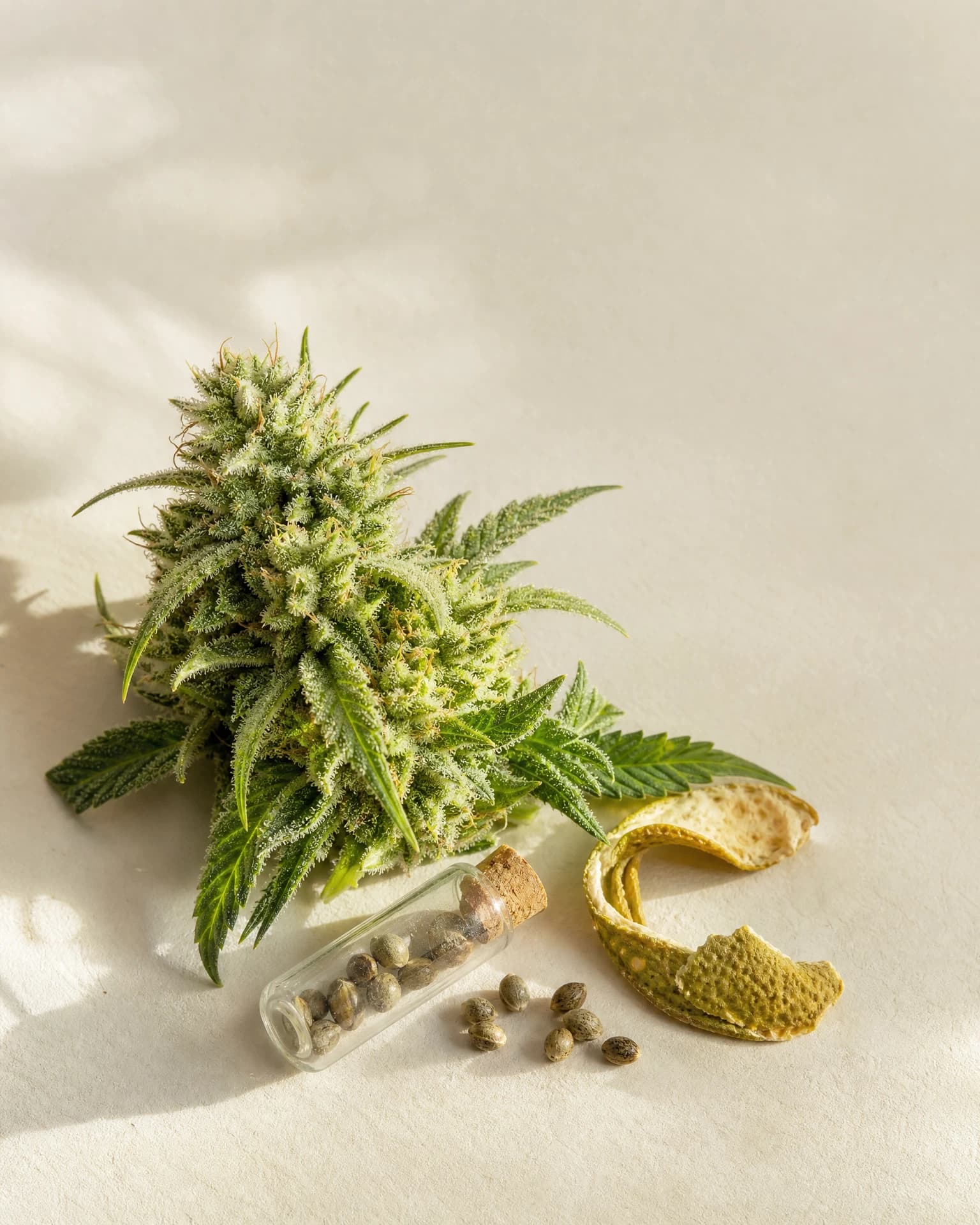
Roadrunner Skunk is presented in the seed trade under that name as a feminized offering. Seedsupreme’s public product record lists Roadrunner Skunk Feminized and identifies it as mostly sativa with a THC range given as 15–20%. If you are searching for Roadrunner Skunk genetics, that listing is the specific public reference this guide uses as its factual anchor.
This guide keeps strictly to the facts shown in the available public record and uses those facts as a starting point for the comparisons and checks growers should make before buying seeds or planning a grow. Where the public record is silent, the guide does not invent details; instead it explains what to look for on breeder pages, on lab reports, and in independent grower documentation, and how to interpret those items when they are available.
The goal is practical — help you interpret the limited public information available for Roadrunner Skunk and build a clear checklist so you can compare breeder records, validate claims, and plan grow decisions without relying on unsupported assumptions.
Genetics and cultivar background
What the public record states
- The only genetics-related label on the public product page is the cultivar name, Roadrunner Skunk, and an indication that it is “mostly sativa” per the record supplied for this guide. No lineage (parent strains), breeding history, or breeder notes are present in the supplied public facts.
How to treat a brief or incomplete genetics claim
- “Mostly sativa” is a high-level descriptor. Different breeders use that phrase differently: some mean a 60/40 sativa/indica split, others a stronger sativa dominance. When a breeder provides only that phrase without lineage, it is a signal to request more detail if that matters to your selection.
- Ask the breeder or retailer for explicit lineage information: variety names for each parent, whether the cross is F1, backcrossed, stabilized, or an F2 population, and whether any phenotype stabilization work has been undertaken (how many generations of selection).
Specific items to request and compare across records
- Parentage: Obtain exact parent strain names. If the breeder lists only a marketing name, ask for the genetic background behind that name.
- Generation and stability: Ask whether the seeds are from a stabilized line (e.g., after multiple generations of selection) or from initial hybrid crosses. Stabilized lines usually have more predictable phenotypes; breeders should document the stabilization process.
- Breeder notes on phenotypes: Request descriptions of the common phenotypes observed (leaf shape, bud structure, any known colorations or distinct traits) and estimated ratios of those phenotypes in a batch.
- Breeding goals: Good breeder records often explain what traits were selected for (e.g., aroma consistency, upright growth, resin production). If absent, contact the breeder for their selection criteria.
How to compare genetics claims across breeders
- Favor vendors who publish clear parentage and stabilization information. If two breeders both call a cultivar “mostly sativa,” the one with documented parentage and phenotype counts gives you a more reproducible expectation.
- Look for supporting materials: breeder diaries, multiple season photos, and third-party grow logs can corroborate lineage claims. Absence of this material isn’t necessarily disqualifying, but it increases the importance of other validation items (COAs, germination guarantees).
Plant profile and grow planning
What the public record provides
- The supplied record does not include a grow profile (flowering time, final height, indoor/outdoor suitability, or expected yield). It lists the seed format as feminized and the cultivar as mostly sativa with a 15–20% THC range. No cultivation metrics are published in the supplied public facts.
How to plan when the breeder record lacks grow metrics
- Treat missing cultivation metrics as a prompt to gather specific data before committing seeds to a planned grow. The following steps form a practical planning checklist.
Essential cultivation questions to ask or verify
- Flowering time (photoperiod): Request estimated flowering duration (in weeks) for indoor photoperiod plants. If not supplied, compare with flowering times of known sativa-dominant cultivars from the same breeder or genetics family.
- Final plant height and stretch: Ask for indoor height estimates and expected stretch during the first 2–4 weeks of flowering. This determines training and space needs.
- Indoor vs. outdoor suitability: Confirm whether the breeder recommends the strain for indoor, greenhouse, or outdoor production, and whether it tolerates cooler or more humid climates.
- Typical structure: Request whether the plant develops a single dominant cola, multiple colas, or a bushier structure—this guides training technique decisions.
- Nutrient and substrate notes: Some breeders provide baseline nutrient schedules or substrate recommendations; get these if available.
- Pest and disease sensitivities: Ask the breeder whether they observed particular vulnerabilities in their test grows (e.g., powdery mildew susceptibility).
How to use comparative records for planning
- If a breeder provides no grow metrics, look at other breeders’ records for the same cultivar name. When multiple records are available, compare reported flowering times, heights, and indoor/outdoor notes to form a range you can plan around.
- Use growers’ photo galleries and grow journals to assess typical plant structure and space requirements. Prioritize photo documentation with timestamps and unobscured canopy views.
Training and environment decisions based on incomplete data
- If the cultivar is sold as feminized and listed as mostly sativa, but flowering time and stretch are unknown, err on the side of conservative space and training choices: prepare for both vertical stretch and multi-cola development by using low-stress training, topping, or a soft trellis early in vegetative growth. This is planning guidance rather than a statement of this cultivar’s behavior.
- Select containers and support systems that can accommodate taller plants if you can’t obtain height estimates. If you need final height limits, ask the breeder for tall/short phenotype proportions.
Record-keeping and test runs
- If a full production run is not yet warranted, run a small test batch to observe the cultivar’s actual growth patterns under your conditions. Compare those observations to breeder-provided notes, and document everything (lighting, nutrients, substrate, pruning, and training) to build a local grow profile.
Aroma and flavor profile
What the public record states
- The supplied source does not publish specific aroma or flavor descriptors, nor terpene profiles, for Roadrunner Skunk.
How to find or verify aroma and flavor claims
- Terpene COAs: The only authoritative way to confirm volatile compound profiles is a laboratory terpene analysis (COA). When a breeder or retailer claims certain aromas or dominant terpenes, ask for the laboratory report that identifies terpene percentages and detection methods.
- Sensory descriptors on breeder pages: Breeders often write brief scent descriptors (e.g., “skunky,” “citrus,” “earthy”). Treat these as starting points and seek verification through COAs or multiple independent grower reports.
- Cross-validate with independent grow logs: Growers’ journals and photo captions frequently include smell and taste notes. While anecdotal, when many independent accounts repeat the same descriptors and match available terpene COAs, the descriptors gain corroborating weight.
Interpreting terpene reports
- When you receive a terpene COA, check:
- Date of testing and lab accreditation.
- Whether terpenes were measured on fresh frozen material, dried cured material, or a solvent extract — values differ depending on the sample type.
- Which terpenes are reported and their relative percentages (common terpenes include myrcene, limonene, linalool, caryophyllene, pinene).
- Understand that terpene profiles can vary between phenotypes and grow conditions. If breeders report a single terpene profile without noting sample number or phenotype, request the sample size and phenotype identity used for testing.
Practical steps if aroma/flavor data are absent
- Request whether the breeder has performed terpene analysis and, if so, for the COA. If none is available, ask for detailed sensory descriptors tied to documented phenotypes and photos.
- Use small-scale test grows to evaluate how your drying and curing methods interact with the cultivar’s terpene profile — growers often find wide variance caused by post-harvest handling.
Reported experience context
What the public record provides
- Seedsupreme’s public description (meta description used in the supplied facts) labels the cultivar as mostly sativa and gives a THC range of 15–20%. The product description language beyond those labels is not included in the supplied public facts for this guide.
How to interpret a stated THC range and “mostly sativa” label
- A listed THC range (15–20%) on a public product page is a reported, general figure. Ask whether that range comes from third-party laboratory testing of multiple samples and request the corresponding COAs. Differences in testing method, sample selection, and phenotype can change reported values.
- Treat “mostly sativa” as a gross botanical descriptor rather than a guarantee of any specific subjective response or growth habit. It suggests sativa influence but does not quantify it.
How to build a reliable context for consumer-reported experiences
- COAs for cannabinoids: Obtain lab documents that show how THC and other cannabinoids were measured, including whether the lab reports delta-9 THC specifically or total THC (which may include acidic precursors).
- Sample size and variability: Ask the breeder for the number of samples tested and the standard deviation or range across samples. Single-sample COAs tell you less about batch variability than multiple-sample testing.
- Phenotype-level reporting: Good breeder records annotate COAs and sensory descriptors by phenotype. If multiple phenotypes exist within a seed run, each may have distinct cannabinoid and terpene profiles.
- Independent reports: When available, cross-reference independent grow reports and photos. Prefer multiple independent sources rather than single, unverified testimonials.
Why context matters
- Public THC numbers and a “mostly sativa” label cannot substitute for detailed lab records and phenotype-level reporting. For a buyer or grower, the useful outputs are repeatable metrics (COAs with sample info), photographic documentation over multiple grows, and clear breeder transparency on phenotype proportions. Those allow you to form a realistic expectation without relying on promotional language.
Limitations you should accept
- Be prepared for natural variability. Even with COAs, cannabinoids and terpenes vary with phenotype selection, environmental inputs, and post-harvest handling. Use COAs and multiple grow records to narrow expected ranges rather than to lock in a single guaranteed outcome.
How to compare current breeder records
A practical, step-by-step comparison workflow
- Assemble candidate breeder records: Collect the public product pages, any available COAs, photo galleries, grower diaries, and posted phenotype descriptions for Roadrunner Skunk from all vendors or breeders you are considering.
- Create a comparison matrix with these columns:
- Source/breeder name and URL
- Seed format(s) offered (e.g., Feminized)
- Published genetic claims (explicit parentage, “mostly sativa,” or other)
- Number of generations/stability notes
- COAs available (yes/no) and which tests (cannabinoids, terpenes)
- Sample sizes used for COAs and dates of testing
- Published flowering time, height, indoor/outdoor notes
- Reported phenotype types and proportions
- Warranty/germination guarantee
- Batch or lot traceability
- Independent grow reports/photos linked
- Weight the fields: Not all fields are equal. Prioritize:
- COAs with multiple samples and dates
- Clear parentage and stabilization documentation
- Batch traceability and photos tied to batch numbers
- Transparent germination guarantees and clear seller policies
Verification tactics for critical claims
- COAs: Verify the lab’s accreditation, the sample type (flower vs. extract), the sample size, and the test date. Confirm that the COA ties to the specific batch or phenotype you would receive.
- Lineage: If a breeder lists parent strains, cross-check those parents’ existence and characteristics with other reputable sources (breeder pages or strain databases) to see if the parent pairing is plausible and recorded elsewhere.
- Phenotype counts: When breeders claim phenotype ratios, ask for documented examples (photos, COAs) per phenotype. If the breeder cannot provide phenotype-level evidence, treat ratio claims as unverified.
- Germination and grow guarantees: Review terms carefully. A generous guarantee reduces the buyer’s risk but read the fine print — many guarantees exclude germination issues arising from improper handling or shipping.
Red flags to watch for
- Vague or marketing-only language without supporting documentation (no COAs, no parentage, no photos with dates).
- COAs without batch or sample identifiers — these are less useful because they do not prove the result applies to the actual product you are buying.
- Inconsistent claims across channels: if a breeder’s social posts claim one phenotype while the product page lists another with no explanation, request clarification.
- No buyer protections or guarantees: absence of a germination policy or plain-language return policy increases risk.
How to interpret inconsistent data across breeders
- If two breeders list different THC ranges, check the COA dates and sample sizes. Newer COAs or those with multiple samples are generally more reliable. Also note testing methodology — labs and methods differ.
- When growers’ logs show divergent growth habits, determine whether they were growing different phenotypes or using different environments; growers should report environment, nutrients, and lighting, and you can use that information to explain differences.
Final decision checklist before purchase
- Confirm seed format and that it matches your needs (Feminized confirmed for Roadrunner Skunk per the supplied record).
- Obtain or verify at least one credible COA that is tied to a batch number or phenotype, and check the lab accreditation and test date.
- Get explicit parentage or breeder-stated stabilization notes if genetics are important for your decision.
- Review breeder policies on germination guarantees and returns; get written confirmation if the website information is thin.
- If cultivation metrics are absent, either plan for a conservative initial grow (small batch) or seek breeders with documented grow metrics and multiple photos.
Closing notes on due diligence
- The publicly supplied facts for Roadrunner Skunk are limited: the cultivar name, a “mostly sativa” classification, a THC range of 15–20%, and a feminized seed format are the available anchors. Use the verification steps in this guide to expand that foundation into a reliable, evidence-backed expectation before purchase or before allocating space and resources for a full grow.
- Maintain documentation of all communications with breeders and retain any COAs and batch identifiers you receive. That documentation is essential for cross-checks and for resolving disputes related to germination or product expectations.
This guide exists to help you navigate incomplete public listings responsibly. Wherever a breeder record leaves a gap, use the comparison and verification steps above to make decisions based on documented evidence rather than assumption.
Frequently asked questions
What is the Roadrunner Skunk strain?
This guide summarizes the documented cultivar record while separating verified details from variable grower outcomes.
Is Roadrunner Skunk suitable for beginners?
Difficulty depends on the exact seed line, environment, and grow setup. Confirm current breeder guidance.
How long does Roadrunner Skunk take to flower?
Flowering windows vary by phenotype and environment. Confirm the estimate for the exact breeder line.
Can Roadrunner Skunk be grown indoors and outdoors?
Suitability depends on the breeder line and local climate. Compare space, humidity, temperature, and season length.
Which Roadrunner Skunk seed format should I choose?
Autoflower and feminized formats serve different schedules and grow styles. Compare only documented direct records.