
Strain guide
Skunk #1 Strain Guide: Citrus aroma and grower notes
Skunk #1 is documented here with partner-source cultivar context, seed-format availability, and secondary-topic research cues.
Overview
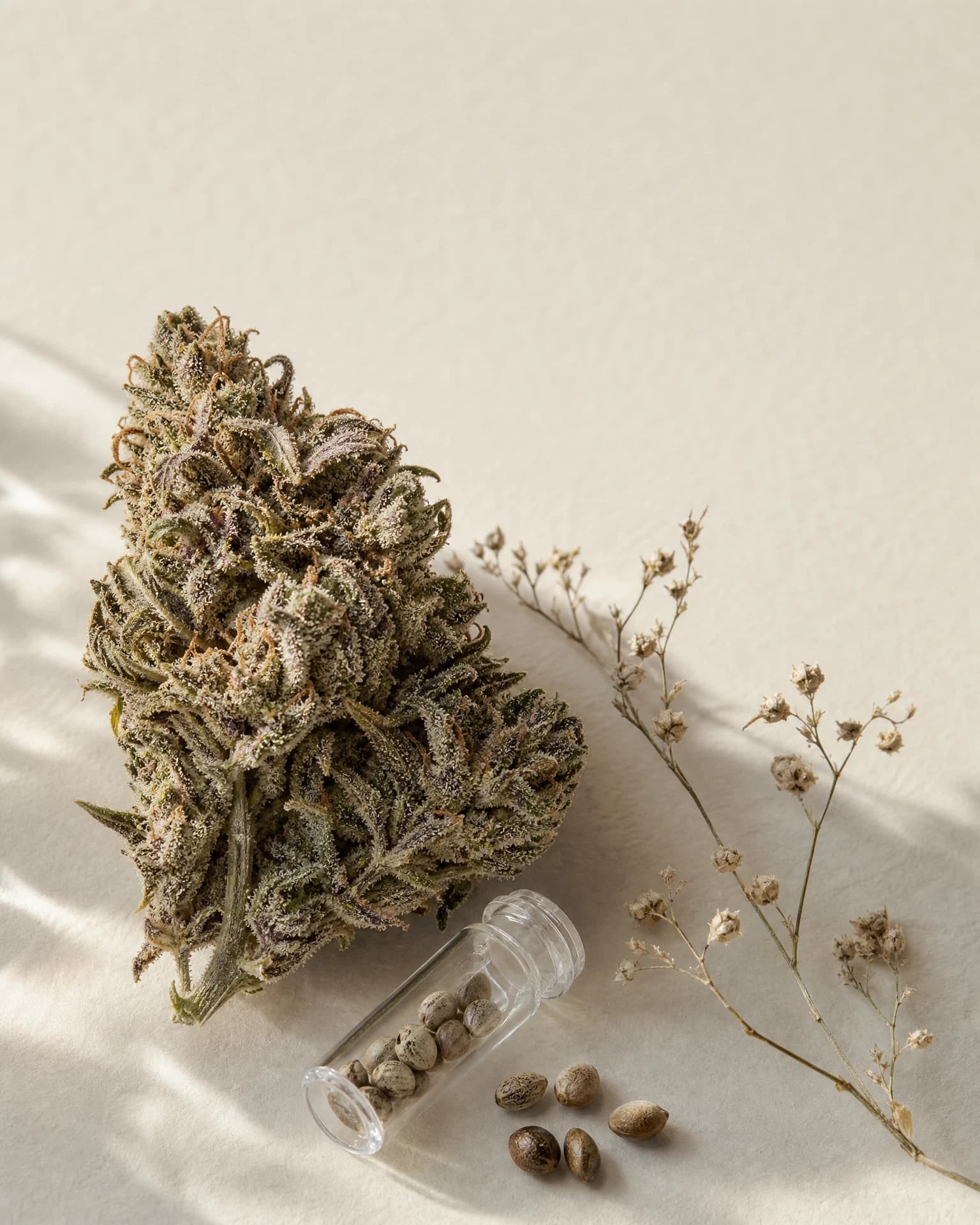
Skunk #1 represents a stabilized hybrid cultivar that has maintained a presence in the botanical records of various seed providers. The technical profile of this plant identifies it as a hybrid, meaning it incorporates genetic material from both indica and sativa lineages. In the specific context of documented breeder data, this cultivar is noted for a growth pattern that typically results in a medium height, often measured between 3.5 and 5 feet. Its physical structure is frequently described as uniform, which is a significant trait for those studying plant morphology and consistency across different specimens. One of the distinguishing characteristics highlighted in technical descriptions is a high bud-to-leaf ratio, a metric that indicates the proportion of floral clusters relative to foliage. This ratio is often a point of interest for researchers evaluating the efficiency of different botanical structures.
The documentation surrounding Skunk #1 genetics often emphasizes its status as a stabilized hybrid. Stabilization in plant breeding refers to the process of selective breeding over multiple generations to ensure that the offspring exhibit consistent traits. When a cultivar is successfully stabilized, the variability between individual plants is minimized, allowing for a more predictable growth experience. For this specific cultivar, the stabilized nature is a core part of its identity in the historical record. The aroma profile associated with this plant is described as pungent and skunky, featuring earthy undertones and sweet citrus notes. These olfactory descriptions are standard in botanical catalogs and serve as a primary means of identifying the specific sensory characteristics of the specimen.
Understanding the technical specifications of a breeder record requires a careful examination of the provided data points. For instance, the flowering time for Skunk #1 is generally listed within a range of 7 to 10 weeks for photoperiod versions. However, a close reading of different source records reveals variations in these timelines, which highlights the necessity of comparing multiple data points. The availability of Skunk #1 genetics across different formats—including feminized, regular, and autoflower—further complicates the task of cataloging its properties, as each format may carry its own set of technical nuances. By focusing on the verified facts within a single record, one can begin to build a clear picture of the cultivar's physical and aromatic properties without relying on anecdotal or unsupported claims.
Genetics and cultivar background
The genetic foundation of Skunk #1 is rooted in a combination of three distinct geographic lineages: Afghani Indica, Acapulco Gold (a Mexican Sativa), and Colombian Gold Sativa. This trio of ancestral sources represents a broad spectrum of the cannabis genus, bringing together traits from high-altitude mountainous regions and tropical climates. The Afghani Indica component is traditionally associated with shorter, denser growth patterns and a focus on resin production, while the Mexican and Colombian Sativa elements are typically linked to taller structures and longer flowering periods. The integration of these diverse genetics into a single stabilized hybrid is a technical feat that has been documented in various botanical archives.
When analyzing the background of a cultivar like Skunk #1, it is essential to consider the role of landrace genetics. A landrace refers to a plant that has developed in a specific geographic region over a long period, adapting to the local environment without human-mediated cross-breeding with outside varieties. The use of Afghani, Mexican, and Colombian landrace-derived genetics in the creation of Skunk #1 suggests a deliberate effort to combine the structural stability of the indica with the aromatic and growth characteristics of the sativas. This process of hybridization is intended to produce a plant that exhibits the best qualities of its ancestors while maintaining a uniform expression in its offspring.
The term "stabilized hybrid" carries significant weight in the context of cultivar background. A hybrid that has not been stabilized may produce a wide variety of phenotypes, leading to inconsistent results for researchers and growers. In contrast, a stabilized hybrid like Skunk #1 has undergone enough generations of backcrossing or sibling crossing to lock in specific traits. This genetic consistency is what allows for the uniform structure mentioned in the plant profile. The historical record for this cultivar points to a long-standing effort to maintain these specific genetic markers, ensuring that the plant remains a reliable reference point for the study of hybrid cannabis.
Researchers examining the genetics of this cultivar often look for markers that indicate the influence of its specific ancestors. The pungent and earthy aroma, for example, is frequently attributed to the Afghani lineage, while the sweet citrus notes may be traced back to the sativa components. However, without detailed laboratory analysis of the specific terpene and cannabinoid synthesis pathways, these attributions remain part of the general botanical understanding of how these lineages interact. The focus remains on the documented facts of the lineage rather than speculative associations.
Plant profile and grow planning
The physical profile of Skunk #1 is characterized by a medium height, typically falling between 3.5 and 5 feet. This height range is a critical consideration for any grow planning, as it dictates the amount of vertical space required for the plant to reach maturity. A plant with a medium structure is often considered more manageable than taller, lanky varieties, yet it still requires enough space to accommodate its sturdy and uniform growth. The uniformity of the structure is particularly noteworthy, as it suggests that individual plants will develop in a similar fashion, making it easier to predict the needs of a larger group of specimens.
A central feature of the Skunk #1 plant structure is its high bud-to-leaf ratio. In botanical terms, this means that the plant produces a significant amount of floral material relative to the amount of leaf matter. This trait is often sought after because it can simplify the process of post-harvest handling and may indicate a plant that allocates its energy efficiently toward reproduction. For those involved in grow planning, understanding the bud-to-leaf ratio is helpful for anticipating the airflow requirements around the floral clusters. A high density of buds requires careful environmental management to prevent moisture-related issues, even if the plant itself is described as sturdy.
The flowering context for Skunk #1 is a point where technical records often show divergence. While the general flowering time is listed as 7 to 10 weeks for photoperiod versions, specific sources provide different figures. For instance, one prominent breeder has reported a faster flowering duration of 45 to 50 days. This discrepancy is a perfect example of why grow planning must account for potential variations in breeder data. Factors such as light intensity, nutrient availability, and the specific phenotype being grown can all influence the actual time it takes for a plant to transition from the vegetative stage to full maturity. The skunk #1 flowering time is therefore a range rather than a fixed number.
Planning for the growth of this cultivar also involves selecting the appropriate seed format. The availability of feminized, regular, and autoflower seeds means that the growth cycle and environmental requirements can vary significantly. Feminized seeds are bred to produce only female plants, which is the standard for floral production. Regular seeds produce a mix of male and female plants, which is necessary for those interested in breeding or maintaining genetic lines. Autoflower versions, meanwhile, do not rely on changes in the light cycle to initiate flowering, which drastically alters the timeline and planning required for the grow. Each of these formats must be evaluated based on the specific goals of the research or cultivation project.
Aroma and flavor profile
The sensory profile of Skunk #1 is one of its most documented features, described consistently across various breeder records. The primary aroma is characterized as pungent and skunky, a description that has become synonymous with a specific category of cannabis scents. This pungency is often the first trait noted when evaluating the plant's aromatic properties. In addition to the dominant skunky scent, the record identifies earthy undertones that provide a grounded, musk-like quality to the overall profile. These earthy notes are a common feature in cultivars with significant indica heritage, such as the Afghani component of this hybrid's lineage.
Complementing the pungent and earthy base are sweet citrus notes. This citrus element adds a layer of complexity to the aroma, offering a sharp, bright contrast to the heavier, muskier scents. The presence of citrus-like aromas is often associated with specific terpenes, though the exact chemical composition is not detailed in the basic breeder record. In the context of flavor, these aromatic traits are expected to translate into a similar experience, where the skunky and earthy qualities are balanced by a hint of sweetness and acidity. The combination of these four descriptors—pungent, skunky, earthy, and sweet citrus—forms the complete aromatic identity of Skunk #1 as defined by the available data.
When analyzing the aroma and flavor profile of a cultivar, it is important to understand that these traits are the result of complex biological processes. The synthesis of aromatic compounds occurs primarily in the glandular trichomes of the plant, and the concentration of these compounds can be influenced by environmental factors such as temperature, humidity, and light spectrum. While the breeder record provides a baseline for what to expect, the intensity and specific nuances of the aroma may vary between individual plants. This is why descriptions like "pungent" are used to indicate a high concentration of aromatic compounds that are likely to be consistent across the stabilized population.
For researchers, the aroma profile serves as a non-destructive way to identify and categorize different cultivars. The skunky scent of Skunk #1 is so distinct that it is often used as a benchmark for comparing other hybrids. However, the record does not provide specific details on the terpene percentages or the exact ratio of sweet to earthy notes. This lack of granular data means that the description remains qualitative rather than quantitative. When evaluating the flavor and aroma, one must rely on these standardized descriptors while acknowledging the potential for subtle variations that are not captured in the summary data.
Reported experience context
The technical record for Skunk #1 does not include specific claims regarding the recreational or medical effects of the cultivar. This omission is common in many professional breeder catalogs, which focus instead on the botanical and genetic properties of the plant. In the absence of documented effects, the reported experience context must be understood through the lens of the plant's chemical potential and the variability of user reports. The record does note a significant conflict in the reported THC potency, with figures ranging from as low as 10-15% to as high as 22%. This wide range in potency is a essential factor in how the experience of the plant might be perceived, as higher concentrations of cannabinoids generally lead to more intense effects.
Because the record does not provide a list of specific effects, it is not possible to state whether the cultivar is associated with relaxation, stimulation, or any other subjective experience. Instead, the focus remains on the technical data that might influence the experience. For example, the hybrid nature of the plant suggests a combination of traits from both the indica and sativa lineages, but the exact balance of these traits in terms of user experience is not defined. The high bud-to-leaf ratio and sturdy structure are physical traits that affect the handling and preparation of the plant material, which in turn can impact the final product used for consumption.
When researching a cultivar like Skunk #1, it is common to encounter a wide variety of anecdotal reports from users. These reports often describe the effects in great detail, but they are not part of the verified breeder record and therefore cannot be treated as factual data. The experience of a cannabis cultivar is highly subjective and can be influenced by an individual's physiology, tolerance, and the environment in which the plant is consumed. Furthermore, the variation in THC potency mentioned in the caveat suggests that two different batches of Skunk #1 could produce significantly different results. This inconsistency is a primary reason why technical records often stick to growth and aromatic data rather than attempting to catalog subjective effects.
The context of the reported experience is also shaped by the seed format and growing conditions. A plant grown from an autoflower seed may have a different cannabinoid profile than one grown from a photoperiod regular seed, even if they share the same name. Similarly, environmental stressors during the growth cycle can alter the production of secondary metabolites, including cannabinoids and terpenes. Without standardized testing and documented effects in the source record, the experience remains an area of uncertainty. The most responsible way to approach this cultivar is to focus on the physical and aromatic facts while remaining aware of the potential for a wide range of outcomes based on the specific specimen and its potency.
How to compare current breeder records
Comparing breeder records for a cultivar as established as Skunk #1 requires a methodical approach to data analysis. The primary challenge lies in the fact that different sources often provide conflicting information. For instance, the record for Skunk #1 shows a significant discrepancy in THC potency, with some sources listing it at 10-15% and others claiming as much as 22%. To evaluate these differences, one must look at the context of the testing. Was the potency measured in a controlled laboratory setting? Was it an average across many specimens or a peak value from a single "star" plant? Understanding the methodology behind the numbers is essential for making an accurate comparison.
Another area of frequent disagreement is the flowering duration. The record notes that while many sources cite a range of 8 to 10 weeks, one prominent breeder reports a much faster 45 to 50 days. This variation can be attributed to several factors. Some breeders may measure flowering time from the first sign of floral development, while others count from the moment the light cycle is switched. Additionally, the specific environment—such as the type of lighting and the nutrient regimen—can accelerate or slow down the maturation process. When comparing these records, it is helpful to look for a consensus among multiple sources while acknowledging the outliers as potential indicators of specific phenotype variations.
Technical details such as plant height and structure also require careful comparison. While Skunk #1 is generally described as having a medium height of 3.5 to 5 feet, environmental factors can cause significant deviations from this range. A record that lists a specific height without a range may be less reliable than one that acknowledges the potential for variability. Similarly, descriptions of structure, such as "sturdy" or "uniform," are qualitative and can be interpreted differently by different observers. To get a clear picture, researchers should look for detailed descriptions that explain what these terms mean in the context of the specific plant's growth habits, such as the bud-to-leaf ratio.
Responsible research involves looking beyond the marketing language of a seed catalog and focusing on the underlying data. This means checking for consistency across different platforms and looking for specific technical details that are supported by multiple records. If a source makes a claim that is significantly different from the majority of other records—such as an unusually high yield or an extremely short flowering time—it should be treated with skepticism unless it is accompanied by clear evidence. By cross-referencing the facts found in the Skunk #1 record with other verified data points, one can develop a more nuanced understanding of the cultivar's true characteristics.
The information provided in this guide is derived from a specific record that compiles data from several established seed retailers and breeders. These sources include several established seed retailers and botanical archives, with specific mentions of data from a primary breeder regarding flowering duration. Each of these organizations maintains its own catalog of technical specifications, and the facts presented here represent the points of agreement and documented variations between them. The use of multiple sources is intended to provide a balanced view of the cultivar's properties while highlighting areas where the data is inconsistent.
The caveat included in the record is a substantive part of the evidence. It notes that there are significant conflicts regarding the THC potency of Skunk #1, with reported values ranging from 10-15% to as high as 22%. This discrepancy is a reminder that the chemical profile of a plant is not a fixed trait but can vary based on a multitude of factors. Similarly, the conflict in flowering duration—where some sources cite 8 to 10 weeks while others, like one prominent breeder, report 45 to 50 days—illustrates the variability in botanical timelines. These conflicts are not errors but rather reflections of the different experiences and testing results reported by various entities in the seed industry.
It is useful to identify the missing facts in the record. There is no documented data on the specific CBD content of Skunk #1, nor is there a detailed breakdown of its terpene profile beyond the general aromatic descriptions. Information regarding specific yields, outdoor harvest dates, and detailed growth requirements for different climates is also absent. By stating these unknowns plainly, the guide avoids making unsupported claims and maintains a strict adherence to the verified data. This approach ensures that the reader is provided with a reliable, evidence-bounded description of the cultivar.
Ultimately, the record caveats serve to clarify the limits of the current botanical understanding of Skunk #1. While it is a well-documented and widely available cultivar, the variations in the technical record show that there is still much to be learned. Researchers and growers are encouraged to consult the original breeder catalogs and look for updated testing data to supplement the information provided here. By focusing on the verified facts and acknowledging the areas of uncertainty, one can approach the study of Skunk #1 with a clear and objective perspective, grounded in the available evidence.
The study of Skunk #1 opens up several interesting avenues for further botanical and genetic research. One of the most prominent questions involves the process of stabilization. How many generations of breeding were required to achieve the uniform structure and consistent aroma profile that defines this cultivar? Research into the specific breeding techniques used to lock in these traits could provide valuable insights for the development of new stabilized hybrids. Understanding the genetic markers that contribute to this stability is a key area of interest for those studying the long-term evolution of cannabis cultivars.
Another area for research is the influence of landrace genetics on the final expression of the hybrid. With ancestors from Afghanistan, Mexico, and Colombia, Skunk #1 is a melting pot of diverse genetic material. How do the traits of these landrace varieties interact at a molecular level? For example, which specific genes from the Afghani Indica are responsible for the high bud-to-leaf ratio, and how do the Sativa genes from Acapulco Gold and Colombian Gold influence the aromatic complexity? Mapping the genome of Skunk #1 and comparing it to its ancestral lines could reveal much about the inheritance of specific botanical traits.
The impact of environmental factors on the expression of Skunk #1 is also a subject for potential study. While the record provides a range for height and flowering time, these are not fixed values. Research into how different light spectrums, soil compositions, and climate conditions affect the growth of this cultivar could help to explain the variations seen in different breeder records. For instance, does a specific nutrient balance favor the development of the sweet citrus notes over the pungent skunky aroma? Does a particular light schedule consistently lead to the faster flowering times reported by some sources? These questions highlight the need for more standardized testing in the field of cannabis research.
Finally, the variation in THC potency presents a significant research challenge. Why do different sources report such a wide range of values? Investigating the factors that contribute to this discrepancy—such as testing methods, plant maturity at harvest, and post-harvest handling—could lead to more accurate and reliable potency labeling. This research is essential for providing clear information to those who rely on technical records to understand the chemical potential of a cultivar. By addressing these and other related questions, the scientific community can continue to build a more comprehensive and evidence-based understanding of Skunk #1 and its place in the botanical world.
Frequently asked questions
What is the Skunk #1 strain?
This guide summarizes the documented cultivar record while separating verified details from variable grower outcomes.
Is Skunk #1 suitable for beginners?
Difficulty depends on the exact seed line, environment, and grow setup. Confirm current breeder guidance.
How long does Skunk #1 take to flower?
Flowering windows vary by phenotype and environment. Confirm the estimate for the exact breeder line.
Can Skunk #1 be grown indoors and outdoors?
Suitability depends on the breeder line and local climate. Compare space, humidity, temperature, and season length.
Which Skunk #1 seed format should I choose?
Autoflower and feminized formats serve different schedules and grow styles. Compare only documented direct records.