
Strain guide
Super Boof Strain Guide: Citrus aroma and grower notes
Super Boof is documented here with partner-source cultivar context, seed-format availability, and secondary-topic research cues.
Overview
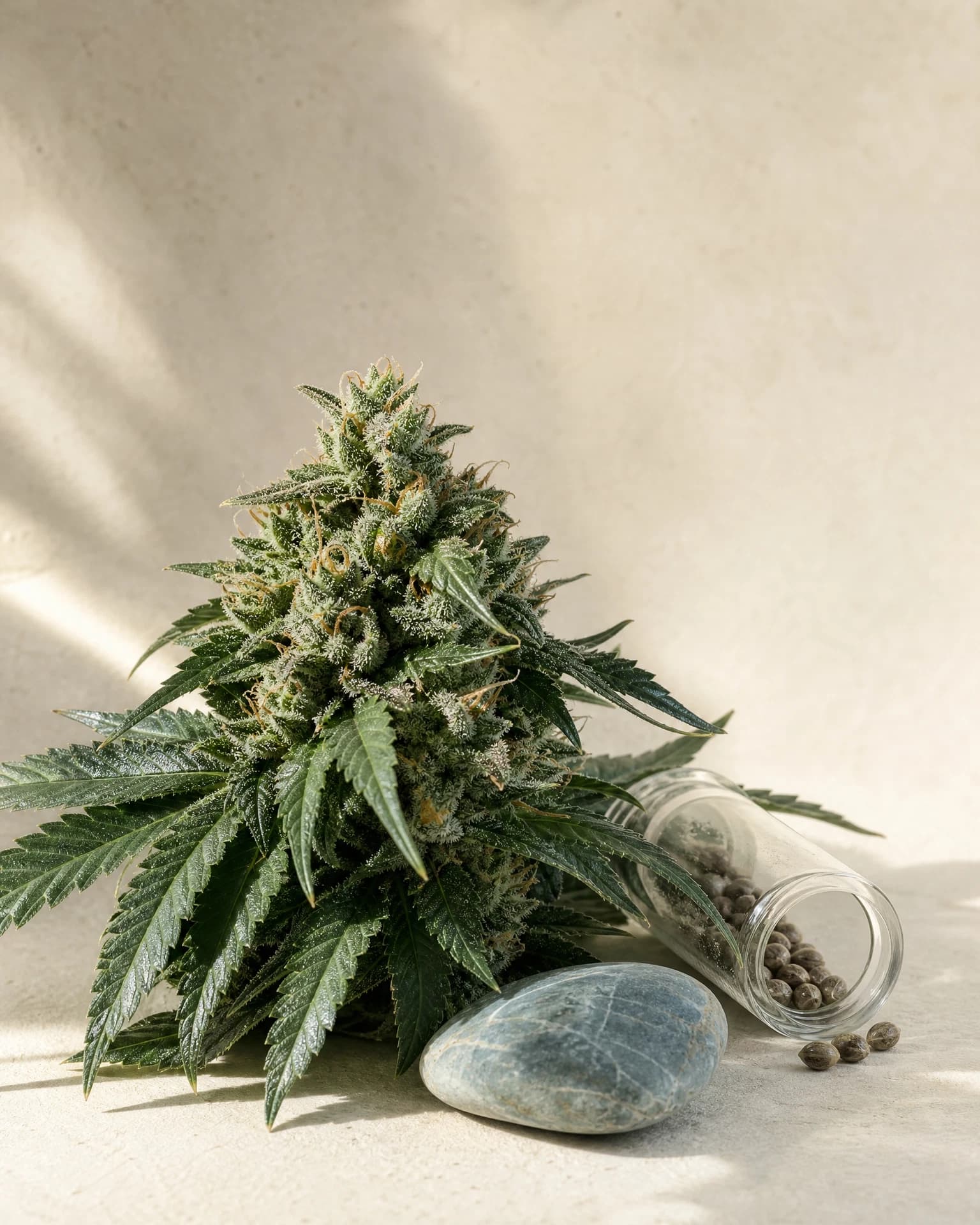
The Super Boof strain is recognized in the contemporary cannabis market as a balanced hybrid cultivar that represents a specific intersection of modern genetic breeding. This variety is the result of a deliberate cross between two established parents: Black Cherry Punch and Tropicana Cookies. As a balanced hybrid, it is positioned to offer a profile that does not lean exclusively toward one side of the traditional subspecies spectrum, instead maintaining a middle ground that is reflected in its growth characteristics and chemical composition. The cultivar is noted for its distinct aromatic presence, which is primarily defined by a citrus and fruity orientation, often described through notes of orange, grapefruit, and various berries.
Growers and collectors looking for Super Boof genetics will find that the variety is currently produced in two primary formats: feminized and autoflower. This availability suggests a level of stabilization that allows for different cultivation approaches depending on the specific needs of the environment or the experience level of the gardener. The physical development of the plant is characterized by a medium height and a sturdy structural integrity, which supports its high resin production. The flowering cycle for this cultivar typically spans a period of 8 to 10 weeks, placing it within a standard timeframe for many modern hybrids. Understanding these baseline characteristics is the first step for anyone looking to integrate this specific variety into their research or cultivation plans.
Genetics and cultivar background
The super boof genetics are rooted in a combination of Black Cherry Punch and Tropicana Cookies. This specific lineage suggests a focus on creating a profile that emphasizes both aromatic complexity and structural reliability. In the study of cannabis genetics, the crossing of two distinct parents is intended to capture specific traits from each, though the resulting offspring can exhibit a range of expressions. For this cultivar, the balance achieved between its parents has led to its classification as a balanced hybrid, a term used to describe plants that exhibit a relatively equal distribution of traits associated with different ancestral lines.
When examining the background of such a cultivar, it is helpful to consider how genetic heritage influences the terpene profile. The presence of Limonene, Myrcene, and Linalool in this variety is a direct consequence of its genetic makeup. These chemical compounds are responsible for the citrus and fruity notes that define the plant's identity. The interaction between the genetics of Black Cherry Punch and Tropicana Cookies has resulted in a stable enough line that major retailers are able to offer it in multiple seed formats. This indicates that the breeding process has reached a point where the core characteristics—such as the 8 to 10-week flowering time and the sturdy, medium-height structure—are consistently passed down to the seeds.
Researchers often look at the genetic history of a plant to predict how it might perform in various conditions. While the record for this cultivar specifies a medium height and high resin production, the underlying genetics provide the blueprint for these physical manifestations. The sturdy nature of the plant is a physical trait that allows it to manage the weight of its resinous output without requiring excessive external support. This genetic stability is a key factor for those who prioritize predictability in their horticultural projects. By relying on the established cross of Black Cherry Punch and Tropicana Cookies, the variety maintains a recognizable identity in a crowded market of hybrid crosses.
Plant profile and grow planning
Planning for the cultivation of the super boof strain requires an understanding of its physical requirements and developmental timeline. The plant is described as reaching a medium height, which is a significant factor for indoor growers who may have limited vertical space. A medium-height plant typically offers a manageable profile that does not require the aggressive training methods sometimes needed for taller, more lanky varieties. The sturdy structure mentioned in the record suggests that the plant develops thick stems and strong branches, which are essential for supporting the high resin production that occurs during the later stages of the flowering cycle.
The flowering period of 8 to 10 weeks is a critical window for any cultivation plan. During this time, the plant transitions from its vegetative state to the production of its primary floral structures. This duration is relatively standard for balanced hybrids, allowing enough time for the full development of the terpene profile and resin glands without extending into the longer cycles required by some tropical varieties. Success in managing this timeline often depends on maintaining consistent environmental conditions that support the plant's natural rhythm. Because the record notes high resin production, growers should be prepared for the increased metabolic demands that resin synthesis places on the plant, ensuring that nutrient levels and light intensity are optimized for this specific output.
In addition to the physical dimensions and timeline, the structural integrity of the plant plays a role in how it is handled throughout its life. A sturdy plant is often more resilient to environmental stressors, although it still requires careful monitoring. The resin production is not just a matter of aesthetic interest but is a biological function that indicates the plant's health and maturity. As the resin accumulates, the weight of the branches may increase, but the sturdy nature of this cultivar is designed to accommodate this growth. For those planning a garden, these details provide a framework for selecting the appropriate containers, lighting setups, and ventilation systems to ensure the plant can reach its full potential within the 8 to 10-week window.
Aroma and flavor profile
The sensory identity of this cultivar is defined by a dominant citrus and fruity profile. According to the verified facts, the primary aromatic notes include orange, grapefruit, and berry. These scents are not merely superficial characteristics but are the result of specific concentrations of terpenes, which are the aromatic compounds found in many plants. In this variety, the terpene profile is rich in Limonene, Myrcene, and Linalool. Limonene is typically associated with the sharp, bright notes of citrus fruits like orange and grapefruit, while Myrcene often contributes to the sweeter, fruitier undertones that can manifest as berry scents. Linalool adds a layer of complexity, often providing a floral or slightly spicy nuance that rounds out the overall experience.
While the majority of sources agree on this citrus-heavy profile, there are variations in how different retailers describe the flavor. For instance, a specific breeder record mentions unique notes such as cheese and vanilla, which are not corroborated by other primary sources. This discrepancy highlights the subjective nature of flavor descriptions in the cannabis industry and the impact of different growing conditions on the final chemical expression of the plant. The presence of cheese or vanilla notes would suggest a different terpene balance, perhaps involving compounds like Caryophyllene or Valencene, but these are not listed as primary terpenes in the general consensus record.
Understanding the aroma and flavor of a cultivar is essential for researchers who are studying the chemical diversity of cannabis. The combination of orange, grapefruit, and berry creates a profile that is widely recognized and sought after. The high resin production mentioned in the plant profile is the physical source of these aromatic compounds, as terpenes are primarily stored within the resin glands. As the plant matures through its 8 to 10-week flowering cycle, these scents become more pronounced, reaching their peak at the time of harvest. For the consumer or researcher, the clarity of these citrus and fruity notes is a primary indicator of the cultivar's identity and the quality of its preservation.
Reported experience context
When discussing the experience associated with a balanced hybrid like this one, one should examine the context of its chemical makeup rather than relying on subjective anecdotes. The record indicates a significant variance in reported THC potency, which is a primary driver of the user experience. Retailers like one retailer list the potency in the range of 20-26%, while another source reports a much higher figure of 32%. This wide range—a 12% difference—suggests that the experience can vary greatly depending on the specific batch, the growing environment, and the testing methodology used by the laboratory.
A balanced hybrid is generally expected to provide a middle-ground experience, but the high resin production and the specific terpene profile (Limonene, Myrcene, Linalool) also play a role in how the cultivar is perceived. Limonene and Myrcene are often studied for their potential influence on the overall effect, though scientific research into these interactions is ongoing. The sturdy structure and medium height of the plant do not directly dictate the experience, but they are indicators of a healthy plant that is capable of producing a high concentration of active compounds. The reported potency levels, even at the lower end of 20%, indicate a variety that is relatively potent by modern standards.
The lack of consensus on potency and flavor (such as the cheese and vanilla notes mentioned by one source) means that any reported experience must be viewed through a lens of variability. A user might encounter a version of the strain that is closer to the 20% THC mark with a pure citrus profile, or they might find a 32% version with unexpected creamy or savory notes. This variability is a standard feature of the current cannabis market, where genetic expression is influenced by a multitude of factors. Therefore, the context of the experience is defined more by this range of possibilities than by a single, uniform set of effects.
How to compare current breeder records
Evaluating cannabis breeder records requires a systematic approach to identifying facts and filtering out marketing language. When looking at a record like the one for this cultivar, the first step is to identify the verified facts that are consistent across multiple sources. In this case, the lineage (Black Cherry Punch x Tropicana Cookies), the general profile (balanced hybrid), and the primary terpenes (Limonene, Myrcene, Linalool) are well-supported. However, as noted in the caveat, there are significant discrepancies in potency and flavor descriptions. Comparing these records involves understanding why these differences exist and how to weigh the information provided by different retailers.
One of the most common areas of disagreement is THC potency. The range of 20% to 32% for this variety is a prime example of how testing results can vary. These numbers are often derived from specific laboratory tests of a single sample, which may not represent the average for the entire cultivar. Factors such as the specific phenotype, the nutrients used, the light intensity, and even the time of harvest can all influence the final THC percentage. Furthermore, different labs use different testing protocols, which can lead to inflated or deflated numbers. A responsible researcher looks for a range of values rather than a single "official" number and considers the reputation and transparency of the source providing the data.
Another aspect of comparing records is looking for unique claims that are not supported by the broader consensus. The mention of cheese and vanilla flavors by a specific breeder record is a notable outlier. When a single source lists traits that no one else mentions, it may indicate a specific phenotype that the breeder has stabilized, or it could be a result of different environmental factors during their testing process. By cross-referencing multiple sources, such as a major seed bank, another source, and one retailer, a clearer picture of the cultivar's most common traits emerges. This process of triangulation is essential for building a reliable understanding of any cannabis variety in a market that lacks centralized regulation and standardized reporting.
Furthermore, it is useful to examine the technical details provided in the flowering context and plant structure. A record that provides a range (like 8 to 10 weeks) is often more realistic than one that gives a single, precise day. Plants are biological organisms, and their development is subject to variation. Similarly, descriptions of height (like "medium") and structure ("sturdy") are more helpful than exact measurements, which will vary based on the container size and growing method. By focusing on these structural and temporal baselines, a grower can prepare for the most likely outcome while remaining flexible enough to handle the natural variation that occurs within the super boof genetics.
The information compiled in this guide is based on a review of several prominent cannabis seed retailers and breeders. One must acknowledge the limitations of this data, as the cannabis industry currently lacks the standardized reporting requirements found in other agricultural sectors. The primary caveat for this cultivar is the significant variance in reported THC potency and flavor profiles. While most sources agree on a citrus and fruity aroma, the inclusion of cheese and vanilla by one retailer suggests a level of phenotypic diversity or environmental influence that is not yet fully understood.
The data points for flowering time (8-10 weeks), plant structure (medium height, sturdy), and genetics (Black Cherry Punch x Tropicana Cookies) are consistent across the sources consulted, including a major seed bank, another source, a specific breeder record, and one retailer. However, the absence of specific data on yield, medical applications, or detailed morphology in the primary record means that these aspects remain unknown. Readers should be aware that the facts presented here are bounded by the available records and do not include personal testing or anecdotal reports. When researching this or any other cultivar, it is recommended to consult multiple sources and look for verified lab results whenever possible to ensure the most accurate understanding of the plant's potential.
As the cannabis industry continues to evolve, there are several areas where further research could clarify the profile of this cultivar. One of the most pressing questions involves the stability of the 32% THC claim. Is this a consistent result for a specific phenotype, or was it a one-time high achieved under perfect laboratory conditions? Understanding the average potency versus the peak potency is vital for both consumers and medical researchers. Additionally, more detailed terpene analysis could help determine if the cheese and vanilla notes mentioned by some sources are present in trace amounts or if they represent a distinct genetic variation that could be further isolated.
Another area for investigation is the performance of the cultivar in different growing mediums. While the record mentions a sturdy structure and medium height, it does not specify if these traits hold true in hydroponic systems versus organic soil. Research into the nutrient requirements of this specific cross could also be beneficial, particularly given its high resin production. Does it require higher levels of phosphorus and potassium during the flowering stage to support resin synthesis? How does it respond to different light spectrums? These are the types of technical questions that can help growers optimize their results and contribute to a more comprehensive understanding of the plant.
Finally, the relationship between the parent strains and the resulting hybrid offers a rich field for genetic study. By comparing the chemical profiles of Black Cherry Punch and Tropicana Cookies with their offspring, researchers can learn more about how specific traits are inherited and expressed. This kind of data is invaluable for future breeding projects aimed at creating new varieties with specific aromatic or structural characteristics. As more data becomes available from a wider range of sources, the profile of the super boof strain will likely become even more refined, providing a clearer roadmap for anyone interested in this balanced hybrid.
Frequently asked questions
What is the Super Boof strain?
This guide summarizes the documented cultivar record while separating verified details from variable grower outcomes.
Is Super Boof suitable for beginners?
Difficulty depends on the exact seed line, environment, and grow setup. Confirm current breeder guidance.
How long does Super Boof take to flower?
Flowering windows vary by phenotype and environment. Confirm the estimate for the exact breeder line.
Can Super Boof be grown indoors and outdoors?
Suitability depends on the breeder line and local climate. Compare space, humidity, temperature, and season length.
Which Super Boof seed format should I choose?
Autoflower and feminized formats serve different schedules and grow styles. Compare only documented direct records.