
Strain guide
train wreck Strain Guide: Cultivar record profile and grower notes
A ILGM source-backed record focused on cultivar details and current seed-page comparison.
Overview
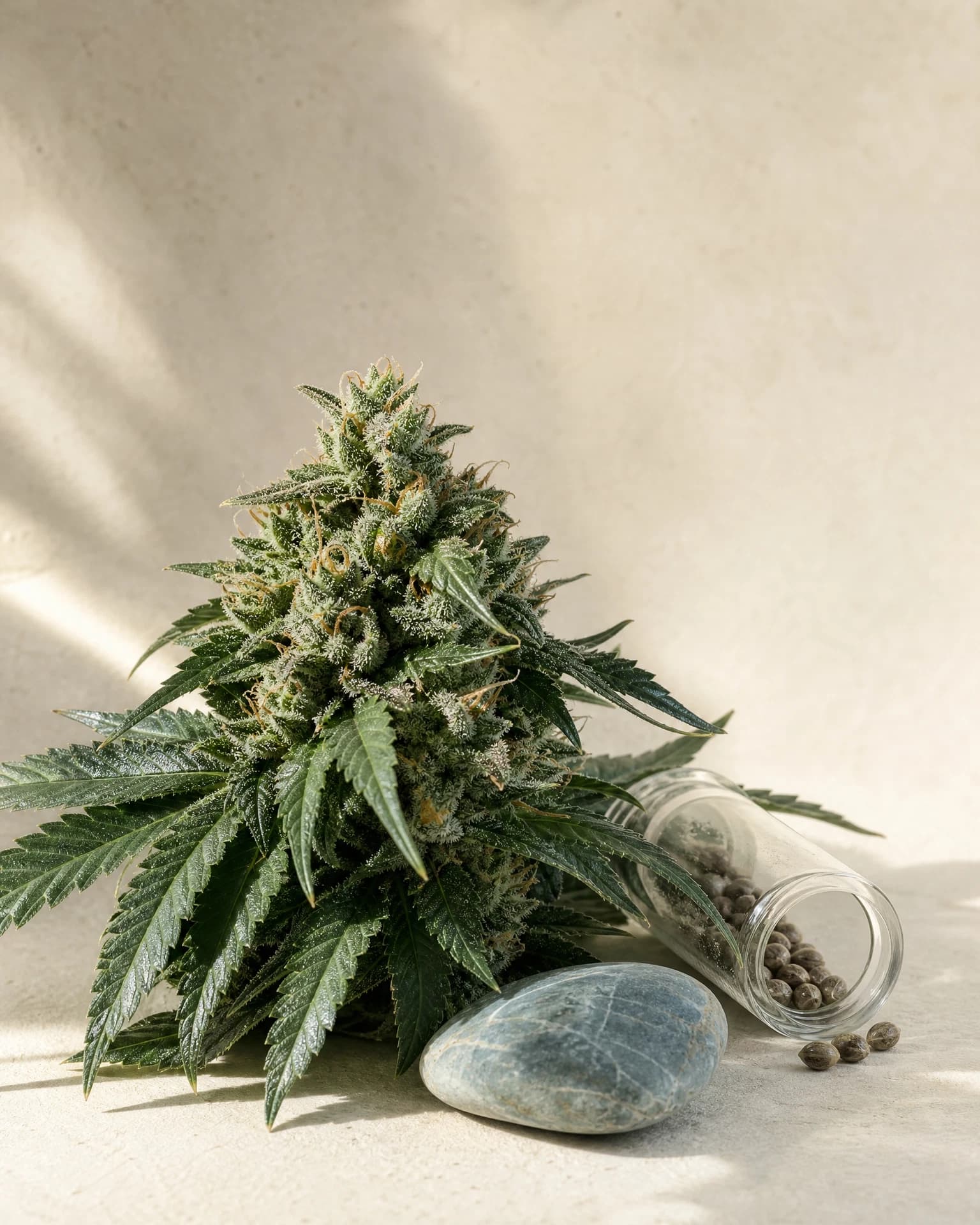
If you're researching train wreck genetics this guide focuses on how to interpret breeder records, reported experience, and current seed options rather than repeating promotional claims. The cultivar name here is Trainwreck; the ILGM product page describes it as a NorCal legend associated with creative, energetic effects. Use this article to decide which breeder data points matter most, how to ask the right questions, and how to plan a grow or comparison when many technical details are not provided in a single listing.
This is not cultivation advice tied to fixed numbers or a recommendation to buy. Instead it lays out the factual checks that let you compare breeders and seed lots, assess reported experiences, and plan a growing approach that remains flexible if the breeder record omits specifics.
Genetics and cultivar background
Breeder-supplied genetics and history usually determine a cultivar’s expected traits. For Trainwreck you should look for the breeder’s own documentation on origin and stability rather than relying on third-party summaries.
Questions to verify with current breeder records
- What parental lines were used? Breeders should list both parents by name or breeder reference rather than vague terms like “classic mix.”
- Is there a documented origin story or breeding timeline? Look for when a cross or backcross was completed and how many generations of selection have been performed.
- Has the breeder provided phenotype statistics? A reliable record will report how many phenotypes were observed in a test population and what percentage matched the advertised target.
- How stable is the line? Verify the incidence of reversion, hermaphroditism, and atypical traits across multiple seed batches if available.
- Are breeder photos tied to documented phenotypes? Photos should include captions linking them to specific phenotype IDs, grow conditions, or batch numbers.
How to interpret different breeder claims
- “Legendary” or regional descriptors: Terms like “NorCal legend” appear in marketing and can reflect community reputation. Ask the breeder what evidence supports the claim — e.g., community preserves, early breeder notes, or continuity in a region.
- Claimed lineage vs. verified pedigree: Some breeders provide detailed pedigrees; others give general parent names without documentation. Prioritize breeders who supply verifiable pedigrees or reference samples.
- Cross-breeding techniques and selection: If the breeder claims stability due to selection, request data on the number of generations selected, the selection criteria used, and how many plants were evaluated per generation.
Records to request from the breeder
- A breeder’s written pedigree or parentage sheet.
- A phenotype hunt summary or grow journal showing multiple plants.
- Notes on selection criteria and any known weak points (e.g., sensitivity to nutrient imbalance).
- Contactable references or experienced growers who have run the same seed lot.
If any of these items are missing, consider the consequence: proceeding without a phenotype frequency, for instance, means you must plan for greater variability in growth habit and finished characteristics.
Plant profile and grow planning
When a breeder listing omits specific cultivation numbers, adopt a planning mindset that anticipates variability. Instead of treating a product page as a full technical sheet, use the breeder record questions below to shape your environment and contingency plans.
Environmental and space planning questions
- Indoor or outdoor suitability: Confirm whether the breeder recommends indoor, outdoor, greenhouse, or multi-environment flexibility. If not specified, prepare for both possibilities by keeping microclimate control options flexible.
- Stretch and vegetative behavior: Ask the breeder whether plants show a lot of vertical stretch during the transition to reproductive development. If unknown, design your canopy and ceiling clearance to accommodate significant vertical change.
- Potential final shape and branching: Request descriptive notes on internode length, branching tendency, and main cola structure. Absent that, plan training options that cover clustered and open-canopy architectures alike.
- Resilience and risk factors: Find out about reported susceptibility to common issues (mold, spider mites, nutrient lockout). If a breeder record is silent, adopt conservative humidity and airflow control practices.
Grow technique and training considerations
- Training strategies to confirm: Ask which training methods the breeder recommends or discourages — low-stress training, topping, supercropping, or screen-of-green. Without guidance, prioritize reversible, low-risk training first so you can adjust once phenotype behavior is observed.
- Pot size and root containment: Verify whether the breeder has recommendations for pot size and root management. When unlisted, start with a plan that allows repotting and root space expansion.
- Nutrient approach: Request the breeder’s baseline nutrient regimen or a reference chart. If that’s not available, prepare to monitor plants closely for deficiency and excess symptoms before applying heavy-handed changes.
- Feeding schedules and flushing: Confirm whether the breeder advises specific feed cycles or flushing strategies. If absent, plan conservative feeding ramps and document plant responses carefully.
Designing flexible grow cycles
- Staged decision points: Map out checkpoints where you’ll reassess plant behavior and change strategy: early veg, pre-flower stretch, mid-flower, and late-flower. This reduces the risk of locking into a plan that doesn’t match the phenotype.
- Backup plans for space or smell: If the breeder’s records don’t cover odor profile or final canopy size, secure additional ventilation or odor control options and make contingency room for plants that outgrow their allocated space.
- Data capture: Keep a structured journal for each plant or phenotype, logging dates, environment, nutrient doses, and visual progress. These records become the basis for comparing later seed lots or other breeders.
Interpreting incomplete grow recommendations
- When flowering time and height are missing: Treat all relevant parameters as variables. Use adjustable light rigs and modular support for trellis or scrog systems to adapt to either compact or tall growth.
- When pest or disease sensitivity isn’t reported: Assume moderate susceptibility and maintain proactive hygiene, quarantine new plants, and monitor early.
The goal is to create a grow plan that can be narrowed as breeder data or initial plant behavior becomes available.
Aroma and flavor profile
Aroma and flavor are both lab-testable (terpenes) and subjective (taster notes). Because promotional blurbs often rely on evocative language, use a combination of lab documentation and independent tasting reports to build a clearer picture.
What to request from the breeder about sensory profile
- Terpene report or GC-MS data: Ask if the breeder can provide recent terpene analyses including compound identities and relative concentrations, with testing date and lab identity.
- Comparative tasting notes: Look for structured tasting notes tied to identified phenotypes, ideally with multiple independent testers and context about dosing and consumption method.
- Reference to parent terpene characteristics: If the breeder lists parent lines, request their terpene profiles as well so you can infer possible dominant aromatics.
How to weigh subjective descriptions
- Marketing adjectives vs. documented chemistry: Terms like “citrus,” “pine,” or “earthy” are useful starting points, but cross-check with a terpene panel. A listing that calls a strain “energetic” or “creative” is describing effects rather than aroma; those descriptions should not replace objective terpene data.
- Consistency across batches: Even if a breeder provides a terpene report for one batch, ask whether profiles are consistent across seed lots or harvests and whether environmental factors noticeably shift the profile.
Interpreting lab results
- Verify the test method and lab accreditation; chromatography for terpenes may be reported as relative percentages or as absolute measurements. Confirm what units are used and the testing date.
- Compare terpene profiles across multiple reports when possible. A consistent presence of particular terpenes across batches strengthens confidence in the sensory signature.
- Beware of single-sample claims. A single lab report demonstrates a single harvest or phenotype, not a guaranteed profile for all plants from a seed lot.
Practical tasting-context questions for reviewers and breeder notes
- How much curing time was used before sampling? Terpene content can change during drying and curing, so note curing protocols.
- What consumption method was used? Smell from a fresh sample, vapor, or smoked flower can yield different dominant aromatics.
- What dose and tolerance were reviewers using? Perception changes with dose and prior exposure.
When breeder records are lacking, treat aroma and flavor as exploratory. Plan small-scale phenotype evaluations and perform your own sensory and analytical checks before committing to a large-scale run.
Reported experience context
Effects reported by users and breeders are subjective and influenced by many variables. ILGM’s product page describes Trainwreck as delivering “creative, energetic effects,” but interpret effect claims carefully and verify with objective information when possible.
How to evaluate reported effects
- Source and sample size: Prefer reports that aggregate many independent experiences over time rather than a small selection of quotes.
- Dose contextualization: Effects scale with dose, method of consumption, and user tolerance. Verify whether reviewers report the amount consumed and their baseline tolerance.
- Consumption method: Vaping, smoking, tinctures, and edibles can all change onset, intensity, and perceived quality. Check which method the report refers to.
- Time-of-day and task: User claims that a cultivar supports “creative” activity are situational. Look for reports that describe specific contexts (daytime creative work vs. evening social settings).
- Symptom reports vs. recreational effects: Avoid assuming medical claims from effect descriptors. If users mention symptom relief, treat those as anecdotes and seek corroboration or lab data for cannabinoids and terpenes if you need more objective context.
Cross-referencing subjective reports with objective data
- Cannabinoid panels: When available, compare user reports to the cannabinoid profile shown in laboratory results. This helps explain differences in perceived intensity.
- Terpene alignment: Check whether terpene reports align with claimed experience; some terpenes are commonly associated with certain sensations (e.g., some may feel stimulating or relaxing), but these relationships are probabilistic, not deterministic.
- Temporal patterning: Look for reports that describe onset, peak, and duration. These patterns can help you infer how the cultivar behaves at typical doses.
Limitations to keep in mind
- Placebo and expectation effects: A strain’s reputation can shape expectations and thereby influence reported effects. Consider blind or paired reporting when available.
- Variation between phenotypes: Differences between phenotypes within a seed lot can lead to markedly different experiences. Verify whether user reports describe single-phenotype grows or mixed-phenotype results.
- Batch variation and environment: Grow environment, nutrient regimes, and harvest timing can alter cannabinoid and terpene expression, affecting user-reported outcomes.
If effect descriptions are important to you, prioritize breeders who supply both lab results and structured user logs. Where that data is unavailable, treat reported effects as informative but provisional.
How to compare current breeder records
Comparing breeders and seed lots requires a systematic approach. Below is a checklist and a set of evaluation criteria that prioritize verifiable data and practical risk management.
Checklist for comparing breeder records and seed lots
- Pedigree completeness: Does the breeder provide parent names and breeding notes?
- Phenotype frequency data: Are there published ratios or phenotype hunt outcomes that show variability?
- Lab analyses: Are recent cannabinoid and terpene panels available, with testing dates and lab identification?
- Germination and viability stats: Has the breeder published germination rates for the specific lot or similar lots?
- Photos tied to lots: Are photos labeled with lot numbers, phenotype IDs, and grow conditions?
- Customer support and policies: Is there a clear germination guarantee, replacement policy, or return window?
- Reputation and references: Can the breeder provide references, grower logs, or community ties that corroborate claims?
Scoring and weighting criteria
- Verifiable lab data (weight high): A recent, accredited lab report for cannabinoids and terpenes gives objective information that can be cross-checked.
- Pedigree transparency (weight high): A breeder who supplies a clear pedigree and selection notes reduces unknown lineage risks.
- Phenotype documentation (weight medium-high): Phenotype hunt results and multiple photos indicate how variable the line is in practice.
- Business policies (weight medium): Guarantees and replacement policies reduce financial risk and indicate confidence.
- Anecdotal reports (weight low-medium): User reviews are helpful but should not outweigh documented lab and breeding records.
How to handle conflicting records
- Compare dates and lot identifiers: Conflicts often reflect different harvests or seed batches. Match the lot number and test date before making comparisons.
- Ask for clarifying documentation: Request raw lab files, phenotype hunt spreadsheets, or header information on COAs that connects the report to the specific lot.
- Prefer recent and repeated testing: One-off older reports are less reliable than multiple recent tests showing consistency.
Questions to ask directly to breeders
- Which lot number corresponds to the product listing and can you provide associated lab reports and photos?
- How many generations of selection have been done, and what selection criteria were used?
- What is the expected phenotype variability and what proportion of plants exhibit the “target” phenotype?
- What is your germination replacement policy for this lot?
- Can you provide grow notes or a recommended baseline regimen for the target phenotype?
Making a purchase decision under uncertainty
- Start small: When documentation is incomplete or inconsistent, purchase a small number of seeds or perform a trial grow to evaluate the lot firsthand.
- Prioritize traceability: Choose lots and breeders that can trace their seed to parents and batches. Traceability reduces surprises.
- Use adaptable grow plans: If breeder records are missing, build flexibility into light schedules, canopy management, and pot sizing to accommodate different phenotype outcomes.
Final note on using this information The information in breeder records is the best available basis for expectation management. When documentation is thorough and recent, you can plan with more certainty. When it’s not, the grower’s best tools are conservative, adaptable planning and careful record-keeping so you can learn from the first run and apply that knowledge to subsequent ones.
This guide is focused on how to interpret and compare breeder data for Trainwreck and similar cultivars. If you need help drafting specific questions to send to a breeder or constructing a trial grow plan that anticipates variable phenotype outcomes, I can help create those templates.
Frequently asked questions
What is the train wreck strain?
This guide summarizes the documented cultivar record while separating verified details from variable grower outcomes.
Is train wreck suitable for beginners?
Difficulty depends on the exact seed line, environment, and grow setup. Confirm current breeder guidance.
How long does train wreck take to flower?
Flowering windows vary by phenotype and environment. Confirm the estimate for the exact breeder line.
Can train wreck be grown indoors and outdoors?
Suitability depends on the breeder line and local climate. Compare space, humidity, temperature, and season length.
Which train wreck seed format should I choose?
Autoflower and feminized formats serve different schedules and grow styles. Compare only documented direct records.