
Strain guide
Wedding Cake Strain Guide: Earthy aroma and grower notes
Wedding Cake is documented here with partner-source cultivar context, seed-format availability, and secondary-topic research cues.
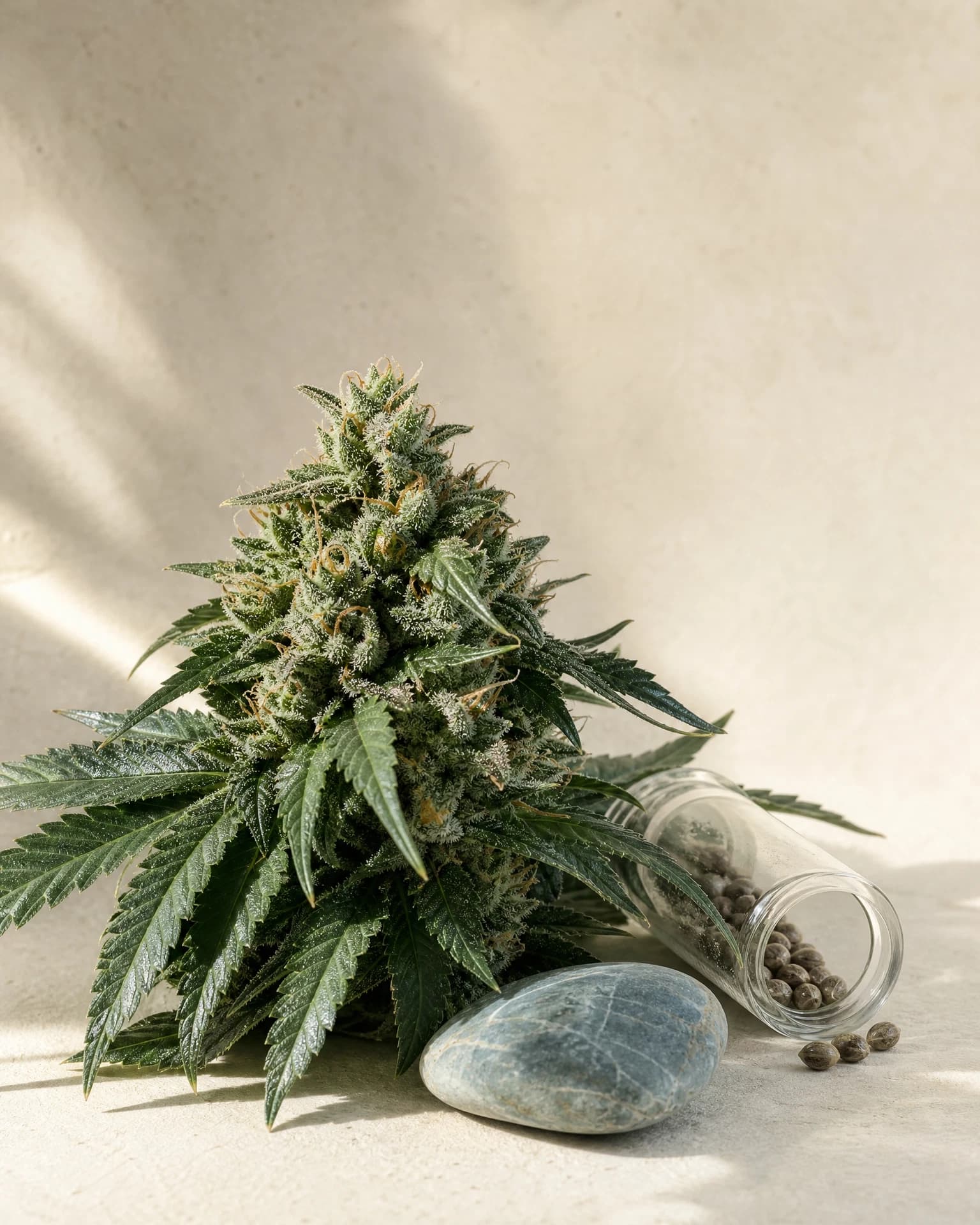
Overview
The process of evaluating a modern cultivar requires a careful examination of the available breeder records and retail data points to establish a baseline of expected characteristics. When looking at the wedding cake strain, the documentation provided by various primary sources suggests a profile that is mostly Indica-dominant in its genetic expression. This classification informs the general understanding of the plant's growth habits and its physical presentation during the various stages of its lifecycle. A central component of these records is the description of the plant as a hybrid, which indicates a blend of traits that have been stabilized through selective breeding processes. The primary documentation highlights a specific set of physical and sensory attributes that define this particular cultivar within the broader context of contemporary botanical catalogs.
A breeder record serves as a technical summary, offering insights into the expected morphology and development of a plant. In the case of this cultivar, the records describe a medium-sized plant structure that tends toward a bushy growth pattern. This physical form is often associated with the production of dense buds that are noted for being rich in resin. Such descriptions are intended to provide growers with a standardized expectation of what the plant will look like as it reaches maturity. The presence of resin is a significant marker in these records, as it relates to the concentration of botanical compounds that the plant produces. By focusing on these documented physical traits, researchers can better understand the structural integrity and aesthetic qualities that define the wedding cake strain across different cultivation environments.
Understanding the limitations of these records is a necessary part of responsible botanical research. A single record may not capture the full range of variability that can occur due to environmental factors or different phenotypes. Therefore, the data points provided in a summary—such as the Indica-leaning profile or the medium plant height—should be viewed as averages or typical expressions rather than absolute certainties. The documentation for the wedding cake strain emphasizes its availability in specific seed formats, namely feminized and autoflower varieties, which allows for a degree of flexibility in how the cultivar is approached by those interested in its development. These formats are designed to meet different technical needs, and their inclusion in the record is a key detail for anyone looking to categorize the cultivar accurately.
Technical specifications regarding the timeline of development are also a standard feature of these summaries. For this cultivar, the records indicate a flowering period that generally falls within the range of 8 to 10 weeks. This window of time is a critical metric for planning and resource management, as it dictates the duration of the most intensive phase of the plant's growth. The documentation also touches upon the sensory profile, noting a dominant flavor and aroma that includes notes of sweet vanilla and creamy baked goods, which are further layered with earthy and peppery undertones. These sensory details are not merely descriptive; they serve as identifiers that help distinguish this cultivar from others with similar genetic backgrounds.
Genetics and cultivar background
The genetic history of a cultivar is often one of the most complex areas of study, as different sources may provide conflicting information regarding the specific parentage used to create a particular hybrid. In the case of the wedding cake strain, there is a notable disagreement among primary retailers and breeders concerning its exact lineage. The majority of available records suggest that the cultivar is the result of a cross between Cherry Pie and Girl Scout Cookies, a combination that frequently includes the influence of OG Kush. This particular lineage is widely cited and forms the basis for the general classification of the plant as a mostly Indica-dominant hybrid. The interaction between these parent strains is believed to contribute to the specific morphological and sensory traits that are documented in the cultivar's profile.
However, a significant alternative perspective exists within the botanical record. At least one prominent source identifies the cultivar as a cross between Triangle Kush and Animal Mints, a combination that is also known in some circles as Triangle Mints #23. This discrepancy highlights the challenges inherent in tracking the origins of modern hybrids, where different breeding programs may use the same name for plants with distinct genetic backgrounds. When two different sets of parents are attributed to the same cultivar name, it creates a situation where the researcher must account for the possibility of phenotypic variation depending on which lineage a specific batch of seeds represents. This conflict is a substantive part of the cultivar's background and must be acknowledged to provide a complete picture of its documented history.
The presence of such conflicting data points is not uncommon in the field of cannabis genetics. The lack of a centralized, universally recognized registry for cultivar names means that the same name can be applied to different genetic crosses, or conversely, the same cross can be given different names by different breeders. In the context of the Wedding Cake genetics available on the market, the lineage conflict serves as a reminder that the name of a cultivar is often a marketing label as much as a genetic identifier. Researchers must therefore look beyond the name and examine the specific parentage claims made by the producer of the seeds they are studying. This level of scrutiny is necessary to ensure that the botanical characteristics being observed are consistent with the genetic claims being made.
General educational practices in botany suggest that when faced with conflicting lineage reports, the best approach is to document all known claims and look for commonalities in the resulting plant traits. Regardless of whether the parentage involves Cherry Pie and Girl Scout Cookies or Triangle Kush and Animal Mints, the resulting cultivar is consistently described as an Indica-leaning hybrid with a high potency profile. This suggests that while the specific genetic paths may differ, the breeding goals were likely similar, aiming for a plant that exhibits a medium, bushy structure and a resin-heavy bud production. The persistence of these traits across different lineage claims provides a degree of stability to the cultivar's identity, even if its exact origins remain a subject of debate among experts.
Evaluating the background of a cultivar also involves understanding the role of high-potency parentage. Both sets of claimed parents are known for their significant concentrations of botanical compounds, which is reflected in the records for the wedding cake strain that often cite THC levels exceeding 20%. This high potency is a defining characteristic of the cultivar's background, indicating that the selection process focused on maximizing the plant's chemical output. Whether the genetics are derived from the Kush family or the Cookies family, the emphasis on potency remains a constant factor in the documentation. This focus on chemical concentration is a hallmark of modern hybrid breeding, where the goal is often to produce plants that offer a powerful and consistent experience for the end user.
Plant profile and grow planning
The physical development of a cultivar is a primary concern for those engaged in botanical study and cultivation. The records for the wedding cake strain describe a plant that typically reaches a medium height, which is a characteristic that makes it manageable in a variety of settings. This medium stature is accompanied by a bushy plant structure, a trait often associated with Indica-dominant hybrids. A bushy structure implies a significant amount of lateral branching, which can lead to a dense canopy if not properly managed. The documentation also notes the production of dense, resin-rich buds, which are a hallmark of this cultivar's mature stage. These physical attributes are essential for planning the spatial requirements and maintenance schedules necessary for the plant to thrive.
Planning for the growth of this cultivar requires an understanding of its preferred environmental conditions. According to the available data, the wedding cake strain is suitable for both indoor and outdoor cultivation, provided the climate is warm and temperate. This environmental preference is a key factor in determining the feasibility of growing the cultivar in specific geographic locations. In outdoor settings, a warm and temperate climate provides the consistent temperatures and light levels that the plant needs to complete its lifecycle. Indoors, these conditions must be replicated through the use of climate control systems that maintain a stable environment. The ability of the plant to adapt to both settings is a testament to the stability of the breeding that produced it.
The timeline for growth is another critical element of the plant profile. The records indicate a wedding cake flowering time that generally spans between 8 and 10 weeks. This period is the time from the onset of the flowering stage until the plant reaches full maturity and is ready for harvest. Understanding this timeline is vital for resource planning, as the flowering stage is when the plant's nutritional and environmental needs are most specific. A shorter flowering time might be preferred in regions with shorter growing seasons, while a longer period may allow for a more extensive development of the plant's resin and flavor profile. The 8 to 10-week window provided in the records offers a reasonable expectation for the duration of this phase.
General educational principles for grow planning emphasize the importance of monitoring plant structure throughout the vegetative and flowering stages. For a medium-sized, bushy plant like this one, techniques such as pruning or training may be employed to ensure that light and air can reach all parts of the plant. This is particularly important for cultivars that produce dense buds, as poor airflow can lead to issues with moisture retention. While the records do not specify particular training methods for the wedding cake strain, the description of its structure provides enough information for a researcher to infer the types of care that might be beneficial. By understanding the plant's natural tendency toward a bushy form, one can plan for a cultivation strategy that maximizes the health and productivity of the cultivar.
Finally, the resin-rich nature of the buds mentioned in the documentation is a significant factor in the overall plant profile. Resin production is a biological process that serves various functions for the plant, including protection from environmental stressors. In the context of a breeder record, high resin production is often a proxy for the concentration of secondary metabolites, such as cannabinoids and terpenes. The dense nature of the buds further suggests a high degree of structural integrity in the plant's reproductive parts. These details, while technical, are the building blocks of a comprehensive plant profile and are essential for anyone looking to understand the botanical characteristics of this particular hybrid.
Aroma and flavor profile
The sensory experience of a cultivar is defined by its aroma and flavor profile, which are the result of a complex interplay of various botanical compounds. For the wedding cake strain, the records describe a dominant flavor profile that is characterized by sweet vanilla and creamy baked goods. These notes are often the first thing a researcher or consumer will notice, and they serve as a primary identifier for the cultivar. The presence of sweet and creamy elements is a common feature in modern hybrids that are bred for a specific sensory appeal. These flavors are not just pleasant; they are a reflection of the plant's underlying chemical composition and are used by breeders to distinguish their work in a crowded market.
In addition to the primary sweet and creamy notes, the documentation also mentions earthy and peppery undertones. these secondary flavors provide a layer of complexity to the overall profile, balancing the sweetness with more grounded and spicy elements. The combination of sweet vanilla with earthy and peppery notes creates a multi-faceted sensory experience that is often described in detail in breeder catalogs. These undertones are important because they can vary in intensity depending on the specific phenotype and the conditions under which the plant was grown. A record that includes both primary and secondary flavor notes provides a more complete picture of what to expect from the cultivar's sensory presentation.
General education on sensory profiles in botany involves understanding how these descriptions are generated. Typically, a panel of experts or a group of experienced tasters will evaluate a cultivar and record their observations. These observations are then synthesized into a standardized description that appears in breeder records. It is important to remember that sensory perception is subjective, and different individuals may emphasize different aspects of the same profile. However, when multiple sources agree on a set of dominant notes—such as the sweet vanilla and creamy baked goods attributed to the wedding cake strain—it provides a high degree of confidence in the accuracy of the description.
The role of environmental factors in shaping a cultivar's aroma and flavor cannot be overstated. While the genetic potential for a specific profile is inherited from the parent plants, the actual expression of those traits is influenced by things like soil composition, nutrient availability, and climate. For example, the earthy and peppery undertones mentioned in the records might be more pronounced in plants grown in certain types of soil or under specific light conditions. This variability is why breeder records often provide a range of flavor notes rather than a single, definitive description. By documenting the most common sensory attributes, these records help to establish a standard for the cultivar while acknowledging the possibility of variation.
Researching the sensory profile of a cultivar also involves looking at how these flavors are perceived during different methods of consumption. While the records for the wedding cake strain focus on the flavor and aroma of the mature buds, these traits can also be observed in other forms, such as concentrates or extracts. The persistence of the sweet vanilla and creamy notes across different formats is a sign of a well-stabilized flavor profile. For the researcher, understanding these sensory details is a key part of characterizing the cultivar and distinguishing it from others that might have a similar appearance or growth habit but a different chemical and sensory makeup.
Reported experience context
When evaluating the reported experience of a cultivar, the most objective metric available in breeder records is the potency, which is typically expressed as a percentage of THC. For the wedding cake strain, the documentation consistently points to a high potency profile, with many sources indicating that the THC content often exceeds 20%. This level of potency is a significant factor in how the cultivar is perceived and categorized. A plant with a THC concentration in this range is considered to be at the upper end of the spectrum for modern hybrids, and this information is a critical part of the context for any reported experience.
The term "potency" in a botanical record refers to the concentration of the primary psychoactive compound in the plant. A high potency rating, such as the one attributed to the wedding cake strain, suggests that the cultivar was bred with the goal of producing a strong and consistent effect. However, the actual experience of a cultivar is the result of the interaction between all of its chemical components, not just the THC. While the records for this particular hybrid do not provide detailed information on other cannabinoids or specific terpenes, the high THC percentage serves as a reliable indicator of the plant's overall strength.
General education on interpreting potency data involves understanding that these percentages are often based on laboratory testing of specific samples. These samples are typically grown under ideal conditions to maximize their chemical output, and the resulting data represents the potential of the cultivar rather than a guaranteed result for every plant. Factors such as cultivation techniques, harvest timing, and curing processes can all influence the final potency of the buds. Therefore, when a record states that the wedding cake strain often exceeds 20% THC, it should be understood as a benchmark for what the plant is capable of achieving when grown and processed correctly.
The lack of specific reported effects in the provided record is a notable omission that requires a cautious approach to interpretation. While many external sources might claim specific physical or mental outcomes associated with this cultivar, a strict evidence-bounded analysis must stick to the data present in the record. The primary takeaway from the documentation is the high potency, which suggests a powerful experience, but the exact nature of that experience—whether it is more sedative, uplifting, or balanced—is not explicitly stated. This absence of information is a common feature of technical breeder records, which often focus on measurable data points like potency rather than subjective descriptions of effects.
In the absence of detailed experiential data, researchers often look to the genetic profile for clues. As an Indica-leaning hybrid, the wedding cake strain might be expected to share some general characteristics with other plants in that category. However, without specific confirmation in the record, these remain as hypotheses rather than verified facts. The most responsible way to describe the experience context for this cultivar is to emphasize its high potency and its classification as an Indica-dominant hybrid, while plainly stating that the specific subjective effects are not documented in the primary record. This approach ensures that the information provided is both accurate and grounded in the available evidence.
How to compare current breeder records
Evaluating a cultivar based on breeder records requires a systematic approach to comparing data points from different sources. Because there is no single, authoritative database for cannabis genetics, information can vary significantly from one record to another. When looking at the wedding cake strain, for example, a researcher might find differences in the reported flowering time, potency levels, or even the genetic lineage. Learning how to manage these discrepancies and identify the most reliable information is a key skill for anyone involved in botanical research.
One of the first steps in comparing records is to look for consensus among multiple sources. If five different retailers all report that the wedding cake strain has a flowering time of 8 to 10 weeks, that information can be viewed with a high degree of confidence. However, if one source reports a much shorter or longer period, it is important to investigate why that might be the case. It could be that the outlier is referring to a different phenotype or that their data is simply less accurate. By looking at the weight of the evidence across a range of sources, a researcher can establish a more reliable baseline for the cultivar's expected performance.
Another important factor to consider is the source of the information. Some records are provided directly by the breeders who created the cultivar, while others are generated by retailers or third-party reviewers. Generally, data from the original breeder is considered the most authoritative, as they have the most direct knowledge of the plant's genetics and growth habits. However, retail records can also be valuable, as they often reflect the experiences of a wider range of growers and may include data points that the original breeder did not capture. When comparing records for the Wedding Cake genetics, it is useful to note which sources are providing the data and to weigh their claims accordingly.
General education on record comparison also involves understanding the terminology used in these documents. Terms like "high potency," "medium height," or "Indica-dominant" can have slightly different meanings depending on the source. For example, what one breeder considers to be a high THC level might be viewed as average by another. To account for this, researchers should look for specific numbers and metrics whenever possible. A record that states a THC level of "over 20%" is more useful than one that simply says "very strong." By focusing on measurable data, a researcher can make more objective comparisons between different cultivars and different versions of the same cultivar.
Finally, it is important to be aware of the role that marketing plays in the creation of breeder records. These documents are often designed to sell seeds, and as such, they may emphasize the most positive traits of a cultivar while downplaying its challenges. A record that claims a plant is "easy to grow" and "high yielding" should be viewed with a healthy degree of skepticism unless these claims are backed up by specific technical data. In the case of the wedding cake strain, the documentation is relatively straightforward, focusing on measurable traits like plant structure, flowering time, and flavor profile. This level of detail is a sign of a high-quality record and provides a solid foundation for further research and evaluation.
The information provided in this guide is based on a synthesis of several primary records and retail catalogs. These sources include a range of perspectives from across the industry, providing a broad overview of the wedding cake strain and its documented characteristics. However, as noted throughout the text, there are significant discrepancies in some areas of the data, particularly regarding the genetic lineage of the cultivar. These conflicts are a substantive part of the record and highlight the importance of approaching botanical information with a critical and discerning eye.
The primary caveat in the documentation for this cultivar involves the disagreement over its parentage. While most retailers cite a cross of Cherry Pie and Girl Scout Cookies, at least one major source identifies the plant as Triangle Kush x Animal Mints. This conflict is not merely a technical detail; it represents a fundamental uncertainty about the genetic identity of the wedding cake strain as it exists on the market today. Because different lineages can lead to different phenotypic expressions, researchers must be aware of which version of the cultivar they are working with. This guide has attempted to present both perspectives fairly while emphasizing the common traits that are documented across all sources.
In addition to the lineage conflict, there are several areas where the available records are incomplete. For example, specific data on yields, harvest dates, and detailed cannabinoid profiles are often missing or vary significantly between sources. These gaps in the information are a reminder of the limitations of current breeder records and the need for continued research and transparency in the industry. By stating these unknowns plainly, this guide aims to provide a realistic and evidence-based assessment of the cultivar, avoiding the common pitfalls of over-generalization or unverified claims.
The goal of these record caveats is to provide the reader with the context necessary to evaluate the information presented in the guide. By understanding where the data comes from and where the points of conflict and uncertainty lie, one can make more informed decisions about how to approach the wedding cake strain. Whether you are a researcher, a grower, or simply a botanical enthusiast, the key to a successful engagement with any cultivar is a commitment to rigorous, evidence-based inquiry and a willingness to acknowledge the complexities of the botanical record.
A thorough investigation of a cultivar often leads to a set of related research questions that can help to deepen one's understanding of its botanical and chemical properties. For the wedding cake strain, several areas of inquiry could provide valuable insights for researchers and growers alike. One such question involves the specific terpene profile of the plant. While the records mention flavors like vanilla, cream, earth, and pepper, they do not list the specific terpenes responsible for these notes. Researching which terpenes—such as myrcene, caryophyllene, or limonene—are typically found in this cultivar could provide a more technical understanding of its sensory and chemical makeup.
Another important research question concerns the stability of the different seed formats. For example, how consistent are the traits of the autoflowering version of the wedding cake strain compared to the feminized photoperiod version? Understanding the degree of phenotypic variation within each format is essential for growers who are looking for a specific set of characteristics. This type of research often involves comparing the results from multiple cultivation projects and looking for patterns in the plant's development and chemical output. By asking these kinds of questions, researchers can help to build a more complete and accurate picture of the cultivar's potential.
Questions about the plant's nutritional and environmental needs are also highly relevant. While the records state that the wedding cake strain is suitable for warm and temperate climates, they do not provide specific details on its preferred nutrient levels or its resistance to common pests and diseases. Investigating these factors could help growers to develop more effective cultivation strategies and to troubleshoot any issues that might arise during the growth process. This type of technical research is often conducted by agricultural scientists and experienced breeders, and the results are a valuable addition to the broader body of knowledge about the cultivar.
Finally, the lineage conflict identified in the records for the wedding cake strain opens up a whole field of genetic research. By using modern DNA sequencing techniques, researchers could potentially resolve the disagreement over whether the cultivar is a cross of Cherry Pie and Girl Scout Cookies or Triangle Kush and Animal Mints. This type of work is at the forefront of cannabis science and is essential for establishing a more accurate and transparent system for naming and categorizing cultivars. By pursuing these and other related research questions, the botanical community can continue to improve the quality and reliability of the information available to everyone interested in these fascinating plants.
Frequently asked questions
What is the Wedding Cake strain?
This guide summarizes the documented cultivar record while separating verified details from variable grower outcomes.
Is Wedding Cake suitable for beginners?
Difficulty depends on the exact seed line, environment, and grow setup. Confirm current breeder guidance.
How long does Wedding Cake take to flower?
Flowering windows vary by phenotype and environment. Confirm the estimate for the exact breeder line.
Can Wedding Cake be grown indoors and outdoors?
Suitability depends on the breeder line and local climate. Compare space, humidity, temperature, and season length.
Which Wedding Cake seed format should I choose?
Autoflower and feminized formats serve different schedules and grow styles. Compare only documented direct records.