
Strain guide
White Fire OG Strain Guide: Pine aroma and grower notes
White Fire OG is documented here with partner-source cultivar context, seed-format availability, and secondary-topic research cues.
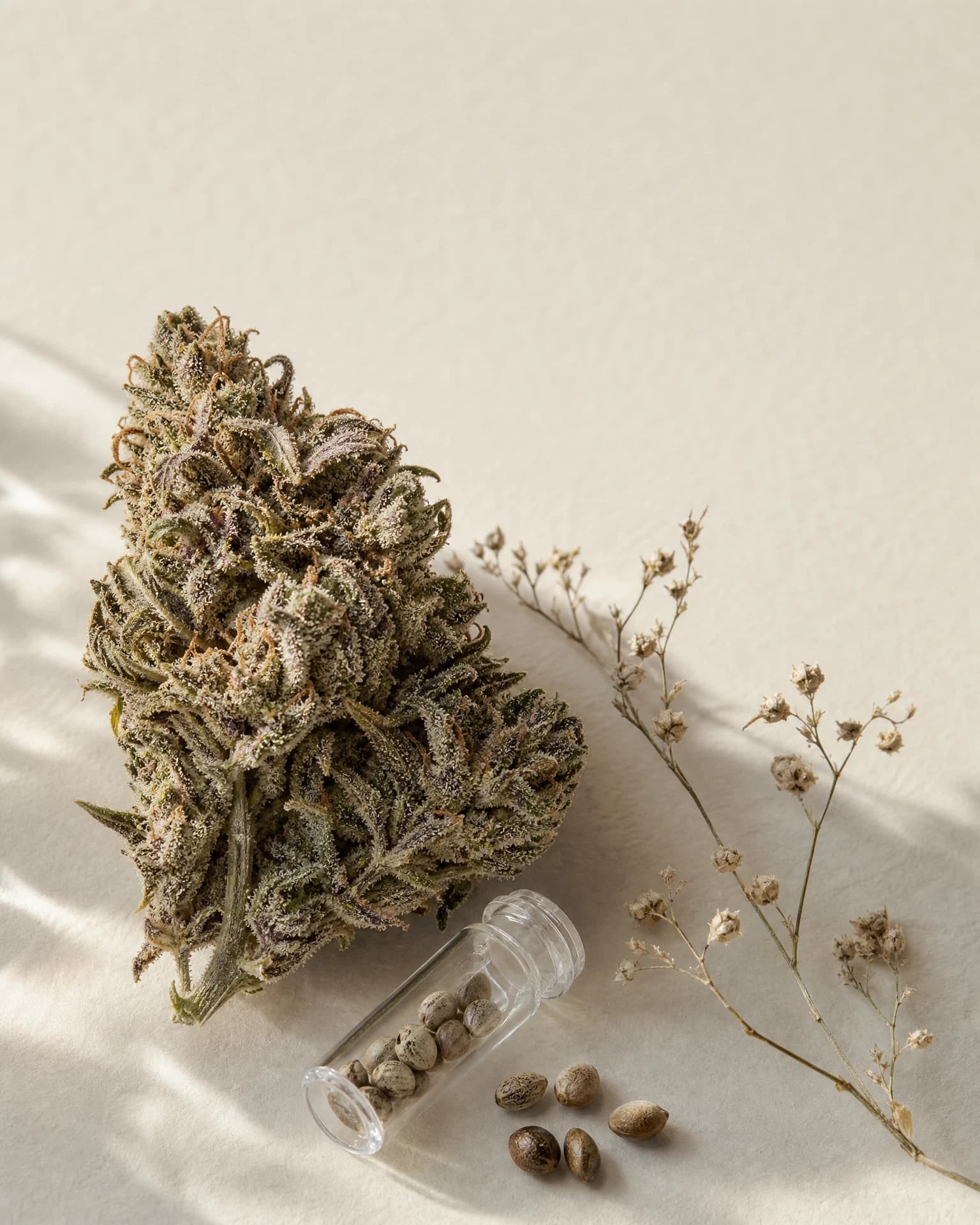
Overview
The White Fire OG strain represents a specific intersection of hybrid genetics that has gained attention for its specific chemical profile and structural characteristics. As a hybrid cultivar, it is defined by a blend of traits that are typically categorized within the broader spectrum of modern cannabis varieties. The primary identifier for this particular selection is its high potency, with testing records indicating a THC concentration that ranges between 24% and 28%. This level of cannabinoid density places it in a category of plants that are often sought for their concentrated resin production. The physical expression of the plant is described as compact, maintaining a stature that is generally classified as short to medium. In controlled indoor environments, these plants are noted for their ability to produce significant biomass, with yields reported to average between 500 and 660 grams per square meter.
Understanding a breeder record like the one provided for the white fire og strain requires a careful look at the specific data points that define a cultivar. A hybrid designation indicates that the plant does not strictly adhere to the traditional morphological extremes of pure indica or pure sativa lineages. Instead, it likely exhibits a combination of growth habits and chemical outputs that reflect its parentage. The White Fire OG genetics available in the current market are primarily offered in feminized photoperiod formats, which is a standard for growers who wish to ensure that their garden consists entirely of flower-producing plants without the need for sexing during the early stages of the vegetative cycle. The flowering time for this variety is documented as being between 8 and 10 weeks, a window that is common for many hybrid crosses that balance speed with the development of complex aromatic profiles.
When evaluating the white fire og flowering time, it is useful to consider how these timelines are calculated by breeders. The 8-10 week estimate usually refers to the period from the initiation of the 12/12 light cycle to the point of peak maturity. For a cultivar known for exceptional resin production, the latter end of this window may be necessary to allow for the full development of the glandular trichomes that contain the plant's cannabinoids and terpenes. The aromatic profile of this cultivar is characterized by herbal and pine notes, suggesting a terpene composition that leans toward earthy and forest-like scents. These descriptors provide a baseline for what a grower or consumer might expect, although the specific intensity of these aromas can be influenced by environmental factors and curing processes.
Genetics and cultivar background
The genetic foundation of the White Fire OG strain is rooted in a cross between two well-known parents: Fire OG and The White. This specific lineage is the primary source of the cultivar's physical and chemical traits. Fire OG is often recognized for its specific growth patterns and aromatic qualities, while The White is frequently cited for its heavy resin coverage and potency. By combining these two, the resulting hybrid aims to express the strengths of both ancestors. The record indicates that this cultivar is sometimes marketed interchangeably under the name WiFi OG, a common practice in the industry where shortened or modified names are used for branding purposes.
The process of crossing Fire OG and The White involves selecting specific phenotypes that demonstrate the desired characteristics of each parent. In the case of White Fire OG, the focus appears to have been on maintaining a high THC ceiling and a compact plant structure. The interaction between these two lineages results in a plant that is capable of producing the 24-28% THC levels mentioned in the breeder documentation. This genetic background is a fundamental piece of information for anyone researching the history of a particular strain, as it provides the biological context for its performance in various environments.
It is common for breeders to use different naming conventions for the same genetic cross. The interchangeable use of White Fire OG and WiFi OG can sometimes lead to confusion in the marketplace, but the underlying genetics remain consistent as long as the parentage is verified. In some instances, retailers may carry the strain as a standalone offering, while others might only include it as a genetic component in other hybrid crosses. For example, some catalogs may feature it as a parent in varieties like Peyote Wi-Fi rather than selling the original cross on its own. This variation in availability highlights the importance of checking the specific source and lineage of the seeds being acquired.
Plant profile and grow planning
The structural profile of White Fire OG is characterized by a short to medium height, typically reaching approximately 1.2 meters. This compact growth habit is a significant factor in how the plant is managed in a garden. A height of 1.2 meters is generally manageable for indoor growers who may have limited vertical space. The description of the plant as sturdy and compact suggests that it develops strong branches capable of supporting the weight of its flowers, which is particularly important given the high yields reported for this variety.
Planning a grow for this cultivar involves accounting for its 8-10 week flowering period. This timeframe requires a stable environment where light, humidity, and temperature can be precisely controlled to maximize the plant's potential. The indoor yield estimates of 500-660 g/m² indicate that this is a productive variety, but achieving these numbers usually requires optimized conditions and specific training techniques. Because the plant is compact, it may benefit from methods that encourage lateral growth or ensure that light reaches the lower branches, even if the primary structure is dense.
The sturdy nature of the plant's structure is a key attribute mentioned in the record. This term generally refers to a plant's ability to withstand environmental stressors or the physical weight of its own growth. In the context of White Fire OG, this sturdiness likely supports the "exceptional resin production" that the strain is known for. Resin production is a resource-intensive process for the plant, and a strong physical foundation is necessary to sustain the development of these secondary metabolites throughout the flowering cycle. Growers should monitor the plant's development closely during the middle to late stages of flowering to ensure that the environment remains conducive to this high level of output.
Aroma and flavor profile
The aromatic profile of the White Fire OG strain is defined by two primary descriptors: herbal and pine. These scents are the result of the plant's specific terpene synthesis, which creates a distinct olfactory experience. Herbal notes often suggest an earthy or spicy quality, while pine aromas are typically associated with fresh, forest-like scents. Together, these elements form the core of the cultivar's identity in terms of how it is perceived by the senses.
While the record focuses on the aromatic profile, it does not provide specific details regarding the flavor of the consumed product. In many cases, the aroma of a cannabis plant is a strong indicator of its flavor, but they are not always identical. The herbal and pine scents likely translate into a similar taste profile, but without explicit data in the record, it is best to focus on the confirmed aromatic qualities. The presence of these specific scents suggests that the plant produces terpenes that are common in many OG-descended varieties, which often feature a mix of earth, wood, and spice.
The intensity of the herbal and pine aromas can vary depending on how the plant is grown and processed. Factors such as nutrient levels, light spectrum, and the temperature during the drying and curing phases all play a role in the final aromatic output. For a strain noted for its resin production, the concentration of these aromatic compounds is likely high, as terpenes are primarily stored within the same glandular trichomes that house the cannabinoids. This connection between resin and aroma means that the visual appearance of the plant—specifically its frostiness—is often a good indicator of the strength of its scent.
Reported experience context
The primary data point regarding the experience of the White Fire OG strain is its high potency, specifically the 24-28% THC range. This concentration is significantly higher than the average for many traditional cultivars and places it firmly in the "high-potency" category. The record does not list specific subjective effects, medical applications, or sensory experiences beyond the aromatic profile. Therefore, the context of the experience is defined primarily by the chemical strength of the cultivar.
When a record specifies a THC range of 24-28%, it provides a clear indication of the plant's potential for intense activity. THC, or tetrahydrocannabinol, is the primary psychoactive compound in cannabis, and its concentration is a major factor in how a user might experience a particular strain. However, the record does not provide information on other cannabinoids like CBD or specific terpenes that might influence the overall character of the experience. As such, the focus remains on the high potency and the exceptional resin production that facilitates it.
One should observe that potency figures in breeder records are often based on optimized samples grown under ideal conditions. A range of 24-28% suggests that the cultivar has a high ceiling, but the actual results achieved by an individual grower may vary based on their skill and the environment provided. The lack of reported effects in this specific record means that researchers should look to the chemical data as the primary guide for what to expect. The high resin production mentioned elsewhere in the record is a physical manifestation of this potency, as the trichomes are the factories for the compounds that define the experience.
How to compare current breeder records
Evaluating a breeder record requires a systematic approach to understanding the data provided. When looking at a strain like White Fire OG, the first step is to verify the primary metrics: genetics, potency, and growth characteristics. A high-quality record will provide specific ranges rather than single, static numbers. For instance, the 24-28% THC range and the 8-10 week flowering time for this cultivar are more useful than a single number because they account for the natural variation found in biological systems.
One should also look for consistency across different sources. The caveat in the record for White Fire OG highlights how a strain can be marketed under different names or available in different forms depending on the retailer. Comparing these records allows a researcher to build a more complete picture of the cultivar's potential. If one source lists a height of 1.2 meters and another lists something vastly different, it may indicate a difference in the specific phenotype being offered or a variation in growing conditions. The ability to identify these discrepancies is a key skill for any serious researcher.
Another aspect of comparing records is understanding the terminology used. Words like "hybrid," "feminized," and "photoperiod" have specific technical meanings that define how the plant will grow and what it will produce. A hybrid designation tells you that the plant has a mixed ancestry, while "feminized" refers to the sex of the seeds. "Photoperiod" indicates that the plant's flowering is triggered by light cycles. By breaking down the record into these component parts, you can better assess whether a particular cultivar meets your specific needs or research goals.
The information provided in this guide is strictly bounded by the specific record for the White Fire OG strain. This record includes data from verified facts, plant profiles, and flowering contexts provided by specific retailers and breeders. One should recognize that this data is limited to what has been explicitly stated in the provided documentation. For instance, while the record confirms the high potency and specific aromatic profile, it does not include information on the subjective effects or medical uses of the cultivar.
The caveat provided in the record is a substantive part of this evidence. It notes that the strain is interchangeably marketed as White Fire OG and WiFi OG and that its availability as a standalone strain is limited to certain retailers. This type of information is vital for maintaining the accuracy of the guide, as it prevents the inclusion of unsupported claims that might be found in less rigorous sources. By sticking to the provided facts, the guide ensures that the reader receives a reliable, evidence-based overview of the cultivar.
Unknown fields, such as specific terpene percentages, detailed flavor descriptions, and precise harvest windows for outdoor growing, are left out of this guide because they do not appear in the record. This approach prioritizes factual integrity over speculative detail. The goal is to provide a clear and concise summary of what is known about White Fire OG based on the available evidence, while also providing the general context necessary to interpret that evidence correctly. Researchers are encouraged to use these record caveats as a baseline for their own investigations into the cultivar.
When investigating a cultivar based on a limited record, several related research questions often emerge. For example, if a record states that a plant has "exceptional resin production," a researcher might want to know more about the specific types of trichomes the plant develops or the density of those trichomes on the flower surfaces. While the record for White Fire OG provides the high-level fact, the underlying biological mechanisms remain an area for further inquiry. Similarly, the "herbal and pine" aromatic profile suggests a specific terpene makeup, but the exact concentrations of pinene, myrcene, or other compounds are not listed.
Another area for research is the environmental preferences of the cultivar. The record notes that the plant is "compact and sturdy" and reaches a height of 1.2 meters, but it does not specify the ideal temperature or humidity ranges for each stage of growth. A researcher might ask how this specific hybrid responds to different nutrient regimens or how its yield of 500-660 g/m² changes when grown in different substrates like soil versus hydroponics. These questions help bridge the gap between the basic facts provided in a breeder record and the practical application of that knowledge in a garden.
Finally, the naming and marketing of the strain raise questions about the history of its distribution. The interchangeable use of White Fire OG and WiFi OG, and its presence as a parent in other crosses, suggests a complex path through the industry. A researcher might look into how these different names became established and whether there are any subtle differences between the "WiFi" and "White Fire" labels in different regions. By identifying what is not in the record—such as specific harvest dates or medical claims—you can more effectively target your future research efforts.
Frequently asked questions
What is the White Fire OG strain?
This guide summarizes the documented cultivar record while separating verified details from variable grower outcomes.
Is White Fire OG suitable for beginners?
Difficulty depends on the exact seed line, environment, and grow setup. Confirm current breeder guidance.
How long does White Fire OG take to flower?
Flowering windows vary by phenotype and environment. Confirm the estimate for the exact breeder line.
Can White Fire OG be grown indoors and outdoors?
Suitability depends on the breeder line and local climate. Compare space, humidity, temperature, and season length.
Which White Fire OG seed format should I choose?
Autoflower and feminized formats serve different schedules and grow styles. Compare only documented direct records.