
Strain guide
Zkittlez Strain Guide: Citrus aroma and grower notes
Zkittlez is documented here with partner-source cultivar context, seed-format availability, and secondary-topic research cues.
Overview
Zkittlez is recognized in the botanical record as an Indica-leaning hybrid, typically exhibiting a genetic composition that ranges between 60% and 75% Indica. This specific classification suggests a plant that leans toward the morphological and growth characteristics often associated with Indica-dominant varieties, though it retains a significant Sativa influence in its genetic background. As a cultivar, it has gained attention for its distinct flavor profile and its availability in multiple seed formats, specifically feminized and autoflowering versions. The plant is noted for its compact growth habit and its ability to produce dense floral clusters, making it a subject of interest for those studying modern hybrid development.
When examining the zkittlez strain, researchers often look at the balance of its physical traits and its chemical output. The record indicates that the cultivar is capable of reaching different heights depending on the environment, with indoor specimens remaining relatively contained while outdoor plants can reach much larger proportions. This adaptability is a common feature in modern hybrids that have been stabilized for diverse growing conditions. The presence of both feminized and autoflower seeds allows for different cultivation strategies, which is a standard offering in the current seed market for popular varieties.
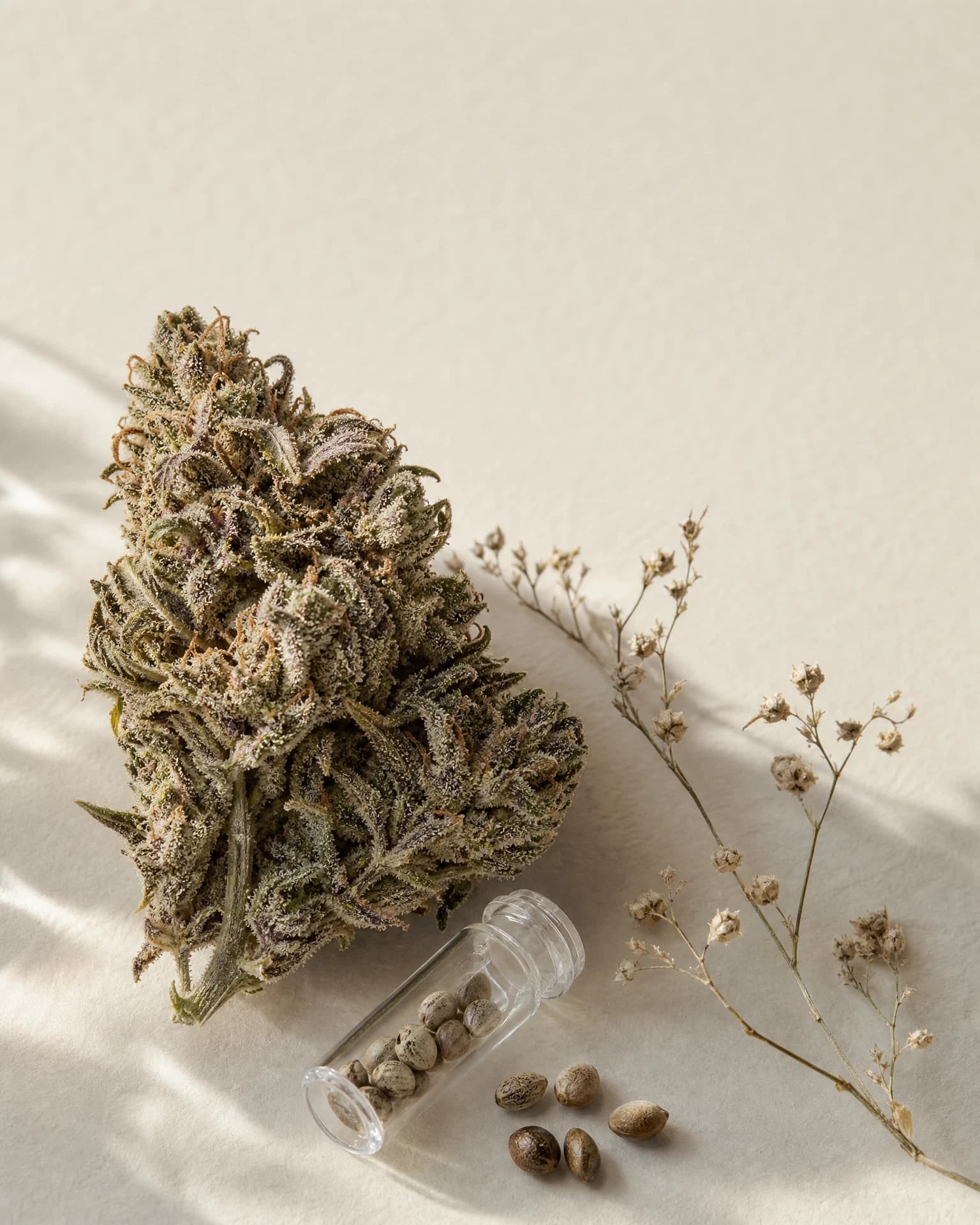
The overall profile of the cultivar is defined by its specific aromatic properties and its visual presentation during the late stages of development. The buds are described as dense, a trait frequently sought after in Indica-leaning plants, and they often display a range of colors including purple hues and bright orange pistils. These visual markers, combined with a sweet and citrus-heavy flavor, contribute to the cultivar's identity within the broader catalog of cannabis genetics. The following sections provide a detailed examination of the available data regarding its lineage, growth patterns, and the technical considerations necessary for evaluating its place in a research or cultivation program.
Genetics and cultivar background
The lineage of Zkittlez is documented as a cross between Grape Ape and Grapefruit, with the inclusion of an undisclosed third parent that contributes to its final genetic makeup. This type of pedigree is common in the development of proprietary cultivars, where breeders may choose to keep certain genetic contributors confidential to protect the unique identity of the plant. The combination of Grape Ape and Grapefruit establishes a foundation of fruit-forward characteristics, which are then modified by the third, unknown element. This undisclosed parentage often leads to discussions regarding the stability and phenotype variation within the zkittlez genetics line.
Grape Ape is generally known for its heavy Indica leanings and its distinct color and scent profile, while Grapefruit is often associated with more uplifting, Sativa-like aromatic qualities. The resulting hybrid, Zkittlez, sits in a space that balances these two influences, though the data confirms a consistent lean toward the Indica side of the spectrum. The variation in the reported Indica-to-Sativa ratio, which fluctuates between 60/40 and 75/25 depending on the source, reflects the natural diversity found within hybrid populations. Such discrepancies are typical when multiple breeders or nurseries work with the same genetic stock, as different selections may emphasize different ancestral traits.
Understanding the background of such a hybrid requires a look at how multi-generational crosses are managed. When three or more parents are involved, the resulting offspring can display a wide range of characteristics. In the case of Zkittlez, the primary focus has been on maintaining the sweet and tropical scent profile that is now synonymous with the name. The use of an undisclosed parent adds an element of mystery to the cultivar's history, but it also highlights the importance of rigorous selection in the breeding process. By crossing established lines like Grape Ape and Grapefruit, breeders aim to capture specific terpene profiles while ensuring the plant remains manageable for the average cultivator.
The genetic stability of Zkittlez is also evidenced by its widespread availability in different formats. Whether a researcher is looking at the standard feminized version or the faster-flowering autoflower variant, the core genetic markers remain the primary focus. The adaptation of these genetics into an autoflowering format involves crossing the original photoperiod plant with Ruderalis genetics, a process that requires several generations of backcrossing to ensure the Zkittlez traits are preserved while the day-neutral flowering habit is introduced. This technical achievement allows for the study of the cultivar's genetics across a broader range of environmental conditions and timelines.
Plant profile and grow planning
The physical structure of Zkittlez is described as short, bushy, and compact, which are hallmark traits of Indica-dominant hybrids. Indoors, the plant typically reaches a height of 3 to 4 feet, making it suitable for environments with limited vertical space. However, when grown outdoors in optimal conditions, the cultivar can stretch significantly, with some reports indicating heights of up to 8 feet. This disparity between indoor and outdoor growth highlights the plant's responsiveness to light intensity and root space. A compact indoor structure often requires specific canopy management techniques to ensure that light reaches the lower branches, as the dense foliage can otherwise shade out potential bud sites.
Flowering time for Zkittlez is reported to be between 8 and 10 weeks. This duration is relatively standard for Indica-leaning hybrids, allowing for a complete maturation of the trichomes and the development of the full terpene profile. For outdoor growers, the harvest typically occurs in early October, which is a critical window for many regions to avoid the onset of late-autumn frosts or high humidity that could impact the health of the dense buds. The timing of the harvest is an essential consideration in any grow planning, as it dictates the entire lifecycle of the plant from the initial vegetative stage through to the final drying and curing process.
The buds themselves are characterized by their density, a physical trait that requires careful monitoring of humidity levels to prevent issues such as mold or mildew. The visual appeal of the mature plant is enhanced by the presence of orange pistils and the development of purple hues, which often become more pronounced as temperatures drop during the final weeks of flowering. These colors are not just aesthetic; they represent the expression of specific pigments within the plant tissue, which can be influenced by both genetics and environmental factors like temperature fluctuations and nutrient availability.
Planning a cultivation cycle for this cultivar involves understanding its nutrient requirements and its preference for environmental stability. Because the plant is bushy and compact, it may benefit from selective defoliation or the use of support structures to maintain airflow through the canopy. The 8 to 10-week flowering window provides a clear timeline for the transition from nitrogen-heavy vegetative nutrients to the phosphorus and potassium-rich fertilizers typically used during the reproductive phase. Monitoring the development of the orange pistils and the clarity of the trichomes serves as a reliable method for determining the peak harvest time, ensuring that the final product aligns with the documented profile of the cultivar.
Aroma and flavor profile
The sensory profile of Zkittlez is one of its most frequently cited attributes, described as a combination of sweet, tropical candy, and citrus notes. This complex flavor is the result of a specific terpene composition, with Caryophyllene, Humulene, and Linalool identified as primary contributors. Each of these terpenes brings its own set of aromatic and chemical properties to the plant. Caryophyllene is known for its spicy and peppery notes, but in this context, it likely provides a grounding element to the more volatile sweet and citrus scents. Humulene often adds an earthy or woody undertone, while Linalool is associated with floral and lavender-like aromas.
The interaction between these terpenes creates the "tropical candy" scent that is so often associated with the zkittlez strain. Terpenes are organic compounds produced in the same glands as cannabinoids, and their primary function in nature is to protect the plant from pests and attract pollinators. In a cultivation setting, the goal is to maximize the production of these compounds through proper nutrition, lighting, and curing techniques. The sweet and citrus flavors are particularly volatile, meaning they can be easily lost if the plant is subjected to excessive heat or improper drying conditions.
Citrus notes in cannabis are often linked to terpenes like Limonene, though Linalool and other minor compounds can also contribute to a fruity or zesty impression. The presence of Linalool in Zkittlez adds a layer of floral sweetness that complements the sharper citrus tones. When these scents are combined with the earthy depth of Humulene and the subtle spice of Caryophyllene, the result is a multi-layered aromatic experience. Researchers studying the chemical makeup of Zkittlez focus on how these ratios vary between different phenotypes and growing environments, as the terpene profile can be highly sensitive to external factors.
Understanding the flavor profile also involves looking at the way these compounds are perceived during consumption. The "candy" aspect of the flavor is a subjective description that points to a high concentration of sweet-smelling esters and terpenes. Unlike some cultivars that may have a more skunky or fuel-like aroma, Zkittlez is consistently noted for its approachable and fruit-forward scent. This makes it a popular choice for those who prioritize flavor in their selection process. The persistence of these flavors from the initial scent of the fresh flower to the final taste of the cured product is a marker of the cultivar's quality and the success of the cultivation process.
Reported experience context
The reported experience of Zkittlez is framed by its cannabinoid content and its hybrid nature. According to the record, THC levels for this cultivar vary significantly, with reports ranging from as low as 16% to as high as 30%. This wide range is a common phenomenon in the cannabis industry, reflecting differences in growing conditions, harvesting times, and the accuracy of laboratory testing. A plant grown under high-intensity lighting with optimized nutrients will likely produce a higher concentration of cannabinoids than one grown in less-than-ideal circumstances. Furthermore, different testing facilities may use different methodologies, leading to variations in the reported percentages.
The Indica-dominant nature of the cultivar (60-75% Indica) also plays a role in how its effects are described. While specific subjective effects are not detailed in the record, the general understanding of Indica-leaning hybrids suggests a balance between physical relaxation and mental engagement. The variance in the Indica/Sativa ratio (from 60/40 to 75/25) across different retailers indicates that there is no single "standard" version of Zkittlez, but rather a family of related phenotypes that share a common genetic foundation. This variation is an important consideration for researchers who need to account for the diversity within the cultivar when conducting studies or evaluating consumer feedback.
When interpreting THC percentages, it is essential to consider the "entourage effect," which is the theory that cannabinoids and terpenes work together to produce a specific experience. A Zkittlez specimen with 18% THC and a high terpene count may be perceived as more potent or effective than one with 25% THC and a low terpene count. The presence of Caryophyllene, Humulene, and Linalool contributes to the overall chemical profile, potentially influencing the way the body interacts with the THC. Because the record notes such a wide range of THC levels, it is clear that the cultivar's potency is not a fixed value but a potential range that depends on many variables.
The context of the reported experience is also shaped by the naming conventions and variants available on the market. The record mentions that some retailers focus on specific hybrids like "Z OG" or "Peyote Zkittlez," which may have different cannabinoid and terpene profiles than the original cross. These variants add another layer of complexity to the reported experience, as a user's perception of "Zkittlez" may be based on a hybrid that includes additional genetics. Therefore, any discussion of the experience associated with this cultivar must acknowledge the inherent variability and the influence of the specific version being studied.
How to compare current breeder records
Evaluating breeder records for a cultivar like Zkittlez requires a systematic approach to data analysis. Because the cannabis industry lacks a centralized regulatory body for genetic naming and reporting, individual seed banks and breeders often provide their own sets of data, which can lead to the discrepancies noted in the record. When comparing these records, the first step is to look for consistency in the primary genetic markers, such as the lineage and the Indica/Sativa ratio. If multiple sources agree that Zkittlez is a cross of Grape Ape and Grapefruit with a 60-75% Indica lean, one can be more confident in the accuracy of that information.
Discrepancies in THC levels and flowering times are also common and should be interpreted as ranges rather than absolute values. The reported 16% to 30% THC range for Zkittlez is a perfect example of how environmental factors and testing methodologies can impact the data. A researcher should look at the average reported values across several reputable sources to get a more realistic expectation of the plant's potential. Similarly, the 8 to 10-week flowering window provides a general timeline, but the actual time to maturity will depend on the specific phenotype and the conditions in which it is grown.
Another important aspect of comparing records is understanding the terminology used by different breeders. Terms like "Indica-leaning" or "compact structure" are qualitative and can be interpreted differently by different people. To get a clearer picture, it is helpful to look for quantitative data, such as height measurements in feet or centimeters and specific terpene concentrations. The record for Zkittlez provides these types of details, such as the 3-4 foot indoor height and the presence of Caryophyllene, Humulene, and Linalool, which helps to ground the more subjective descriptions in measurable facts.
Finally, one must account for the presence of variants and hybrids that carry the Zkittlez name. As mentioned in the caveat, names like "Z OG" or "Peyote Zkittlez" indicate that the original genetics have been modified. When comparing records, it is essential to ensure that you are looking at the same version of the cultivar. A record for an autoflower version will naturally differ from a record for a photoperiod version in terms of height, flowering time, and potentially chemical composition. By carefully vetting the source of the data and looking for patterns across multiple records, a researcher can build a comprehensive and accurate profile of the cultivar.
The information provided in this guide is based on a synthesis of available breeder records and retailer data, which are subject to the inherent limitations of the current cannabis information ecosystem. As noted in the caveat, there are significant variations in the reported THC levels, ranging from 16% to 30%, which suggests a high degree of phenotypic diversity or inconsistency in testing standards. These figures should be viewed as a potential range rather than a guaranteed outcome. Furthermore, the slight discrepancies in the Indica/Sativa ratio, which fluctuates between 60/40 and 75/25, reflect the different ways that breeders and retailers may classify the same genetic stock.
The naming conventions for Zkittlez also present a challenge for data accuracy. The record indicates that some retailers use alternative names or focus on specific hybrids, such as "Z OG" or "Peyote Zkittlez." These variants may share some of the core characteristics of the original Zkittlez, but they are distinct cultivars with their own unique genetic influences. When researching this strain, it is essential to distinguish between the original cross and these subsequent hybrids to avoid conflating their traits. The presence of "Zkittlez Auto" also introduces a different set of growth parameters that must be accounted for in any technical analysis.
The physical descriptions of the plant, such as its short and bushy structure and its dense buds with orange pistils and purple hues, are consistent across most sources. However, the reported heights—3 to 4 feet indoors and up to 8 feet outdoors—are highly dependent on the cultivation environment and the specific phenotype being grown. These measurements should be used as general guidelines for space planning rather than absolute limits. Similarly, the 8 to 10-week flowering window and the early October outdoor harvest time are based on typical growth cycles and may vary depending on local climate conditions and grower practices.
In conclusion, while the data for Zkittlez provides a solid foundation for understanding its genetics, growth habits, and chemical profile, the presence of significant caveats highlights the need for a critical approach to breeder records. The lack of standardized reporting means that any single source may provide an incomplete or slightly skewed picture of the cultivar. By acknowledging these discrepancies and focusing on the most consistently reported traits, such as the primary terpene profile and the general plant structure, we can form a more reliable understanding of what defines Zkittlez as a unique and influential member of the cannabis family. Researchers and cultivators alike should remain aware of these data limits and continue to seek out high-quality, verified information as the industry evolves.
The study of Zkittlez opens up several avenues for further research, particularly regarding its unique chemical profile and its genetic stability. One primary area of interest is the identity of the "undisclosed third parent." While breeders often keep this information secret, genetic sequencing could potentially reveal the ancestral lines that contribute to the cultivar's distinct flavor and growth habits. Understanding the full lineage would provide valuable insights into how these specific traits were selected and stabilized over time. This research could also help to explain the variations in the Indica/Sativa ratio and the wide range of reported THC levels.
Another important research question concerns the stability of the terpene profile across different environments. Since Zkittlez is known for its sweet, tropical candy, and citrus flavors, it would be beneficial to study how factors like light spectrum, nutrient ratios, and temperature fluctuations affect the production of Caryophyllene, Humulene, and Linalool. Does a specific light cycle enhance the floral notes of Linalool, or does a certain nutrient regimen boost the spicy undertones of Caryophyllene? Answering these questions would allow cultivators to fine-tune their environments to maximize the expression of the cultivar's most desirable aromatic traits.
The performance of Zkittlez in different seed formats also warrants further investigation. A comparative study between the feminized photoperiod version and the autoflower variant could reveal how the introduction of Ruderalis genetics impacts the plant's chemical output and overall structure. Are the dense buds and purple hues equally prevalent in the autoflower version? How does the shorter lifecycle of the autoflower affect the development of the full terpene profile? These questions are particularly relevant as autoflowering genetics continue to gain popularity in the commercial and research sectors.
Finally, the long-term stability of the Zkittlez name and its associated variants is a topic worth exploring. As the market becomes flooded with "Z" hybrids and differently named versions of the same genetics, how can researchers and consumers ensure they are working with the authentic cultivar? Developing standardized chemical and genetic markers for Zkittlez would provide a way to verify the identity of seeds and finished products. This would not only protect the integrity of the cultivar but also provide a more reliable foundation for scientific studies and consumer safety.
Frequently asked questions
What is the Zkittlez strain?
This guide summarizes the documented cultivar record while separating verified details from variable grower outcomes.
Is Zkittlez suitable for beginners?
Difficulty depends on the exact seed line, environment, and grow setup. Confirm current breeder guidance.
How long does Zkittlez take to flower?
Flowering windows vary by phenotype and environment. Confirm the estimate for the exact breeder line.
Can Zkittlez be grown indoors and outdoors?
Suitability depends on the breeder line and local climate. Compare space, humidity, temperature, and season length.
Which Zkittlez seed format should I choose?
Autoflower and feminized formats serve different schedules and grow styles. Compare only documented direct records.