
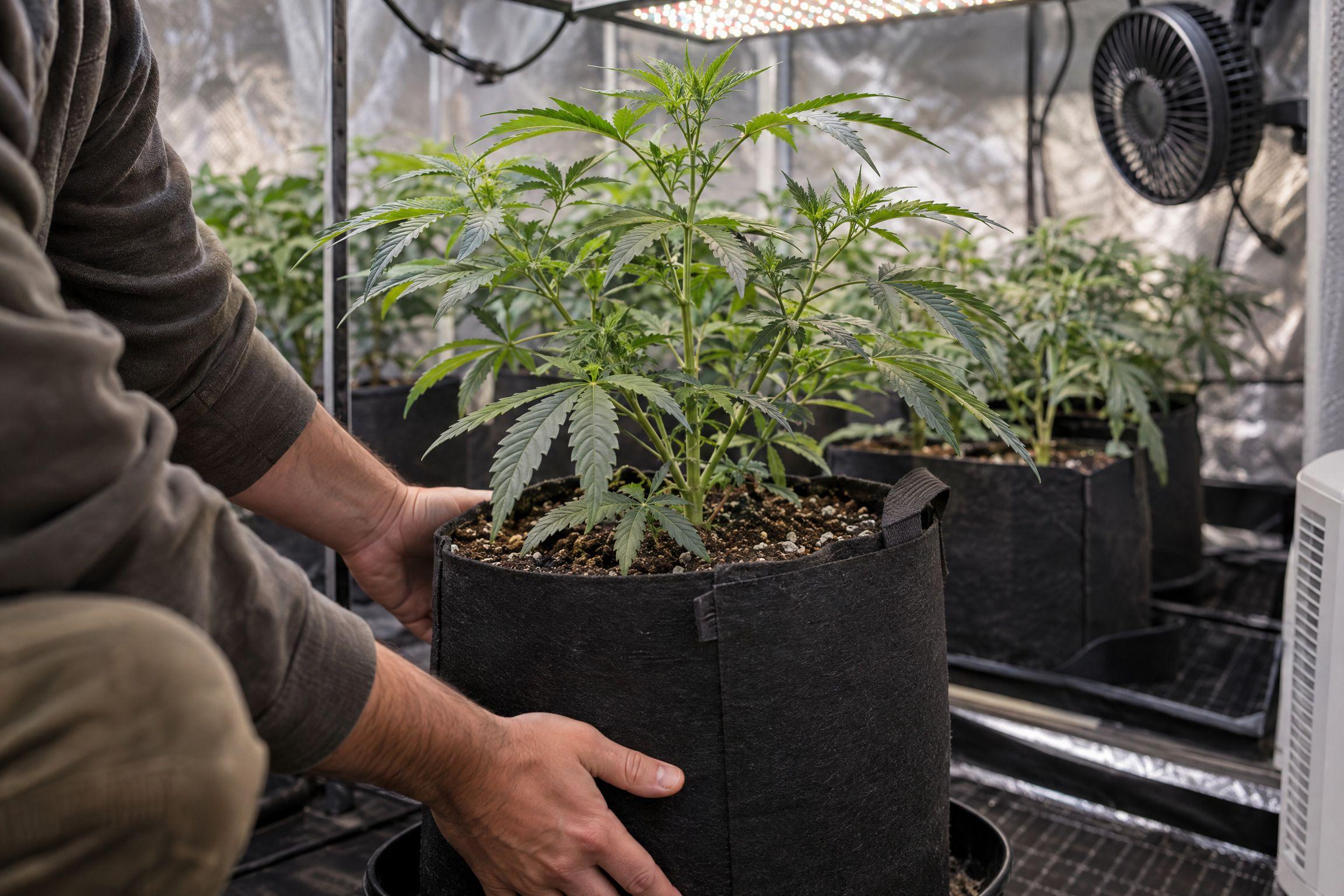
Bruce Banner Autoflower Seeds
The most useful way to approach Bruce Banner autoflower seeds is to prepare the destination before the plant needs it. This listed route brings the Bruce Banner family into a maturity-led flowering format, so the final container, root zone, light, airflow, and support plan deserve attention from the start.
OG Kush × Strawberry Diesel, with additional autoflowering genetics
Cycle timing
Approximately 10 weeks
Plant height
Variable; generally shorter than photoperiod counterparts
Environment
Indoor and outdoor in suitable conditions
Current offer
We may earn a commission when you purchase through one of these links.
About Bruce Banner Autoflower Seeds
Bruce Banner is a hybrid family associated with OG Kush and Strawberry Diesel. Our house aroma direction layers sweet strawberry or berry with diesel, fuel, and earthy notes, while this Autoflower record should be treated as its own format rather than an identical copy of every Bruce Banner line.
What the Autoflower format changes
Autoflower describes a flowering response organized around plant maturity rather than a deliberate photoperiod switch. The practical result is not a promise about speed or finish, but a reason to make key setup choices early and keep the routine easy to observe.
A maturity-led cycle rewards a ready room. Place the final container where light, airflow, and inspection will remain workable, then avoid unnecessary disruption while the plant establishes its early pattern.
The light schedule should support the environment you can maintain consistently. Choose a position that lets you monitor leaf posture, new growth, moisture, and canopy development without treating a single schedule as universal.
Build the early setup around the final position
Choose the working container and medium with the root zone in mind. A clear plan reduces the need for repeated moves, while a stable position makes changes in watering, light, and airflow easier to evaluate.
Leave practical clearance around the plant. The useful space includes more than the pot footprint because you also need room to inspect the interior, adjust equipment, reach the medium, and add gentle support if the structure calls for it.
Set the light by watching the plant’s response rather than copying a number from another room. Make one change at a time and note what follows so the routine stays readable.
A short log is especially helpful on an age-led route. Record emergence, watering, new growth, training, environmental changes, and the first flowering signs without forcing those observations into a fixed calendar.
Canopy and support planning
Bruce Banner has an open, branch-forming house direction that makes flexible canopy planning useful. That does not establish a final size or require one training method, so let the available space and the individual plant guide any shaping decision.
Keep early work restrained and purposeful. If the plant needs support, add it in a way that improves access and airflow instead of imposing a standard shape on every run.
Watch the relationship between the root zone and the canopy. A change in watering, temperature, light position, or container access can affect how the plant reads, so make adjustments gradually and keep notes.
Aroma direction and family context
The Autoflower route belongs to the broader Bruce Banner family while carrying format-specific differences. Keep the original OG Kush × Strawberry Diesel context as family orientation, and keep the listed Autoflower record attached to its own product details.
Indoor and outdoor planning
An indoor Bruce Banner Autoflower setup benefits from a measured light footprint, usable airflow, root-zone access, and a clear inspection path. Prepare the environment before planting because a maturity-led route gives you less reason to postpone decisions about the final position.
An outdoor plan needs a suitable season, direct light, drainage, weather margin, and a legal approach. Choose a site that remains accessible as the plant develops, and keep enough room for support and inspection after weather changes.
In either setting, write down the conditions you can control and the conditions you cannot. That simple distinction helps you adjust the routine without treating the format label as a guarantee about what the plant will do.
A practical maturity-led checklist
Before starting, confirm the container, medium, light position, airflow path, support options, water access, and inspection route. Make sure the space is ready for a plant that will organize flowering by maturity rather than waiting for a deliberate photoperiod change.
During the early stages, keep the environment calm and the record brief. Note what changed, what the plant showed, and what you will check next instead of stacking several untested interventions together.
As flowering signs appear, keep the routine focused on access and environmental consistency. Protect the canopy from stagnant pockets, inspect shaded growth, and allow the individual plant to set the pace.
If development differs from your expectation, revise the routine rather than forcing a borrowed schedule. A flexible plan is more useful than a confident date that does not match the plant in front of you.
Keep the maturity-led workflow readable
A useful first-week routine begins with a simple walk-through of the space. Confirm that the container can be reached, the light can be adjusted without disturbing the plant, and the airflow path remains open as leaves begin to spread.
The medium should be easy to inspect rather than hidden behind a complicated schedule. Check its condition, note the container weight, and make watering decisions from what you observe instead of copying an interval from a different room.
Early leaves can tell you whether the environment is comfortable enough to keep reading. Look at posture, color, new growth, and the relationship between the plant and its light, then make a small correction when the pattern gives you a reason.
Maturity-led flowering does not remove the value of preparation. It changes which decisions deserve attention first, so put the final location, root-zone plan, support option, and inspection route on the checklist before the canopy asks for them.
If you use training, keep the purpose visible. A gentle adjustment may improve access or airflow, but an intervention that creates more recovery work than the room needs is not automatically a better choice.
The container should remain part of the observation loop. Check whether the plant can be inspected from more than one side, whether runoff can be handled cleanly, and whether equipment can be reached without brushing through developing growth.
Light placement deserves the same calm approach. Change distance or intensity gradually, watch the new growth afterward, and write down the setting so the next adjustment has a clear starting point.
A short environmental record can include temperature, humidity, watering notes, light changes, and airflow observations. The purpose is not to build a complicated report, but to make the routine repeatable and easier to refine.
As the canopy develops, keep the center accessible enough to inspect. Remove obstacles from the working path, check shaded leaves, and use support only when it improves organization for the plant and the space.
The listed route gives you a maturity-led framework, not a prewritten outcome. Let that framework simplify the calendar question while you continue to make room, root-zone, light, airflow, and support choices from direct observation.
A calm handoff into late planning
When flowering signs become part of the picture, review the whole environment rather than focusing on one visible change. Confirm that airflow still reaches the interior, that the container remains easy to reach, and that the light position leaves practical clearance.
Keep the late routine as steady as the early routine. Avoid unnecessary rearranging, protect the plant from rough contact, and record any meaningful environmental change so aroma and maturity observations remain connected to the conditions around them.
Outdoor growers can use the same approach with an added weather check. Look at rain, wind, night conditions, site access, drainage, and local requirements before deciding whether the current position still gives the plant a workable margin.
Indoor growers should revisit the equipment path as the canopy fills the room. A clear route for inspection and adjustment protects consistency and makes it easier to respond without turning a small issue into a major disruption.
Use the family aroma direction as an observation prompt rather than a finish signal. Sweet berry, strawberry, diesel, fuel, and earthy notes may develop with different balance, so let maturity and the exact plant guide your interpretation.
Current Bruce Banner Autoflower offer
When you are ready to review the exact route, Buy NowWe may earn a commission when you purchase through this link.. Confirm the live page for changing commercial details before ordering.
For the family comparison, visit Bruce Banner Seeds. For identity, aroma, and the wider format decision, read the Bruce Banner strain guide, then keep the Feminized route available if photoperiod control is a better match.
Choosing this route with clear expectations
Bruce Banner autoflower seeds suit a grower who prefers maturity-led flowering and can make the main space decisions early. They are a format choice, not a shortcut around observation, environmental care, or the variation that comes with an individual plant.
Use the family name for its berry, diesel, and earthy direction, then use the exact route for the planning details that belong to this listed record. Keep the original family cross as context without assuming every Bruce Banner format shares the same structure or expression.
The best preparation is concrete. Measure the room, place the final container thoughtfully, protect airflow, and keep a short log that helps the next decision follow the plant.
Bottom line for Bruce Banner Autoflower seeds
Bruce Banner Autoflower seeds combine a recognizable hybrid family direction with a maturity-led flowering framework. Prepare the environment early, make gentle adjustments, and allow the listed route and individual plant to establish the details that no headline can promise.
If that workflow fits your schedule, Buy NowWe may earn a commission when you purchase through this link.. If you want more control over vegetative timing, compare the Feminized route through the Bruce Banner Seeds group page.
Read the Bruce Banner strain guide for cultivar background and broader growing context. Use this page to compare the selected seed format.
Bruce Banner Autoflower Seeds data sheet
Use the details below to compare this seed type with your space and schedule. Plant traits can vary with format and growing conditions.
| Seed format | Autoflower |
|---|---|
| Profile | Sativa-dominant hybrid; original strain approximately 60% sativa / 40% indica |
| Flowering window | Approximately 10 weeks |
| Expected height | Variable; generally shorter than photoperiod counterparts |
| Environment | Indoor and outdoor in suitable conditions |
| Growing difficulty | Generally manageable |
| THC | High potential; approximately 24–29% |
Cultivar context
These traits describe the cultivar as a whole. Expression can vary across seed formats and growing conditions.
| Cultivar background | Bruce Banner is a Sativa-dominant hybrid created by crossing OG Kush and Strawberry Diesel, renowned for its extreme potency reaching up to 30% THC. The cultivar typically exhibits a tall, lanky, and vigorous plant struc |
|---|---|
| Group profile | Hybrid |
Bruce Banner Autoflower Seeds growing FAQs
How should I plan the flowering window for Bruce Banner?
The listed flowering reference is Approximately 10 weeks ; use it as planning context rather than a fixed finish date. Individual plants and conditions can shift timing.
What size context is listed for Bruce Banner?
The listed size context is Variable; generally shorter than photoperiod counterparts; treat it as a planning reference rather than a fixed result. Container size, training, and growing conditions can shape plant structure.
What environment should I consider for Bruce Banner?
Indoor and outdoor in suitable conditions is the listed setup context; match it to your space and climate. Light, airflow, and routine still vary between growing environments.
What harvest context is available for Bruce Banner?
Harvest outcomes vary with the seed line, plant health, light, and growing conditions. A figure associated with another format should not be treated as an estimate for this one.
How should I choose a seed type for Bruce Banner?
Compare the autoflower format with your space, timing, and preferred light schedule. Choose the exact seed type that fits your plan, then review the format-specific page.
Related seeds
All seeds
Hybrid
24k Gold
24k Gold seed options include Feminized formats. Compare the options with your preferred space and growing schedule.
View details
Hybrid
3 Kings
3 Kings seed options include Feminized formats. Compare the options with your preferred space and growing schedule.
View details
Hybrid
5 Alive
5 Alive seed options include Feminized formats. Compare the options with your preferred space and growing schedule.
View details