
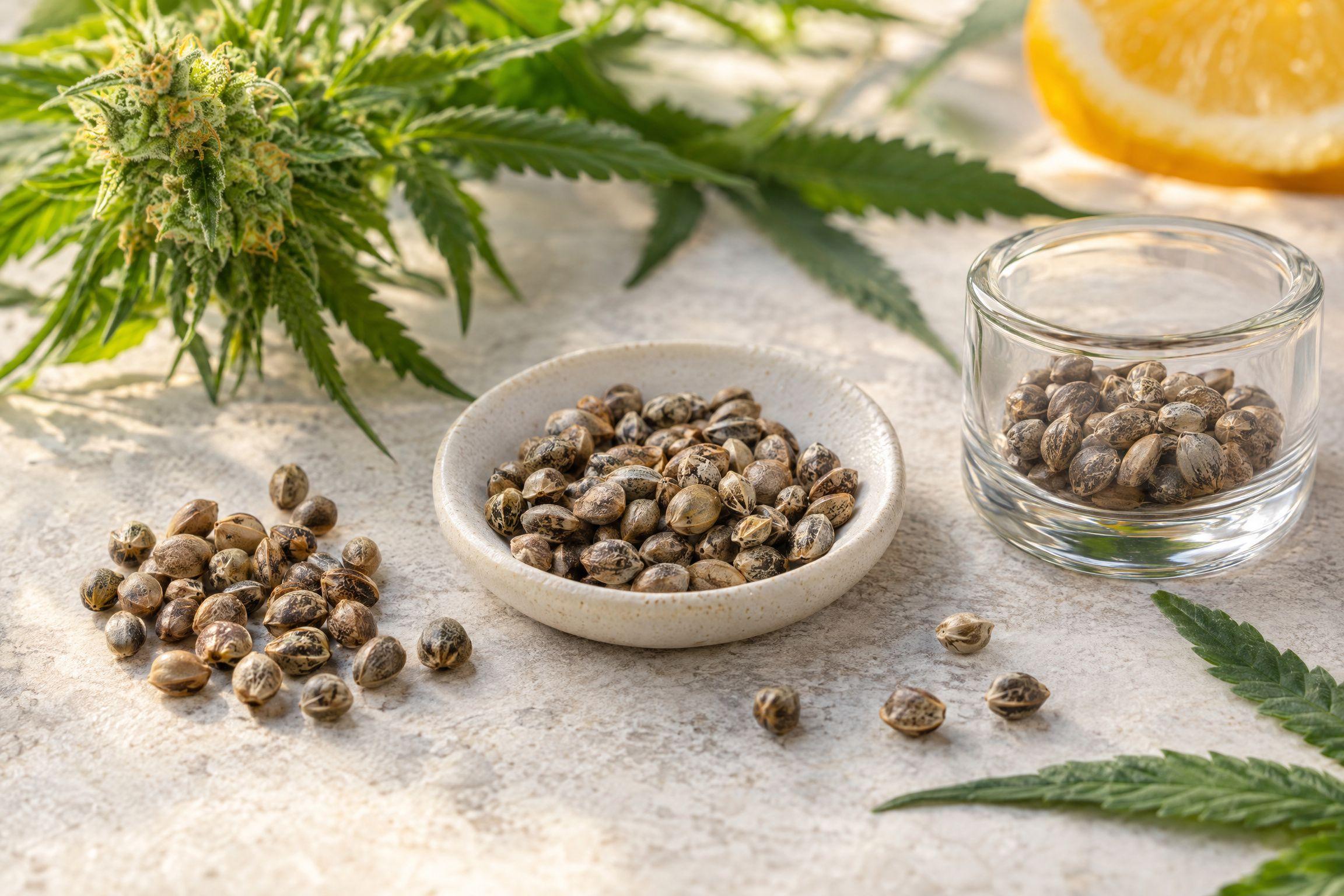
Cinderella 99 Seeds
Choosing Cinderella 99 seeds is easier when you start with the format that matches your project. Our comparison separates autoflower, feminized, and regular options, then directs you to the current product details that matter for timing, line identity, and cultivation planning.
Cinderella 99 is a Sativa-dominant hybrid (80-85% Sativa) created by crossing Jack Herer and Shiva Skunk, originally bred by Brothers Grimm. It is characterized by a tropical profile with dominant notes of pineapple and
Flowering
8-10 Weeks
Height
Medium
Yield
Heavy
About Cinderella 99 Seeds
Choosing Cinderella 99 seeds is easier when you start with the format that matches your project. Our comparison separates autoflower, feminized, and regular options, then directs you to the current product details that matter for timing, line identity, and cultivation planning.
Those details give the family a useful identity without creating one universal specification. We recommend choosing the format first, then using its dedicated page for the line-specific information that should guide your decision.
The comparison in one view
A group page should sort the decision rather than flatten options into one data sheet. The table shows what each label helps you decide and the benefit of starting with that format.
Autoflower — Age-led flowering rather than a deliberate photoperiod switch — Does the auto line fit my schedule and light routine? — A straightforward age-led plan.
Feminized — Intended female-plant expression — Do I want to reduce routine sex-identification work? — A simpler planning path for many grows.
Regular — A conventional lot in which sex expression is not preselected — Do I value observation and selection flexibility? — Room to evaluate plants individually.
These distinctions make “Cinderella 99 seed format” more useful than a scorecard. This page owns the cross-format comparison, while exact-format pages provide the next decision.
Start with identity, then check the line
A familiar cultivar name does not guarantee one modern line. A current offer may be a historical-style regular product, a later feminized interpretation, or an autoflower derivative, so we recommend checking the format and line context before comparing timing, structure, aroma, or chemical fields.
The safest public description is qualified: Cinderella 99 is commonly presented as a sativa-leaning hybrid with recurring fruit, citrus, tropical, floral, earthy, and skunky descriptors. Those words describe reported sensory families, not a promise about a particular seed, plant, batch, or finished product.
How the three formats change the decision
An autoflower label indicates that flowering is intended to begin with age and development rather than a deliberate photoperiod change. We recommend this route when an age-led schedule and a consistent light routine fit the space better than controlling a flowering switch.
“Flowering” on a photoperiod page and “seed-to-finish cycle” on an autoflower page can describe different intervals. Review the dedicated Cinderella 99 Autoflower Seeds page, then check the neutral current autoflower option to confirm the displayed format and identity.
A feminized label describes an intended female expression, not an absolute result or a substitute for checking the current product details. Compare this option when reducing routine sex-identification work matters more than the selection choices available in a regular lot.
Feminized Cinderella 99 options can carry different naming, ancestry, and catalog details, so the label cannot settle timing, structure, aroma, or chemical questions by itself. Read the dedicated Cinderella 99 Feminized Seeds page, then check the neutral current feminized option for its present details.
Regular seeds are the conventional option when a grower wants to observe sex expression and retain selection or breeding flexibility. We recommend this format when plant-by-plant evaluation is central to the project and the grower has room for those decisions.
The regular route has the clearest connection to the Princess-and-P94 line context used for the current regular product details. Use the dedicated Cinderella 99 Regular Seeds page, then review the neutral current regular option if that format fits.
Partner links are neutral commercial links and may be affiliate links. A qualifying link may earn the site a commission without changing the editorial comparison.
Read growing notes as planning guidance
Cinderella 99 growing notes are most useful when they tell you what to verify next. Photoperiod windows, autoflower cycle descriptions, structure labels, cannabinoid figures, output estimates, and terpene lists belong to named lines, so do not lift them from one format and apply them to another.
When the current product details give a number, ask what line it describes, what the measurement includes, and whether it is a catalog estimate or a batch result. If the context is unclear, use the dedicated format page and avoid filling the gap with a familiar Cinderella 99 figure.
A practical route to the right format
First decide whether the project is built around an age-led or photoperiod schedule. Then decide whether intended female expression or regular selection flexibility is the more important constraint, and only after that compare the current product details linked from the relevant page.
For identity and historical context, read the Cinderella 99 strain guide. For format-specific timing and cultivation planning, follow the dedicated autoflower, feminized, or regular page.
Make the comparison first
Cinderella 99 seeds are easier to evaluate when the decision is framed around format and line context rather than one headline profile. Compare each route on its own terms, use the dedicated pages for practical details, and choose the option that fits your schedule, space, and selection goals.
Compare Cinderella 99 seed types
Compare the available seed types for Cinderella 99. Match a format to your space, experience, and preferred growing rhythm.
Autoflower seed type
Cinderella 99 Autoflower Seeds
Our Cinderella 99 autoflower seeds selection is for growers who want the convenience of an age-led flowering format with the recognizable Cinderella 99 name. We recommend starting with the auto format itself, then checking the current product details so your light, container, and care plan fit the line you are choosing.Feminized seed type
Cinderella 99 Feminized Seeds
Choosing Cinderella 99 feminized seeds makes sense when you want an intended female-plant format and a clear plan for the space you have available. Our recommendation is to begin with the feminized format, then confirm the current product details so the line, timing language, and cultivation notes suit your project.Regular seed type
Cinderella 99 Regular Seeds
Cinderella 99 regular seeds suit growers who want to observe a mixed seed lot and make plant-by-plant decisions rather than begin with a predetermined sex outcome. Our recommendation is to plan for observation from the start, with clear labels, enough room, and a realistic approach to variation.Cinderella 99 Seeds data sheet
These profile details help compare seed formats and plan a growing space. Plant development can vary with seed type and growing conditions.
Cinderella 99 Seeds growing FAQs
Are all Cinderella 99 seeds the same line?
No, the name can cover different regular, feminized, and autoflower products. Compare the exact format, ancestry wording, and current product identity before treating two options as interchangeable.
Which Cinderella 99 format should I compare first?
Start with the format that matches your plan: age-led flowering for an autoflower, intended female expression for a feminized lot, or selection flexibility for regular seeds. Then inspect the current product details instead of relying on a cultivar-wide assumption.
Can I apply one flowering figure to every format?
No, a photoperiod window and an autoflower seed-to-finish description use different timing definitions. Keep those details on their dedicated pages and confirm what the stated interval measures.
What should I verify before following an option?
Verify that the destination still identifies the format you intend to compare and that its current details are clear enough for your decision. The product page, not the cultivar name alone, should control any format-specific expectation.
Related seeds
All seeds
Hybrid
24k Gold
24k Gold seed options include Feminized formats. Compare the options with your preferred space and growing schedule.
View details
Hybrid
3 Kings
3 Kings seed options include Feminized formats. Compare the options with your preferred space and growing schedule.
View details
Hybrid
5 Alive
5 Alive seed options include Feminized formats. Compare the options with your preferred space and growing schedule.
View details