
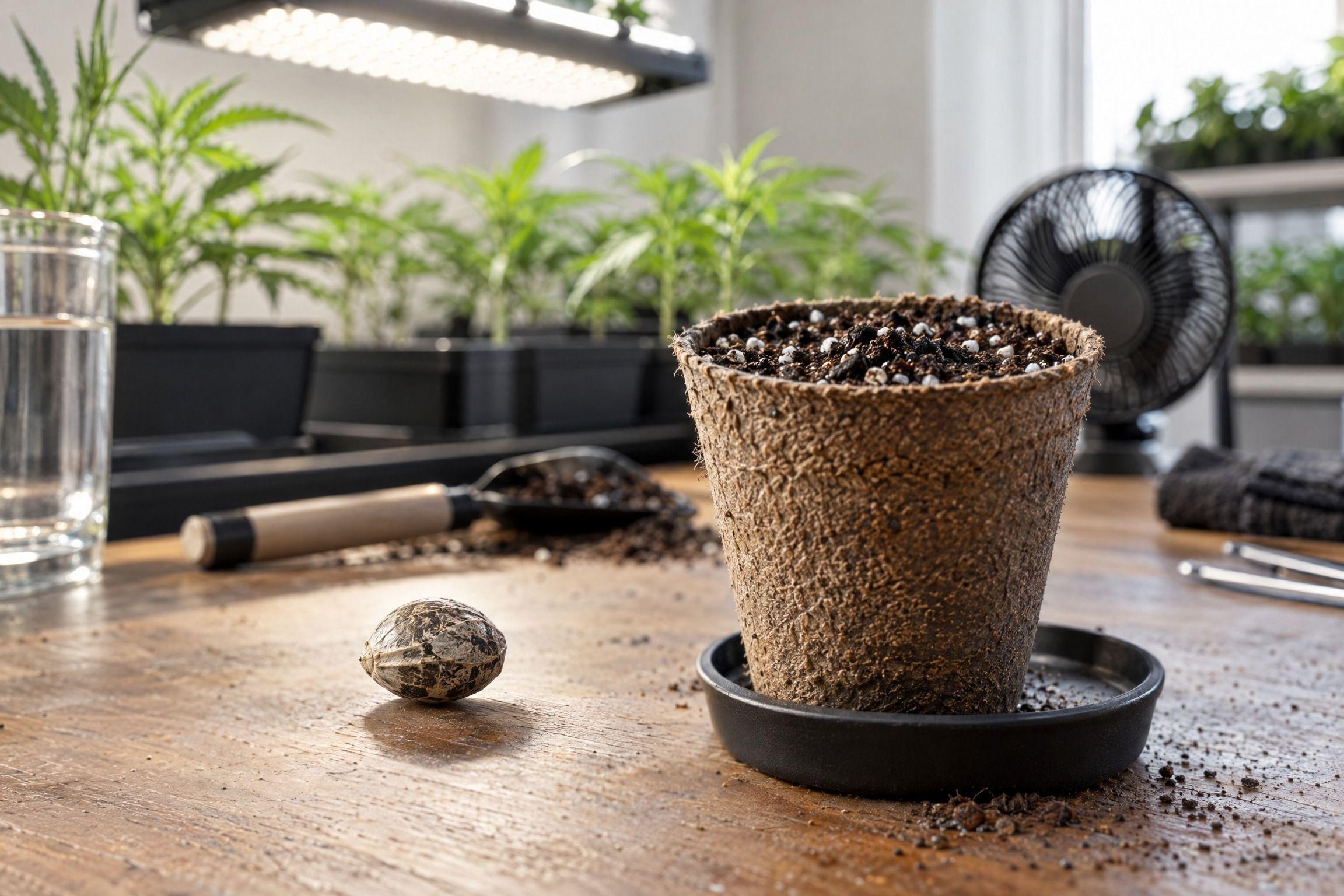
Grapefruit Autoflower Seeds
Grapefruit autoflower seeds put the schedule on plant age instead of a chosen photoperiod transition. That makes early container planning, a settled root zone, reachable airflow, and close observation the most useful starting points for this route.
Current offer
We may earn a commission when you purchase through one of these links.
About Grapefruit Autoflower Seeds
The Grapefruit family is known for a sharp bittersweet grapefruit-citrus direction with sweet tropical-fruit or pineapple notes. On this exact-format page, the sensory profile is a preference filter while the practical focus stays on the age-led workflow.
What makes the Autoflower route different?
An autoflower plan follows an age-led flowering pattern rather than waiting for a grower-selected light-cycle change. Plan the final container and root zone early, because repeated disruption can make the first part of the run harder to read.
The format does not turn cultivation into a fixed script. Keep the light position, airflow, moisture routine, and plant access easy to inspect, then make one measured change at a time when the plant gives you a reason.
Autoflower Grapefruit is not the same planning lane as Grapefruit Feminized. The Feminized route is a photoperiod option, so its schedule and transition decisions belong on the Grapefruit Feminized Seeds page, not on this page.
Build the early setup around the root zone
Choose a container position that can stay practical as the plant develops. Leave room to reach the root zone, adjust the light, inspect new growth, and keep air moving around the container and canopy.
Keep the first weeks calm and observable. Gentle handling, a consistent environment, and a short log of watering, light changes, posture, and new growth can make the next decision clearer.
The age-led route benefits from preparation before the plant asks for it. Have support, airflow, and access arranged early so the routine does not depend on a late change that the plant may not need.
Space and canopy planning
A short-to-medium starting assumption can help you place the container, but leave clearance for variation and stretch. Plan for lateral branching and keep the interior of the canopy reachable instead of treating one shape as guaranteed.
Airflow is part of the layout rather than an afterthought. Keep moving air from creating stagnant pockets, leave a clear path for inspection, and adjust the room in response to what you observe.
Use support only when it serves the available space. A simple, gentle structure can organize branches while preserving access for watering and observation.
Grapefruit identity and sensory direction
Our house profile describes Grapefruit as a sativa-dominant hybrid with a C99-based foundation crossed to an unnamed fruity or fast-flowering sativa. That concise identity belongs to the family profile, while this auto route remains centered on the exact age-led product format.
The aroma direction is sharp or bittersweet grapefruit citrus, sweet tropical fruit or pineapple, and a tangy finish. Let the individual plant and its handling shape the balance rather than treating the name as a guarantee of one expression.
Sensory notes are most useful before you choose a route. If grapefruit-forward citrus with tropical lift appeals to you, this page keeps that preference connected to an autoflower workflow.
Autoflower observation checklist
Place the final container where you can inspect it without repeated movement. Record root-zone observations, watering changes, light adjustments, airflow checks, and visible development in a simple sequence.
Avoid copying a photoperiod training schedule onto an age-led plant. Use the plant’s pace and recovery as the guide, keep interventions modest, and protect the access you need for the next inspection.
Indoor and outdoor plans need different site checks. Indoor growers can organize light and airflow closely, while outdoor growers must account for sunlight, weather, drainage, access, seasonal shifts, and applicable law.
Current Grapefruit Autoflower option
When you are ready to review the exact product route, Buy NowWe may earn a commission when you purchase through this link. before proceeding. Confirm the live destination and its exact format as your final check.
For a family-level comparison, use Grapefruit Seeds. For lineage, aroma, structure, and broader planning context, read the Grapefruit strain guide, then compare the Grapefruit Feminized Seeds route if a photoperiod workflow is a better fit.
A practical Autoflower checklist
Before starting, write down the final container position, root-zone plan, light placement, airflow path, access route, and observation routine. That list keeps the age-led format visible without turning it into a promise about one plant’s development.
Grapefruit autoflower seeds fit best when you want a prepared, age-led workflow and a citrus-forward family identity. Set the foundation early, watch the plant you have, and keep the exact route attached to each practical decision.
Read the Grapefruit strain guide for cultivar background and broader growing context. Use this page to compare the selected seed format.
Grapefruit Autoflower Seeds data sheet
Use the details below to compare this seed type with your space and schedule. Plant traits can vary with format and growing conditions.
| Seed format | Autoflower |
|---|
Cultivar context
These traits describe the cultivar as a whole. Expression can vary across seed formats and growing conditions.
| Cultivar background | Grapefruit is a Sativa-dominant hybrid (approx. 70-80% Sativa) primarily derived from Cinderella 99 (C99) genetics crossed with a fast-flowering or fruity Sativa. The strain typically flowers in 8 to 10 weeks for photope |
|---|---|
| Group profile | Hybrid |
Grapefruit Autoflower Seeds growing FAQs
How should I plan the flowering window for Grapefruit?
Flowering pace varies with the selected seed line, plant, and environment. Use a flexible schedule and observe growth instead of treating the cultivar name as a fixed finish date.
What size context is listed for Grapefruit?
Final plant structure varies with seed type, container, training, and growing conditions. Plan space for access and airflow rather than relying on a single size estimate.
What environment should I consider for Grapefruit?
Indoor and outdoor plans depend on available space, light, airflow, and local climate. Choose a setup you can manage consistently.
What harvest context is available for Grapefruit?
Harvest outcomes vary with the seed line, plant health, light, and growing conditions. A figure associated with another format should not be treated as an estimate for this one.
How should I choose a seed type for Grapefruit?
Compare the autoflower format with your space, timing, and preferred light schedule. Choose the exact seed type that fits your plan, then review the format-specific page.
Related seeds
All seeds
Hybrid
24k Gold
24k Gold seed options include Feminized formats. Compare the options with your preferred space and growing schedule.
View details
Hybrid
3 Kings
3 Kings seed options include Feminized formats. Compare the options with your preferred space and growing schedule.
View details
Hybrid
5 Alive
5 Alive seed options include Feminized formats. Compare the options with your preferred space and growing schedule.
View details