
Strain guide
Grapefruit Strain Guide: Citrus aroma and grower notes
Grapefruit is documented here with partner-source cultivar context, seed-format availability, and secondary-topic research cues.
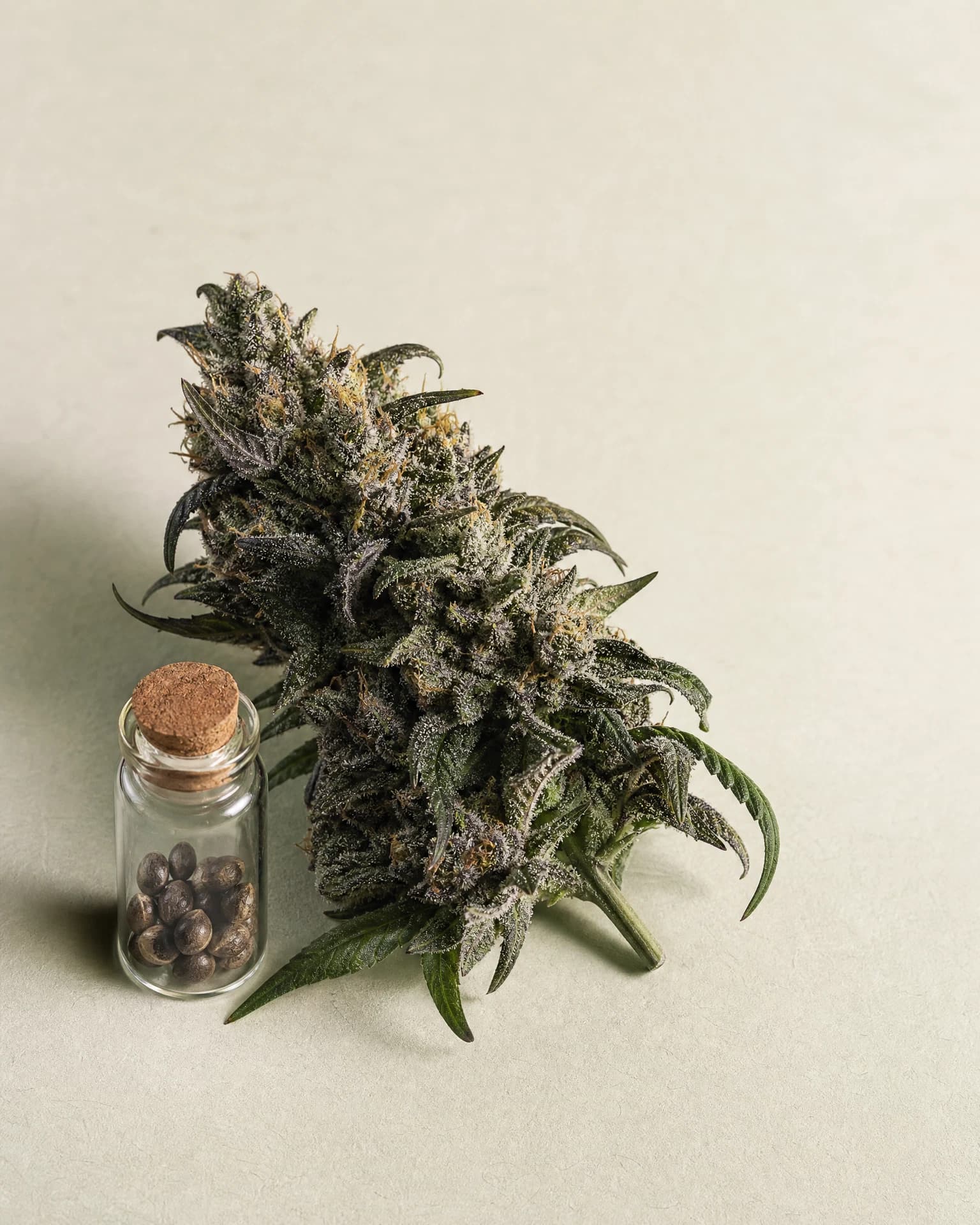
Overview
The grapefruit strain is documented as a sativa-dominant hybrid that maintains a specific presence within the catalogs of several major seed retailers. According to the available record, this cultivar typically displays a genetic profile that leans heavily toward sativa characteristics, often cited as being between 70% and 80% sativa. This classification is significant for those who study botanical records, as it suggests a plant that inherits certain growth patterns and physiological traits associated with equatorial varieties, even when adapted for contemporary cultivation environments. The documentation indicates that the plant generally reaches a height classified as short to medium, specifically ranging from 60cm to 100cm. This physical stature is noteworthy because sativa-dominant varieties are frequently expected to reach much greater heights; however, the data for this specific record points to a more compact structure that may be more manageable in restricted spaces.
When examining the available data for Grapefruit genetics, it is clear that the information provided by various sources can vary, particularly regarding the chemical composition and potency of the final product. The record highlights a significant range in reported THC levels, which serves as a primary example of the inconsistencies often found in the botanical documentation of cannabis cultivars. While some sources suggest a moderate potency in the 15% to 19% range, others claim much higher concentrations reaching between 20% and 30%. Such discrepancies are a fundamental part of the current research environment, where different testing methodologies, environmental factors, and phenotype variations can lead to diverse data points for the same named cultivar. This guide relies strictly on the provided record and does not incorporate outside anecdotal evidence or historical narratives not explicitly stated in the source material.
Genetics and cultivar background
The genetic foundation of the grapefruit strain is primarily attributed to the influence of Cinderella 99, a well-known variety often referred to as C99. The record specifies that the lineage involves crossing C99 genetics with a fast-flowering or fruity sativa. This specific combination is intended to produce a hybrid that retains the desirable characteristics of its parentage while potentially offering a more efficient development cycle. In the study of cannabis genetics, the use of C99 is often associated with efforts to stabilize certain aromatic profiles and growth habits. By crossing it with another sativa variety, breeders aim to maintain the sativa-dominant profile that defines this cultivar.
Understanding the background of a cultivar requires a careful analysis of how genetic information is reported and verified. In many cases, the lineage of a plant is described through its primary ancestors, but the specific "fast-flowering" or "fruity" sativa used in the cross remains unnamed in the primary record. This is a common occurrence in the industry, where certain proprietary or unidentified parents are used to refine a strain's traits. A researcher looking at these records must recognize that the term "genetics" often refers to the broad heritage of the plant rather than a complete, verified pedigree. The 70-80% sativa dominance mentioned in the record provides a quantitative framework for understanding the plant's likely behavior, but it is also a figure that represents a general consensus among the retailers cited rather than a definitive laboratory measurement.
When evaluating the background of any cultivar, it is useful to consider the broader context of hybrid development. Breeders often select parents based on their ability to contribute specific traits, such as a particular scent or a faster transition from the vegetative stage to the flowering stage. The mention of a "fast-flowering" parent in the grapefruit record suggests an intentional effort to reduce the typically long duration associated with pure sativa varieties. This type of selective breeding is a cornerstone of modern horticulture, aiming to create plants that are better suited for specific environments or timelines. However, without more detailed information on the specific secondary parent, the full genetic history remains partially obscured, a fact that should be noted by anyone attempting to trace the exact origins of the cultivar.
Plant profile and grow planning
The physical profile of the grapefruit strain is characterized by its relatively modest height for a sativa-dominant variety. The record states that the plants typically reach between 60cm and 100cm, placing them in the short to medium category. For a cultivator, this information is vital for space management and planning. Sativas are traditionally known for their "stretch," a period of rapid vertical growth that occurs at the beginning of the flowering phase. A plant that stays under one meter in height suggests that the specific selection of genetics in this record has successfully mitigated the extreme verticality often found in other sativa hybrids. This makes the plant a candidate for environments where vertical clearance is a limiting factor.
Planning for the growth of this cultivar also involves accounting for the grapefruit flowering time, which is listed as 8 to 10 weeks for photoperiod versions. This window is fairly standard for hybrids with a high sativa percentage, as pure sativas can often take 12 weeks or longer to complete their cycle. The 8 to 10-week timeframe allows for a more predictable schedule, but it still requires a degree of patience and attention to the plant's changing needs as it matures. During this period, the plant transitions from its vegetative state to the production of flowers, a process that is triggered by changes in the light cycle for photoperiod seeds.
A researcher must also consider the implications of the plant's structure when designing a cultivation strategy. A short to medium plant with sativa-leaning genetics may exhibit different branching patterns than a pure indica. While the height is controlled, the plant may still show the narrow leaves and open structure typical of its sativa heritage. This can affect how light penetrates the canopy and how air circulates around the developing flowers. Planning should include considerations for how to best support the plant's structure if the flowers become heavy, even if the overall height remains manageable. The record does not provide specific details on yield or specific nutrient requirements, so these factors remain unknown and should be approached with general horticultural principles in mind.
Aroma and flavor profile
The most distinct aromatic feature of the grapefruit strain, as documented in the record, is a powerful bittersweet citrus and grapefruit aroma. This description provides a clear sensory target for what the cultivar is expected to produce. In the context of botanical analysis, these scents are the result of specific volatile organic compounds produced within the plant's glandular structures. The combination of "bittersweet" and "citrus" suggests a complex profile that is not merely sweet, but possesses the sharp, tangy notes associated with the fruit for which it is named. This aromatic profile is a primary identifier for the strain across the various retailers mentioned in the record.
When discussing the flavor and aroma of a cultivar, it is important to understand how these traits are reported in breeder records. Descriptions like "grapefruit" or "citrus" are often used to categorize a plant's scent into broad groups that are easily recognizable to researchers and consumers. These terms are subjective and can vary based on the individual's perception and the specific phenotype of the plant. However, when multiple sources—such as Seedsupreme, Blimburn, and Herbies—all point toward a similar citrus-heavy profile, it increases the confidence in that particular attribute. The record does not specify the exact chemical breakdown of the terpenes responsible for this scent, so any discussion of specific compounds like limonene or myrcene would be speculative and is therefore excluded from this guide.
The intensity of the aroma is also a factor noted in the documentation. A "powerful" scent implies that the plant produces a high concentration of aromatic compounds, which can be a significant consideration for those managing the environment where the plant is kept. In a professional botanical setting, the strength of a cultivar's scent is often used as a marker for its quality and the maturity of its floral development. The bittersweet nature of the aroma adds a layer of depth, suggesting that the scent is balanced between the sharp acidity of citrus and a more grounded, perhaps slightly earthy or bitter undertone. This complexity is a hallmark of the grapefruit strain's reported profile and is one of the few consistent facts available across the different source materials.
Reported experience context
The reported experience context for the grapefruit strain is heavily defined by the variance in its chemical potency. The record provides a clear warning that THC levels are not consistent across different sources. Specifically, Blimburn and Herbies report levels in the 15% to 19% range, while Seedsupreme lists the potential for much higher concentrations, between 20% and 30%. This wide gap is a critical piece of information for anyone researching the cultivar, as it indicates that the experience associated with the plant can differ dramatically depending on the specific seeds acquired and how they are grown. A 15% THC profile represents a moderate level of potency, whereas a 30% profile would place the plant among the most potent varieties currently documented.
This variance in data is not uncommon in the cannabis industry and can be attributed to several factors that a responsible researcher should understand. First, the term "THC level" often refers to the maximum potential of a strain under ideal conditions, rather than a guaranteed result. Different labs may use different testing protocols, and the samples provided by breeders may represent the best possible examples of a particular harvest. Furthermore, the environmental conditions during the plant's life—such as light intensity, nutrient availability, and temperature—can significantly influence the production of cannabinoids. The record's caveat regarding these discrepancies serves as a reminder that the numbers provided in marketing materials should be viewed as a range of possibilities rather than a fixed fact.
Beyond the THC percentages, the record does not provide specific details on the effects or medical applications of the grapefruit strain. In keeping with the strict evidence-bounded nature of this guide, no claims will be made regarding how the strain makes a user feel or what conditions it might be used to treat. The "experience" of a cultivar is a subjective matter that is influenced by the interaction between the plant's chemical profile and the individual's unique physiology. Without documented evidence in the record regarding specific effects, the focus remains on the measurable and reported data points like potency ranges and genetic classification. The absence of this information in the record is a factual state that researchers should note, as it highlights the limits of current botanical documentation for this particular variety.
How to compare current breeder records
Comparing breeder records for a cultivar like grapefruit requires a systematic approach to identifying and evaluating discrepancies. As shown in the provided record, different retailers often present conflicting information, particularly regarding potency and height. A researcher should start by listing the claims made by each source and looking for areas of consensus. For example, if multiple retailers agree on the 8 to 10-week flowering time and the citrus aroma, these can be considered more reliable than a THC percentage that varies by 15%. Understanding that these records are often created for marketing purposes is essential; they are intended to highlight the most attractive qualities of a strain, which can lead to an emphasis on the highest possible numbers.
Another important step in comparing records is to look for the specific language used to describe the plant. Terms like "sativa-leaning" or "short-medium" are qualitative descriptions that provide a general idea of the plant's nature but lack the precision of laboratory measurements. A researcher should also pay attention to what is not said in the records. If a source fails to mention a specific parent or a detailed terpene profile, it indicates a gap in the available knowledge that should be acknowledged. In the case of the grapefruit strain, the record notes that no direct product page was found on Homegrown Cannabis Co., which is a significant piece of information when trying to verify the strain's presence across the entire industry.
Evaluating source disagreements also involves considering the reputation and methodology of the retailers themselves. Some companies may provide more detailed documentation or rely on third-party testing, while others may use more generic descriptions. By cross-referencing the information from Seedsupreme, Blimburn, Seedsman, and Herbies, a more complete—if still inconsistent—picture of the grapefruit strain emerges. The goal is not necessarily to find a single "correct" answer, but to understand the range of characteristics that a cultivar might exhibit. This approach to data analysis is fundamental to responsible botanical research, as it prevents the researcher from relying too heavily on any one source and encourages a more critical view of the available information.
The information provided in this guide is derived from a specific set of source materials, including data from Seedsupreme, Blimburn, Seedsman, and Herbies. These retailers are the primary contributors to the current understanding of the grapefruit strain's characteristics. Each source provides a different perspective on the cultivar, with some focusing on the autoflower format and others providing detailed information on the photoperiod version. The record's reliance on these sources is a reflection of the current state of the industry, where retailers serve as the primary repositories for strain data. However, as noted throughout this guide, the information provided by these sources is not always consistent, particularly regarding the plant's chemical potency.
A significant caveat in the source material is the lack of information from Homegrown Cannabis Co. The record explicitly states that no direct product page for a strain named "Grapefruit" was located on their site, although the flavor is mentioned in relation to other varieties. This absence is noteworthy because it highlights the fact that not all major retailers recognize or carry every named cultivar. For a researcher, this means that the "grapefruit strain" may not be a universally accepted or available variety, and its documentation may be limited to a specific subset of the industry. This type of missing data is just as important as the information that is present, as it helps to define the boundaries of what is known about the plant.
The record caveats also serve as a reminder of the evidence-bounded nature of this guide. Every claim made here—from the 70-80% sativa dominance to the bittersweet citrus aroma—is tied directly to the provided record. Where the record is silent, such as on the specific effects or detailed cultivation requirements, this guide remains silent as well. The goal is to provide a clear and accurate summary of the available data while acknowledging the limits of that data. By documenting the sources and the discrepancies between them, this guide provides a foundation for further research and a model for how to evaluate botanical information in an environment where facts are often variable and documentation is incomplete. The researcher is encouraged to use this information as a starting point and to continue their own investigation into the many questions that remain about the grapefruit cultivar.
Given the limitations and inconsistencies in the current record for the grapefruit strain, several research questions arise that could guide future investigations. One primary area of interest is the exact nature of the "fast-flowering or fruity sativa" used in the plant's lineage. Identifying this parent would provide a much clearer understanding of the strain's genetic history and how it differs from other C99-based hybrids. A researcher might ask: What specific cultivars were available to the original breeders at the time this cross was made? Are there other strains with similar profiles that share this unidentified parent? Answering these questions would help to fill in the gaps in the cultivar's background and provide a more detailed genetic map.
Another set of questions concerns the wide range of reported THC levels. Why do some sources report 15% while others report 30%? Is this difference due to the use of different phenotypes, or is it a result of varying cultivation and testing practices? A researcher could investigate the specific testing protocols used by the retailers mentioned in the record to see if there is a common thread that explains the discrepancy. Furthermore, the relationship between the plant's height and its sativa dominance is a topic for further study. How does a 70-80% sativa-dominant hybrid maintain a height of only 60cm to 100cm? Understanding the physiological mechanisms that allow for this compact structure in a sativa-leaning plant could have broader implications for the study of cannabis morphology.
Finally, the absence of the grapefruit strain from the Homegrown Cannabis Co. catalog, despite the flavor being listed as a characteristic for other cultivars, raises questions about the strain's nomenclature and categorization. Is "Grapefruit" sometimes used as a descriptive term rather than a specific cultivar name? How do different retailers decide which strains to carry and how to name them? These questions touch on the broader issues of standardization and naming conventions in the cannabis industry. By identifying these unknown fields and asking targeted questions, a researcher can move beyond the surface-level data and begin to uncover the more complex realities of botanical documentation and strain identification.
Frequently asked questions
What is the Grapefruit strain?
This guide summarizes the documented cultivar record while separating verified details from variable grower outcomes.
Is Grapefruit suitable for beginners?
Difficulty depends on the exact seed line, environment, and grow setup. Confirm current breeder guidance.
How long does Grapefruit take to flower?
Flowering windows vary by phenotype and environment. Confirm the estimate for the exact breeder line.
Can Grapefruit be grown indoors and outdoors?
Suitability depends on the breeder line and local climate. Compare space, humidity, temperature, and season length.
Which Grapefruit seed format should I choose?
Autoflower and feminized formats serve different schedules and grow styles. Compare only documented direct records.