
Strain guide
Durban Poison Strain Guide: Pine aroma and grower notes
Durban Poison is documented here with partner-source cultivar context, seed-format availability, and secondary-topic research cues.
Overview
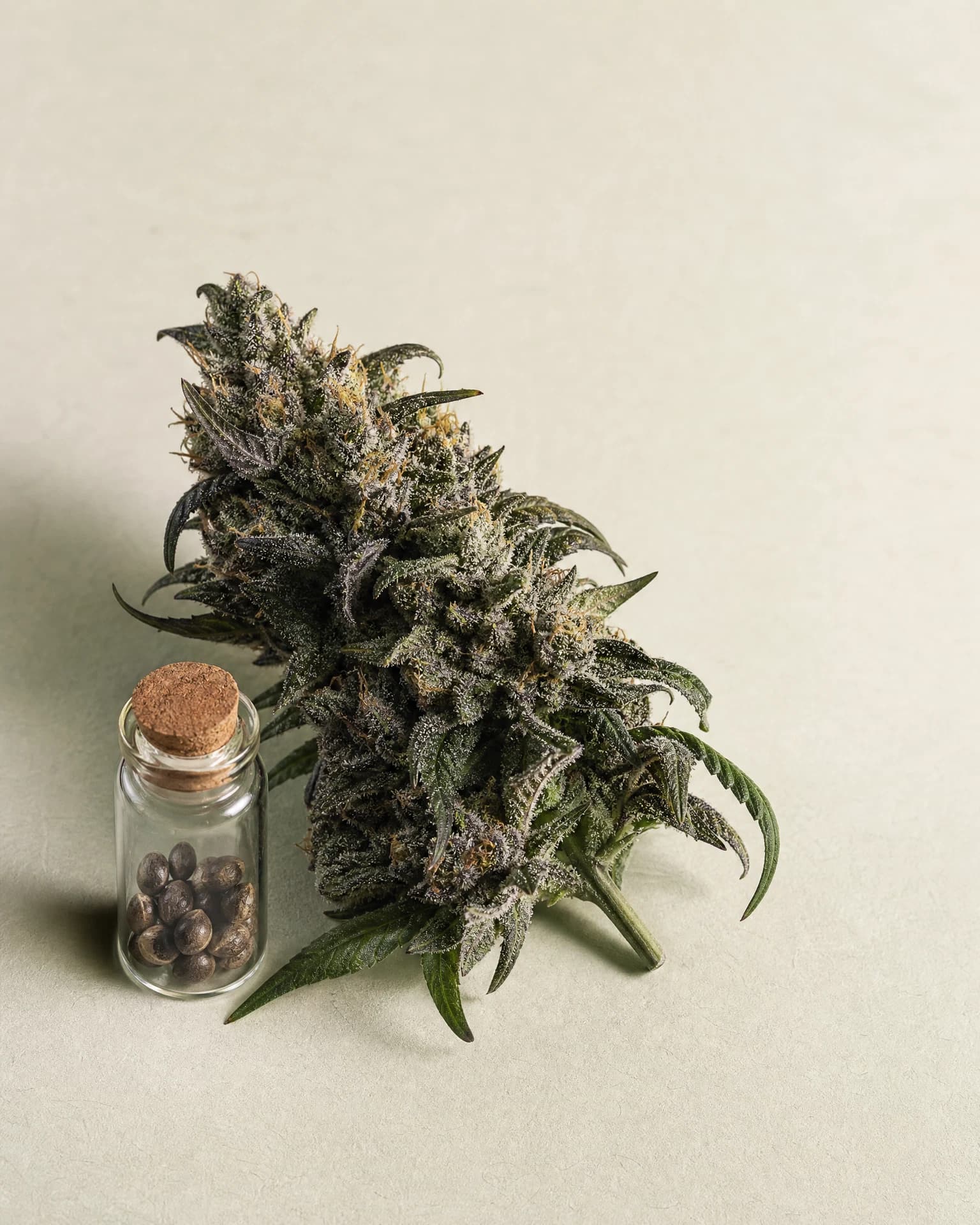
The Durban Poison strain is widely recognized in the botanical community as a legendary Sativa variety that traces its origins back to South Africa. Within the available records, this cultivar is consistently noted for its distinct physical presence, characterized by a tall and large plant structure that frequently exceeds a height of two meters. This significant vertical development is paired with a relatively rapid flowering cycle, typically spanning between 8 and 10 weeks. Such a combination of physical scale and efficient maturation makes the cultivar a subject of interest for those studying traditional Sativa growth patterns in various environments. The records indicate that the plant is suitable for both indoor and outdoor cultivation, provided the climate is either warm or temperate.
Researchers and enthusiasts often look at the durban poison flowering time as a benchmark for Sativa-dominant plants, which usually require longer periods to reach full maturity. In this case, the 8 to 10-week window represents a condensed timeline for a plant of such stature. Furthermore, the Durban Poison genetics are currently distributed in multiple formats, including both feminized and autoflower options, which allows for different approaches to cultivation and study. The aromatic profile of the cultivar is another defining feature, often described as having a mixture of earthy, pine, and sweet anise notes. This combination creates a sensory profile that is frequently cited in breeder documentation as a hallmark of the variety.
Understanding the context of a breeder record involves looking at both the consensus and the outliers in the data. For the Durban Poison strain, the general consensus points toward a high-energy and clear-headed experience, though technical specifications regarding its genetic makeup and chemical potency show some variation across different retail sources. By examining the available facts without making assumptions, one can form a clearer picture of how this cultivar is positioned within the current market and how its traits might manifest under specific conditions. This overview serves as a starting point for a deeper investigation into the specific technical details and educational context surrounding the record.
Genetics and cultivar background
The genetic background of the Durban Poison strain is a subject of significant discussion among botanical historians and breeders. The primary record identifies it as a Sativa originating from South Africa, a region known for its unique environmental conditions that have shaped the evolution of various plant species. In many historical contexts, this cultivar is described as a pure Sativa landrace, implying that it developed its characteristics through natural selection in its native environment rather than through intentional human hybridization. However, a closer look at modern breeder records reveals a more complex narrative regarding its current genetic status.
According to the supplied caveat, while the majority of sources may describe the plant as a pure landrace, specific retailers such as Blimburn and Seedsman provide different data. These records suggest the inclusion of an "Unknown Indica" within the lineage, which leads to a classification of the cultivar as a 90% Sativa hybrid. This discrepancy is an excellent example of how the identity of a plant can shift as it moves through different breeding programs and commercial channels. The presence of an unknown genetic contributor means that the "pure" label may not be universally applicable to all versions of the seeds currently available on the market.
When evaluating the genetics of a cultivar like this, it is necessary to understand what the term "landrace" signifies in a modern context. A true landrace is a variety that has become adapted to a specific geographic area over many generations. When such a plant is moved to a different climate or crossed with other varieties to improve specific traits—such as stability or flowering speed—it technically moves away from its landrace status. The mention of an "Unknown Indica" in some records suggests that at some point in its history, the South African genetics may have been combined with other traits to influence the plant's growth habits or chemical profile.
This genetic ambiguity highlights the importance of checking multiple sources when researching a cultivar's background. If a researcher only looks at one record, they might conclude the plant is a 100% pure Sativa. By comparing multiple records, the nuance of the 90% hybrid classification becomes apparent. This distinction is not merely academic; it can have implications for how the plant develops and how its chemical constituents are expressed. The unknown nature of the Indica component also leaves a gap in the record that researchers must acknowledge rather than fill with speculation.
Plant profile and grow planning
The physical profile of the Durban Poison strain is dominated by its impressive stature. The records describe the plant structure as "Tall," with specific notes indicating that it can grow to exceed two meters in height. This size is a typical trait for Sativa-dominant varieties, which have evolved to reach toward the sun in competitive environments. For anyone planning to cultivate or study this plant, the vertical requirement is a primary consideration. A plant that grows over two meters requires significant space, whether it is housed in a large outdoor garden or a high-ceilinged indoor facility.
Planning for a tall plant involves several technical steps that differ from managing shorter, bushier varieties. In an indoor setting, the height must be managed through various training techniques or by initiating the flowering phase earlier than one might for a shorter plant. The 8 to 10-week durban poison flowering time is relatively short for a plant of this size, which means the vegetative growth must be carefully monitored to ensure the plant does not outgrow its space before the transition to flowering occurs. The records state that the cultivar is suitable for both indoor and outdoor cultivation, but the outdoor option is specifically recommended for warm or temperate climates.
In a warm or temperate outdoor environment, the plant can take full advantage of the natural sunlight to reach its maximum height potential. The large plant structure mentioned in the verified facts suggests a high capacity for biomass production, which in turn requires a stable supply of nutrients and water. When planning a grow, the environment must be assessed for its ability to support such a large organism. Wind resistance, soil depth, and the length of the growing season are all factors that become more significant when dealing with a plant that exceeds two meters.
The record also mentions that the cultivar is available in autoflower and feminized formats. For grow planning, the choice between these two formats is significant. Feminized seeds are designed to produce only female plants, which simplifies the process by removing the need to identify and remove male plants. Autoflower seeds, on the other hand, follow a timeline based on age rather than light cycles. While the record does not specify the exact flowering time for the autoflower version specifically, the general 8-10 week window provided for the cultivar gives a baseline for what to expect during the reproductive phase.
Aroma and flavor profile
The sensory characteristics of the Durban Poison strain are defined by a specific set of aromatic notes that are frequently highlighted in breeder documentation. The records describe the profile as featuring earthy, pine, and sweet anise notes. These descriptors provide a window into the chemical complexity of the plant, even if the specific terpenes responsible for these scents are not listed in the record. Earthy notes often suggest a grounded, organic scent, while pine provides a sharp, refreshing quality. The addition of sweet anise introduces a spicy, liquorice-like element that sets this cultivar apart from others with more common citrus or berry profiles.
When researchers describe an aroma as "earthy," they are often referring to scents that resemble damp soil, forest floors, or dried herbs. This is a common base note in many traditional Sativa varieties. The "pine" component adds a layer of brightness, often associated with coniferous forests. This scent is usually very distinct and can be the first thing noticed when the plant is in its later stages of flowering. The "sweet anise" note is perhaps the most unique aspect of the profile mentioned in the record, providing a complex sweetness that balances the more rugged earthy and pine elements.
Flavor profiles in cannabis are closely linked to the aromatic profile, as the two are both products of the plant's volatile organic compounds. While the record focuses on the aromatic description, it is standard in botanical study to expect these scents to translate into the flavor experience. A sweet anise flavor would likely be prominent on the palate, accompanied by the lingering presence of pine and earth. The consistency of these reports across different retailers suggests that these traits are stable and characteristic of the Durban Poison strain as it is currently bred.
Understanding how these aromas develop is part of the broader study of the cultivar. The aromatic intensity often increases as the plant approaches the end of its 8 to 10-week flowering period. Environmental factors such as temperature and humidity can influence the expression of these scents, but the genetic blueprint provided in the record establishes the baseline. When comparing different versions of the seeds, such as the feminized versus the autoflower options, one might look for whether the aromatic profile remains consistent across both formats, as this is a sign of a well-stabilized breeding line.
Reported experience context
The reported experience associated with the Durban Poison strain is consistently described in the records as being energizing, clear-headed, and creative. This cerebral high is a hallmark of Sativa-dominant varieties and is often the primary reason this cultivar is sought after for study or use. Unlike varieties that are reported to produce a heavy or sedating effect, this plant is associated with mental clarity and a boost in creative thinking. The record uses the term "cerebral high" to emphasize that the effects are primarily felt in the mind rather than as a physical sensation in the body.
However, the record also includes a significant caveat regarding the chemical potency of the plant. Reported THC levels vary widely across different retailers, ranging from 15% to 25%. This 10% spread is substantial and indicates that the experience can vary significantly depending on the specific batch or version of the seeds being used. A 15% THC level might result in a more moderate, manageable experience, while a 25% level represents a much higher potency that could be more intense for the user. This variability is a reminder that a cultivar's name does not guarantee a specific chemical outcome; the individual plant's genetics and the conditions under which it was grown play a major role.
The "clear-headed" nature of the reported high is often contrasted with other varieties that might cause mental fog or confusion. In the context of the Durban Poison strain, this suggests that the energizing effects do not necessarily impair cognitive function but rather enhance it in a way that supports creative endeavors. This makes the cultivar a frequent subject of interest in discussions about the functional use of cannabis. The records do not provide information on other cannabinoids like CBD or minor compounds, so the focus remains entirely on the THC-driven cerebral effects.
When interpreting these experience reports, it is important to remember that they are subjective and can be influenced by a wide range of factors. The record provides a summary of what is "consistently characterized" by breeders and retailers, but individual results may vary. The wide range of THC levels mentioned in the caveat is particularly important for anyone researching the cultivar's potential effects. A researcher must account for this variability when designing studies or making recommendations, as the difference between 15% and 25% THC is enough to change the entire profile of the experience.
How to compare current breeder records
Comparing breeder records is a technical skill that requires a critical eye and a systematic approach. When looking at data for a cultivar like the Durban Poison strain, one often encounters a mix of consistent facts and contradictory claims. The first step in a responsible comparison is to identify the core traits that are supported by multiple sources. In this case, the tall structure, the 8-10 week flowering time, and the South African origin are consistently reported across the five URLs provided. These can be considered the "verified facts" of the cultivar's profile.
The next step is to look for the discrepancies, which are often found in the genetics and potency sections. As noted in the caveat for this record, different retailers classify the plant differently. Some call it a pure Sativa landrace, while others label it a 90% Sativa hybrid due to an "Unknown Indica" in its lineage. A researcher must ask why these differences exist. It could be that different breeders are working with different selections of the original South African genetics, or it could be that some have introduced Indica traits to stabilize the plant for indoor growing. Recognizing these differences prevents a researcher from making oversimplified claims about the plant's "purity."
Potency reports are another area where records frequently diverge. The range of 15% to 25% THC mentioned in the caveat is a perfect example of this. When a record shows such a wide range, it is a signal that the cultivar's expression is highly variable or that the testing methods used by different retailers are not standardized. A responsible researcher will not simply pick the highest number to highlight; instead, they will report the range and explain that the actual potency of any given plant will depend on its specific environment and genetic sub-line. This approach provides a more accurate and honest representation of the cultivar.
Finally, one should look at what is missing from the records. Are there details about the terpene percentages? Is there information on the specific yield in grams per square meter? In the record for the Durban Poison strain, many of these technical details are absent. Stating these unknowns plainly is just as important as reporting the known facts. It prevents the spread of misinformation and highlights areas where further research is needed. By systematically comparing what is said, what is contested, and what is left out, one can build a comprehensive understanding of a cultivar that goes beyond simple marketing descriptions.
The information provided in this guide is derived from a specific record that synthesizes data from five primary retail and breeder sources: SeedSupreme, Blimburn Seeds, Homegrown Cannabis Co., Seedsman, and Herbies Headshop. Each of these sources contributes to the overall profile of the Durban Poison strain, but they do not always agree on the technical details. The "verified facts" represent the points of consensus among these sources, such as the plant's South African origin and its tall physical structure. However, the caveat provided in the record is essential for a complete understanding of the cultivar's status in the market.
The primary conflict in the source material concerns the genetic classification of the plant. While the general reputation of the cultivar is that of a pure Sativa landrace, the records from Blimburn and Seedsman specifically mention an "Unknown Indica" in the lineage, leading them to categorize it as a 90% Sativa hybrid. This is a critical distinction, as it challenges the "pure landrace" narrative that is often used to market the strain. The inclusion of this information in the record caveats ensures that the reader is aware of the disagreement and can make an informed judgment based on the available evidence.
Another significant point of variation in the sources is the reported THC content. With a range spanning from 15% to 25%, the data suggests that there is no single "standard" for the potency of the Durban Poison strain. This variability may be due to the different breeding selections maintained by each of the five sources. For example, one retailer may be selling a version that has been bred for maximum potency, while another may be offering a version that is closer to the original, potentially lower-potency landrace genetics. The record caveats serve to highlight these differences rather than trying to reconcile them into a single, potentially misleading figure.
In conclusion, the record for the Durban Poison strain is a composite of several different perspectives within the seed industry. By relying on these specific sources and acknowledging their disagreements, this guide provides a source-bounded look at the cultivar. The absence of certain facts, such as specific terpene percentages or detailed yield data, is noted as a limitation of the current record. Researchers are encouraged to use these record caveats as a starting point for their own investigations, always keeping in mind the variability and caveats that define the current botanical environment for this legendary Sativa.
The available data on the Durban Poison strain raises several questions that could guide future research and investigation. One of the most prominent questions involves the "Unknown Indica" mentioned in the caveat. What is the origin of this Indica component, and at what point was it introduced into the lineage? Understanding this would clarify whether the cultivar should be treated as a true landrace or a modern hybrid. Research into the specific genetic markers of the South African parentage versus the unknown contributor could provide a definitive answer to the 100% Sativa versus 90% Sativa debate.
Another area for investigation is the wide variability in THC levels. Why do some reports show 15% while others show 25%? A researcher might ask if this is due to different phenotypes within the seed lots or if it is a result of different cultivation techniques. Studying how the durban poison strain responds to various light intensities, nutrient regimens, and harvest timings could reveal how to consistently reach the higher end of that potency range. Furthermore, the record mentions the plant is suitable for warm or temperate climates, but it does not specify the plant's resistance to common pests or molds. Investigating these resilience factors would be highly beneficial for those planning to grow the plant in less-than-ideal conditions.
The aromatic profile also presents opportunities for further study. While "earthy, pine, and sweet anise" are useful descriptors, a full laboratory analysis of the volatile compounds would provide a more technical understanding of the plant's sensory properties. Does the sweet anise note correlate with a specific rare terpene, or is it a result of a unique combination of more common ones? Comparing the aromatic profiles of the feminized and autoflower versions could also reveal if the introduction of Ruderalis genetics has any impact on the scent and flavor of the final product.
Finally, the question of height management for a plant that exceeds two meters is a practical research topic. For indoor researchers, finding the optimal balance between vegetative time and final height is essential. How does the plant respond to different training methods like topping or trellising? Does the rapid 8-10 week flowering time leave enough room for the plant to recover from these techniques? By pursuing these questions, the botanical community can move from a general understanding of the Durban Poison strain to a more precise and technical mastery of its unique characteristics.
Frequently asked questions
What is the Durban Poison strain?
This guide summarizes the documented cultivar record while separating verified details from variable grower outcomes.
Is Durban Poison suitable for beginners?
Difficulty depends on the exact seed line, environment, and grow setup. Confirm current breeder guidance.
How long does Durban Poison take to flower?
Flowering windows vary by phenotype and environment. Confirm the estimate for the exact breeder line.
Can Durban Poison be grown indoors and outdoors?
Suitability depends on the breeder line and local climate. Compare space, humidity, temperature, and season length.
Which Durban Poison seed format should I choose?
Autoflower and feminized formats serve different schedules and grow styles. Compare only documented direct records.