
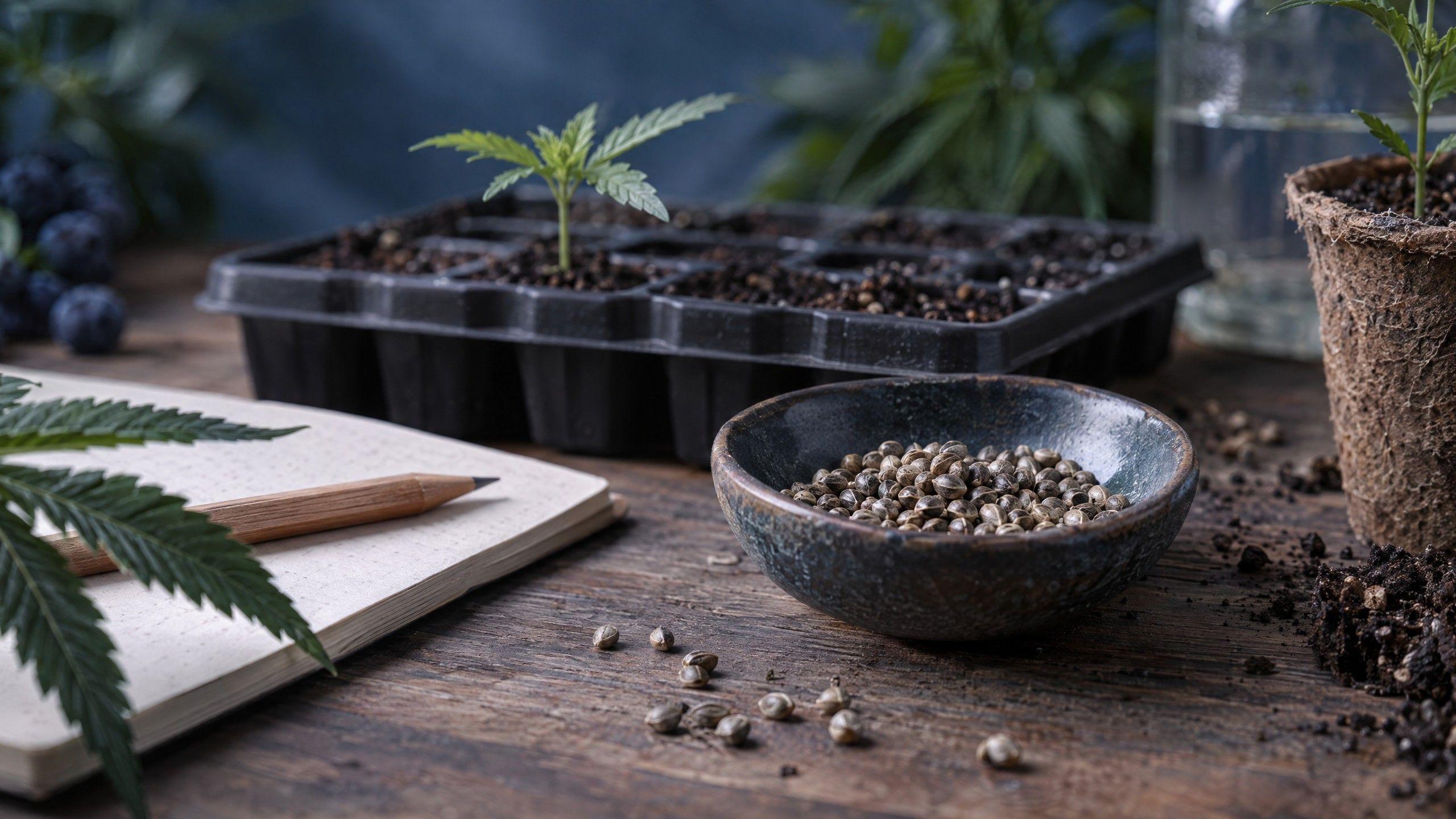
Blueberry Regular Seeds
Blueberry regular seeds suit growers who want to observe individual plants and make deliberate selection decisions as the grow develops. Our guidance starts with the regular format, then moves to labels, space, note-taking, and the line details that matter before you choose.
Current offer
We may earn a commission when you purchase through one of these links.
About Blueberry Regular Seeds
The short answer
Regular seeds can include male and female plants, so they fit a plan that allows time for identification and selection. The right choice depends on your space, observation routine, and willingness to evaluate plants as they develop rather than assume one outcome.
Start with the regular format
Give each plant its own label and track development separately from the first stage. Early identification, clear notes, and enough room to work make the regular format easier to manage and help you make decisions from what you can see.
The word regular describes the seed type, not a fixed schedule, aroma, structure, or harvest result. Those details belong to the selected line, the environment, and the individual plant, so we recommend checking the current product details before building a plan.
Our Blueberry context
Blueberry is a legacy cultivar name commonly associated with Afghani and Thai influence, while some historical accounts also include Oaxacan or Mexican Sativa. We use that as reported background rather than a single pedigree that defines every regular packet.
Berry, sweet, candy, earthy, and occasional pine notes are useful descriptors when you compare a Blueberry line. They are possible sensory directions, not guarantees, and they should not replace the format and growing details attached to the line you choose.
For broader identity and growing context, read the Blueberry strain guide. Keep the guide for cultivar context, then return here when the decision is specifically about Blueberry regular seeds.
How to assess regular-seed details
Next, look at the conditions behind any measurement. Use a value with the indoor setup, method, and line it describes. Those details guide the plan for the Blueberry packet you select.
If the product details do not provide a measurement, plan from the traits you can observe. Let the regular format, selected line, environment, and plant response guide your decisions.
A practical selection checklist
Compare the product details with your setup before you choose. Confirm regular seeds, label each plant, and distinguish the selected line in your notes.
For a broader cross-format view, use the Blueberry seed comparison page. Choose regular seeds when the possibility of male and female plants, observation, and selection work are part of your growing plan.
Final take
Blueberry regular seeds are a fit for a format-first approach: identify plants, keep clear notes, and judge the selected line on its own terms. We recommend using the Blueberry seed comparison page for the wider choice, then returning to the regular details before making a plan.
Read the Blueberry strain guide for cultivar background and broader growing context. Use this page to compare the selected seed format.
Blueberry Regular Seeds data sheet
Use the details below to compare this seed type with your space and schedule. Plant traits can vary with format and growing conditions.
| Seed format | Regular |
|---|
Cultivar context
These traits describe the cultivar as a whole. Expression can vary across seed formats and growing conditions.
| Cultivar background | Blueberry is a legendary 80% indica-dominant hybrid originating from the 1970s, typically resulting from a cross between Afghani Indica and Thai landraces. It is characterized by a sweet, fruity profile dominated by fres |
|---|---|
| Group profile | Hybrid |
Blueberry Regular Seeds growing FAQs
How should I plan the flowering window for Blueberry?
Flowering pace varies with the selected seed line, plant, and environment. Use a flexible schedule and observe growth instead of treating the cultivar name as a fixed finish date.
What size context is listed for Blueberry?
Final plant structure varies with seed type, container, training, and growing conditions. Plan space for access and airflow rather than relying on a single size estimate.
What environment should I consider for Blueberry?
Indoor and outdoor plans depend on available space, light, airflow, and local climate. Choose a setup you can manage consistently.
What harvest context is available for Blueberry?
Harvest outcomes vary with the seed line, plant health, light, and growing conditions. A figure associated with another format should not be treated as an estimate for this one.
How should I choose a seed type for Blueberry?
Compare the regular format with your space, timing, and preferred light schedule. Choose the exact seed type that fits your plan, then review the format-specific page.
Compare Blueberry seed types
All Blueberry seed typesBlueberry Autoflower Seeds
Review the autoflower route for format-specific planning details. Match the format to your space and schedule.
Feminized seed typeBlueberry Feminized Seeds
Review the feminized route for format-specific planning details. Match the format to your space and schedule.
Related seeds
All seeds
Hybrid
24k Gold
24k Gold seed options include Feminized formats. Compare the options with your preferred space and growing schedule.
View details
Hybrid
3 Kings
3 Kings seed options include Feminized formats. Compare the options with your preferred space and growing schedule.
View details
Hybrid
5 Alive
5 Alive seed options include Feminized formats. Compare the options with your preferred space and growing schedule.
View details