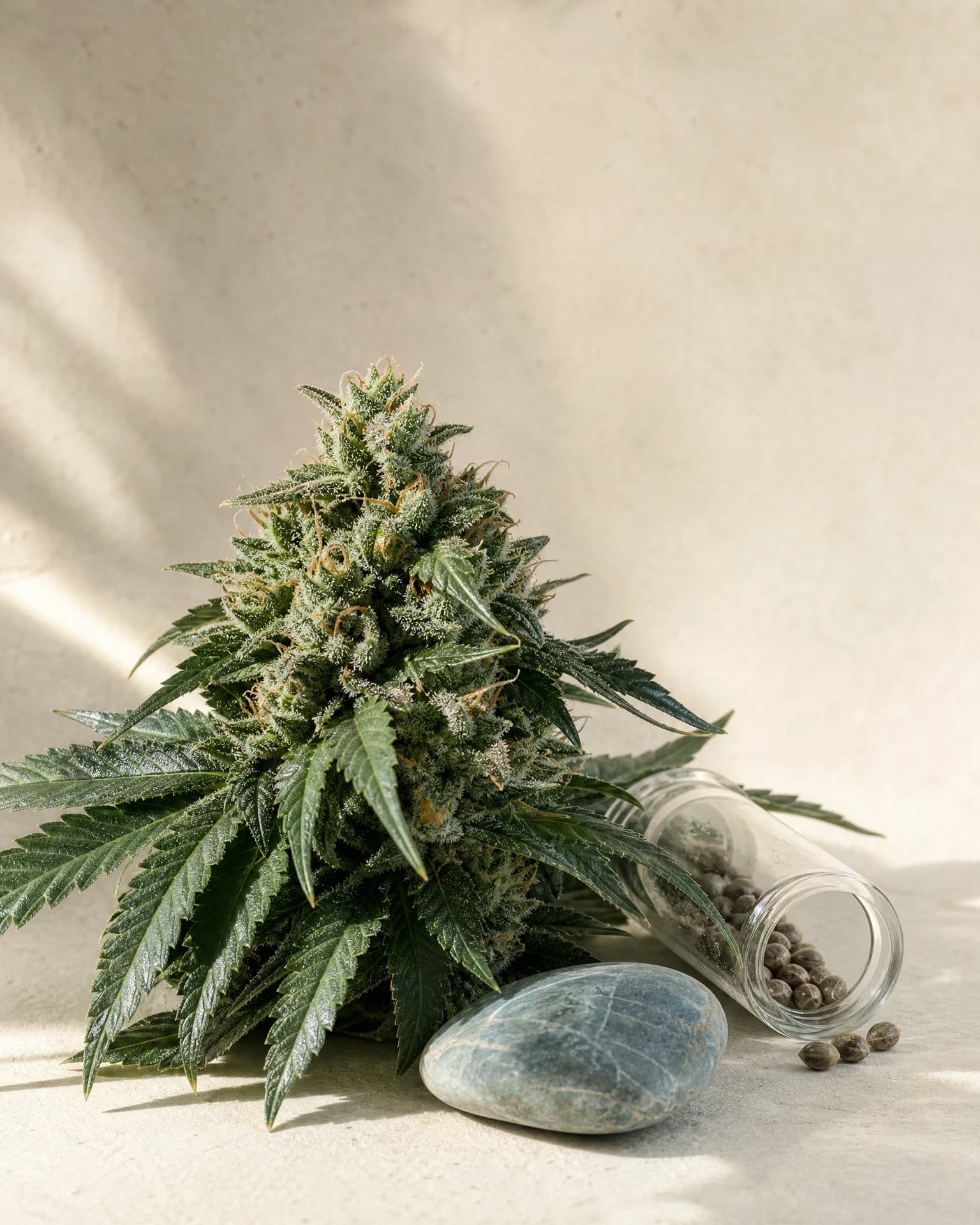
Bruce Banner Seeds helps you compare two common seed formats for a sativa-leaning hybrid that breeders and growers reference under the Bruce Banner name. Use this profile to weigh Autoflower and Feminized options side by side when choosing seeds that match your schedule and cultivation preferences.
Critical Seeds is a hybrid cultivar aimed at growers who want a balance of citrus-forward aroma with earthy, herbal backnotes. If you are trying to compare available forms before you buy, this cultivar summarizes the documented traits for the grouped cultivar and contrasts the two listed seed formats.
Read the complete selection guide in the window below, or continue browsing the product cards above.
Welcome to the Cannabis Seeds US fast version seeds collection. This catalog category is designed to bridge the gap between standard photoperiod lines and autoflowering varieties, offering shoppers options bred specifically for a condensed bloom phase.
This collection serves buyers who are looking for quicker turnaround times but still wish to maintain the vegetative control associated with photoperiod genetics. Keep in mind that catalog labels represent breeder estimates based on controlled environments, rather than fixed harvest guarantees.
Understanding the terminology
The term generally describes a photoperiod line bred to transition through its flowering phase more rapidly than its standard counterpart. While breeding methods vary across different seed banks, many breeders achieve this by crossing a traditional photoperiod strain with autoflower genetics, then carefully selecting offspring that retain the photoperiod trait while inheriting a shorter bloom cycle.
It is important to distinguish these options from true autoflowers, which initiate flowering based on age rather than a change in the light cycle. When reviewing fast flowering cannabis seeds, buyers should note that the reduced timeline applies specifically to the flowering phase itself, not the total seed-to-harvest duration.
Selecting from this collection requires looking beyond the headline flowering time. Start by confirming whether a specific listing is photoperiod-dependent or autoflowering, and whether the seeds are feminized or regular. Next, compare the stated flowering weeks while keeping your intended indoor or outdoor context and local climate constraints in mind.
Shoppers should also evaluate the breeder notes regarding anticipated height, expected yield ranges, and cannabinoid profiles. Instead of simply picking the shortest estimated timeline, choose the record that offers the clearest evidence for your specific constraints, such as available vertical space or expected seasonal shifts.
Evaluating fast version seeds against standard photoperiods and autoflowers comes down to light response and vegetative control. Standard photoperiods require a change in light cycle to trigger bloom and offer full control over the vegetative phase. Autoflowers transition automatically based on age, offering a fixed lifecycle but zero vegetative control.
This specific category sits in the middle, maintaining the photoperiod requirement for light-cycle changes while aiming for a condensed flowering window. Buyers prioritizing vegetative training might prefer these over autoflowers, whereas those seeking a completely hands-off light schedule might lean toward an autoflowering option.
Breeder figures for flowering time, yield, and cannabinoid content are reported estimates based on specific, controlled environments, not absolute certainties. When reading a flowering estimate, verify whether the timeline begins at germination or at the moment the light cycle is switched to a twelve-hour schedule.
Treat all yield and potency numbers as potential ranges dependent on environmental conditions and genetic expression. When comparing different options in the catalog, look for like-for-like records and review the detailed product specifications to understand the context behind the breeder's data.
The success of any genetic selection depends heavily on matching the seed to its intended setting. Indoor buyers should review height estimates and space requirements, while outdoor buyers must consider their local season length and typical climate shifts before making a purchase.
A shorter flowering phase can be advantageous in regions with early autumn frosts, but environmental compatibility involves more than just timing. Review the catalog filters for indoor or outdoor suitability, and prioritize genetics that align with your specific spatial and environmental constraints.
This collection guide focuses on navigating product categories, interpreting genetic labels, and selecting the right seeds for your requirements. The category label describes the intended genetic expression and flowering timeline, which is just one piece of the puzzle.
Practical application, including lighting schedules, germination methods, plant training, and harvest timing, requires dedicated study. For comprehensive information on plant care and environmental management, please refer to our dedicated educational resources and cultivation materials.
Frequently asked questions
Are fast version seeds autoflowering, or are they photoperiod-dependent?
Most options in this specific category are photoperiod-dependent, meaning they require a change in the light cycle to trigger flowering, though they are bred to complete that flowering phase more quickly than standard varieties.
What does a breeder’s fast flowering time actually measure?
The estimated flowering time typically measures the weeks required to complete the bloom phase after the light cycle has been switched, rather than the total time from seed germination to harvest.
Should I choose fast version seeds or autoflower seeds for my project?
The choice depends on your need for vegetative control. If you want to dictate the size and shape of the plant before initiating bloom, choose a photoperiod option; if you prefer a fixed lifecycle without light-schedule management, choose an autoflower.
What should I compare besides the number of flowering weeks?
Beyond the flowering timeline, shoppers should compare indoor or outdoor suitability, expected height, yield ranges, cannabinoid profiles, and whether the seeds are feminized or regular.
Does a shorter flowering estimate guarantee a smaller or larger yield?
Not necessarily. While a condensed lifecycle can sometimes impact overall plant size, yield is a highly variable estimate dependent on genetics, environmental conditions, and available space rather than just the flowering duration.
What is the difference between fast version seeds and fast flowering cannabis seeds?
Fast version often refers to a specific breeding line where a standard photoperiod is crossed to shorten its bloom time, whereas fast flowering cannabis seeds is a broader catalog term that can encompass any genetics with a rapid bloom phase.
Can I legally buy, possess, germinate, or cultivate cannabis seeds where I live?
Cannabis seed sale, possession, and cultivation laws vary significantly by jurisdiction. Listing a seed in our catalog does not establish cultivation legality, and adults must verify their current local requirements before purchasing.