
Strain guide
Banana Kush Strain Guide: Breeder-specific aroma and grower notes
Banana Kush is documented here with partner-source cultivar context, seed-format availability, and secondary-topic research cues.
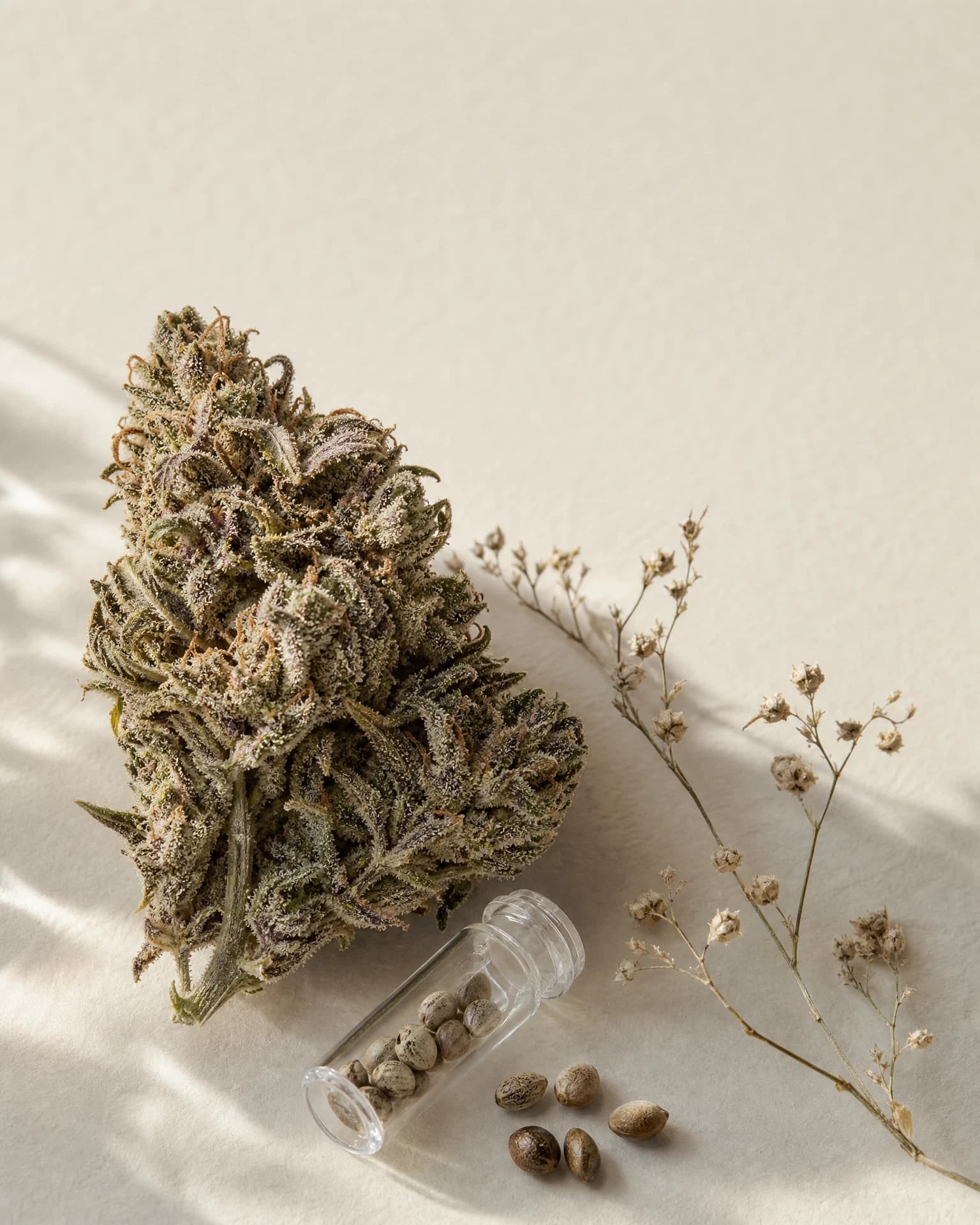
Overview
The banana kush strain represents a specific classification within the botanical records of hybrid cultivars, primarily categorized by its Indica-leaning growth habits and genetic composition. When examining a breeder record for this particular plant, researchers encounter a set of verified data points that define its physical and chemical potential, though these records often contain variations depending on the source. A standard entry for this cultivar identifies it as a hybrid with a significant lean toward Indica traits, which influences both its structural development and its biological requirements during the cultivation process. Understanding these records requires a methodical approach to data interpretation, as the information provided by seed banks and breeders serves as a foundational guide rather than an absolute blueprint for every individual plant.
The process of cataloging a cultivar involves documenting its primary characteristics, such as its genetic lineage, its expected physical dimensions, and the timeframe required for it to reach maturity. For the banana kush strain, the available documentation provides a clear window into its identity as a 60-70% Indica-dominant hybrid. This specific ratio suggests a plant that prioritizes lateral growth and dense foliage over the elongated, spindly structures often associated with Sativa-heavy varieties. By focusing on these documented facts, a grower or researcher can establish a baseline for what to expect, while remaining aware that biological variation is a constant factor in botanical studies. The following analysis adheres strictly to the verified facts present in current breeder records, providing a comprehensive look at the data without introducing unsupported claims or external anecdotes.
Genetics and cultivar background
The genetic foundation of this cultivar is documented as a cross between Ghost OG and a member of the Skunk or Haze families, specifically citing Skunk Haze or Skunk Kush as the likely secondary parent. This lineage places the plant within a broader context of hybrid development, where established parental lines are combined to stabilize specific phenotypic expressions. The resulting hybrid typically maintains an Indica dominance of approximately 60% to 70%, a detail that is verified across multiple primary sources. This genetic balance is a defining feature of the cultivar, as it dictates the plant's physiological responses and its overall structural integrity throughout its life cycle.
When evaluating the genetics of a hybrid, it is useful to consider how breeders document these crosses. The inclusion of Ghost OG as a primary parent suggests a lineage rooted in established hybrid history, while the variability in the secondary parent—whether Skunk Haze or Skunk Kush—highlights the minor discrepancies that can exist between different breeder interpretations of the same cultivar name. These distinctions are common in the industry, as different seed banks may use slightly different selections of a parental line to create their version of a specific strain. For the researcher, this means that while the core identity of the plant remains consistent, the specific genetic nuances may shift depending on which breeder's record is being consulted.
The documentation of a 60-70% Indica dominance is a critical piece of information for understanding the plant's biological heritage. This percentage range indicates that the plant will likely exhibit traits such as broader leaves, a more compact stature, and a shorter flowering period compared to plants with a higher Sativa concentration. In the study of cannabis genetics, these ratios are used to predict how a plant will behave in various environments, although the actual expression of these genes can be influenced by external factors. By sticking to the verified genetic record, we can see that this cultivar is firmly established as a predominantly Indica hybrid with a lineage that draws from well-known parental groups.
Plant profile and grow planning
The physical profile of this cultivar is characterized by a height that typically reaches between 1.1 and 1.5 meters. This range suggests a medium-sized plant that is manageable in various settings, provided that the space is adequate for its lateral expansion. The foliage is described in breeder records as dense and bushy, a trait that is consistent with its Indica-leaning genetics. This density requires careful consideration during the planning stages of growth, as bushy plants often necessitate specific techniques to ensure that all parts of the plant receive adequate light and air circulation. The record for plant structure specifically advises to check current breeder sources, indicating that while the general height and foliage density are known, the exact branching patterns and structural details may vary.
The banana kush flowering time is another verified data point, generally falling within a window of 7 to 9 weeks. This duration is relatively standard for Indica-dominant hybrids and allows for a predictable schedule when planning a cultivation cycle. A 7 to 9 week flowering period means that the plant transitions from its vegetative stage to full maturity in a timeframe that is efficient for many researchers. Planning for this window involves monitoring the plant's development closely as it approaches the end of its cycle, ensuring that environmental conditions remain optimal for the final stages of maturity. The consistency of this flowering time across records provides a reliable metric for those timing their botanical projects.
When planning for a plant with these specific dimensions and growth habits, it is useful to reflect on the general principles of managing dense, bushy foliage. Plants that reach up to 1.5 meters with a thick canopy often require more attention to the interior of the plant to prevent the accumulation of stagnant air. While the record does not provide specific instructions on pruning or training, the description of "dense, bushy foliage" serves as a technical indicator that the plant will naturally fill out its available space. Researchers must account for this when determining the spacing between individual plants and the overall layout of their study area. The absence of specific yield data or climate preferences in the record means that these factors should be approached through general botanical best practices rather than cultivar-specific assumptions.
Aroma and flavor profile
In the case of the current record for this cultivar, specific details regarding the aroma and flavor profile are not provided in the verified data. This absence of information is an important detail for researchers to note, as it highlights the limitations that can exist within individual breeder records. While many cultivars are named after specific scents or tastes, it is a standard practice in evidence-bounded research to refrain from assuming that a name dictates the actual sensory experience of the plant. Without explicit documentation of terpenes or sensory descriptions, the profile remains an unknown field in this particular data set.
The study of botanical aromas generally focuses on terpenes, which are the organic compounds responsible for the scent and flavor of various plants. In a broader educational context, understanding how these compounds are documented can help a researcher interpret why some records might omit this information. Terpene profiles can be highly variable, influenced by everything from the specific phenotype of the seed to the environmental conditions in which the plant is grown. When a record does not list specific aromatic qualities, it may be because the breeder has chosen to focus on structural or chemical data instead, or because the sensory profile is considered too variable to be captured in a single verified statement.
For those looking to research a cultivar's sensory characteristics, the absence of data in a primary record serves as a prompt for further investigation through independent laboratory testing or secondary documentation. In general, the aroma of a plant is a complex interaction of multiple chemical constituents, and the way these are perceived can vary from one individual to another. By stating the field as unknown, the record maintains a high level of scientific integrity, avoiding the trap of providing generic or anecdotal descriptions that may not apply to every instance of the cultivar. Researchers are encouraged to look for comprehensive terpene reports when such information is required for their specific projects, while acknowledging that the current record prioritizes other verified facts.
Reported experience context
The chemical potency of this cultivar is documented through its reported THC levels, which show a significant range of variation. According to the verified record, THC percentages can fall anywhere between 17% and over 25%, depending on the specific breeder source and the conditions of growth. This wide range is a significant factor in understanding the cultivar's profile, as it indicates that the plant's chemical expression is not fixed but exists on a spectrum. Potency is often one of the most sought-after data points in a breeder record, yet it is also one of the most variable, subject to the nuances of cultivation, harvesting, and testing methodologies.
When evaluating a THC range like 17% to 25%, it is helpful to understand the general factors that contribute to such discrepancies. Cannabinoid production is a biological process that can be influenced by light intensity, nutrient availability, and the timing of the harvest. A record that provides a range rather than a single number is often more accurate, as it reflects the reality of botanical variation. For the researcher, this means that while the cultivar has the potential to reach high levels of potency, there is no guarantee that every individual plant will hit the upper end of that scale. The presence of this data in the record allows for a realistic assessment of the plant's chemical potential without making absolute claims that might be contradicted by individual results.
Beyond the specific THC figures, the record does not provide information on other cannabinoids or the specific effects associated with the cultivar. In the context of professional documentation, the omission of "effects" is a common practice, as the human experience of a cultivar is subjective and influenced by a wide array of personal and environmental factors. Instead of relying on anecdotal reports of how a plant might make one feel, evidence-bounded guides focus on the measurable chemical constituents that can be verified through laboratory analysis. This approach ensures that the information provided is grounded in data rather than subjective narrative, allowing the researcher to draw their own conclusions based on the verified chemical profile.
How to compare current breeder records
Comparing breeder records for a cultivar like this requires a discerning eye for both what is present and what is absent. In the current data set, the cultivar is confirmed to be available through specific primary retail sources. However, the record also notes that no direct product listings were found at other major industry outlets. This discrepancy in availability is a common occurrence in the botanical industry, where certain seed banks may hold exclusive rights to a specific version of a cultivar or where stock levels fluctuate based on regional demand. For the researcher, this means that the first step in any project must be a thorough verification of the source to ensure that the material being studied aligns with the documented facts.
When faced with conflicting data, such as the reported THC range of 17% to over 25%, it is essential to look at the context of each source. Different breeders may use different testing laboratories, and the methods used to measure cannabinoid content can vary in their precision and their focus. Some sources might report the highest possible result achieved in a controlled environment, while others might provide an average based on multiple tests. A responsible researcher does not simply choose the most appealing number but instead looks at the entire range as a representation of the plant's biological potential. This approach allows for a more realistic expectation of the cultivar's performance and highlights the importance of environmental factors in determining the final chemical output.
Furthermore, the process of comparing records involves looking for consistency in the core botanical traits. In the case of this cultivar, the 7 to 9 week flowering time and the 1.1 to 1.5 meter height are relatively consistent across the confirmed sources. When these primary characteristics align, it provides a higher degree of confidence in the record's accuracy. Conversely, when a record like this one states "Check current breeder source" for a field like plant structure, it serves as a reminder that not all data is standardized. This transparency is a hallmark of a reliable record, as it admits the limits of its own knowledge rather than providing speculative information. By learning how to manage these discrepancies, researchers can build a more comprehensive understanding of the cultivar while remaining grounded in verified evidence.
The information presented in this guide is strictly bounded by the verified facts available in the current record for the cultivar known as banana kush. This record provides a clear set of data points, including its genetic lineage as a cross between Ghost OG and a Skunk or Haze variant, its 60-70% Indica dominance, and its physical dimensions of 1.1 to 1.5 meters. The flowering period is confirmed to be between 7 and 9 weeks, and the cultivar is available in both feminized and autoflower seed formats. These facts serve as the foundation for the guide, ensuring that every claim made about the plant is supported by primary documentation.
However, it is equally important to acknowledge the limitations and caveats that accompany this data. As noted in the record, while the strain is confirmed at three primary retail sources, it is notably absent from the listings at other major industry outlets. This indicates a level of variability in market availability that researchers must account for. Additionally, the significant range in reported THC levels—from 17% to over 25%—highlights the fact that chemical potency is highly dependent on the specific breeder source and the conditions of growth. These caveats are not mere footnotes but are substantive explanations of the evidence limits that define our current understanding of the cultivar.
The absence of data for fields such as aroma, flavor, yield, and specific plant structure (beyond height and foliage density) means that these aspects of the plant remain undocumented in this particular record. In keeping with the principles of evidence-bounded writing, no claims have been made regarding these unknown fields. This approach ensures that the guide remains a reliable and accurate resource, free from the influence of outside knowledge or unsupported assumptions. Researchers are encouraged to use this guide as a starting point for their own investigations, while remaining mindful of the specific evidence limits and source discrepancies that characterize the current botanical record for this cultivar. By adhering to these strict standards of documentation, we can maintain the integrity of the data and provide a clear, factual overview of the cultivar's verified characteristics.
The presence of unknown fields in a botanical record should not be seen as a failure of documentation, but rather as an invitation for further research. When a record for a cultivar like this one does not include data on yield, aroma, or specific terpene profiles, it opens up several important questions for the researcher to consider. For instance, how does the absence of yield data affect the planning of a large-scale botanical study? Without a verified average, researchers must rely on general expectations for Indica-dominant hybrids of a similar height and structure, while acknowledging the uncertainty that comes with missing specific metrics. This highlights the need for independent trials and the careful documentation of results to fill in the gaps left by primary breeder records.
Another area for inquiry involves the sensory profile of the plant. If the record does not list an aroma or flavor, a researcher might ask what environmental factors are most likely to influence the development of terpenes in a 60-70% Indica-dominant hybrid. While the name of a cultivar can sometimes hint at its aromatic potential, the lack of verified data means that any sensory findings must be treated as new evidence rather than a confirmation of pre-existing claims. This approach encourages a more scientific mindset, where every observation is recorded and analyzed without the bias of external expectations. By focusing on these related research questions, the study of a cultivar becomes an active process of discovery rather than a simple verification of a static record.
Finally, the variability in THC levels prompts questions about the relationship between genetics and environment. A researcher might ask what specific conditions lead to the 25% potency reported by some breeders versus the 17% reported by others. Is this difference purely a result of genetic selection, or does it reflect the impact of different cultivation techniques? Investigating these questions requires a deep understanding of plant physiology and a commitment to methodical experimentation. By identifying the limits of the current record, researchers can target their efforts toward the areas where new data is most needed, ultimately contributing to a more complete and accurate body of knowledge for the entire botanical community.
Frequently asked questions
What is the Banana Kush strain?
This guide summarizes the documented cultivar record while separating verified details from variable grower outcomes.
Is Banana Kush suitable for beginners?
Difficulty depends on the exact seed line, environment, and grow setup. Confirm current breeder guidance.
How long does Banana Kush take to flower?
Flowering windows vary by phenotype and environment. Confirm the estimate for the exact breeder line.
Can Banana Kush be grown indoors and outdoors?
Suitability depends on the breeder line and local climate. Compare space, humidity, temperature, and season length.
Which Banana Kush seed format should I choose?
Autoflower and feminized formats serve different schedules and grow styles. Compare only documented direct records.