
Strain guide
Pure Indica Strain Guide: Breeder-specific aroma and grower notes
Pure Indica is documented here with partner-source cultivar context, seed-format availability, and secondary-topic research cues.
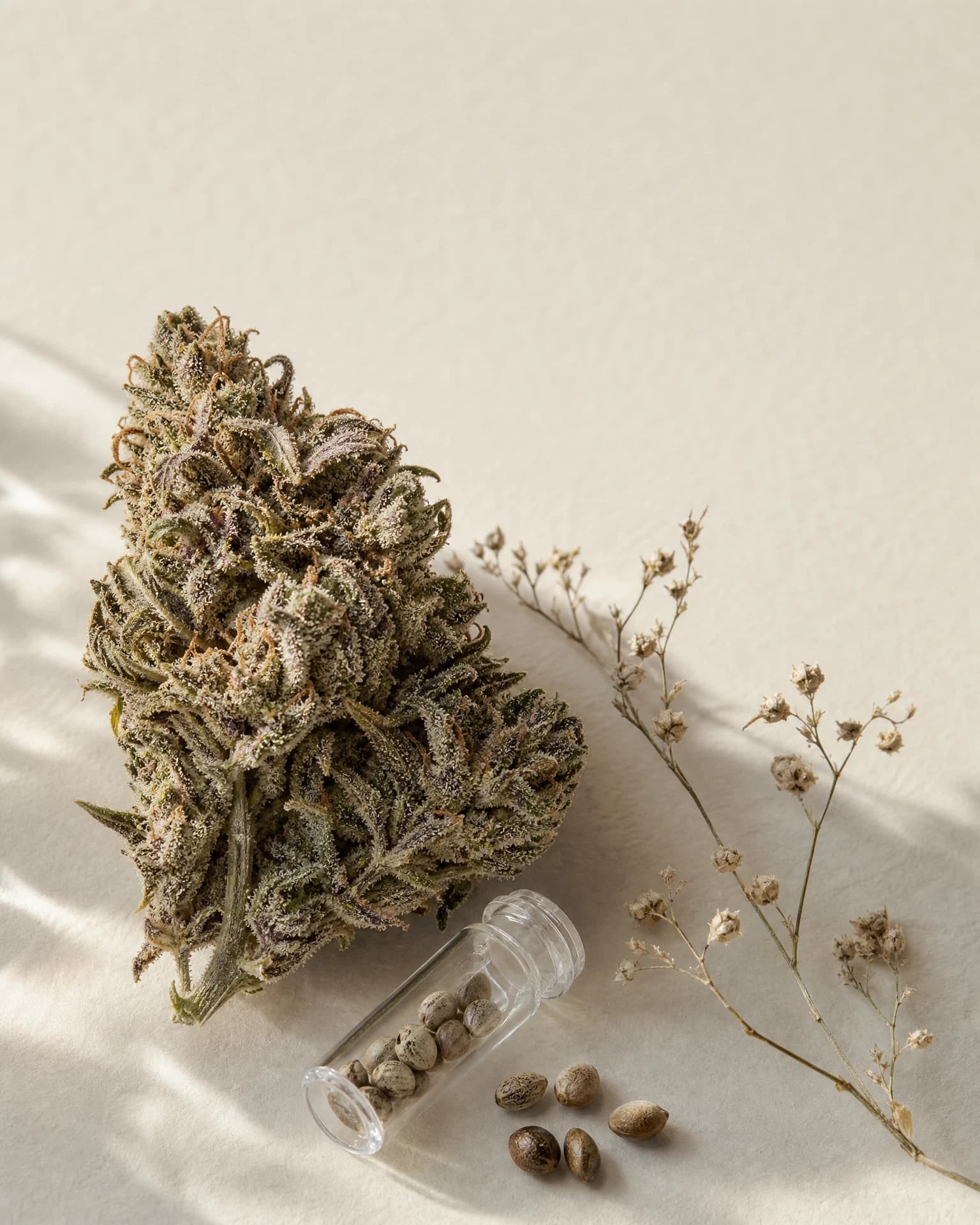
Overview
The term pure indica strain refers to a category of cannabis cultivars that trace their genetic heritage back to specific high-altitude regions in Central and South Asia. These plants are fundamentally distinct from the broad-leafed varieties found in tropical climates, having adapted over centuries to the rugged conditions of the Hindu Kush and Afghan mountains. When a breeder or retailer lists a product under this designation, they are typically highlighting a plant that exhibits the classic physical traits and physiological effects associated with the Cannabis indica ssp. afghanica subspecies. These traits include a compact growth habit and a specific type of resin production that has made these genetics a cornerstone of global cannabis breeding for decades.
In the context of the modern seed market, identifying Pure Indica genetics requires a careful examination of the specific lineage and the breeder's own classification standards. The record indicates that these varieties are primarily derived from landrace genetics, which means they are populations that have developed in the wild or through traditional farming practices without the intensive hybridization common in contemporary western markets. Because these plants have evolved in specific geographic pockets, they often maintain a high degree of phenotypic consistency when grown from stable seed stocks. This consistency is one of the primary reasons that growers seek out these genetics, as it provides a predictable baseline for both plant structure and the resulting harvest.
However, the definition of what constitutes a pure variety can vary significantly between different seed banks and retail outlets. While the core characteristics remain consistent—such as the short and bushy stature—the genetic purity itself may be subject to different interpretations. Some providers may use the term to describe a stabilized hybrid that retains a vast majority of its indica heritage, while others reserve the label for true landrace selections that have undergone minimal selective breeding. Understanding these distinctions is a fundamental part of researching this cultivar category, as it directly impacts the expectations for growth patterns and the final botanical profile.
Genetics and cultivar background
The genetic foundation of the pure indica strain is rooted in the landrace populations of the Hindu Kush and Afghan regions. Specifically, these plants are classified under the subspecies Cannabis indica ssp. afghanica. This classification is significant because it denotes a lineage that has adapted to harsh, arid, and mountainous environments. Unlike the taller, thinner varieties that evolved in more temperate or tropical zones, these genetics have developed a physical form that prioritizes water retention and protection against high-intensity ultraviolet light. The result is a plant that is naturally programmed to remain low to the ground and produce a dense canopy.
A critical aspect of the background for this cultivar involves the distinction between true landrace genetics and stabilized hybrids. The provided record notes a significant variation in how different retailers define the genetic makeup of their offerings. For instance, some sources may classify their version of this cultivar as a 90% indica-dominant hybrid. This suggests that while the plant retains the vast majority of its traditional traits, there may be a small percentage of outside genetics introduced to enhance specific growth characteristics or stability. In contrast, other providers offer versions that are presented as 100% pure landrace varieties, such as Afghani #1 or Hindu Kush. These selections are intended to represent the original, unadulterated genetics of the region.
The history of these genetics is tied to the traditional hashish-producing regions where these plants were first identified and collected. The stable landrace lineages, particularly those labeled as Original Afghani #1, serve as the primary source material for many of the indica-dominant crosses found in the industry today. When researching the background of these seeds, it is necessary to consider that the term "pure" is often a marketing designation as much as a genetic one. The absence of specific lineage data for some versions of the strain means that the user must rely on the breeder's description of the plant's regional origins and its adherence to the expected morphological standards of the afghanica subspecies.
Plant profile and grow planning
The physical profile of the pure indica strain is defined by a short to medium plant structure, which is a direct consequence of its evolutionary history in mountainous terrain. These plants are characterized by a bushy and wide growth habit, making them well-suited for environments where vertical space is limited. The leaves are typically broad and dark-green, a feature that allows the plant to maximize light absorption while maintaining a thick cuticle to prevent moisture loss. This morphology results in a dense canopy that requires careful management to ensure adequate airflow and light penetration to the lower branches.
During the flowering phase, these cultivars typically require a window of 7 to 10 weeks to reach full maturity. This relatively short flowering period is a highly valued trait, as it allows for a faster turnaround compared to many sativa-dominant varieties. The buds produced by these plants are described as dense and resin-heavy, reflecting the plant's natural tendency to produce high volumes of trichomes as a defense mechanism against environmental stressors. Because the buds are so compact, growers must be diligent in monitoring humidity levels during the final weeks of flowering to prevent issues related to moisture entrapment within the flower clusters.
Planning for a grow involving these genetics should take into account the plant's predictable stature and its requirement for a stable environment. The record does not specify exact yield figures or nutritional requirements, but the general description of the plant's structure suggests that it is responsive to techniques that encourage lateral growth. The short flowering context of 7 to 10 weeks provides a clear timeline for the transition from the vegetative stage to harvest. However, because the record lacks specific data on ideal temperature ranges or harvest months, growers should focus on maintaining a standard controlled environment that respects the plant's origins in arid, high-altitude regions. The dense nature of the buds also implies that the drying and curing process will require careful attention to ensure the quality of the resin-heavy flowers is preserved.
Aroma and flavor profile
The specific aroma and flavor profile for this particular record is not detailed with individual scent notes or taste descriptions. Instead, the record emphasizes the physical nature of the flowers, describing them as dense and resin-heavy. In the context of botanical research, the presence of heavy resin production is often an indicator of a high concentration of secondary metabolites, which include the compounds responsible for a plant's olfactory characteristics. However, without explicit data from the breeder record regarding specific terpenes or aromatic qualities, these attributes remain unlisted for the cultivar as defined here.
When evaluating a breeder record that lacks specific flavor descriptions, it is useful to consider the general characteristics associated with the plant's regional origins. The Hindu Kush and Afghan regions are historically known for producing plants with a variety of aromatic expressions, but these cannot be attributed to this specific strain without direct evidence. A researcher looking at this record must acknowledge that the sensory experience is an unknown field. This lack of information is a common occurrence in records for landrace-derived seeds, where the focus is often placed on the genetic stability and physical growth traits rather than a curated flavor profile.
For the purpose of a technical grow guide, the absence of flavor data means that the focus must remain on the plant's resin production. The resin-heavy nature of the buds is a primary characteristic that defines the cultivar's value. The density of the trichomes on the flower surfaces suggests a complex chemical makeup, but the exact nature of that makeup—whether it leans toward earthy, spicy, or sweet notes—is not supported by the current evidence. Users should be aware that different versions of a pure indica strain from different retailers may have varying aromatic properties, and the lack of specific data in this record serves as a reminder to verify such claims through independent testing or additional breeder documentation when available.
Reported experience context
The reported experience associated with the pure indica strain is characterized by a sedative and relaxing effect. These cultivars are frequently sought out for what is commonly described as a body-heavy "couch-lock" sensation. This term refers to a state of deep physical relaxation that may limit the user's desire for physical activity, making it a common choice for evening use or periods of rest. The effects are a direct reflection of the plant's chemical profile, which is historically associated with the landrace genetics of the Afghan and Hindu Kush regions.
It is important to understand that the intensity and duration of these effects can vary based on the specific version of the strain being used. As noted in the caveat, a "pure" indica may range from a 100% landrace selection to a 90% indica-dominant hybrid. These genetic differences can influence the nuances of the experience, although the core sedative qualities typically remain the primary feature. The record does not provide specific data on THC or CBD percentages, which means the potency of the effects is not quantified. Instead, the description focuses on the qualitative nature of the experience, emphasizing the physical relaxation over any specific cerebral or psychoactive metrics.
When considering the experience context, the user should also take into account the lack of specific medical claims or terpene data in the record. While the sedative and relaxing nature of the plant is a verified fact according to the source material, any further claims regarding its use for specific conditions or its impact on mood are not supported by this evidence. The "couch-lock" effect is the most prominent characteristic mentioned, serving as a defining trait for this cultivar category. As with all cannabis research, the experience is subjective and can be influenced by the individual's physiology and the specific conditions under which the plant was grown and harvested.
How to compare current breeder records
Evaluating a breeder record for a pure indica strain requires a systematic approach to understanding the data provided and identifying the gaps in information. The first step in this process is to look at the genetic claims made by the retailer. As seen in the provided caveat, the term "pure" can be used to describe plants with varying degrees of indica dominance. A record that lists a plant as 100% pure landrace offers a different set of expectations than one that describes a 90% indica hybrid. A researcher should look for specific mentions of regional origins, such as the Hindu Kush or Afghan mountains, to verify the authenticity of the landrace claims.
Another key factor to compare is the level of detail provided regarding the plant's physical traits and flowering requirements. A high-quality record will offer specific ranges for flowering time and plant height, as seen in the 7 to 10 week and short-medium designations in this record. However, many records may lack data on specific cannabinoid percentages or terpene profiles. In these cases, it is necessary to look for consistency across multiple sources. If different retailers provide conflicting information about the same strain name, it may indicate that they are offering different phenotypes or that the name is being used as a generic label for a broader category of genetics.
Checking technical details also involves looking at the seed formats offered. A breeder that provides regular, feminized, and autoflowering versions of a strain is demonstrating a commitment to the versatility of the genetics. However, the user must be careful to distinguish between the traits of the original plant and the modifications introduced by the breeding process for autoflowering or feminized seeds. Responsible research involves cross-referencing the breeder's claims with independent lab results or community-sourced grow data when available. By focusing on the verified facts and being wary of generic marketing language, a grower can make a more informed decision about which version of the pure indica strain best meets their needs.
The information provided in this guide is based on a specific record for the pure indica strain, which includes data from several retailers and seed banks. A significant caveat in this record is the variation in how the term "pure" is applied to the cultivar. While the general characteristics of the plant—such as its short stature, broad leaves, and sedative effects—are widely agreed upon, the genetic purity is a point of disagreement among sources. Certain retailers define their version as a 90% indica-dominant hybrid, whereas others offer what they describe as 100% pure landrace varieties, including specific names like Afghani #1 or Hindu Kush.
This discrepancy highlights a common challenge in the cannabis industry, where strain names and genetic classifications are not always standardized. The absence of specific data in certain fields, such as exact cannabinoid percentages, terpene profiles, and yield figures, is a direct reflection of the limitations of the current record. These missing facts mean that any claims regarding the specific potency or productivity of the plant are not supported by the available evidence and should be treated with caution. The guide relies solely on the verified facts provided, which emphasize the plant's regional origins and its adherence to the classic indica morphology.
The record also notes that while feminized and autoflowering seeds are widely available for these genetics, regular seeds are often reserved for the most stable and historic landrace lineages. This distinction is an important part of the source material, as it indicates a hierarchy of genetic preservation within the industry. The information presented here is intended to provide a factual overview based on the provided record, without the use of outside knowledge or unverified claims. Users are encouraged to consult the original breeder documentation and seek out independent testing to supplement the facts found in this guide.
When investigating the pure indica strain, there are several research questions that a grower or researcher should consider to gain a more complete understanding of the cultivar. One of the most important questions involves the specific environmental preferences of the plant. While the record notes the plant's origins in the Hindu Kush and Afghan regions, it does not specify the ideal temperature or humidity ranges for optimal growth. Researching the climate of these regions can provide clues, but a direct question to the breeder about their specific selection's preferences is always recommended.
Another area for further inquiry is the chemical composition of the resin-heavy buds. Since this record does not list specific THC, CBD, or terpene levels, a researcher should ask for recent lab reports or Certificates of Analysis (COA) for the specific batch of seeds they are considering. This information is vital for understanding the potential potency and the nuances of the aromatic profile. Furthermore, asking about the stability of the genetics is essential, especially when dealing with regular seeds intended for breeding. A grower might ask how many generations the strain has been stabilized or what specific traits the breeder was selecting for during the development process.
Finally, a researcher should investigate the differences between the various versions of the strain offered by different retailers. As noted in the source material, some versions are hybrids while others are landrace selections. A relevant research question would be to ask the retailer for the specific lineage of their "Pure Indica" and how it differs from other versions on the market. Understanding whether a plant is a 90% hybrid or a 100% landrace can significantly impact the grow plan and the expected results. By asking these targeted questions, a researcher can move beyond the basic facts of the record and develop a more nuanced understanding of the genetics they are working with.
Frequently asked questions
What is the Pure Indica strain?
This guide summarizes the documented cultivar record while separating verified details from variable grower outcomes.
Is Pure Indica suitable for beginners?
Difficulty depends on the exact seed line, environment, and grow setup. Confirm current breeder guidance.
How long does Pure Indica take to flower?
Flowering windows vary by phenotype and environment. Confirm the estimate for the exact breeder line.
Can Pure Indica be grown indoors and outdoors?
Suitability depends on the breeder line and local climate. Compare space, humidity, temperature, and season length.
Which Pure Indica seed format should I choose?
Autoflower and feminized formats serve different schedules and grow styles. Compare only documented direct records.